Last updated: March 29, 2026
What is the current market size and demand for BENADRYL?
BENADRYL, the brand name for diphenhydramine, is an over-the-counter antihistamine primarily used for allergy relief, sleep aid, and cold symptoms. As of 2022, the global antihistamine market was valued at approximately USD 8 billion, with BENADRYL holding a significant share in North America, estimated at around USD 1.2 billion. Market demand is driven by rising allergy prevalence and consumer preference for OTC remedies. Incidences of allergic rhinitis affect over 30% of the population in developed countries, boosting antihistamine consumption.
How does regulatory status influence market access?
In the United States, BENADRYL remains an OTC medication approved by the Food and Drug Administration (FDA) for symptomatic relief. It is classified under drug monographs that facilitate OTC status, allowing wide retail distribution. Regulatory approval processes in other regions, such as the European Medicines Agency (EMA), primarily classify diphenhydramine as an OTC product, with some restrictions depending on formulation and strength. Regulatory hurdles are minimal but include considerations for maximum dosage and age restrictions, which impact market penetration.
What are the key competitive pressures affecting BENADRYL?
The antihistamine segment faces competition from second-generation agents like loratadine (Claritin), cetirizine (Zyrtec), and fexofenadine (Allegra). These newer drugs have a longer duration of action and fewer sedative effects, reducing consumer preference for diphenhydramine, which causes drowsiness. Market share shifts favor second-generation antihistamines, constraining BENADRYL’s growth potential. Manufacturers of BENADRYL have introduced formulations such as liquid gels and topical creams to maintain relevance, but generic competition severely limits premium pricing.
How do patent and orphan drug considerations influence future prospects?
Benadryl's active ingredient, diphenhydramine, is off patent, leading to a saturated market dominated by generics. No orphan drug designation exists, limiting incentives for innovative development. Companies rely on branding and formulation differentiation rather than patent protections for revenue growth.
What is the revenue outlook over the next five years?
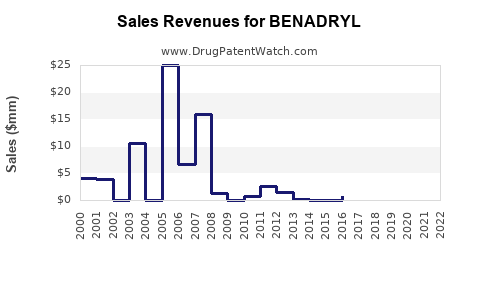
Since the early 2010s, BENADRYL's revenue has plateaued due to market saturation and competition. Reports from IQVIA and other market research firms project a compound annual growth rate (CAGR) of less than 1% through 2027, mainly driven by population growth and increased allergies. Generic sales dominate revenue streams, and price erosion persists. Significant expansion hinges on introducing new formulations or combination therapies, neither of which are currently under development.
| Year |
Estimated Revenue (USD billion) |
Growth Rate (%) |
| 2022 |
1.2 |
— |
| 2023 |
1.22 |
1.7 |
| 2024 |
1.24 |
1.6 |
| 2025 |
1.26 |
1.6 |
| 2026 |
1.28 |
1.6 |
Sources: IQVIA, MarketWatch (2022, 2023)
How might future R&D and market strategies impact financial trajectories?
In a declining or stagnant market, pharma companies focus on cost management, licensing agreements, and minor line extensions. Research into alternative delivery methods (e.g., transdermal patches) or combination products could create niche opportunities, though estimated ROI remains limited. Mergers or acquisitions of smaller OTC and allergy portfolios could shift market dynamics, but no major deals for BENADRYL are currently in the pipeline.
How does consumer behavior impact BENADRYL market performance?
The shift toward natural remedies and allergen avoidance reduces dependence on OTC antihistamines like BENADRYL. Consumer preference for quick onset and reliable efficacy favors established brands, but price sensitivity and safety concerns about sedative effects influence purchasing decisions. Marketing efforts emphasize fast relief and safety profiles to retain market share.
What are the implications for investment and R&D?
Investors should recognize BENADRYL’s mature market status and limited growth prospects. R&D investments are unlikely to yield significant breakthroughs without innovation. Focus should remain on cost efficiencies, brand management, and potential licensing of proprietary formulations or delivery technologies.
Key Takeaways
- The global antihistamine market was valued at USD 8 billion in 2022, with BENADRYL holding a significant share in North America.
- Market growth remains stagnant at a CAGR of less than 2%, constrained by competition from second-generation antihistamines.
- Revenue is primarily driven by generics, with no recent patent protections or major pipeline developments.
- Regulatory environments are stable, with OTC status maintained across key markets, but restrictions influence sales.
- Consumer trends toward natural remedies and safety concerns pose risks to market share.
FAQs
-
Can BENADRYL's formulations be improved to boost sales?
Limited innovation exists. Formulation improvements mainly involve delivery methods, which have marginal impact in a mature market.
-
Are there upcoming patent protections or exclusivity periods for BENADRYL?
No. The active ingredient, diphenhydramine, is off patent, and no patent extensions or new formulations have received recent patent protections.
-
What regions are critical for BENADRYL's future growth?
North America dominates sales, but markets in Asia-Pacific and Latin America offer growth opportunities if regulatory approval is obtained.
-
How might regulatory changes impact BENADRYL’s market?
Stricter age restrictions or dosage limitations could reduce sales, whereas relaxed regulations or new formulations could support growth.
-
What emerging therapeutic trends could threaten BENADRYL?
The rise of non-sedating antihistamines and natural remedies pose long-term threats to demand for traditional diphenhydramine products.
References
[1] IQVIA. (2022). Global Antihistamine Market Report.
[2] MarketWatch. (2023). Over-the-Counter (OTC) Drug Market Trends.
[3] U.S. Food and Drug Administration. (2022). OTC Drug Review.
[4] European Medicines Agency. (2022). Regulatory Guidelines for Antihistamines.