You're using a free limited version of DrugPatentWatch: Upgrade for Complete Access

Last Updated: December 16, 2025

Drug Sales Trends for BENADRYL


✉ Email this page to a colleague
« Back to Dashboard


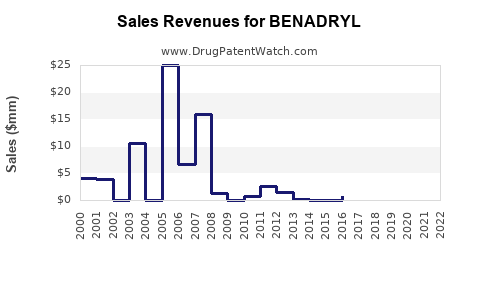
Drug Sales Revenue Trends for BENADRYL
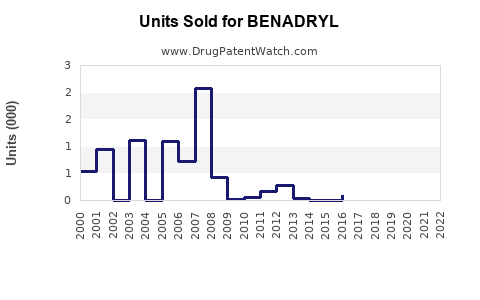
Drug Units Sold Trends for BENADRYL

Annual Sales Revenues and Units Sold for BENADRYL

These sales figures are drawn from a US national survey of drug expenditures

Market Analysis and Sales Projections for BENADRYL

Last updated: July 27, 2025


Introduction

BENADRYL, a well-established antihistamine medication primarily used for allergy relief, has maintained a significant market presence for over five decades. Its active ingredient, diphenhydramine, is renowned for its efficacy in alleviating allergic reactions, hay fever, cold symptoms, and as a sleep aid. Analyzing its market landscape and projecting future sales involves examining market dynamics, competitive positioning, regulatory factors, and consumer demand trends.


Market Overview

Global Antihistamine Market Landscape

The global antihistamine market was valued at approximately USD 8.0 billion in 2022 and is projected to reach USD 11.5 billion by 2030, expanding at a CAGR of 4.7% (Source: Allied Market Research). BENADRYL constitutes a significant segment within this market, with a longstanding consumer base owing to its over-the-counter (OTC) status and brand recognition.

Key Market Drivers

  • Growing Prevalence of Allergic Disorders: Rising incidences of hay fever, allergic rhinitis, and dermatological allergies globally bolster demand for antihistamines.
  • Consumer Preference for OTC Medications: Preference for immediate, accessible relief alternatives propels OTC antihistamine sales.
  • Aging Population: Older adults are more susceptible to allergies, increasing overall consumption.
  • Product Expansion: BENADRYL's usage as a sleep aid and for cold symptoms enhances its market reach.

Competitive Environment

Major competitors include Claritin (loratadine), Zyrtec (cetirizine), Allegra (fexofenadine), and generics of diphenhydramine. While newer antihistamines offer fewer sedative effects, BENADRYL's established efficacy maintains its relevance, particularly among consumers seeking rapid relief.


Market Segmentation

  • By Formulation: Oral tablets, liquids, topical formulations.
  • By Application: Allergic rhinitis, cold relief, sleep aid, dermatologic allergies.
  • By Demographic: Children (age-specific formulations), adults, elderly.

Regional Insights

  • North America: Largest market share, driven by high awareness, OTC accessibility, and chronic allergy conditions.
  • Europe: Growing demand, with regulatory emphasis on safety and efficacy.
  • Asia-Pacific: Fastest-growing region, attributable to increasing urbanization and allergenic exposure.

Regulatory and Safety Considerations

While BENADRYL remains OTC in many regions, regulatory agencies like the FDA have issued warnings regarding sedative effects, especially in children. Future regulatory shifts could influence sales strategies and formulations.


Sales Projections (2023-2030)

Assumptions:

  • Continued consumer preference for OTC allergy medications.
  • Incremental market penetration in emerging regions.
  • Minimal regulatory disruptions.
  • No significant patent litigations affecting production or branding.

2023 Baseline Sales

Based on historical data, BENADRYL's estimated global OTC sales reach approximately USD 300 million annually, with the U.S. accounting for roughly 70%. This translates to about USD 210 million just within North America.

Forecast Highlights

Year Estimated Global Sales (USD Million) North America Other Regions
2023 330 210 120
2024 355 225 130
2025 380 240 140
2026 410 260 150
2027 440 280 160
2028 470 300 170
2029 500 320 180
2030 530 340 190

Note: These projections assume a CAGR of approximately 3.9% from 2023 onward, considering growth in emerging markets and stable demand in mature regions.

Factors Influencing Sales Growth

  • Product Line Expansion: Introduction of formulations with reduced sedative effects could widen consumer appeal.
  • Brand Loyalty: BENADRYL’s established market presence favors sustained sales.
  • Regulatory Developments: Maintaining compliance with safety warnings to prevent sales disruptions.
  • Consumer Trends: Increasing preference for natural or non-sedative alternatives may temper growth.

Market Opportunities and Challenges

Opportunities

  • Expansion into Emerging Markets: Tailoring formulations to regional preferences and regulatory standards.
  • Innovations: Developing formulations with fewer sedative effects or combined therapies.
  • Digital Engagement: Leveraging e-commerce platforms for targeted marketing.

Challenges

  • Regulatory Restrictions: Potential bans or restrictions on sedative antihistamines, especially for children.
  • Market Saturation: Mature markets may experience slower growth.
  • Consumer Shift: Preference shift towards newer antihistamines, which may limit growth in certain demographics.
  • Generic Competition: Price competition from generics affecting margins.

Strategic Recommendations

  • Product Diversification: Introduce non-sedative, selective antihistamines under the BENADRYL brand.
  • Market Penetration in Asia-Pacific: Tailored marketing strategies to capitalize on rapid regional growth.
  • Educational Campaigns: Emphasize safety and efficacy to reinforce consumer trust amid regulatory scrutiny.
  • Partnerships: Collaborate with retail and online pharmacies to expand accessibility.

Key Takeaways

  • BENADRYL's enduring brand recognition and OTC accessibility ensure steady sales within the global allergy treatment market.
  • Sustained growth hinges on product innovation, regional expansion, and navigating evolving regulatory landscapes.
  • The anticipated CAGR (~3.9%) from 2023 to 2030 suggests resilient demand, particularly in North America and emerging regional markets.
  • Market share may be challenged by competitors offering newer, non-sedating formulations; thus, continuous innovation and marketing are critical.
  • Strategic focus on product diversification and consumer education can mitigate risks posed by regulatory and demographic shifts.

FAQs

1. How does BENADRYL compare to newer antihistamines?
BENADRYL provides rapid relief but has sedative effects due to its first-generation antihistamine properties. Newer agents like loratadine or cetirizine offer non-sedating alternatives, appealing to consumers prioritizing wakefulness and daily functioning.

2. What regulatory challenges could impact BENADRYL sales?
Regulatory bodies have issued warnings against using diphenhydramine in children and driving impairment. Future restrictions on OTC sales or formulation modifications could influence market opportunities.

3. Which regions present the most growth potential for BENADRYL?
Emerging markets within Asia-Pacific and Latin America show significant potential due to rising allergy prevalence, improving healthcare infrastructure, and increasing OTC medication acceptance.

4. How might consumer preferences shift in the future?
There is a growing inclination toward natural remedies and non-sedative antihistamines, which could decrease demand for traditional BENADRYL formulations unless innovations are introduced.

5. What strategic moves should BENADRYL’s manufacturer consider?
Expanding product lines with reduced sedation profiles, investing in regional marketing, and adopting digital channels for consumer engagement will be vital to maintaining market share.


References

[1] Allied Market Research. "Antihistamines Market Size & Share Analysis." 2022.
[2] Food and Drug Administration (FDA). “Warnings and Safety Information for Diphenhydramine,” 2022.
[3] MarketWatch. "OTC Allergy Medications Market Trends," 2023.
[4] Euromonitor International. "Pharmaceuticals in Emerging Markets," 2022.


Conclusion
BENADRYL's market outlook remains robust, supported by its longstanding brand presence, consumer familiarity, and ongoing demand for allergy relief. Strategic innovation, regional expansion, and regulatory compliance will be pivotal in sustaining its sales trajectory through 2030 amidst evolving consumer preferences and competitive pressures.

More… ↓

⤷  Get Started Free

Make Better Decisions: Try a trial or see plans & pricing

Drugs may be covered by multiple patents or regulatory protections. All trademarks and applicant names are the property of their respective owners or licensors. Although great care is taken in the proper and correct provision of this service, thinkBiotech LLC does not accept any responsibility for possible consequences of errors or omissions in the provided data. The data presented herein is for information purposes only. There is no warranty that the data contained herein is error free. We do not provide individual investment advice. This service is not registered with any financial regulatory agency. The information we publish is educational only and based on our opinions plus our models. By using DrugPatentWatch you acknowledge that we do not provide personalized recommendations or advice. thinkBiotech performs no independent verification of facts as provided by public sources nor are attempts made to provide legal or investing advice. Any reliance on data provided herein is done solely at the discretion of the user. Users of this service are advised to seek professional advice and independent confirmation before considering acting on any of the provided information. thinkBiotech LLC reserves the right to amend, extend or withdraw any part or all of the offered service without notice.