Last updated: April 25, 2026
Market dynamics and financial trajectory for ANTIZOL
ANTIZOL is the brand name for sulfamethoxazole/trimethoprim (co-trimoxazole). The product’s market dynamics and financial trajectory are driven by four forces: (1) global access to generic co-trimoxazole, (2) revenue concentration in markets that maintain brand substitution controls, (3) competitive pricing pressure from low-cost generics, and (4) regulator-led shifts in antibiotic stewardship and prescribing guidance. The result is a typical “brand in a generic class” P&L profile: high volume elasticity to switching, contracting gross margins over time, and a need for localized supply contracts and formulary placement to sustain revenue.
What market segments does ANTIZOL effectively compete in?
ANTIZOL competes in the systemic antibacterial segment for bacterial infections where co-trimoxazole is recommended or still used in clinical practice. Market activity clusters around:
- Hospital formularies and inpatient procurement for empiric or targeted use when susceptibility supports co-trimoxazole
- Retail pharmacy prescriptions in countries with continuing brand selection or limited generic substitution at the point of dispensing
- Niche or guideline-reinforced indications in markets where clinicians still follow older local practice patterns
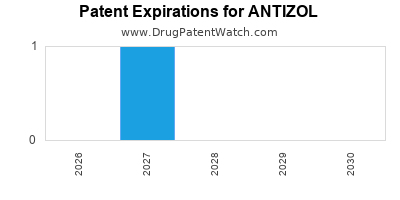
What matters commercially is that co-trimoxazole is rarely protected in late life cycles by meaningful patent exclusivity in most jurisdictions. That structurally positions ANTIZOL as a brand competing against generics on price, availability, and pack/format breadth rather than on therapeutic novelty.
How do generic co-trimoxazole dynamics shape pricing and volume?
The economics of co-trimoxazole are dominated by generic supply and commoditization:
Pricing pressure profile
- Brand pricing typically tracks the “lowest available” generic corridor, with discounts driven by tender outcomes and payer pressure.
- Gross margin compression is persistent once equivalent generics establish steady supply and wide pharmacy access.
- Volume growth tends to come from either (a) geography where brand substitution is slower, or (b) contract wins with healthcare systems that specify brand procurement for operational reasons.
Switching sensitivity
Co-trimoxazole is therapeutically substitutable with other equivalent regimens and within-class co-trimoxazole generics. That makes demand:
- Highly elastic on out-of-pocket cost or payer reimbursement rules
- Route dependent: inpatient tendering can lock short-term volume, while outpatient relies on prescribing and dispensing behavior
Supply and tender cycles
Commercial performance usually correlates with:
- pharmaceutical tender calendars in public systems
- manufacturer capacity and lead-time reliability, which can override pricing in procurement windows
What regulatory and prescribing trends move the demand curve?
Global antibiotic stewardship trends influence utilization across antibacterial classes, including co-trimoxazole. Key demand-side effects typically include:
- Reduced empirical use in settings with higher resistance patterns or guideline-driven de-emphasis of older antibiotics
- Protocol-driven restrictions requiring susceptibility evidence for continued use
- Shift toward newer alternatives where local resistance and clinical guidance support other agents
The practical outcome for ANTIZOL is not a uniform demand collapse, but incremental headwinds to utilization rate, with market share depending on whether clinicians still deploy co-trimoxazole under local guidelines and whether procurement continues to stock it.
Where does ANTIZOL face the sharpest competitive risk?
ANTIZOL’s highest risk is not clinical substitution; it is commercial substitution inside the same active ingredient class:
Competitive set
- Generic co-trimoxazole brands with equivalent formulation and bioequivalence
- Multi-source suppliers that win tenders via price erosion
- Alternatives in antibacterial therapy where stewardship and resistance profiles push prescribers away from co-trimoxazole
Risk channels
- Tender price depression: public and large private buyers force down unit economics
- Formulary displacement: preferred drug lists can change annually
- Out-of-stock and pack substitution: procurement failures can temporarily shift volume but also permanently shift prescriber habits
What is the financial trajectory typically observed for a branded co-trimoxazole asset?
Absent unique patent tailwinds, the financial trajectory for a brand like ANTIZOL typically follows a pattern observed across “older antibiotic brands” in generic-dense markets:
Phase 1: Sustained revenue with declining margins
- Revenue holds due to formulary presence, supplier contracts, and physician familiarity
- Gross margin compresses as generics expand and payer cost-containment tightens
Phase 2: Revenue stabilization or modest decline with volume churn
- Revenue becomes sensitive to tender wins and pricing concessions
- Promotion and switching pressures intensify, with brand volume increasingly tied to supply continuity and procurement mechanics
Phase 3: Portfolio rationalization and margin defense
- Market exits or SKU reduction occur in low-margin geographies
- Focus shifts to “where reimbursement and procurement specify the brand,” where it is easiest to defend a price band
This is the business reality for co-trimoxazole brands: a stable but capped addressable market, with revenue growth constrained by substitution.
Which indicators should investors and operators track for ANTIZOL performance?
Given the class mechanics, the most actionable indicators are commercial and tender metrics rather than R&D milestones.
Commercial KPI set
- Net sales by geography (brand vs generic substitution intensity)
- Gross margin trend (unit price vs mix)
- Procurement share in public hospitals and national tenders
- Dispensing trend in retail channels (prescription counts and brand share)
- SKU and pack availability (stock-outs correlate with permanent share loss)
Contract and regulatory KPI set
- Formulary position and reimbursement tiering changes
- Tender participation outcomes (win rate and average contract price)
- Guideline updates impacting empiric vs susceptibility-based prescribing
How does ANTIZOL pricing likely behave versus generic co-trimoxazole?
A branded antibiotic in a generic class typically sustains a price premium only where one or more of these conditions hold:
- Payers negotiate brand rebates but allow use of the brand under defined formularies
- National purchasing frameworks include brand-level specifications
- Patients or prescribers show inertia due to physician familiarity or treatment continuity
- Supply chain reliability keeps the brand as the default procurement option despite generic availability
Where those conditions weaken, pricing converges toward generic benchmarks and volume shifts quickly to the lowest-cost supplier.
What scenario map best explains upside and downside outcomes?
Upside scenario (best-case commercial)
- Brand keeps formulary access in key geographies
- Tender wins offset generic price erosion
- Resistance-guided prescribing still supports co-trimoxazole use in targeted settings
- Supply reliability prevents share loss
Base scenario (most common)
- Revenue stabilizes with mix-driven margin compression
- Volume slowly erodes in outpatient channels where substitution is easier
- Inpatient procurement keeps the floor under unit volumes
Downside scenario (risk case)
- Stewardship changes reduce routine co-trimoxazole utilization
- Major tenders shift to lowest-cost generics
- Reimbursement or formulary downgrades raise barriers for continued brand use
- Margin turns negative in weaker geographies, forcing exits
What can be concluded about ANTIZOL’s financial trajectory from the drug’s economic structure?
The core conclusion is structural: ANTIZOL’s financial trajectory is constrained by generic co-trimoxazole competition, with upside depending mainly on contracted procurement and geography-specific brand persistence, not on differentiation. Over time, the asset behaves like a mature brand in a commoditized class: revenue durability with gradual erosion of gross margin, followed by rationalization of marginal markets.
Key Takeaways
- ANTIZOL is a branded co-trimoxazole asset competing in a generic-dense antibacterial class where price convergence and switching risk are structural.
- Market dynamics are dominated by tender mechanics, formulary access, and stewardship-driven prescribing volumes.
- The financial trajectory typically follows margin compression with revenue stabilization, then portfolio rationalization where brand-specific procurement fails.
- Actionable performance tracking focuses on net sales by geography, gross margin trend, procurement win rate, and formulary reimbursement tier changes.
FAQs
-
Is ANTIZOL protected against generic substitution?
As a co-trimoxazole brand, it faces persistent generic substitution risk in most jurisdictions once equivalence and supply expand.
-
What drives ANTIZOL demand more: new clinical evidence or procurement?
Procurement and formulary access usually dominate because co-trimoxazole is substitutable and the market is mature.
-
How does antibiotic stewardship affect co-trimoxazole brands?
It can reduce empiric use and tighten prescribing criteria, lowering utilization unless local guidelines still support use.
-
Where does brand revenue most likely persist?
In geographies where tenders and reimbursement rules allow continued brand specification or where switching inertia exists at dispensing.
-
What is the most sensitive metric for financial trajectory?
Gross margin trend tied to net price erosion versus mix, alongside tender win rate for volume stability.
References
[1] World Health Organization (WHO). WHO Model Formulary for Children: Antibiotics (including co-trimoxazole). World Health Organization.
[2] U.S. National Library of Medicine. Trimethoprim-sulfamethoxazole (co-trimoxazole) drug information. National Institutes of Health.
[3] European Medicines Agency (EMA). Public assessment reports and product information for co-trimoxazole-containing medicines. European Medicines Agency.