Last updated: August 3, 2026
Aggrenox, the fixed-dose combination of extended-release dipyridamole and aspirin, is a mature antiplatelet product with limited current commercial value. Boehringer Ingelheim developed and marketed Aggrenox for secondary prevention of stroke in patients with prior transient ischemic attack or ischemic stroke. U.S. product exclusivity has expired, the principal formulation patent has passed its expected term, and generic competition has shifted the market from branded revenue generation to low-margin multisource supply.
The product remains clinically relevant, but its commercial position is constrained by generic availability, competition from aspirin, clopidogrel, and alternative antiplatelet regimens, and the tolerability burden associated with dipyridamole, particularly headache.
What is Aggrenox and what is it approved to treat?
Aggrenox contains two antiplatelet agents:
| Component |
Formulation |
Pharmacologic role |
| Aspirin |
Immediate-release component |
Irreversible platelet cyclooxygenase inhibition |
| Dipyridamole |
Extended-release component |
Inhibits platelet aggregation through increased cyclic nucleotide activity |
The FDA approved Aggrenox for the reduction of the risk of stroke in patients who have experienced a previous ischemic stroke or transient ischemic attack. The standard adult dose is one capsule twice daily, administered with or without food. The product is not an acute stroke treatment and is not approved for primary prevention in otherwise healthy patients. [1]
Aggrenox was approved in the United States under NDA 020988. Its clinical value was established primarily through the European Stroke Prevention Study 2, which compared the combination with individual components and placebo in patients with prior stroke or transient ischemic attack. [1]
What are the principal clinical limitations?
The main commercial and clinical limitations are:
- Twice-daily dosing.
- Headache associated with extended-release dipyridamole.
- Gastrointestinal and bleeding risks associated with aspirin.
- Need for patient selection in populations with high hemorrhagic risk.
- Availability of simpler alternatives, especially clopidogrel and aspirin-based regimens.
The fixed-dose combination improves convenience relative to taking separate products, but the two-component regimen has historically faced adherence and tolerability challenges.
When did Aggrenox lose market exclusivity?
Aggrenox lost meaningful U.S. market exclusivity after expiration of its key formulation patent and the arrival of generic versions.
| Milestone |
Approximate date or status |
| U.S. FDA approval |
1999 |
| Original branded commercial period |
Late 1990s through the 2010s |
| Principal U.S. formulation patent |
U.S. Patent No. 6,015,577 |
| Expected patent expiration |
2017, subject to patent-term calculations |
| Generic entry |
Mid-to-late 2010s |
| Current market position |
Generic, mature product |
U.S. Patent No. 6,015,577 covered aspects of the extended-release dipyridamole and aspirin combination. The patent was the central intellectual-property barrier associated with Aggrenox in U.S. litigation and generic-development activity. Its term has expired. [2]
FDA regulatory exclusivity, if any, does not provide a current barrier to abbreviated new drug application competition. The product’s present commercial status is therefore determined primarily by generic pricing, supply reliability, prescriber preference, and reimbursement.
What patents protect Aggrenox?
The historic patent estate centered on the fixed-dose modified-release combination rather than a novel chemical entity.
Principal composition and formulation patent
| Patent |
Subject matter |
Status |
| U.S. Patent No. 6,015,577 |
Combination of aspirin and extended-release dipyridamole in a multiparticulate dosage form |
Expired |
The formulation architecture was commercially important because it combined immediate-release aspirin with extended-release dipyridamole in one oral capsule. That structure created a potential distinction from ordinary coadministration of aspirin and dipyridamole products.
The product did not have the type of broad, long-lived composition-of-matter protection associated with a new molecular entity. Aspirin and dipyridamole were both established active ingredients. The defensible IP position therefore depended on dosage-form engineering, release characteristics, manufacturing know-how, and regulatory listing rather than underlying molecule ownership.
What formulations were protected?
The relevant formulation concept used extended-release dipyridamole pellets together with an aspirin component. This delivery design controlled the release of dipyridamole while delivering aspirin in the same capsule.
After patent expiration, generic manufacturers could pursue pharmaceutical equivalence through their own manufacturing processes, subject to FDA requirements for:
- Active ingredients and strengths.
- Dosage form and route of administration.
- Release characteristics.
- Bioequivalence.
- Stability and product quality.
- Labeling requirements.
Residual manufacturing know-how may still affect product quality and supply consistency, but it does not create a durable patent barrier once the listed formulation claims expire.
What was the Aggrenox Paragraph IV litigation?
Aggrenox was involved in U.S. generic patent litigation concerning abbreviated new drug applications and the validity or enforceability of the formulation patent.
The principal dispute involved Boehringer Ingelheim and generic applicants, including Barr Laboratories. The Federal Circuit addressed the patent case in Boehringer Ingelheim International GmbH v. Barr Laboratories, Inc. The litigation examined whether the claimed aspirin and extended-release dipyridamole formulation was obvious in light of prior art. [3]
The litigation had three commercial consequences:
- It delayed or complicated generic commercialization while patent issues were litigated.
- It tested the strength of the formulation patent rather than a chemical-composition patent.
- It reduced the expected duration of branded pricing once the patent barrier was removed.
Because the patent term has ended, historical Paragraph IV disputes no longer create a forward-looking entry barrier. Current generic entry risk is therefore low from a patent perspective and high from a commercial perspective.
What is the Orange Book status of Aggrenox?
Aggrenox was listed in the FDA Orange Book under its approved NDA, with patent information historically associated with the product’s formulation protection. The Orange Book identifies patents submitted by sponsors for approved drug products and records patent-use codes and expiration information when applicable. [4]
The key current conclusion is that Aggrenox does not have an unexpired Orange Book patent that supports a durable U.S. branded monopoly based on the historic formulation patent. The practical market is multisource.
Orange Book status should be distinguished from product availability. A branded product can remain listed after patent expiration, while generic products can be approved and marketed independently. Listing status does not establish that the brand has material market share or ongoing commercial promotion.
Which companies are challenging or competing with Aggrenox?
The principal competitive pressure comes from generic manufacturers rather than a single branded challenger.
Direct generic competition
Generic products are marketed as aspirin and extended-release dipyridamole capsules. FDA-approved products are required to demonstrate pharmaceutical equivalence and bioequivalence to the reference listed drug.
Competition is typically based on:
- Wholesale acquisition cost.
- Medicaid and commercial-plan reimbursement.
- Pharmacy benefit manager formulary placement.
- Manufacturing capacity.
- Back-order performance.
- Contracting with wholesalers and pharmacies.
Therapeutic competition
Aggrenox competes with:
| Product or regimen |
Competitive effect |
| Aspirin alone |
Lower cost and simpler regimen |
| Clopidogrel |
Once-daily alternative used widely for secondary prevention |
| Aspirin plus clopidogrel |
Used in selected settings, although bleeding risk limits long-term use in many patients |
| Separate aspirin and dipyridamole |
Potential substitute when fixed-dose availability is limited |
| Other antithrombotic therapies |
Relevant where stroke mechanism or comorbidity supports another treatment approach |
The strongest competitive threat is not a substitute fixed-dose combination. It is the availability of lower-cost, simpler antiplatelet regimens that physicians and patients may find easier to use.
How strong is the Aggrenox patent estate?
The Aggrenox patent estate is commercially weak today because its central formulation patent has expired and the active ingredients were already known.
| Patent-strength factor |
Assessment |
| Composition-of-matter protection |
Weak or unavailable; ingredients are established drugs |
| Formulation protection |
Historically important, now expired |
| Method-of-use protection |
Limited forward-looking value after expiration of core protection |
| Manufacturing know-how |
Potential operational barrier, not a durable exclusivity barrier |
| Regulatory exclusivity |
Expired for practical commercial purposes |
| Biosimilar protection |
Not applicable |
| Current generic barrier |
Low |
The historic estate was more defensible than the current position. Before patent expiry, the controlled-release dosage form and litigation risk could support delayed generic entry. After expiry, those assets no longer protect branded pricing.
What method-of-use patents protect Aggrenox?
Aggrenox’s principal approved use is secondary prevention of stroke after ischemic stroke or transient ischemic attack. Method-of-use claims, where present, would have had limited value compared with the core formulation patent because:
- The disease indication was established and broadly treated with antiplatelet therapy.
- Physicians could often prescribe alternative antiplatelet agents.
- Generic applicants could use labeling strategies that avoid patented indications where legally available.
- The primary commercial barrier was the formulation patent.
No current method-of-use protection creates a material U.S. monopoly for Aggrenox. The approved indication remains clinically relevant, but it does not support branded exclusivity.
What is the FDA regulatory status of Aggrenox?
Aggrenox is an FDA-approved prescription antiplatelet product. Its regulatory profile is that of a mature small-molecule combination product, not a biologic.
| Regulatory issue |
Status |
| FDA pathway |
NDA reference product |
| Active ingredients |
Aspirin and dipyridamole |
| Product type |
Fixed-dose oral capsule |
| Biosimilar pathway |
Not applicable |
| Generic pathway |
ANDA |
| Primary regulatory comparator |
Aggrenox reference listed drug |
| Major safety concern |
Bleeding, with headache and gastrointestinal effects also relevant |
The FDA label warns of bleeding risk and cautions against use in patients with aspirin hypersensitivity or certain bleeding disorders. The product’s risk profile is consistent with antiplatelet therapy and must be considered in patients receiving anticoagulants or other agents that increase bleeding risk. [1]
What is the financial trajectory of Aggrenox?
Aggrenox’s financial trajectory follows the standard pattern for a mature branded drug:
- Revenue growth during adoption of the fixed-dose combination.
- Peak or plateau sales during the protected branded period.
- Reduced pricing pressure before generic entry as patent challenges increased.
- Sharp revenue erosion after generic launch.
- Residual brand sales driven by prescriber familiarity, substitution controls, supply issues, or patient preference.
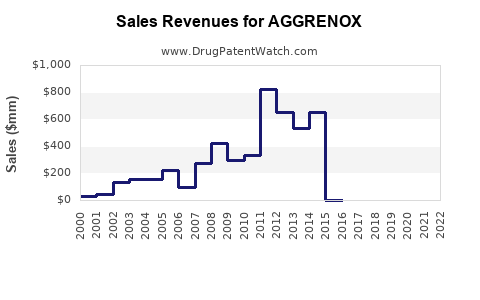
Boehringer Ingelheim does not consistently disclose Aggrenox as a separate line item in its public financial reporting. The company reports at a segment and product-portfolio level, with major products such as Spiriva, Pradaxa, Jardiance, and OFEV receiving greater disclosure. A precise current Aggrenox revenue figure therefore cannot be established from public company reporting.
Financial exposure by period
| Period |
Commercial condition |
Financial implication |
| Pre-generic period |
Branded fixed-dose product with formulation protection |
Higher price and stronger gross-margin profile |
| Paragraph IV period |
Litigation and uncertainty over timing of generic entry |
Risk to forward revenue and contracting leverage |
| Early generic period |
Multiple manufacturers enter or prepare to enter |
Rapid price and share erosion |
| Mature generic period |
Commodity-like multisource market |
Low branded revenue and limited pricing power |
Aggrenox is unlikely to be a material driver of Boehringer Ingelheim’s current financial performance. Its commercial value is more relevant as a historical example of lifecycle management around a formulation patent than as a current growth asset.
What generic launch scenarios exist for Aggrenox?
Scenario 1: Fully commoditized generic market
Multiple suppliers compete on price, with pharmacy substitution and payer preference moving volume away from the brand. This is the most likely long-term outcome.
Scenario 2: Limited-supplier market
Only a small number of manufacturers maintain reliable supply. Prices remain above pure commodity levels, and temporary shortages may preserve residual brand demand.
Scenario 3: Brand-retention niche
Some patients remain on branded Aggrenox because of tolerability history, prescriber preference, or concern about switching. This scenario supports limited residual revenue but not meaningful market power.
Scenario 4: Formulation-driven substitution
Patients receive separate aspirin and dipyridamole products when the fixed-dose capsule is unavailable or not covered. This shifts value from the branded product to pharmacy-level regimen management.
What manufacturing and IP barriers remain?
Patent barriers are largely exhausted, but manufacturing barriers remain operational.
Generic manufacturers must reproduce a technically complex product involving:
- Extended-release dipyridamole pellets.
- Immediate-release aspirin.
- Capsule filling and component segregation.
- Release-profile control.
- Stability management.
- Bioequivalence across the combination product.
These requirements can produce supply interruptions or limit the number of active suppliers. They do not, however, restore patent exclusivity. The most relevant barrier is manufacturing economics: a mature product with modest demand may attract fewer suppliers, while low prices can reduce incentives to maintain capacity.
Geographic protection is also limited. U.S. patent expiry does not automatically determine patent status in Europe, Japan, or other markets, because patent families, supplementary protection certificates, regulatory exclusivity, and national litigation differ. The U.S. market, however, no longer offers a durable patent-based monopoly for the historic Aggrenox formulation.
What licensing deals affect Aggrenox?
No major current licensing transaction is publicly identified as a material driver of Aggrenox’s commercial value. The product was associated primarily with Boehringer Ingelheim’s own development and commercialization activities rather than a widely disclosed current co-commercialization arrangement.
Any historical development, distribution, or regional commercialization arrangements would have limited present financial relevance after U.S. patent expiry and generic entry.
What patent litigation affects Aggrenox today?
No active U.S. patent litigation based on the expired core Aggrenox formulation patent is expected to create a material barrier to generic entry. Historical litigation remains relevant for understanding the timing and risk of generic commercialization, but it does not support current branded exclusivity.
The current legal exposure is more likely to involve ordinary product liability, labeling, supply, or commercial disputes than a live patent case capable of preserving a U.S. monopoly.
How does Aggrenox compare with clopidogrel?
| Factor |
Aggrenox |
Clopidogrel |
| Dosage |
Twice daily |
Generally once daily |
| Active ingredients |
Aspirin plus extended-release dipyridamole |
Single antiplatelet agent |
| Patent position |
Expired formulation protection |
Mature generic product |
| Tolerability |
Headache and gastrointestinal effects can limit use |
Bleeding and variable response concerns |
| Commercial position |
Niche generic combination |
Broad generic standard |
| Adherence |
More complex dosing |
Simpler dosing |
| Pricing |
Low after generic entry |
Low and highly competitive |
Clopidogrel has a broader commercial footprint because of once-daily dosing, extensive clinical familiarity, and generic availability. Aggrenox retains a role for patients and clinicians who prefer the aspirin-dipyridamole combination for secondary stroke prevention.
Key Takeaways
- Aggrenox is a mature fixed-dose combination of aspirin and extended-release dipyridamole.
- Its primary U.S. formulation patent, U.S. Patent No. 6,015,577, has expired.
- Generic entry has removed the principal patent-based barrier to competition.
- No biosimilar pathway applies because Aggrenox is a small-molecule combination product.
- Current competition comes from generic aspirin/dipyridamole products, clopidogrel, aspirin, and alternative antiplatelet regimens.
- Boehringer Ingelheim does not separately disclose current Aggrenox revenue in a way that supports a precise standalone financial estimate.
- The product’s current value is primarily clinical and operational, not a major branded pharmaceutical revenue asset.
- Manufacturing complexity may limit supplier count, but it does not recreate exclusivity.
- Historical Paragraph IV litigation involving the Aggrenox formulation patent is important for lifecycle analysis but has limited current legal impact.
FAQs
Is Aggrenox still sold under the brand name?
Brand availability may be limited by market and supplier decisions, while generic aspirin and extended-release dipyridamole products represent the principal U.S. commercial supply.
Is generic Aggrenox therapeutically equivalent to the brand?
FDA-approved generic versions must meet applicable pharmaceutical-equivalence and bioequivalence requirements to the reference listed drug. Product-level substitution depends on FDA rating and state pharmacy law.
Does Aggrenox have pediatric exclusivity?
Aggrenox is an adult secondary-stroke-prevention product. No current pediatric exclusivity period creates a meaningful barrier to generic competition.
Can separate aspirin and dipyridamole replace Aggrenox?
Clinicians may use separate products in some circumstances, but dose, release characteristics, adherence, and clinical appropriateness must match the intended regimen.
Is Aggrenox a biologic or eligible for biosimilar competition?
No. Aggrenox is an orally administered small-molecule combination product. Competition proceeds through the generic-drug pathway, primarily ANDAs, rather than the biosimilar pathway.
References
-
U.S. Food and Drug Administration. (2019). Aggrenox (aspirin/extended-release dipyridamole) prescribing information. https://www.accessdata.fda.gov/drugsatfda_docs/label/2019/020988s018lbl.pdf
-
U.S. Patent and Trademark Office. (1997). U.S. Patent No. 6,015,577: Pharmaceutical composition comprising acetylsalicylic acid and dipyridamole. https://patents.google.com/patent/US6015577
-
United States Court of Appeals for the Federal Circuit. (2010). Boehringer Ingelheim International GmbH v. Barr Laboratories, Inc., 592 F.3d 1340. https://law.justia.com/cases/federal/appellate-courts/Fed-Cir/09-1032/09-1032-2011-03-16.html
-
U.S. Food and Drug Administration. (2024). Approved drug products with therapeutic equivalence evaluations, Orange Book. https://www.fda.gov/drugs/drug-approvals-and-databases/approved-drug-products-therapeutic-equivalence-evaluations-orange-book