ACANYA Drug Patent Profile
✉ Email this page to a colleague
Which patents cover Acanya, and what generic alternatives are available?
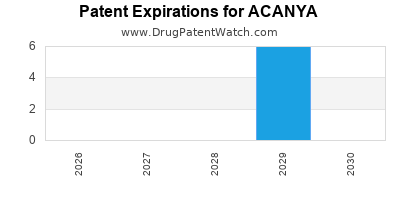
Acanya is a drug marketed by Bausch and is included in one NDA. There are six patents protecting this drug.
The generic ingredient in ACANYA is benzoyl peroxide; clindamycin phosphate. There is one drug master file entry for this compound. Fourteen suppliers are listed for this compound. Additional details are available on the benzoyl peroxide; clindamycin phosphate profile page.
DrugPatentWatch® Generic Entry Outlook for Acanya
There have been seven patent litigation cases involving the patents protecting this drug, indicating strong interest in generic launch. Recent data indicate that 63% of patent challenges are decided in favor of the generic patent challenger and that 54% of successful patent challengers promptly launch generic drugs.
Indicators of Generic Entry
AI Deep Research
Questions you can ask:
- What is the 5 year forecast for ACANYA?
- What are the global sales for ACANYA?
- What is Average Wholesale Price for ACANYA?
Summary for ACANYA
| US Patents: | 6 |
| Applicants: | 1 |
| NDAs: | 1 |
| Finished Product Suppliers / Packagers: | 2 |
| Raw Ingredient (Bulk) Api Vendors: | 1 |
| Clinical Trials: | 6 |
| Drug Prices: | Drug price information for ACANYA |
| Patent Litigation and PTAB cases: | See patent lawsuits and PTAB cases for ACANYA |
| What excipients (inactive ingredients) are in ACANYA? | ACANYA excipients list |
| DailyMed Link: | ACANYA at DailyMed |

Recent Clinical Trials for ACANYA
Identify potential brand extensions & 505(b)(2) entrants
| Sponsor | Phase |
|---|---|
| Taro Pharmaceuticals USA | Phase 1 |
| Watson Laboratories, Inc. | Phase 3 |
| Padagis LLC | Phase 3 |
Pharmacology for ACANYA
| Drug Class | Lincosamide Antibacterial |
| Physiological Effect | Decreased Sebaceous Gland Activity Neuromuscular Blockade |
US Patents and Regulatory Information for ACANYA
ACANYA is protected by six US patents.
| Applicant | Tradename | Generic Name | Dosage | NDA | Approval Date | TE | Type | RLD | RS | Patent No. | Patent Expiration | Product | Substance | Delist Req. | Exclusivity Expiration |
|---|---|---|---|---|---|---|---|---|---|---|---|---|---|---|---|
| Bausch | ACANYA | benzoyl peroxide; clindamycin phosphate | GEL;TOPICAL | 050819-001 | Oct 23, 2008 | AB | RX | Yes | Yes | 8,288,434 | ⤷ Start Trial | Y | ⤷ Start Trial | ||
| Bausch | ACANYA | benzoyl peroxide; clindamycin phosphate | GEL;TOPICAL | 050819-001 | Oct 23, 2008 | AB | RX | Yes | Yes | 10,624,918 | ⤷ Start Trial | ⤷ Start Trial | |||
| Bausch | ACANYA | benzoyl peroxide; clindamycin phosphate | GEL;TOPICAL | 050819-001 | Oct 23, 2008 | AB | RX | Yes | Yes | 8,895,070 | ⤷ Start Trial | ⤷ Start Trial | |||
| >Applicant | >Tradename | >Generic Name | >Dosage | >NDA | >Approval Date | >TE | >Type | >RLD | >RS | >Patent No. | >Patent Expiration | >Product | >Substance | >Delist Req. | >Exclusivity Expiration |
Expired US Patents for ACANYA
| Applicant | Tradename | Generic Name | Dosage | NDA | Approval Date | Patent No. | Patent Expiration |
|---|---|---|---|---|---|---|---|
| Bausch | ACANYA | benzoyl peroxide; clindamycin phosphate | GEL;TOPICAL | 050819-001 | Oct 23, 2008 | 5,733,886 | ⤷ Start Trial |
| Bausch | ACANYA | benzoyl peroxide; clindamycin phosphate | GEL;TOPICAL | 050819-001 | Oct 23, 2008 | 6,117,843 | ⤷ Start Trial |
| >Applicant | >Tradename | >Generic Name | >Dosage | >NDA | >Approval Date | >Patent No. | >Patent Expiration |
International Patents for ACANYA
When does loss-of-exclusivity occur for ACANYA?
Based on analysis by DrugPatentWatch, the following patents block generic entry in the countries listed below:
Australia
Patent: 09255679
Patent: Topical pharmaceutical formulations containing a low concentration of benzoyl peroxide in suspension in water and a water-miscible organic solvent
Estimated Expiration: ⤷ Start Trial
Brazil
Patent: 0913326
Patent: formulações farmacêuticas tópicas contendo uma baixa concentração de peróxido de benzoíla em suspensão aquosa e um solvente orgânico miscível em água
Estimated Expiration: ⤷ Start Trial
Canada
Patent: 23029
Patent: FORMULATIONS PHARMACEUTIQUES TOPIQUES CONTENANT UNE FAIBLE CONCENTRATION DE PEROXYDE DE BENZOYLE EN SUSPENSION DANS DE L'EAU ET UN SOLVANT ORGANIQUE MISCIBLE AVEC L'EAU (TOPICAL PHARMACEUTICAL FORMULATIONS CONTAINING A LOW CONCENTRATION OF BENZOYL PEROXIDE IN SUSPENSION IN WATER AND A WATER-MISCIBLE ORGANIC SOLVENT)
Estimated Expiration: ⤷ Start Trial
China
Patent: 2056481
Patent: Topical pharmaceutical formulations containing a low concentration of benzoyl peroxide in suspension in water and a water-miscible organic solvent
Estimated Expiration: ⤷ Start Trial
Croatia
Patent: 0200450
Estimated Expiration: ⤷ Start Trial
European Patent Office
Patent: 99810
Patent: FORMULATIONS PHARMACEUTIQUES TOPIQUES CONTENANT UNE FAIBLE CONCENTRATION DE PEROXYDE DE BENZOYLE EN SUSPENSION DANS DE L'EAU ET UN SOLVANT ORGANIQUE MISCIBLE AVEC L'EAU (TOPICAL PHARMACEUTICAL FORMULATIONS CONTAINING A LOW CONCENTRATION OF BENZOYL PEROXIDE IN SUSPENSION IN WATER AND A WATER-MISCIBLE ORGANIC SOLVENT)
Estimated Expiration: ⤷ Start Trial
Japan
Patent: 77693
Estimated Expiration: ⤷ Start Trial
Patent: 06272
Estimated Expiration: ⤷ Start Trial
Patent: 11522820
Patent: 水及び水混和性有機溶媒中に懸濁する低濃度過酸化ベンゾイルを含む局所用医薬品製剤
Estimated Expiration: ⤷ Start Trial
Patent: 15038093
Patent: 水及び水混和性有機溶媒中に懸濁する低濃度過酸化ベンゾイルを含む局所用医薬品製剤 (TOPICAL PHARMACEUTICAL FORMULATION CONTAINING LOW CONCENTRATION OF BENZOYL PEROXIDE IN SUSPENSION IN WATER AND WATER-MISCIBLE ORGANIC SOLVENT)
Estimated Expiration: ⤷ Start Trial
Mexico
Patent: 10013152
Patent: FORMULACIONES FARMACEUTICAS TOPICAS QUE CONTIENEN UNA BAJA CONCENTRACION DE PEROXIDO DE BENZOILO EN SUSPENSION EN AGUA Y UN SOLVENTE ORGANICO MISCIBE EN AGUA. (TOPICAL PHARMACEUTICAL FORMULATIONS CONTAINING A LOW CONCENTRATION OF BENZOYL PEROXIDE IN SUSPENSION IN WATER AND A WATER-MISCIBLE ORGANIC SOLVENT.)
Estimated Expiration: ⤷ Start Trial
Portugal
Patent: 99810
Estimated Expiration: ⤷ Start Trial
Russian Federation
Patent: 93847
Patent: ФАРМАЦЕВТИЧЕСКИЕ СОСТАВЫ ДЛЯ МЕСТНОГО ПРИМЕНЕНИЯ, СОДЕРЖАЩИЕ НИЗКУЮ КОНЦЕНТРАЦИЮ БЕНЗОИЛПЕРОКСИДА В СУСПЕНЗИИ В ВОДЕ И СМЕШИВАЮЩИМСЯ С ВОДОЙ ОРГАНИЧЕСКОМ РАСТВОРИТЕЛЕ (PHARMACEUTICAL FORMULATIONS FOR LOCAL APPLICATION CONTAINING LOW CONCENTRATIONS OF BENZOYL PEROXIDE IN SUSPENSION IN WATER AND WATER-MISCIBLE ORGANIC SOLVENT)
Estimated Expiration: ⤷ Start Trial
Patent: 45087
Patent: ФАРМАЦЕВТИЧЕСКИЕ СОСТАВЫ ДЛЯ МЕСТНОГО ПРИМЕНЕНИЯ, СОДЕРЖАЩИЕ НИЗКУЮ КОНЦЕНТРАЦИЮ БЕНЗОИЛПЕРОКСИДА В СУСПЕНЗИИ В ВОДЕ И СМЕШИВАЮЩИМСЯ С ВОДОЙ ОРГАНИЧЕСКОМ РАСТВОРИТЕЛЕ (PHARMACEUTICAL FORMULATIONS FOR LOCAL APPLICATION CONTAINING LOW CONCENTRATIONS OF BENZOYL PEROXIDE IN SUSPENSION IN WATER AND WATER-MISCIBLE ORGANIC SOLVENT)
Estimated Expiration: ⤷ Start Trial
Patent: 10146038
Patent: ФАРМАЦЕВТИЧЕСКИЕ СОСТАВЫ ДЛЯ МЕСТНОГО ПРИМЕНЕНИЯ, СОДЕРЖАЩИЕ НИЗКУЮ КОНЦЕНТРАЦИЮ БЕНЗОИЛПЕРОКСИДА В СУСПЕНЗИИ В ВОДЕ И СМЕШИВАЮЩИМСЯ С ВОДОЙ ОРГАНИЧЕСКОМ РАСТВОРИТЕЛЕ (PHARMACEUTICAL FORMULATIONS FOR LOCAL APPLICATION CONTAINING LOW CONCENTRATIONS OF BENZOYL PEROXIDE IN SUSPENSION IN WATER AND WATER-MISCIBLE ORGANIC SOLVENT)
Estimated Expiration: ⤷ Start Trial
Patent: 13122395
Patent: ФАРМАЦЕВТИЧЕСКИЕ СОСТАВЫ ДЛЯ МЕСТНОГО ПРИМЕНЕНИЯ, СОДЕРЖАЩИЕ НИЗКУЮ КОНЦЕНТРАЦИЮ БЕНЗОИЛПЕРОКСИДА В СУСПЕНЗИИ В ВОДЕ И СМЕШИВАЮЩИМСЯ С ВОДОЙ ОРГАНИЧЕСКОМ РАСТВОРИТЕЛЕ (PHARMACEUTICAL FORMULATIONS FOR LOCAL APPLICATION CONTAINING LOW CONCENTRATIONS OF BENZOYL PEROXIDE IN SUSPENSION IN WATER AND WATER-MISCIBLE ORGANIC SOLVENT)
Estimated Expiration: ⤷ Start Trial
South Africa
Patent: 1008265
Patent: TOPICAL PHARMACEUTICAL FORMULATIONS CONTAINING A LOW CONCENTRATION OF BENZOYL PEROXIDE IN SUSPENSION IN WATER AND A WATER-MISCIBLE ORGANIC SOLVENT
Estimated Expiration: ⤷ Start Trial
South Korea
Patent: 110014651
Patent: TOPICAL PHARMACEUTICAL FORMULATIONS CONTAINING A LOW CONCENTRATION OF BENZOYL PEROXIDE IN SUSPENSION IN WATER AND A WATER-MISCIBLE ORGANIC SOLVENT
Estimated Expiration: ⤷ Start Trial
Spain
Patent: 73931
Estimated Expiration: ⤷ Start Trial
Generics may enter earlier, or later, based on new patent filings, patent extensions, patent invalidation, early generic licensing, generic entry preferences, and other factors.
See the table below for additional patents covering ACANYA around the world.
| Country | Patent Number | Title | Estimated Expiration |
|---|---|---|---|
| Australia | 2009255679 | ⤷ Start Trial | |
| Brazil | PI0913326 | ⤷ Start Trial | |
| Canada | 2723029 | FORMULATIONS PHARMACEUTIQUES TOPIQUES CONTENANT UNE FAIBLE CONCENTRATION DE PEROXYDE DE BENZOYLE EN SUSPENSION DANS DE L'EAU ET UN SOLVANT ORGANIQUE MISCIBLE AVEC L'EAU (TOPICAL PHARMACEUTICAL FORMULATIONS CONTAINING A LOW CONCENTRATION OF BENZOYL PEROXIDE IN SUSPENSION IN WATER AND A WATER-MISCIBLE ORGANIC SOLVENT) | ⤷ Start Trial |
| >Country | >Patent Number | >Title | >Estimated Expiration |
Supplementary Protection Certificates for ACANYA
| Patent Number | Supplementary Protection Certificate | SPC Country | SPC Expiration | SPC Description |
|---|---|---|---|---|
| 1458369 | CA 2008 00029 | Denmark | ⤷ Start Trial | PRODUCT NAME: ADAPALEN, BENZOYLPEROXID |
| 1458369 | SPC/GB10/005 | United Kingdom | ⤷ Start Trial | PRODUCT NAME: ADAPALENE AND BENZOYL PEROXIDE; REGISTERED: DK 40440 20071218; UK PL10590/0057 20091111 |
| 1458369 | C01458369/01 | Switzerland | ⤷ Start Trial | PRODUCT NAME: ADAPALENUM + BENZOYLIS PEROXIDUM; REGISTRATION NUMBER/DATE: SWISSMEDIC 58460 19.05.2009 |
| >Patent Number | >Supplementary Protection Certificate | >SPC Country | >SPC Expiration | >SPC Description |
Acanya Market Dynamics and Financial Trajectory: FDA Status, Generic Competition, Patents, and Commercial Outlook
More… ↓
Make Better Decisions: Try a trial or see plans & pricing
Drugs may be covered by multiple patents or regulatory protections. All trademarks and applicant names are the property of their respective owners or licensors. Although great care is taken in the proper and correct provision of this service, thinkBiotech LLC does not accept any responsibility for possible consequences of errors or omissions in the provided data. The data presented herein is for information purposes only. There is no warranty that the data contained herein is error free. We do not provide individual investment advice. This service is not registered with any financial regulatory agency. The information we publish is educational only and based on our opinions plus our models. By using DrugPatentWatch you acknowledge that we do not provide personalized recommendations or advice. thinkBiotech performs no independent verification of facts as provided by public sources nor are attempts made to provide legal or investing advice. Any reliance on data provided herein is done solely at the discretion of the user. Users of this service are advised to seek professional advice and independent confirmation before considering acting on any of the provided information. thinkBiotech LLC reserves the right to amend, extend or withdraw any part or all of the offered service without notice.
ISSN: 2162-2639

Privacy and Cookies
Terms & Conditions
Site Map
DrugPatentWatch Alternatives
LOE / Major Patent Expirations 2026 - 2027
NCE-1 Patent Challenge Dates 2026 - 2027
Friedman, Yali. "DrugPatentWatch" DrugPatentWatch, thinkBiotech, 2026, www.DrugPatentWatch.com.
See Primary Research Papers Citing DrugPatentWatch