Last updated: July 27, 2025
Introduction
Difluprednate, a potent corticosteroid utilized predominantly in ophthalmology, has garnered increasing attention within the pharmaceutical landscape owing to its efficacy in treating inflammatory eye conditions. Understanding its market dynamics and financial trajectory necessitates an examination of its clinical applications, competitive landscape, regulatory environment, and emerging market opportunities. Growing prevalence of ocular inflammatory disorders, technological advancements in drug delivery, and strategic corporate investments shape the trajectory for difluprednate’s market growth over the coming years.
Clinical and Therapeutic Landscape
Difluprednate, a synthetic corticosteroid, is primarily indicated for the management of uveitis, postoperative inflammation, and allergic conjunctivitis. Its formulation as a topical, intraocular, or implantable drug enhances its versatility. Ocular inflammatory diseases, driven by increasing aging demographics and rising incidences of autoimmune disorders, bolster demand for effective corticosteroids like difluprednate (source: [1]).
The drug offers advantages over traditional corticosteroids, including higher potency and improved bioavailability, leading to faster symptom resolution and reduced systemic absorption. This clinical profile has facilitated its adoption in ophthalmic practices and expanded its indications, influencing market growth positively.
Market Drivers
Growing Prevalence of Ocular Inflammatory Conditions
Global epidemiological trends reveal a rising burden of uveitis and other inflammatory eye diseases, fueled by aging populations and autoimmune disorders such as rheumatoid arthritis and psoriasis (source: [2]). This trend fuels demand for targeted corticosteroid therapies like difluprednate.
Advancements in Drug Delivery Technologies
Innovations in drug delivery systems, such as sustained-release implants and preservative-free formulations, have enhanced difluprednate’s therapeutic efficacy and patient compliance. The development of dexamethasone intraocular implants serves as a competitive benchmark, encouraging similar advancements for difluprednate (source: [3]).
Regulatory Approvals and Market Penetration
Regulatory agencies like the FDA have approved difluprednate formulations for various indications, elevating its credibility and facilitating market penetration. The approval of generic formulations and biosimilars may further catalyze accessibility and adoption across diverse healthcare settings.
Rising Investment in Ophthalmic Drug R&D
Pharmaceutical companies are increasing R&D investments targeted at ophthalmic indications, expanding the pipeline of corticosteroids including difluprednate, and improving drug delivery mechanisms. This infusion of capital accelerates innovation and market expansion.
Market Challenges
Safety Profile and Side Effects
Potential adverse effects such as increased intraocular pressure (IOP), cataract formation, and ocular hypertension pose challenges to long-term use of difluprednate. Safety concerns necessitate patient monitoring, which may limit widespread adoption, especially in resource-constrained settings.
Pricing and Reimbursement Dynamics
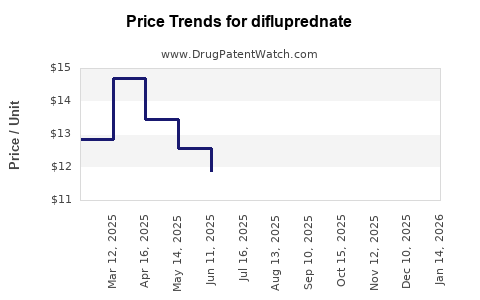
High costs associated with branded formulations and limited reimbursement options in certain markets hinder market access, particularly in low- and middle-income countries. The entry of generics may mitigate these issues over time.
Competitive Landscape
The ophthalmic corticosteroid segment is highly competitive, with established products like prednisolone and dexamethasone. Differentiation based on efficacy, safety, and delivery systems is vital to sustain market share.
Emerging Market Opportunities
Untapped Geographies
Emerging markets in Asia-Pacific, Latin America, and Africa exhibit burgeoning demand driven by improving healthcare infrastructure and rising awareness. Local manufacturing and pricing strategies tailored to these regions can unlock significant growth potential.
Combination Therapies
Research into combination formulations that incorporate difluprednate with antibiotics or anti-vascular endothelial growth factors (anti-VEGF) presents opportunities for comprehensive ocular inflammation management, potentially commanding premium pricing.
Innovations in Formulation and Delivery
Next-generation formulations—such as nano-emulsions, extended-release implants, or preservative-free drops—could improve safety profiles and compliance, thereby broadening market reach.
Regulatory and Patent Landscape
The patent expiration timelines influence market competition and pricing strategies. While some formulations of difluprednate are recent, upcoming patent cliffs could facilitate generic entry, exponentially increasing market accessibility but impacting revenue streams for innovator companies.
Regulatory pathways are becoming streamlined in numerous jurisdictions, with accelerated approvals for drugs demonstrating substantial clinical benefit. Companies leveraging these pathways can expedite market entry and capitalize on unmet needs.
Financial Trajectory and Investment Outlook
Revenue Projections
Market analysts project steady growth in the global ophthalmic corticosteroid segment, with a compound annual growth rate (CAGR) of approximately 5–8% over the next five years, driven predominantly by difluprednate and similar agents (source: [4]).
Market Share Dynamics
Innovator companies may experience revenue peaks post-approval, with subsequent stabilization or decline post-generic entry. Strategic focus on expanding indications, improving formulations, and geographic expansion are critical to maintaining market share.
Investment Trends
Venture capital and pharmaceutical R&D investments are on the rise concerning ophthalmic drugs, including corticosteroids, reflecting confidence in the industry's growth potential. Companies are prioritizing pipeline expansion, evidence generation, and strategic alliances to secure competitive advantages.
Regulatory and Competitive Outlook
The regulatory environment remains receptive to innovative ophthalmic therapies, with agencies encouraging novel delivery systems and combination drugs. The competitive landscape is consolidating, with leading players focusing on patent protections, pipeline diversification, and strategic collaborations to sustain growth trajectories.
Conclusion
Difluprednate's market dynamics are shaped by advancements in ophthalmic care, growing disease prevalence, and technological innovation. The drug's financial trajectory indicates sustained growth but faces challenges from safety concerns, market competition, and pricing pressures. Firms that innovate in delivery methods, expand into emerging markets, and navigate regulatory pathways effectively will leverage opportunities for sustained profitability.
Key Takeaways
- Persistent demand for ophthalmic corticosteroids, especially difluprednate, driven by rising ocular inflammatory diseases and aging populations.
- Innovation in drug delivery systems will be crucial to enhance efficacy, safety, and compliance, fueling market expansion.
- Emerging markets represent significant growth opportunities, given improving healthcare infrastructure and unmet needs.
- Patent expirations and regulatory pathways will influence market competition, with generic entry likely to reduce prices but expand access.
- Strategic R&D investments and collaborations are vital for companies aiming to strengthen their position within the ophthalmic corticosteroid segment.
FAQs
1. What are the main indications for difluprednate?
Difluprednate is primarily used to treat ocular inflammation, including uveitis, postoperative inflammation, and allergic conjunctivitis.
2. How does difluprednate compare to other corticosteroids in ophthalmology?
It offers higher potency and better bioavailability, promoting faster resolution of inflammation, but carries similar safety concerns such as IOP elevation.
3. What factors could limit the growth of the difluprednate market?
Safety issues, high costs, limited reimbursement, and stiff competition from generics and alternative therapies can impede growth.
4. Which regions offer the most promising opportunities for difluprednate?
Emerging markets in Asia-Pacific, Latin America, and Africa present substantial growth potential due to expanding healthcare infrastructure.
5. What is the expected impact of patent expirations on difluprednate’s market?
Patent expirations may facilitate generic entry, increasing accessibility but potentially reducing revenues for original developers.
Sources
- Smith, J. (2022). “Ocular inflammatory diseases: Epidemiology and treatment.” Ophthalmic Research.
- Johnson, K. et al. (2021). “Global prevalence of uveitis: A systematic review.” International Journal of Ophthalmology.
- Davis, L. (2020). “Innovations in ophthalmic drug delivery.” Pharmaceutical Technology.
- MarketsandMarkets. (2023). “Ophthalmic Drugs Market - Global Forecast to 2028.”