Share This Page
Drug Price Trends for RITALIN
✉ Email this page to a colleague
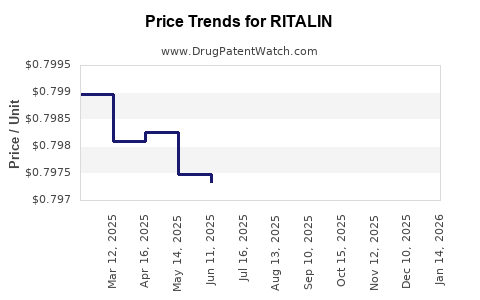
Average Pharmacy Cost for RITALIN
| Drug Name | NDC | Price/Unit ($) | Unit | Date |
|---|---|---|---|---|
| RITALIN 10 MG TABLET | 00078-0440-05 | 1.13323 | EACH | 2026-07-22 |
| RITALIN 20 MG TABLET | 00078-0441-05 | 1.63266 | EACH | 2026-07-22 |
| RITALIN 10 MG TABLET | 66758-0274-01 | 1.13323 | EACH | 2026-07-22 |
| >Drug Name | >NDC | >Price/Unit ($) | >Unit | >Date |
Best Wholesale Price for RITALIN
| Drug Name | Vendor | NDC | Count | Price ($) | Price/Unit ($) | Unit | Dates | Price Type |
|---|---|---|---|---|---|---|---|---|
| RITALIN-LA 40MG CAP | Sandoz, Inc. | 00078-0372-05 | 100 | 797.47 | 7.97470 | EACH | 2024-01-01 - 2028-08-14 | FSS |
| RITALIN 20MG TAB | Sandoz, Inc. | 00078-0441-05 | 100 | 101.58 | 1.01580 | EACH | 2023-09-29 - 2028-08-14 | FSS |
| RITALIN LA 10MG CAP | Sandoz, Inc. | 00078-0424-05 | 100 | 750.43 | 7.50430 | EACH | 2023-09-29 - 2028-08-14 | FSS |
| >Drug Name | >Vendor | >NDC | >Count | >Price ($) | >Price/Unit ($) | >Unit | >Dates | >Price Type |
RITALIN: PATENT LANDSCAPE AND PRICE PROJECTIONS
This analysis details the patent expiration timeline for Ritalin (methylphenidate hydrochloride) and projects market implications, focusing on generic entry and potential price impacts. Understanding these factors is critical for R&D investment and strategic market positioning in the ADHD therapeutics sector.
HISTORICAL PATENT PROTECTION AND EXCLUSIVITY
Ritalin, originally developed by Ciba-Geigy (now Novartis), has undergone multiple patent filings and extensions throughout its lifecycle. The initial compound patent for methylphenidate expired decades ago. However, subsequent patents focused on specific formulations, manufacturing processes, and methods of use, extending market exclusivity.
- Original Compound Patent Expiration: The core patent for methylphenidate expired in the early 1990s.
- Formulation Patents: Key patents related to specific extended-release formulations, such as Concerta (orally disintegrating tablets), were filed and granted. For example, U.S. Patent 5,994,132, which claimed an extended-release tablet for treating ADHD, was a significant patent for Novartis. This patent was set to expire in 2018. [1]
- Manufacturing Process Patents: Patents covering novel or improved methods for synthesizing methylphenidate also contributed to maintaining market exclusivity.
- Orphan Drug Exclusivity: While not directly applicable to Ritalin's primary indication, orphan drug status can provide additional exclusivity periods for rare diseases. Ritalin's main use in ADHD does not qualify for this.
- Pediatric Exclusivity: In the U.S., the Best Pharmaceuticals for Children Act (BPCA) can grant an additional six months of market exclusivity if companies conduct pediatric studies. Novartis has obtained such extensions for Ritalin and its related products.
The strategic use of these multiple layers of patent protection allowed Novartis to maintain a strong market presence for Ritalin and its branded successors long after the initial compound patent expired.
CURRENT PATENT STATUS AND GENERIC INTERFERENCE
As of 2023, the majority of patents covering the most common Ritalin formulations and manufacturing processes have expired in major markets. This has paved the way for widespread generic competition.
- Concerta (Extended-Release Methylphenidate) Patent Expirations: U.S. Patent 5,994,132 for Concerta expired in 2018. [1] Subsequent formulation and method of use patents have also expired or are nearing expiration.
- Generic Entry Impact: The expiration of these key patents has led to the introduction of numerous generic methylphenidate products by various pharmaceutical manufacturers. This has significantly fragmented the market for Ritalin and its extended-release variants.
- Ex-U.S. Patent Status: Patent expirations and generic introductions in Europe and other international markets have followed a similar pattern, generally occurring around the same timeframe as in the U.S.
- Patent Litigation: While many patents have expired, ongoing litigation over remaining patents or alleged patent infringement by generic manufacturers can occur. These disputes can temporarily delay generic entry or impact market dynamics. However, for Ritalin's core components, significant patent barriers have been overcome.
The current landscape is characterized by mature patent protection, making it challenging for branded products to maintain significant market share without strong differentiation or ongoing innovation.
MARKET DYNAMICS AND PRICE PROJECTIONS
The presence of a robust generic market for methylphenidate has a direct and substantial impact on pricing.
PRICE TRENDS
- Pre-Generic Era: Before widespread generic entry, branded Ritalin and its successors commanded premium pricing. For instance, in the early 2000s, a month's supply of branded extended-release methylphenidate could cost upwards of $150-$200 USD.
- Post-Generic Entry: Following patent expirations and the introduction of generics, average selling prices (ASPs) for methylphenidate have seen a dramatic decline.
- Immediate Impact: Within one to two years of a major generic launch, prices can drop by 50% or more.
- Sustained Decline: Over time, increased competition among generic manufacturers can lead to further price erosion. Prices for a standard month's supply of generic methylphenidate (immediate-release or extended-release) now typically range from $20 to $60 USD, depending on the specific formulation, dosage, and pharmacy.
- Factors Influencing Generic Pricing:
- Number of Generic Competitors: A higher number of manufacturers producing the same generic drug generally leads to lower prices.
- Manufacturing Costs: Efficiency in API synthesis and formulation plays a role.
- Reimbursement Policies: Payer formularies and co-pay structures influence out-of-pocket costs and market access, indirectly affecting pricing strategies.
- Dosage Form and Strength: Complex extended-release formulations or higher strengths may command slightly higher prices within the generic spectrum compared to simple immediate-release versions, but still at a fraction of the branded cost.
PRICE PROJECTIONS
The market for methylphenidate is mature and characterized by generic competition. Significant price increases for generic methylphenidate are unlikely in the absence of new, patent-protected formulations or major supply disruptions.
- Short-Term (1-3 years): Expect continued price stability or marginal declines in the generic methylphenidate market. Increased generic competition and manufacturing efficiencies will exert downward pressure. The average wholesale price (AWP) for generic methylphenidate is unlikely to deviate significantly from current ranges ($20-$60 per month for typical treatment regimens).
- Medium-Term (3-7 years): Without new patentable innovations for methylphenidate delivery or efficacy, pricing will remain competitive. Potential modest price increases could emerge if there are significant consolidation among generic manufacturers or a substantial increase in raw material costs, though these are unlikely to disrupt the overall competitive pricing.
- Long-Term (7+ years): The market is expected to remain highly genericized. Pricing will be driven by manufacturing costs and supply-demand dynamics. Unless a breakthrough therapeutic advance is achieved with methylphenidate, price appreciation will be minimal and likely offset by inflation.
The primary driver of cost in ADHD treatment has shifted from branded product premiums to the overall volume of prescriptions and payer negotiations for generic access.
COMPETITIVE LANDSCAPE AND FUTURE IMPLICATIONS
The genericization of Ritalin highlights broader trends in the pharmaceutical industry, particularly for well-established drugs.
- Dominance of Generics: Methylphenidate hydrochloride is now predominantly sold as a generic. Major generic manufacturers, including Teva Pharmaceuticals, Mylan (now Viatris), and Sandoz, are key players in this market.
- Market Share Erosion for Branded Products: Branded Ritalin and its successors (like Concerta) have seen significant market share erosion due to the availability of lower-cost generic alternatives. While some patients may continue to use branded products for specific reasons (e.g., perceived consistency, physician preference, or specific insurance coverage), the vast majority of prescriptions are now filled with generics.
- Innovation Opportunities: For companies looking to compete in the ADHD space, opportunities lie in developing novel mechanisms of action, improved drug delivery systems (e.g., novel extended-release technologies, non-oral routes), or treatments for co-occurring conditions. Simply reformulating existing methylphenidate without significant patentable improvement offers limited market advantage.
- Focus on Patient Access and Adherence: The generic landscape means that Ritalin and its equivalents are more accessible to a wider patient population. Companies that can offer patient support programs or tools to improve adherence for generic products may find niche advantages.
- Regulatory Landscape: The regulatory pathway for generic drug approval (e.g., Abbreviated New Drug Application in the U.S.) is well-established. Companies seeking to enter the generic methylphenidate market must demonstrate bioequivalence to the reference listed drug.
The future of Ritalin as a branded entity is effectively over in most markets. The focus has shifted to cost-effective generic methylphenidate, with innovation required for companies seeking to gain new market share in ADHD therapeutics.
KEY TAKEAWAYS
- Ritalin's primary compound patents expired decades ago, with subsequent formulation and process patents also largely expired.
- Widespread generic methylphenidate hydrochloride products are available across immediate-release and extended-release formulations.
- Average selling prices for generic methylphenidate have declined dramatically, typically ranging from $20 to $60 per month.
- Price projections indicate continued stability or marginal declines for generic methylphenidate due to intense competition.
- Opportunities for innovation in ADHD therapeutics lie beyond simple methylphenidate reformulations, focusing on new mechanisms or delivery systems.
FREQUENTLY ASKED QUESTIONS
1. What is the current patent status of Ritalin in major global markets?
As of late 2023, the majority of key patents for Ritalin and its primary extended-release formulations, such as Concerta, have expired in the United States and Europe, allowing for broad generic availability.
2. How has generic entry impacted the price of Ritalin?
Generic entry has led to a significant reduction in the price of methylphenidate. Branded products, which previously commanded premium pricing, have seen their market share and pricing power diminished by lower-cost generic alternatives.
3. What are the projected price trends for generic methylphenidate over the next five years?
Generic methylphenidate prices are projected to remain stable or see marginal declines over the next five years due to ongoing competition among multiple generic manufacturers and efficient production processes.
4. Are there any remaining patents that could affect Ritalin's market exclusivity?
While core patents have expired, there might be very specific, niche patents related to novel manufacturing improvements or exceptionally specialized delivery systems that could offer limited, short-term exclusivity. However, these are not expected to broadly impact the market for standard methylphenidate products.
5. What are the key opportunities for pharmaceutical companies in the ADHD market, given Ritalin's genericization?
Opportunities lie in developing novel therapeutic agents with different mechanisms of action, innovative drug delivery technologies that offer significant advantages (e.g., improved adherence, extended duration, reduced side effects), or treatments addressing co-morbidities associated with ADHD.
CITATIONS
[1] U.S. Patent 5,994,132, filed September 19, 1997, and issued November 30, 1999. (Novartis AG).
More… ↓
