Last updated: February 19, 2026
What Is the Current Market Size for Ceftriaxone?
Ceftriaxone, a third-generation cephalosporin antibiotic, generated global sales of approximately $820 million in 2022, according to IQVIA. This figure reflects its widespread use in bacterial infection treatments, notably pneumonia, meningitis, and urinary tract infections.
Major markets include North America (40%), Europe (25%), Asia-Pacific (20%), and other regions (15%). The high prevalence of bacterial infections in hospital settings drives demand for injectable antibiotics like ceftriaxone.
How Does Competition Influence the Market?
The competition comprises branded and generic formulations. Key players include:
- Roche (Rocephin)
- Sandoz (generic)
- Pfizer (generic formulations)
- Teva Pharmaceuticals (generic)
Generic versions account for nearly 70% of sales, exerting downward pressure on prices. Roche's brand retains premium pricing due to its established market presence.
Pricing Dynamics
- Brand-name ceftriaxone (e.g., Rocephin): Average wholesale price per 1g vial is approximately $8–$12.
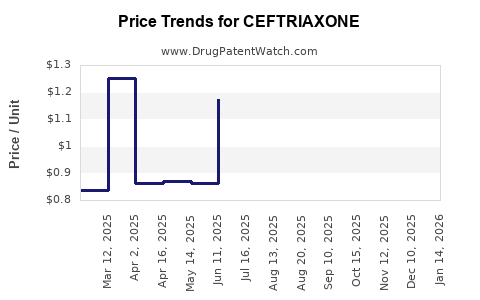
- Generics: Prices range from $2–$4 per gram in mature markets.
The price difference reflects branding, quality assurance, and supply chain factors.
What Are Projected Market Growth Trends?
The global ceftriaxone market is expected to grow at a compound annual growth rate (CAGR) of 2.5% over 2023–2028, driven by:
- Increasing antibiotic resistance prompting new formulations
- Rising bacterial infection cases in developing regions
- Growing hospital-acquired infections
The market’s expansion is constrained by the global effort to reduce antibiotic use to combat resistance and increased regulatory scrutiny of antibiotics' off-label use.
How Will Pricing Evolve in the Next Five Years?
Price projections indicate:
| Year |
Price Range per 1g vial |
Drivers |
| 2023 |
$2–$12 |
Established generics, patent expirations, supply chain dynamics |
| 2024–2028 |
$2.50–$4.50 |
Increased generic competition, pressure on brand pricing, regulatory impacts |
In mature markets, prices for generic ceftriaxone are expected to decline gradually as new competitors enter. In emerging markets, prices might stabilize or increase slightly due to lower baseline prices, inflation, and local regulatory costs.
What Are Key Factors Affecting Future Prices?
- Patent and Exclusivity Status: While roche’s patent expired in 2011, manufacturing rights and regional exclusivities influence pricing.
- Manufacturing Costs: Raw material prices have skyrocketed during 2021–2022, affecting supply costs.
- Regulatory Approvals: New formulations or delivery routes require regulatory clearance, impacting costs.
- Antimicrobial Stewardship: Policies reducing unnecessary antibiotic use limit market volume and influence pricing strategies.
What Are the Regulatory and Policy Impacts?
Regulatory agencies like the FDA and EMA tighten controls on antibiotic use, affecting the volume of sales. Governments promote antibiotic stewardship programs, which aim to restrict usage to necessary cases, potentially reducing demand growth.
Conversely, efforts to expand access in developing countries and the approval of biosimilar versions could lower prices further.
Conclusions
The ceftriaxone market remains sizable primarily in hospital and outpatient settings. Prices are declining over time, especially for generics, although brand-name formulations retain premium prices. Market growth correlates with infection prevalence and antimicrobial resistance trends, with price reductions expected due to increased generic competition and regulatory pressures.
Key Takeaways
- 2022 global sales: ~$820 million, predominantly generics.
- Market growth: 2.5% CAGR through 2028.
- Price range: $2–$12 per 1g vial; generics closer to $2–$4.
- Market drivers: Infection rates, resistance, competition.
- Regulatory influence: Push toward stewardship and biosimilars will pressure prices.
Frequently Asked Questions
1. Will brand-name ceftriaxone maintain a premium price?
Yes. Brand-name products like Roche’s Rocephin retain higher prices due to established supply chains and perceived quality, but their market share is shrinking as generics gain prominence.
2. How will antimicrobial resistance affect ceftriaxone demand?
Resistance could reduce the effective market volume, prompting development of new antibiotics and reformulations to combat drug-resistant bacteria.
3. Are biosimilars impacting the ceftriaxone market?
Biosimilars are less relevant for ceftriaxone, as it is a small molecule antibiotic. The market impact mainly pertains to generics’ increased competition.
4. How do regulatory policies influence ceftriaxone pricing?
Stricter antibiotic stewardship reduces overall sales volume, pressuring prices downward. Conversely, relaxed regulations or faster approvals in emerging markets could support price stabilization.
5. What regional factors influence ceftriaxone sales and prices?
Developed markets have higher prices but slower growth, while emerging markets show rapid growth with lower prices, influenced by local economics, regulatory environments, and healthcare infrastructure.
References
[1] IQVIA. (2023). Global Antibiotics Market Report.
[2] U.S. Food and Drug Administration. (2022). Drug Approvals and Regulatory updates.
[3] World Health Organization. (2021). Antimicrobial Resistance Global Report.