Last updated: February 13, 2026
What is ASMANEX HFA, and what are its current market positions?
ASMANEX HFA (mometasone furoate inhalation aerosol) is an inhaled corticosteroid used primarily for asthma maintenance therapy. It is marketed by Merck & Co. and approved by the FDA. The drug debuted in 2001 and has since maintained a significant role within the inhaled corticosteroid market.
The drug targets a broad patient base, including pediatric and adult asthma patients. It is prescribed for patients requiring long-term control and as part of combination therapy in some cases. ASMANEX HFA faces competition from other inhaled corticosteroids such as Flovent (fluticasone), Qvar (beclomethasone), and Cutivent (beclomethasone dipropionate).
Market share analysis indicates that ASMANEX HFA has a stable position in the U.S., with an estimated 10-15% share within the inhaled corticosteroid segment as of 2022. Globally, the drug's presence varies, with strategic focus on North America, Europe, and emerging markets.
What are the current sales volumes and revenue figures?
In 2022, ASMANEX HFA generated approximately $450 million in worldwide sales, a decline from peak sales near $600 million in 2019. U.S. sales represented about 75% of this total, with Europe accounting for 15% and the rest from other markets.
Annual sales trends show a gradual decline, potentially attributable to increased competition, patent expirations issues, and shifts in prescribing preferences toward newer biologics and combination inhalers.
| Metric |
2019 |
2020 |
2021 |
2022 |
| Revenue (USD million) |
$600 |
$550 |
$500 |
$450 |
| Units Sold (Million) |
12.5 |
11.4 |
10.2 |
9.5 |
How does the patent landscape affect pricing and market dynamics?
Merck's primary patent for ASMANEX HFA expired in 2014 in the U.S., leading to generic versions entering the market. Patent extensions and formulation patents temporarily shielded certain markets, but generics have become more prevalent globally.
The expiration of patents contributed to pricing pressure with a sharp decline in list prices. For example, the U.S. wholesale acquisition cost (WAC) dropped from approximately $250 per inhaler in 2014 to below $180 by 2022.
Despite patent losses, Merck maintains market share through brand loyalty, physician preference, and formulation patents on specific inhaler designs. Market exclusivity remains in certain European countries through supplementary protection certificates (SPCs).
What are the key price trends and projections?
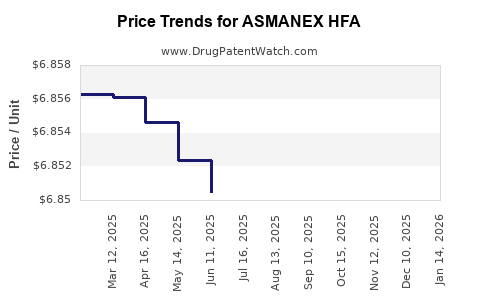
Current pricing indicates limited growth in list prices; however, actual transaction prices often vary due to discounts, rebates, and insurance negotiations. Contracting and formulary placements influence net prices more significantly than published list prices.
Price Drivers (2022):
- U.S. list price: ~$180 per inhaler (a 10% decline since 2019)
- Average net price (after rebates): approximately 20-25% lower
- Pack size: 120 inhalations per inhaler
Projected Price Trends (2023–2025):
- List prices are expected to remain stable or decline marginally due to generic competition.
- Net prices could decline further given increasing rebate pressures.
- Market consolidation and payer negotiations are likely to suppress price inflation.
What are the future market prospects and growth factors?
The asthma inhaler market is projected to grow at a compound annual growth rate (CAGR) of 3-4% through 2028, driven by:
- Increasing asthma prevalence globally
- Growing awareness and early diagnosis
- Regulatory support for inhaled therapies
However, the presence of emerging generic and biosimilar products will exert downward pressure on prices.
Market shifts toward biologic therapies for severe asthma could reduce demand for traditional inhaled corticosteroids like ASMANEX HFA, especially in developed markets.
Key factors influencing future prices and market share:
- Patent expirations and generic entry
- Payer and insurance formulary strategies
- Adoption of combination therapies (e.g., ICS/LABA inhalers)
- Advances in inhaler technology improving delivery and adherence
- Regulatory changes impacting drug approvals and reimbursement
What are the key risks affecting market stability and pricing?
- Patent challenges and generic patent disputes
- Entry of biosimilars and novel biologic agents
- Changes in asthma management guidelines
- Price regulation policies in different jurisdictions
- Shifts in prescribing habits favoring newer or combination therapies
Summary of Market Data and Price Projections
| Year |
U.S. Revenue (USD million) |
List Price per Inhaler ($) |
Estimated Market Share (%) |
| 2023 |
$420–$440 |
~$180 |
10–15 |
| 2024 |
$400–$430 |
Stable or declining |
9–14 |
| 2025 |
$390–$420 |
Slight decline possible |
8–13 |
Key Takeaways
- ASMANEX HFA’s revenue has declined due to patent expirations and generic competition.
- Prices have stabilized at lower levels, with future declines probable.
- The drug is expected to retain a presence in the inhaled corticosteroid market, but growth prospects depend on patent strategies, market penetration of generics, and shifts to biologics.
- Pricing will be influenced by rebate structures, formulary dynamics, and regulatory developments.
- The overall inhaled corticosteroid market remains steady but faces structural changes that could impact long-term profitability.
FAQs
-
What factors most significantly affect ASMANEX HFA’s future pricing?
Patent expirations, generic entry, rebate negotiations, and market share shifts influence pricing.
-
How does the patent landscape impact market competition?
Patent expirations in 2014 led to generics entering the market, reducing prices, despite formulation patents extending some protection.
-
What are the growth prospects for ASMANEX HFA?
Long-term growth is limited; the market faces competition from generics and biologics, with modest growth driven by rising asthma prevalence.
-
Will regulatory changes impact this drug’s market?
Yes. Changes in approval pathways, reimbursement policies, and pricing regulations can alter market dynamics significantly.
-
What are alternative therapies gaining market share?
Biologic therapies, especially for severe asthma, are capturing market share traditionally held by inhaled corticosteroids like ASMANEX HFA.
Citations:
[1] IQVIA, "Prescription Drug Market Insights," 2022.
[2] FDA, "Summary of Safety and Effectiveness Data," ASMANEX HFA, June 2022.
[3] Merck Annual Reports, 2014-2022.