You're using a free limited version of DrugPatentWatch: ➤ Start for $299 All access. No Commitment.

Last Updated: December 16, 2025

PROCRIT Drug Profile


✉ Email this page to a colleague

« Back to Dashboard


Summary for Tradename: PROCRIT
High Confidence Patents:5
Applicants:1
BLAs:1
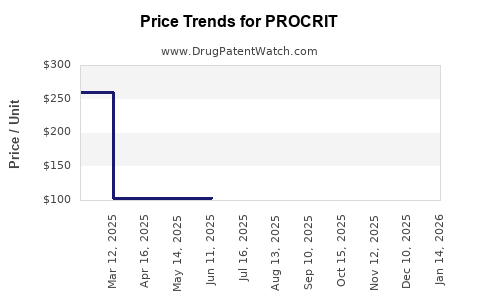
Drug Prices: Drug price information for PROCRIT
Pharmacology for PROCRIT
Physiological EffectIncreased Erythroid Cell Production
Established Pharmacologic ClassErythropoiesis-stimulating Agent
Chemical StructureErythropoietin
Note on Biologic Patents

Matching patents to biologic drugs is far more complicated than for small-molecule drugs.

DrugPatentWatch employs three methods to identify biologic patents:

  1. Brand-side disclosures in response to biosimilar applications
  2. These patents were identified from disclosures by the brand-side company, in response to a potential biosimilar seeking to launch. They have a high certainty of blocking biosimilar entry. The expiration dates listed are not estimates — they're expiration dates as indicated by the brand-side company.

  3. DrugPatentWatch analysis and company disclosures
  4. These patents were identified from searching various sources, including drug labels and other general disclosures from the brand-side company. This list may exclude some of the patents which block biosimilar launch, and some of these patents listed may not actually block biosimilar launch. The expiration dates listed for these patents are estimates, based on the grant date of the patent.

  5. Patents from broad patent text search
  6. For completeness, these patents were identified by searching the patent literature for mentions of the branded or ingredient name of the drug. Some of these patents protect the original drug, whereas others may protect follow-on inventions or even inventions casually mentioning the drug. The expiration dates listed for these patents are estimates, based on the grant date of the patent.

1) High Certainty: US Patents for PROCRIT Derived from Brand-Side Litigation

No patents found based on brand-side litigation

2) High Certainty: US Patents for PROCRIT Derived from DrugPatentWatch Analysis and Company Disclosures

These patents were obtained from company disclosures
Applicant Tradename Biologic Ingredient Dosage Form BLA Patent No. Estimated Patent Expiration Source
Amgen Inc. PROCRIT epoetin alfa Injection 103234 5,441,868 2007-10-23 DrugPatentWatch analysis and company disclosures
Amgen Inc. PROCRIT epoetin alfa Injection 103234 5,547,933 2015-06-07 DrugPatentWatch analysis and company disclosures
Amgen Inc. PROCRIT epoetin alfa Injection 103234 5,618,698 2015-06-06 DrugPatentWatch analysis and company disclosures
Amgen Inc. PROCRIT epoetin alfa Injection 103234 5,756,349 2015-06-06 DrugPatentWatch analysis and company disclosures
Amgen Inc. PROCRIT epoetin alfa Injection 103234 5,955,422 2013-08-02 DrugPatentWatch analysis and company disclosures
>Applicant >Tradename >Biologic Ingredient >Dosage Form >BLA >Patent No. >Estimated Patent Expiration >Source

3) Low Certainty: US Patents for PROCRIT Derived from Patent Text Search

These patents were obtained by searching patent claims

Supplementary Protection Certificates for PROCRIT

Supplementary Protection Certificate SPC Country SPC Expiration SPC Description
SPC/GB01/055 United Kingdom ⤷  Get Started Free PRODUCT NAME: DARBEPOETIN ALFA; REGISTERED: UK EU/1/01/185/001-030 20010608
300075 Netherlands ⤷  Get Started Free PRODUCT NAME: DARBEPOETIN ALFA; REGISTRATION NO/DATE: EU/1/01/185/001 20010608
01C0050 France ⤷  Get Started Free PRODUCT NAME: DARBEPOETIN ALFA; REGISTRATION NO/DATE: EU/1/01/185/001 20010608
10199059 Germany ⤷  Get Started Free PRODUCT NAME: DARBEPOETIN ALFA; REGISTRATION NO/DATE: EU/1/01/185/001-030 20010608
>Supplementary Protection Certificate >SPC Country >SPC Expiration >SPC Description

Market Dynamics and Financial Trajectory for the Biologic Drug: PROCRIT

Last updated: September 19, 2025


Introduction

PROCRIT (epoetin alfa) is a recombinant human erythropoietin used primarily for treating anemia associated with chronic kidney disease (CKD), oncology, and chemotherapy. Since its commercialization, the drug has exemplified the transformative potential of biologics in addressing unmet medical needs. Understanding its market dynamics and financial trajectory offers crucial insights into current strategies, competitive positioning, and future growth prospects within the biologics sector.


Market Landscape and Therapeutic Significance

Biologic Market Overview

The biologic drugs market has experienced rapid expansion owing to technological advancements and growing prevalence of chronic diseases. Biologics accounted for approximately 38% of the global pharmaceutical market in 2022, with projections estimating a compound annual growth rate (CAGR) of around 10% through 2030.[1] Erythropoiesis-stimulating agents (ESAs) like PROCRIT form a significant segment within hematology therapeutics, catering to an expanding patient population with renal and oncologic disorders.

PROCRIT’s Therapeutic Position

PROCRIT was among the first recombinant erythropoietins approved by regulatory agencies in the late 1980s and early 1990s, establishing a foothold in anemia management. Its efficacy in improving quality of life and reducing transfusion needs fostered widespread clinical adoption. However, safety concerns prompted reevaluations, influencing prescribing trends and market size evolution.


Market Dynamics Influencing PROCRIT's Trajectory

Regulatory and Safety Developments

The initial enthusiasm for PROCRIT was tempered by reports linking ESAs to increased cardiovascular events when targeting higher hemoglobin levels. Regulatory agencies, including the US FDA and EMA, issued guidance restricting ESA use, emphasizing cautious dosing and patient selection.[2] These safety signals impacted sales, prompting shifts toward more conservative prescribing patterns.

Pricing and Reimbursement Environment

Biologics like PROCRIT face complex reimbursement landscapes. In many regions, reimbursement policies are evolving to incorporate biosimilars—a cost-effective alternative—thereby exerting downward pressure on prices. For example, the entry of biosimilar epoetin alfa in Europe post-2013 resulted in significant price reductions, adversely affecting revenue streams for originator products.[3]

Biosimilar Competition

Biosimilars represent both a challenge and an opportunity. The European market has seen multiple biosimilar epoetin alfa options, causing market share erosion for PROCRIT. However, patent expirations and patent litigations continue to define competitive dynamics globally. In the U.S., patent cliffs for epoetin alfa occurred around 2015-2018, enabling biosimilar entrants to capture market share.[4]

Innovative Therapeutic Alternatives

Emerging therapies, such as hypoxia-inducible factor (HIF) stabilizers (e.g., roxadustat), introduce new mechanisms of erythropoiesis stimulation and threaten the traditional ESA market. Clinical trials have demonstrated comparable efficacy with potential advantages in safety and convenience, compelling clinicians and payers to reevaluate standard-of-care treatments.


Financial Trajectory and Revenue Trends

Historical Revenue Performance

PROCRIT initially enjoyed robust sales, peaking in the early 2000s. The global revenue for epoetin alfa products exceeded $3 billion annually at its height, according to industry reports.[5] However, subsequent safety concerns, regulatory constraints, and biosimilar competition precipitated a decline, with revenues stabilizing or decreasing by approximately 20-30% from peak levels over the past five years.

Impact of Biosimilars and Market Share

In Europe, biosimilars have captured over 70% of the erythropoietin market segments, significantly diminishing originator sales.[3] In the US, biosimilar approvals have started gaining traction, but market penetration remains gradual due to payer preferences, physician familiarity, and patent disputes.

Forecasting Future Revenue

Projections suggest a continued decline in traditional PROCRIT sales, potentially reaching a compound annual decrease of 5-8% through 2030, absent new indications or formulation innovations. However, specialty and niche markets—such as for anemia in non-dialysis CKD or oncology—retain growth potential, especially with targeted reimbursement initiatives and clinical guideline support.

Emerging Market Opportunities

Growth avenues include expanding use in low- and middle-income countries (LMICs), where biosimilar availability is increasing, and in niche indications like supportive care in specific cancer types. Additionally, product differentiation through improved formulations or delivery systems could provide incremental revenue.


Strategic Considerations and Innovation Pathways

R&D and Biosimilar Development

Manufacturers investing in biosimilar epoetin alfa aim for cost leadership and market share expansion. Innovation in manufacturing processes to improve biosimilar cost-efficiency, coupled with strategic licensing, can disrupt established markets.

Adjunct and Combination Therapies

Combining erythropoietic agents with other supportive therapies, or developing next-generation biologics with improved safety profiles, can revitalize interest and revenue streams. The advent of HIF stabilizers represents a disruptive innovation in anemia management.

Regulatory and Market Access Strategies

Proactive engagement with health authorities and payers—through real-world evidence generation—can facilitate expanded indications, optimize dosing strategies, and improve market acceptance.


Key Market Participants

Major players in the epoetin alfa domain include Amgen, Johnson & Johnson, and Hospira. Amgen's Epogen and Eprex, along with biosimilars from Sandoz and others, dominate regional markets. The competitive landscape increasingly centers on biosimilar manufacturers and biotech firms innovating in anemia therapeutics.


Concluding Perspective

PROCRIT's market and financial trajectory illustrate the broader challenges biologics face amid safety concerns, biosimilar proliferation, and evolving therapeutic paradigms. While current sales decline is inevitable, strategic positioning—focusing on niche markets, biosimilar competitiveness, and innovation—will define long-term sustainability.


Key Takeaways

  • The global biologics market expansion has driven demand for erythropoietin therapies like PROCRIT, but safety concerns and regulatory changes have tempered growth.

  • Biosimilar entry significantly impacts revenue, particularly in Europe, demanding strategic adaptation from originator manufacturers.

  • Emerging therapies, notably HIF stabilizers, threaten to redefine anemia management and disrupt existing biologic market shares.

  • Despite revenue declines, niche markets and geographic expansion in LMICs offer growth potential.

  • Continuous innovation, strategic partnerships, and proactive regulatory engagement are essential for maintaining competitiveness.


FAQs

  1. What factors contributed to the decline in PROCRIT's sales over recent years?
    Regulatory restrictions following safety concerns, evolving reimbursement policies favoring biosimilars, and the emergence of alternative therapies such as HIF stabilizers have collectively reduced PROCRIT’s market share and sales.

  2. How do biosimilars impact the profitability of originator biologic drugs like PROCRIT?
    Biosimilars offer lower-cost alternatives, leading to increased price competition and significant erosion of market share for originator products, thereby reducing revenue and profit margins.

  3. Are there any new indications that could revive PROCRIT’s market?
    While current approvals primarily target anemia in CKD and oncology, expanding indications could potentially boost sales, contingent upon clinical validation and regulatory approval.

  4. What is the outlook for PROCRIT’s presence in emerging markets?
    Growth prospects remain favorable due to increasing biosimilar adoption and greater healthcare access; however, price sensitivity and regulatory harmonization will influence market penetration.

  5. What strategic actions can biotech companies take to compete in the erythropoietin market?
    Investing in biosimilar development, improving manufacturing efficiency, diversifying therapeutic portfolios, and engaging with clinical and regulatory pathways are essential for sustainable competitiveness.


References

[1] EvaluatePharma. "Global Biologics Market Forecast." 2022.
[2] U.S. Food and Drug Administration. "Erythropoiesis-Stimulating Agents (ESAs) and Associated Risks." 2021.
[3] European Medicines Agency. "Biosimilar Epoetins Market Overview." 2020.
[4] U.S. Patent and Trademark Office. "Patent Expirations related to Erythropoietin." 2018.
[5] IQVIA. "Annual Report on Hematology Drugs." 2022.

More… ↓

⤷  Get Started Free

Make Better Decisions: Try a trial or see plans & pricing

Drugs may be covered by multiple patents or regulatory protections. All trademarks and applicant names are the property of their respective owners or licensors. Although great care is taken in the proper and correct provision of this service, thinkBiotech LLC does not accept any responsibility for possible consequences of errors or omissions in the provided data. The data presented herein is for information purposes only. There is no warranty that the data contained herein is error free. We do not provide individual investment advice. This service is not registered with any financial regulatory agency. The information we publish is educational only and based on our opinions plus our models. By using DrugPatentWatch you acknowledge that we do not provide personalized recommendations or advice. thinkBiotech performs no independent verification of facts as provided by public sources nor are attempts made to provide legal or investing advice. Any reliance on data provided herein is done solely at the discretion of the user. Users of this service are advised to seek professional advice and independent confirmation before considering acting on any of the provided information. thinkBiotech LLC reserves the right to amend, extend or withdraw any part or all of the offered service without notice.