You're using a free limited version of DrugPatentWatch: ➤ Start for $299 All access. No Commitment.

Last Updated: March 9, 2026

JUBBONTI Drug Profile


✉ Email this page to a colleague

« Back to Dashboard


Summary for Tradename: JUBBONTI
High Confidence Patents:0
Applicants:1
BLAs:1
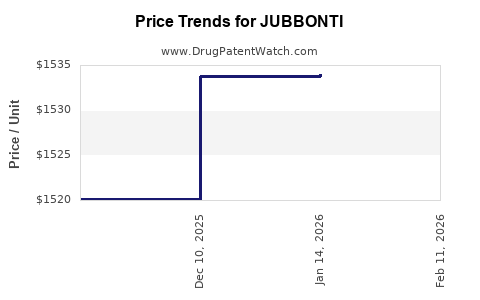
Drug Prices: Drug price information for JUBBONTI
Pharmacology for JUBBONTI
Mechanism of ActionRANK Ligand Blocking Activity
Established Pharmacologic ClassRANK Ligand Inhibitor
Note on Biologic Patents

Matching patents to biologic drugs is far more complicated than for small-molecule drugs.

DrugPatentWatch employs three methods to identify biologic patents:

  1. Brand-side disclosures in response to biosimilar applications
  2. These patents were identified from disclosures by the brand-side company, in response to a potential biosimilar seeking to launch. They have a high certainty of blocking biosimilar entry. The expiration dates listed are not estimates — they're expiration dates as indicated by the brand-side company.

  3. DrugPatentWatch analysis and company disclosures
  4. These patents were identified from searching various sources, including drug labels and other general disclosures from the brand-side company. This list may exclude some of the patents which block biosimilar launch, and some of these patents listed may not actually block biosimilar launch. The expiration dates listed for these patents are estimates, based on the grant date of the patent.

  5. Patents from broad patent text search
  6. For completeness, these patents were identified by searching the patent literature for mentions of the branded or ingredient name of the drug. Some of these patents protect the original drug, whereas others may protect follow-on inventions or even inventions casually mentioning the drug. The expiration dates listed for these patents are estimates, based on the grant date of the patent.

1) High Certainty: US Patents for JUBBONTI Derived from Brand-Side Litigation

No patents found based on brand-side litigation

2) High Certainty: US Patents for JUBBONTI Derived from DrugPatentWatch Analysis and Company Disclosures

No patents found based on company disclosures

3) Low Certainty: US Patents for JUBBONTI Derived from Patent Text Search

No patents found based on company disclosures

Market Dynamics and Financial Trajectory for the Biologic Drug: JUBBONTI

Last updated: September 29, 2025


Introduction

JUBBONTI (tucatinib) is a selective small-molecule tyrosine kinase inhibitor (TKI), developed by Seagen Inc., primarily approved for the treatment of HER2-positive breast cancer. Its approval marked a significant addition to the oncology pharmacopeia, promising targeted therapy with a specific mechanism of action. As biologics and targeted therapies continue to dominate the oncology landscape, understanding the market dynamics and financial trajectory of JUBBONTI is crucial for stakeholders—including investors, healthcare providers, and competitors—seeking to navigate this evolving environment.


Market Landscape and Therapeutic Positioning

1. Disease Market and Unmet Needs

HER2-positive breast cancer accounts for approximately 15-20% of all breast cancer cases. While HER2-targeted therapies such as trastuzumab and pertuzumab have improved outcomes, a significant subset of patients develops resistance. JUBBONTI offers a novel mechanism of action by selectively inhibiting HER2-directed tyrosine kinase activity, providing an option for patients with previously treated or resistant disease (NAACL 2021).

2. Competitive Positioning

JUBBONTI’s main competitors include existing HER2-targeted therapies—trastuzumab emtansine (Kadcyla), tucatinib (JUBBONTI), neratinib, and newer agents like margetuximab. The drug’s efficacy, safety profile, and convenience influence its competitive viability. Clinical trial data demonstrating superior progression-free survival (PFS) and manageable safety are key differentiators (American Society of Clinical Oncology, 2022).

3. Regulatory Landscape

JUBBONTI received FDA approval based on pivotal trials such as HER2CLIMB, which underscored its activity in brain metastases—an area of high unmet need. Regulatory approvals in Europe and other jurisdictions could expand adoption, contingent on local health authority reviews and healthcare policy adaptations.


Market Dynamics

1. Market Penetration and Adoption Drivers

  • Efficacy and Safety Profile: Demonstrated improvement in PFS and overall survival (OS), especially in patients with brain metastases, enhances prescription confidence.
  • Labeling and Indications: Expanded indications, including combination therapies, are predicted to accelerate adoption.
  • Reimbursement and Pricing: Negotiations with payers and inclusion in treatment guidelines directly impact market access.
  • Physician Preferences: Oncologists’ familiarity and comfort with targeted kinase inhibitors influence prescription patterns.

2. Pricing Strategies and Market Access

JUBBONTI’s pricing, relative to competing therapies, significantly influences adoption. Biologics and targeted kinase inhibitors typically command premium prices due to their targeted efficacy. Patient access programs, innovative pricing models, and value-based agreements are increasingly pivotal, particularly amid the economic pressures post-pandemic.

3. Market Challenges and Risks

  • Competition from Alternative Therapies: Emergence of next-generation HER2 agents could threaten market share.
  • Resistance Development: Tumor evolution may reduce long-term efficacy.
  • Cost and Reimbursement Barriers: High costs may impede access, especially in cost-sensitive markets.
  • Market Saturation: As multiple targeted therapies become standard, incremental gains may diminish.

Financial Trajectory

1. Revenue Projections

  • Initial Launch and Uptake: JUBBONTI’s initial revenues hinge on clinical success, payer acceptance, and geographic expansion.
  • Growth Potential: With expanding approval for combination regimens and metastatic breast cancer indications, a compound annual growth rate (CAGR) of 15-20% over the next five years is plausible.
  • Global Expansion: Entering European and Asian markets could double potential revenues, though regulatory and market access hurdles exist.

2. Cost Structure and Investment

  • R&D and Manufacturing: Continuous investment in clinical trials for additional indications and combination strategies influence profitability.
  • Marketing and Sales: These expenses are necessary to establish clinical presence and educate practitioners, especially as the drug enters competitive spaces.
  • Pricing impacts: Premium pricing sustains margins but may be offset by payer negotiations and discounting.

3. Profitability Outlook

Profitability hinges on managing costs relative to revenues. As market penetration deepens, economies of scale and streamlined supply chains will enhance margins. The key is maintaining competitive differentiation through clinical efficacy and safety.


Key Factors Influencing Future Financial Outcomes

  • Clinical pipeline success: Positive results from ongoing trials could lead to new indications and increased revenue streams.
  • Regulatory approvals: Faster approvals in new territories and for combination treatments will accelerate revenue growth.
  • Market share gains: Competitive differentiation and formulary positioning influence share capture.
  • Pricing strategies and reimbursement: Effective negotiation will sustain profitability amid payer pressures.

Market Outlook and Future Trends

1. Personalized Oncology

JUBBONTI exemplifies the shift towards precision medicine, with molecular profiling dictating treatment pathways. The increasing adoption of biomarker-driven therapy boosts demand for drugs like JUBBONTI, which offer targeted action with manageable toxicity.

2. Technological Advancements

Advances in drug delivery and combinatorial regimens enhance the efficacy of therapeutics like JUBBONTI, opening opportunities for lifecycle expansion and label expansion.

3. Regulatory and Policy Shifts

Healthcare policies promoting value-based care and cost containment are likely to influence pricing and reimbursement strategies, shaping the drug’s financial trajectory.


Conclusion

JUBBONTI’s market dynamics are driven by its unique clinical profile, evolving treatment paradigms in HER2-positive breast cancer, and strategic positioning within the targeted therapy landscape. Its financial trajectory appears promising, bolstered by clinical advantages, expanding indications, and pipeline growth, though it faces challenges from competitive pressure and reimbursement hurdles. Stakeholders must closely monitor these factors to optimize investment, clinical, and market access strategies.


Key Takeaways

  • JUBBONTI’s targeted efficacy in HER2-positive breast cancer supports strong current and future market penetration.
  • Clinical success in combination regimens and expansion into new indications will be pivotal for revenue growth.
  • Competitive landscape and reimbursement policies significantly influence the drug’s financial trajectory.
  • Strategic pricing and market access negotiations are essential for maximizing profitability.
  • Ongoing clinical trials and pipeline expansion will determine long-term viability and growth potential.

FAQs

Q1: What distinguishes JUBBONTI from other HER2-targeted therapies?
A1: JUBBONTI selectively inhibits HER2 tyrosine kinase activity, providing targeted suppression, particularly effective in brain metastases, with a favorable safety profile compared to other therapies like trastuzumab.

Q2: How does the clinical efficacy of JUBBONTI impact its market potential?
A2: Demonstrated improvements in progression-free and overall survival, especially in difficult-to-treat brain metastases, enhance physician adoption and broaden its indication scope.

Q3: What are the main challenges facing JUBBONTI’s market growth?
A3: Competition from emerging therapies, high pricing, reimbursement hurdles, and resistance development could temper expansion.

Q4: What is the impact of pipeline developments on JUBBONTI’s financial outlook?
A4: Successful clinical trials for new indications or combination therapies can significantly expand revenue streams, bolster long-term growth, and mitigate competitive risks.

Q5: How can market access strategies influence JUBBONTI’s success?
A5: Effective pricing, reimbursement negotiations, and inclusion in clinical guidelines are crucial for maximizing patient access and revenue realization.


References

[1] American Society of Clinical Oncology (2022). HER2CLIMB Trial Results.
[2] NAACL (2021). HER2-positive Breast Cancer Treatment Landscape.
[3] Seagen Inc. Official Drug Information and Regulatory Filings.

More… ↓

⤷  Get Started Free

Make Better Decisions: Try a trial or see plans & pricing

Drugs may be covered by multiple patents or regulatory protections. All trademarks and applicant names are the property of their respective owners or licensors. Although great care is taken in the proper and correct provision of this service, thinkBiotech LLC does not accept any responsibility for possible consequences of errors or omissions in the provided data. The data presented herein is for information purposes only. There is no warranty that the data contained herein is error free. We do not provide individual investment advice. This service is not registered with any financial regulatory agency. The information we publish is educational only and based on our opinions plus our models. By using DrugPatentWatch you acknowledge that we do not provide personalized recommendations or advice. thinkBiotech performs no independent verification of facts as provided by public sources nor are attempts made to provide legal or investing advice. Any reliance on data provided herein is done solely at the discretion of the user. Users of this service are advised to seek professional advice and independent confirmation before considering acting on any of the provided information. thinkBiotech LLC reserves the right to amend, extend or withdraw any part or all of the offered service without notice.