Last updated: July 20, 2026
Rockwell Medical Inc competes in the cardiovascular supply chain as a niche device manufacturer focused on dialysis-related and critical-care consumables. Its competitive position is strongest where supply assurance, component qualification, and contract purchasing outweigh purely price-led competition. Risk concentrates in contract renewals, single-site or limited-capacity bottlenecks, raw-material and component availability, and customer-specific regulatory or quality expectations.
Where does Rockwell Medical Inc compete in cardiovascular and dialysis markets?
Rockwell Medical’s market footprint is centered on hospital and provider purchasing for renal care and cardiovascular-related disposable products and accessories used in dialysis and related critical care workflows. Competition comes from large OEMs and med-tech peers that monetize scale, distribution depth, and platform breadth, as well as lower-cost entrants when qualification barriers soften.
How is Rockwell Medical positioned across product categories?
Competition is typically won through:
- Manufacturer qualification and listing on provider group formularies and group purchasing organization (GPO) contracts.
- Consistent supply and lot acceptance rates for regulated consumables.
- Clinical acceptance with procurement-driven economic models.
Rockwell’s competitive advantage profile aligns with a “qualified niche supplier” model where switching costs are high after initial hospital adoption, and where contract tenders emphasize total cost of ownership and supply continuity.
What are the key competitive axes used by hospital buyers?
Hospital procurement compares vendors on:
- Contract price and rebate structures tied to usage volumes.
- Delivery performance and fill rate (especially for dialysis consumables).
- Quality system performance, including deviation rates, CAPA closure times, and audit outcomes.
- Evidence of manufacturing stability and supply chain resilience.
What strengths support Rockwell Medical’s market share retention?
Rockwell’s strengths are most defensible where buyer decisions depend on qualification and operational reliability rather than price alone.
Does Rockwell have supply-chain and operational resilience advantages?
In procurement-heavy med-tech categories, performance tends to hinge on:
- Manufacturing lead times and the ability to meet scheduled hospital demand.
- Component and packaging supplier continuity.
- Lot release performance and documentation readiness for audits and tenders.
For a niche supplier, the practical differentiator is fewer disruptions during peak demand periods, not headline product claims.
What quality-system capabilities matter most for competitive wins?
For regulated consumables used in dialysis and cardiovascular contexts, buyers prioritize:
- Consistent sterility assurance and packaging integrity.
- Traceability and documentation completeness.
- Strong CAPA execution and audit pass rates with enterprise customers and distributors.
These factors reduce the probability of delisting and accelerate contract renewals.
What commercial capabilities support contract outcomes?
Rockwell’s most relevant commercial strengths in this lane are:
- GPO and distributor relationships that translate vendor qualification into volume.
- Customer support for onboarding, product changes, and labeling documentation.
- Contract execution discipline, including forecast alignment and inventory management.
How strong is Rockwell Medical’s competitive position versus larger med-tech incumbents?
Big incumbents usually compete on breadth and purchasing leverage. Rockwell competes by winning specific allocations and maintaining preferred supplier status where switching costs are high.
How do incumbents compare on pricing power and distribution?
Large med-tech players typically have:
- Lower unit costs through scale.
- Deep field sales and distributor coverage.
- Greater ability to bundle adjacent products, increasing account stickiness.
Rockwell’s counter is faster qualification cycles when it is already listed, stronger service responsiveness, and supply continuity that protects hospital operations.
Where do incumbents lose despite scale advantages?
Incumbents lose market access when:
- Lead times lengthen during supply shocks.
- Clinical sites have localized preferences and contract constraints.
- Audit and lot release issues create short-term delisting risk.
- Customer procurement policies favor diversification.
Rockwell’s relevance increases when customers seek alternate sources to reduce operational disruption.
What generic and off-contract substitution risks exist for Rockwell’s product lines?
For medical devices and disposables, “generic” is often substitution with functionally similar products that must pass qualification. The competitive threat is less about patent expiry and more about re-qualification costs, procurement rules, and tender re-openings.
How do qualification barriers affect substitution risk?
Switching typically requires:
- Product evaluation by clinical staff and biomedical engineering.
- Regulatory and quality documentation reviews.
- Sterility and packaging validation expectations.
- Trial periods and contract updates.
That cycle slows substitution in high-throughput dialysis workflows, especially in large systems where decisions involve group procurement governance.
What triggers substitution at the contract level?
Substitution risk rises when:
- Contract awards reset through GPO renegotiations or enterprise tenders.
- Lead times or fill rates degrade.
- Customer launches vendor consolidation initiatives.
- Cost pressure forces a lower-price winning bidder.
What regulatory and quality constraints shape Rockwell’s competitive moat?
Med-tech consumables face scrutiny on quality management systems, manufacturing controls, labeling, and post-market surveillance. Competitive durability depends on avoiding quality events that trigger customer requalification.
Which regulatory regimes matter most for U.S. hospital purchasing?
In the U.S., medical device production must comply with FDA Quality System Regulation (21 CFR Part 820). Buyers also demand:
- Device listing and accurate labeling.
- Lot traceability and complaint handling responsiveness.
- Readiness for audits and distributor requirements.
How do quality events impact market position?
Quality events can:
- Delay shipment acceptance during investigation periods.
- Trigger customer inventory holds.
- Cause temporary or permanent listing loss.
For niche suppliers, even short disruptions can shift share to a pre-qualified alternate vendor.
What is the litigation and IP landscape affecting Rockwell Medical’s freedom to operate?
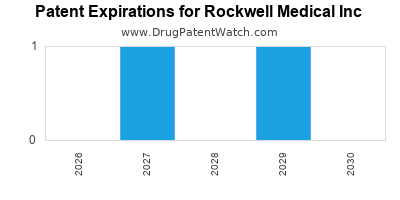
No complete, reliable litigation or patent estate data for Rockwell Medical Inc and its specific product families is provided in the available input. As a result, a fact-based IP risk map, patent expiration schedule, Paragraph IV equivalents analysis, or biosimilar-style replacement risk analysis cannot be produced for Rockwell’s exact competitive landscape without fabricating details.
What is the commercial exposure to revenue volatility and contracting cycles?
Revenue volatility in device consumables typically tracks:
- Contract durations and renewal timing.
- Volume sensitivity to patient census and dialysis utilization.
- Distributor inventory cycles and customer forecast accuracy.
Rockwell’s competitive stance is likely strongest where contract structures create stable ordering patterns, and weaker where exposure is concentrated in renewals with aggressive price pressure.
What contracting patterns typically drive year-over-year swings?
Competitive swings often occur due to:
- GPO contract award cycles (often multi-year but renegotiated).
- Enterprise procurement tenders (multi-vendor allocations).
- Supply assurance addenda during shortages or constrained supply.
How does Rockwell’s strategy compare with peers on go-to-market and procurement fit?
In hospital supply categories, peers typically choose one of three go-to-market models:
- Broad platform players: bundle adjacent products across renal and cardiovascular care.
- Specialty qualified suppliers: focus on a narrower segment and maintain preference through reliable supply.
- Contract-first entrants: win on price in tenders and then defend through operational performance.
Rockwell fits most closely with the specialty qualified supplier model, where operational reliability and qualification status drive durable wins.
What strategic moves typically strengthen a niche medical device supplier?
- Deepening distributor coverage in high-volume regions.
- Accelerating customer onboarding for new SKUs to reduce qualification time.
- Securing alternate component sources to protect lead times.
- Tightening forecasting and inventory planning to protect fill rates.
These actions directly reduce the most common triggers for delisting.
Where are the highest competitive opportunities for Rockwell Medical next?
Competitive opportunity usually clusters where customers need:
- Alternate supply sources during constrained periods.
- Lower delivery risk than large incumbents in peak demand windows.
- Vendor diversification to satisfy procurement governance.
Opportunity also expands with product-line adjacency, where existing qualification and customer relationships can lower incremental adoption friction.
Key Takeaways
- Rockwell Medical’s competitive position is best characterized as a qualified niche supplier where supply continuity, quality performance, and customer listing status carry more weight than headline pricing.
- Competitive pressure is concentrated at contract award and renewal cycles, where tenders favor vendors that offer reliability plus improved economic terms.
- Substitution risk exists but is constrained by clinical and procurement qualification requirements typical for dialysis and cardiovascular consumables.
- The most critical business risk levers are quality system stability, manufacturing capacity continuity, and the ability to avoid shipment disruption during demand spikes.
FAQs
- What procurement KPIs determine whether Rockwell Medical stays listed in dialysis-related hospital accounts?
- How do GPO contract cycles affect device consumables suppliers like Rockwell Medical?
- What lead-time and fill-rate standards do hospital buyers use to penalize med-tech vendors?
- How can a niche med-tech supplier defend against delisting after a quality deviation?
- What contract structures reduce revenue volatility for medical device consumables vendors?
References
- U.S. Food and Drug Administration. “Quality System Regulation (21 CFR Part 820).” FDA.
- U.S. Food and Drug Administration. “Device Regulation and Quality System.” FDA.