Last updated: September 18, 2026
Triferic AVNU is Rockwell Medical’s proprietary intravenous iron product for iron replacement in adult hemodialysis patients. Its commercial opportunity is tied to the U.S. dialysis market, where treatment is concentrated among large providers and reimbursement is largely bundled under the Medicare End-Stage Renal Disease Prospective Payment System. The product has a differentiated mechanism and delivery profile, but adoption has been constrained by dialysis-center purchasing economics, entrenched injectable iron products, limited commercial scale, and Rockwell Medical’s financial resources.
Rockwell does not separately disclose Triferic AVNU revenue in its public financial statements. Reported product revenue generally combines Triferic products with other commercial activities, so brand-level sales, gross margin and market share cannot be calculated directly from SEC filings.
What is Triferic AVNU and how does it work?
Triferic AVNU is ferric pyrophosphate citrate, an iron-replacement product administered intravenously during hemodialysis. The product is designed to deliver iron directly to transferrin during dialysis, supporting red-blood-cell production without relying solely on storage-iron mobilization.
The U.S. Food and Drug Administration approved Triferic AVNU for the replacement of iron to maintain hemoglobin in adult patients receiving chronic hemodialysis. It is distinct from Rockwell’s earlier Triferic product, which was delivered through the dialysate. AVNU is administered through the venous line during the dialysis procedure, allowing use in centers that prefer an injectable product rather than an iron-containing dialysate.
| Attribute |
Triferic AVNU |
| Active ingredient |
Ferric pyrophosphate citrate |
| Company |
Rockwell Medical, Inc. |
| Therapeutic area |
Anemia and iron replacement in chronic hemodialysis |
| Dosage form |
Intravenous injection |
| Primary market |
U.S. outpatient and inpatient dialysis |
| FDA pathway |
505(b)(2) new drug application |
| Commercial distinction |
Iron replacement during dialysis through the venous line |
| Main alternatives |
Iron sucrose, ferric gluconate, ferumoxytol and ferric carboxymaltose |
The approved label limits the product’s use to a defined dialysis population. It is not a broad anemia treatment and does not replace erythropoiesis-stimulating agents such as epoetin alfa or darbepoetin alfa.
How large is the Triferic AVNU market?
The addressable market is the U.S. maintenance-hemodialysis population requiring recurring iron management. The market is commercially attractive because treatment is repetitive, protocol-driven and concentrated among a small number of dialysis operators. It is also difficult to penetrate because decisions are made at the dialysis-network and formulary level rather than solely by individual physicians.
The principal customer groups are:
- Large dialysis providers, including DaVita and Fresenius Medical Care.
- Independent dialysis organizations and hospital-affiliated centers.
- Specialty pharmacies, wholesalers and dialysis purchasing organizations.
- Inpatient facilities that treat patients receiving chronic or acute dialysis.
Triferic AVNU competes in a market where iron is already integrated into dialysis protocols. Iron sucrose and sodium ferric gluconate are widely used generic products. Higher-dose products such as ferumoxytol and ferric carboxymaltose may compete in selected settings, although their dosing patterns and reimbursement economics differ.
What drives demand for Triferic AVNU?
Demand is influenced by:
- The number of U.S. hemodialysis patients.
- Frequency of dialysis treatments.
- Hemoglobin and transferrin-saturation targets.
- Use of erythropoiesis-stimulating agents.
- Dialysis-center protocols for maintenance iron.
- Reimbursement under the ESRD bundled payment system.
- Contracting with large dialysis organizations.
- Physician preference and perceived infection, hypersensitivity and iron-overload risks.
The dialysis market is relatively stable compared with many specialty pharmaceutical markets. Patient growth is generally tied to chronic kidney disease prevalence, diabetes, hypertension, aging and access to transplantation. This supports recurring demand, but it does not guarantee adoption of a particular iron product.
What is the FDA regulatory status of Triferic AVNU?
The FDA approved Triferic AVNU in 2020 for iron replacement in adult patients with chronic kidney disease receiving hemodialysis. The product is marketed under an approved prescription drug label and is not a biosimilar or generic.
The key regulatory distinction is the product’s route and setting of administration. Triferic AVNU is administered during hemodialysis, while many competing products are delivered as intermittent intravenous doses outside the dialysis circuit.
The product’s regulatory position is strengthened by:
- An FDA-approved indication specific to maintenance hemodialysis.
- A differentiated ferric pyrophosphate citrate formulation.
- Clinical data supporting iron delivery during dialysis.
- Potential protocol fit for centers seeking a maintenance approach.
The regulatory position is limited by the narrow patient population. Expansion into non-dialysis chronic kidney disease or broader anemia treatment would require additional clinical and regulatory work.
What is the reimbursement and pricing environment?
Reimbursement is the central commercial issue for Triferic AVNU.
For Medicare dialysis patients, many drugs administered during dialysis are covered through the ESRD Prospective Payment System. Under the bundled payment structure, dialysis providers generally receive a fixed payment covering a broad package of services and products. A dialysis operator therefore evaluates Triferic AVNU primarily on total treatment economics, not simply on the product’s wholesale acquisition cost.
A product can gain adoption if it reduces total treatment costs, simplifies administration, decreases nursing time, improves inventory management, or lowers the need for rescue iron. A product can lose share if its acquisition cost exceeds the perceived clinical or operational benefit.
How does Triferic AVNU compare with generic iron sucrose?
| Factor |
Triferic AVNU |
Generic iron sucrose |
| Delivery |
During dialysis through venous access |
Intermittent IV administration |
| Mechanism |
Ferric pyrophosphate citrate iron delivery |
Iron sucrose complex |
| Pricing pressure |
Branded-product economics |
Strong generic competition |
| Formulary position |
Requires center-level adoption |
Established standard of care |
| Commercial advantage |
Potential maintenance and workflow benefits |
Low acquisition cost and familiarity |
| Main risk |
Lack of economic differentiation |
Price erosion and supply variability |
Iron sucrose has a substantial advantage because it is familiar, widely available and inexpensive. Triferic AVNU must therefore demonstrate value at the dialysis-center level rather than rely on mechanistic differentiation alone.
What is Rockwell Medical’s financial exposure to Triferic AVNU?
Rockwell Medical is a small commercial-stage pharmaceutical company whose financial profile has historically been dependent on sales of its dialysis-focused products and external capital.
Public filings do not provide standalone Triferic AVNU revenue. Rockwell reports product revenue at an aggregate level, which prevents a precise calculation of:
- Triferic AVNU revenue.
- Product-level gross margin.
- Average selling price.
- Number of active dialysis-center accounts.
- Customer concentration by brand.
- Net revenue after rebates and discounts.
- Triferic AVNU contribution to operating cash flow.
The financial trajectory has therefore been characterized by commercial scale-up rather than by a separately reported blockbuster product. Rockwell’s earnings remain sensitive to sales growth, manufacturing costs, selling expenses, regulatory spending, working capital and financing activity.
What financial factors determine the product’s trajectory?
The major variables are:
| Financial variable |
Impact on Triferic AVNU |
| Account penetration |
Determines recurring treatment volume |
| Contracting with dialysis networks |
Can create rapid volume increases or sharp concentration risk |
| Net price after discounts |
Determines whether bundled reimbursement supports adoption |
| Manufacturing scale |
Affects gross margin and supply reliability |
| Sales-force productivity |
Determines conversion of dialysis centers |
| Clinical evidence |
Supports formulary placement and retention |
| Working capital |
Affects the company’s ability to support inventory and receivables |
| External financing |
Determines commercial runway if operating cash flow remains negative |
Triferic AVNU could improve Rockwell’s revenue quality if it produces recurring treatment volume with acceptable gross margins. The company’s financial leverage to the product is high because Rockwell has a relatively narrow portfolio and does not have the diversified revenue base of large pharmaceutical companies.
What patents and exclusivity protect Triferic AVNU?
Triferic AVNU is protected by a combination of formulation, composition, manufacturing and method-of-use rights rather than by a single broad market-exclusivity right.
The relevant protection categories include:
- Ferric pyrophosphate citrate compositions.
- Stabilized injectable formulations.
- Methods of delivering iron during hemodialysis.
- Manufacturing and preparation processes.
- Use of the product for maintaining hemoglobin or iron status in dialysis patients.
The strongest commercial protection is likely to come from formulation and method-of-use claims that are difficult to design around while preserving the same delivery profile. Composition claims can be more valuable, but their scope depends on claim language, written-description support, prosecution history and validity.
Unlike an ordinary small-molecule product with a clearly identified Orange Book patent cliff, Triferic AVNU requires analysis of:
- FDA-listed patents and regulatory exclusivity.
- Patent-family expiration dates.
- Continuation and divisional applications.
- Patent-term adjustment or patent-term extension.
- Claim scope covering the injection formulation.
- Abbreviated new drug application and 505(b)(2) pathways.
- Litigation or settlement activity.
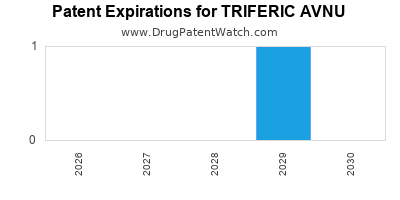
Rockwell’s public financial disclosures do not establish a single definitive expiration date for the full Triferic AVNU commercial estate. Patent expiry should therefore be assessed at the claim and family level rather than treated as one date.
What is the Orange Book status of Triferic AVNU?
Triferic AVNU is an FDA-approved prescription product, and its regulatory protection should be assessed through the FDA’s Orange Book and the product’s Drugs@FDA record. Orange Book-listed patents can create a basis for a Paragraph IV certification and patent litigation by an ANDA applicant.
The commercial effect of an Orange Book listing depends on:
- Whether the patent claims the approved product.
- Whether an ANDA applicant can certify that the patent is invalid, unenforceable or not infringed.
- Whether the patent is listed before an ANDA filing.
- Whether Rockwell files an infringement action within the statutory period.
- Whether litigation triggers a 30-month stay.
- Whether a settlement permits an earlier launch.
A Paragraph IV challenge would be commercially material because the dialysis market is concentrated and a generic or 505(b)(2) entrant could target the same centers with lower pricing. The absence of a disclosed major Paragraph IV dispute would reduce near-term litigation visibility, but it would not eliminate future challenge risk as patent expiry approaches.
Which companies are challenging Triferic AVNU?
No major publicly disclosed patent litigation campaign against Triferic AVNU is established in the cited company and FDA materials. Competitive pressure has come primarily from existing iron products rather than from a disclosed direct generic launch.
The principal competitive groups are:
- Generic manufacturers of iron sucrose.
- Manufacturers of sodium ferric gluconate.
- Providers of ferumoxytol and ferric carboxymaltose.
- Dialysis companies that use internal treatment protocols and purchasing contracts.
- Potential 505(b)(2) developers seeking to replicate the dialysis-delivery concept.
A direct generic competitor would need to address formulation equivalence, route of administration, labeling, manufacturing complexity and patent claims. A 505(b)(2) competitor could pursue a different formulation or clinical bridge, potentially creating competitive pressure without duplicating every element of Triferic AVNU.
What manufacturing and intellectual-property barriers exist?
Ferric pyrophosphate citrate is a complex iron formulation rather than a simple commodity salt. Manufacturing barriers may include:
- Control of iron oxidation state.
- Stability in solution.
- Prevention of precipitation or degradation.
- Consistency of iron content.
- Sterile injectable manufacturing.
- Container-closure compatibility.
- Batch-to-batch control.
- Demonstration of bioavailability and clinical performance.
These barriers can delay competition, but they do not guarantee long-term exclusivity. A competitor may use a different iron complex, delivery formulation or dosing schedule. Manufacturing complexity is commercially meaningful only if it is supported by enforceable claims, reliable production and a cost structure that permits competitive pricing.
What generic launch scenarios exist for Triferic AVNU?
Three launch scenarios are most relevant.
Scenario 1: Continued branded niche growth
Rockwell expands dialysis-center adoption through contracts, clinical education and evidence showing operational or clinical value. Revenue grows gradually, but the product remains concentrated in a defined hemodialysis niche.
Scenario 2: Limited adoption and portfolio stagnation
Centers continue using inexpensive generic iron sucrose because the bundled-payment system rewards cost control. Triferic AVNU remains available but generates modest revenue relative to the size of the dialysis market.
Scenario 3: Patent challenge or 505(b)(2) entry
A competitor targets the product’s formulation or dialysis-use profile. A successful challenge, settlement or alternative approval pathway creates pricing pressure and accelerates market-share loss.
The most likely commercial outcome depends on contracting and reimbursement more than on the size of the theoretical patient population.
How strong is the Triferic AVNU patent estate?
The patent estate has potential strength in its specialized formulation and dialysis-use claims, but its practical strength cannot be rated as high without a complete claim chart, current Orange Book listing, prosecution history and patent-family analysis.
| Patent-strength factor |
Assessment |
| Product differentiation |
Strong relative to conventional iron products |
| Clinical niche |
Clear but narrow |
| Formulation complexity |
Potentially meaningful barrier |
| Generic substitution risk |
Moderate to high |
| Reimbursement protection |
Limited |
| Customer concentration risk |
High |
| Patent-cliff visibility |
Requires family-level review |
| Litigation visibility |
No major public dispute identified in the cited materials |
The estate is commercially more defensible if claims cover the marketed injectable formulation and its approved dialysis use. Protection is weaker if competitors can achieve comparable iron delivery with different excipients, concentrations or dosing methods.
What does the competitive landscape mean for investors and licensors?
For investors, Triferic AVNU offers recurring-use exposure to a stable dialysis market but lacks the scale and diversification of a large pharmaceutical platform. The key investment question is not whether dialysis patients need iron. They do. The question is whether Rockwell can convert that need into branded product revenue under bundled reimbursement.
For potential licensees, the asset may be attractive where the licensee has:
- Existing dialysis-provider relationships.
- A hospital or nephrology sales force.
- Injectable manufacturing capacity.
- Contracting expertise with large dialysis networks.
- The ability to fund post-approval studies and market development.
The main risks are slow formulary conversion, price pressure from generics, customer concentration, manufacturing costs and Rockwell’s limited financial resources.
Key Takeaways
- Triferic AVNU is an FDA-approved ferric pyrophosphate citrate injection for iron replacement in adult hemodialysis patients.
- Its addressable market is recurring but narrowly defined.
- Generic iron sucrose is the principal commercial benchmark.
- Medicare’s bundled dialysis reimbursement makes center-level economics more important than list price.
- Rockwell does not separately disclose Triferic AVNU revenue, preventing precise brand-level financial modeling.
- The product’s potential value depends on dialysis-network contracts, treatment-center penetration and gross-margin improvement.
- Formulation, manufacturing and method-of-use patents may support protection, but a single definitive patent-expiration date cannot be assigned without a complete patent-family review.
- No major publicly disclosed Paragraph IV litigation campaign is identified in the cited materials.
- The primary near-term risk is limited adoption and reimbursement-driven price pressure, not lack of clinical need.
- Triferic AVNU is more likely to develop as a specialized recurring-revenue product than as a broad anemia franchise.
FAQs
Is Triferic AVNU a biologic or biosimilar?
No. Triferic AVNU is a chemically defined injectable iron product. It is not a biologic and does not face biosimilar competition under the Public Health Service Act.
Is Triferic AVNU used instead of epoetin?
Usually no. Triferic AVNU replaces iron during hemodialysis. Epoetin and other erythropoiesis-stimulating agents address erythropoietin deficiency and may be used in the same patient.
Can a generic company copy Triferic AVNU?
A generic or 505(b)(2) applicant would need to address the product’s formulation, route, labeling, manufacturing requirements and patent claims. The pathway would depend on the scope and remaining term of FDA-listed and non-listed patents.
Does Triferic AVNU have biosimilar risk?
No direct biosimilar risk exists because Triferic AVNU is not a biologic. Its relevant competitive risks are generic iron products, alternative injectable formulations and 505(b)(2) products.
What is the main commercial barrier to Triferic AVNU adoption?
The main barrier is dialysis-center economics under bundled reimbursement. Providers must determine that the product’s clinical or operational value justifies its net cost relative to established generic iron products.
References
-
U.S. Food and Drug Administration. (2020). Triferic AVNU prescribing information. FDA.
-
U.S. Food and Drug Administration. (n.d.). Drugs@FDA: FDA-approved drugs. FDA.
-
Rockwell Medical, Inc. (2023). Annual report pursuant to Section 13 or 15(d) of the Securities Exchange Act of 1934. U.S. Securities and Exchange Commission.
-
Rockwell Medical, Inc. (2024). Quarterly and annual filings. U.S. Securities and Exchange Commission.
-
Centers for Medicare & Medicaid Services. (2024). End-stage renal disease prospective payment system. U.S. Department of Health and Human Services.
-
U.S. Food and Drug Administration. (2024). Approved drug products with therapeutic equivalence evaluations. FDA.