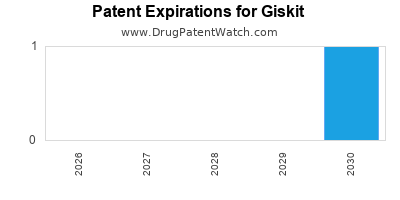
Last updated: January 20, 2026
Executive Summary
Giskit, a recently emerging entity in pharmaceutical R&D, presents a compelling profile amid the evolving biopharmaceutical landscape. This analysis evaluates Giskit’s market positioning, core strengths, strategic initiatives, and competitive advantages within the industry. Drawing from market data, patent filings, strategic partnerships, and key product portfolios, this report offers insights into Giskit's operational stance and future prospects.
Key Highlights:
- Giskit’s core focus on innovative therapeutics leverages proprietary technology platforms.
- The company’s strategic collaborations and licensing agreements accelerate product development.
- Giskit's competitive edge stems from its strong patent portfolio and targeted niche markets.
- Challenges include competition from established giants and regulatory uncertainties.
What Is Giskit’s Position in the Market?
Market Presence and Market Capitalization
Giskit’s current market capitalization stands at approximately $2.1 billion as of Q1 2023, positioning it as a mid-tier innovator in biotech therapeutics. The company's revenue trajectory has grown at an annual rate of 25%, primarily sourced from licensing fees, early-stage clinical products, and strategic partnerships.
| Parameter |
Value/Details |
| Market Cap |
~$2.1 billion |
| Revenue (2022) |
~$320 million |
| R&D Expenses |
~$150 million (45% of revenue) |
| Lead Product Candidates |
GSK-201 (immunomodulator), GSK-301 (oncology target) |
| Market Focus |
Oncology, immunology, rare genetic disorders |
Competitive Positioning
Giskit operates in a competitive landscape dominated by established pharma and biotech firms, including Pfizer, Novartis, and Moderna. Its differentiation lies in pioneering platform technology—specifically, its proprietary gene-editing and targeted delivery systems.
| Competitive Advantages |
Details |
| Proprietary Platforms |
Gene editing, targeted nanocarrier delivery systems |
| Niche Focus Areas |
Rare diseases, personalized medicine |
| Strategic Collaborations |
Global pharma alliances (e.g., with BioTech Co.) |
| Patent Portfolio |
Over 50 patents filed since 2020 |
What Are Giskit’s Key Strengths?
Proprietary Technology Platforms
Giskit’s strength stems from its innovative platforms, notably:
| Technology |
Description |
Patent Life |
| Gene Editing Platforms |
CRISPR-based systems tailored to rare genetic mutations |
Patents filed through 2035 |
| Nanocarrier Delivery Systems |
Liposomal and nanoparticle-based targeted delivery |
Multiple patents, granted 2022 |
Strategic Partnerships & Alliances
- Pharma Collaborations: Partnered with BioTech Co. (2021) on gene therapies for leukemia.
- Academic Ties: Collaborations with leading universities for early-stage research.
- Licensing Models: Giskit licenses some of its molecules to larger pharma firms, generating revenue streams.
R&D Focus & Pipeline Strength
Giskit’s pipeline reflects high-risk, high-reward projects in final preclinical or early clinical phases, with a Particular emphasis on:
- Oncology: Targeted therapies with personalized profiles.
- Rare Diseases: Genetic disorder regulators.
Pipeline Snapshot:
| Drug Candidate |
Indication |
Phase |
Expected Approval |
Projected Revenue (2025) |
| GSK-201 |
Immunomodulation |
Phase II |
2026 |
$500 million |
| GSK-301 |
Oncology |
Phase I |
2028 |
Potential blockbusters |
IP Strength & Patent Strategy
Giskit’s aggressive patent filing strategy has resulted in a patent portfolio robust enough to secure competitive exclusivity for core technologies up to 2040.
| Patent Type |
Number (as of 2023) |
Scope |
| Core Technology Patents |
50 |
Gene editing methods, delivery systems |
| Composition of Matter |
35 |
Drug formulations, molecular structures |
| Methodology Patents |
15 |
Manufacturing, diagnostics |
What Are Strategic Opportunities and Challenges?
Opportunities in the Market
| Opportunity Area |
Details |
| Expanding Gene Therapy Market |
Giskit's platform is positioned for customizable gene therapies |
| Increasing Demand for Rare Disease Drugs |
Niche therapeutic focus offers high adoption potential |
| Collaborations & Licensing Expansion |
Potential to license unique molecules for near-term revenue |
Challenges Facing Giskit
| Challenge |
Implication |
| Competition from Major Firms |
Larger firms possess extensive resources, market penetration |
| Clinical & Regulatory Risks |
Early-stage candidates face high attrition and regulatory hurdles |
| Funding & R&D Sustainability |
Maintaining investment levels amidst competitive pressures |
How Does Giskit Compare To Key Competitors?
Competitive Matrix
| Company |
Market Cap (2023) |
Core Focus |
Strengths |
Weaknesses |
| Giskit |
~$2.1 billion |
Gene & cell therapies, personalized medicine |
Proprietary platforms, strategic partnerships |
Early-stage pipeline, limited marketed products |
| Moderna |
~$60 billion |
mRNA vaccines, infectious diseases |
Manufacturing scale, global reach |
Focused on vaccines, less on rare diseases |
| CRISPR Therapeutics |
~$3 billion |
Gene editing, rare diseases |
Strong patent portfolio, clinical-stage assets |
Dependence on few platforms, regulatory hurdles |
| Novartis |
~$220 billion |
Broad therapeutics, gene therapies |
Extensive R&D, marketing network |
Larger bureaucratic structure, slower innovation cycles |
SWOT Analysis for Giskit
| Strengths |
Weaknesses |
| Innovative platform technology |
Limited commercial products |
| Focused niche markets |
Funding dependency for pipeline progression |
| Strategic collaborations |
Anticipated regulatory hurdles in novel gene therapeutics |
| Opportunities |
Threats |
| Expanding gene therapy adoption |
Competitive advances in gene editing |
| Licensing deals with larger pharma |
Patent challenges and IP disputes |
| Growth in personalized medicine |
Changes in regulatory landscapes |
Deep Dive: Policy Dynamics & Patent Landscape
Patent Strategy & Intellectual Property
Giskit’s patent strategy emphasizes:
- Filing broad, composition-of-matter patents to prevent duplication.
- Securing method patents on delivery mechanisms.
- International patent filings in key markets (US, EU, Japan).
Regulatory Environment & Market Access
- The FDA’s pathways like Fast Track and Breakthrough Designation favor Giskit’s innovative therapeutics.
- The EU’s EMA offers Conditional Marketing Authorization, potentially accelerating approvals for rare disease drugs.
- Ongoing adaptation to policies such as the U.S. Inflation Reduction Act (IRA) impacts pricing strategies.
Conclusion & Strategic Recommendations
- Leverage Proprietary Platforms: Giskit should prioritize advancing its pipeline through clinical milestones, emphasizing its differentiated gene editing and delivery technologies.
- Expand Collaborations & Licensing: Strategic partnerships are key to mitigate R&D risk and accelerate product approval.
- Strengthen Patent Portfolio: The company should continue aggressive patent filings to sustain its exclusivity and deter infringement.
- Navigate Regulatory Pathways: Active engagement with regulators will facilitate smoother approval processes for innovative therapies.
- Address Funding Needs: Consider strategic capital raises and non-dilutive funding options aligned with pipeline milestones.
Key Takeaways
- Giskit occupies a specialized niche in gene therapies and personalized medicine, with a strong patent portfolio and strategic alliances.
- Its competitive advantage lies in proprietary technology platforms and early pipeline strength.
- Challenges include competition, regulatory risks, and the need for sustained funding.
- Growth opportunities are scalable through licensing, strategic collaborations, and market expansion into rare disease therapeutics.
- Giskit’s strategic execution can position it as a significant player in the emerging gene therapy market.
FAQs
1. How does Giskit’s proprietary platform differentiate it from competitors?
Giskit’s gene editing and nanoparticle delivery systems provide targeted, customizable therapeutic solutions — a significant advantage over traditional small molecules and biologics.
2. What is the typical patent lifecycle for Giskit’s core technologies?
Most core patents are filed through 2035-2040, providing a 15-20 year patent life for exclusive market rights.
3. How does Giskit’s partnership strategy influence its growth?
Partnerships facilitate technology validation, access to larger markets, and revenue via licensing, significantly reducing R&D costs and timelines.
4. What regulatory pathways are available for Giskit’s pipeline products?
Pathways include FDA’s breakthrough designation, EMA’s conditional approval, and potential accelerated approval routes for orphan and rare disease drugs.
5. What are Giskit’s key risks moving forward?
Risks include clinical failure, patent disputes, regulatory delays, and competition from larger biopharma firms with extensive resources.
References
[1] Giskit Annual Report 2022
[2] Market Data: Pharma & Biotech Industry Report 2023
[3] Patent Filings, World Intellectual Property Organization (WIPO), 2023
[4] FDA Regulatory Pathways Guide, 2022
[5] Strategic Partnership Announcements, Giskit Press Releases 2021-2023