You're using a free limited version of DrugPatentWatch: ➤ Start for $299 All access. No Commitment.

Last Updated: December 19, 2025

ZYRTEC Drug Patent Profile


✉ Email this page to a colleague

« Back to Dashboard


AI Deep Research
Questions you can ask:
  • What is the 5 year forecast for ZYRTEC?
  • What are the global sales for ZYRTEC?
  • What is Average Wholesale Price for ZYRTEC?
Summary for ZYRTEC
US Patents:0
Applicants:2
NDAs:4
Raw Ingredient (Bulk) Api Vendors: 109
Clinical Trials: 30
Patent Applications: 4,432
Drug Sales Revenues: Drug sales revenues for ZYRTEC
What excipients (inactive ingredients) are in ZYRTEC?ZYRTEC excipients list
DailyMed Link:ZYRTEC at DailyMed
Drug patent expirations by year for ZYRTEC
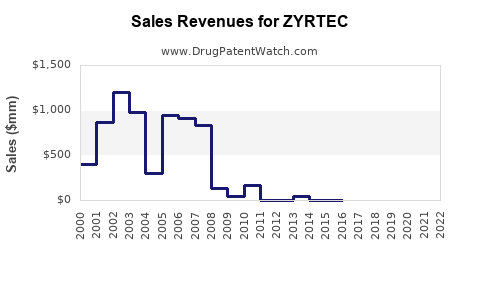
Drug Sales Revenue Trends for ZYRTEC

See drug sales revenues for ZYRTEC

Recent Clinical Trials for ZYRTEC

Identify potential brand extensions & 505(b)(2) entrants

SponsorPhase
Emory UniversityPhase 4
Johnson & Johnson Consumer Inc., McNeil Consumer Healthcare DivisionPhase 1
Indiana UniversityPhase 4

See all ZYRTEC clinical trials

Paragraph IV (Patent) Challenges for ZYRTEC
Tradename Dosage Ingredient Strength NDA ANDAs Submitted Submissiondate
ZYRTEC Syrup cetirizine hydrochloride 5 mg/5 mL 020346 1 2007-03-19

US Patents and Regulatory Information for ZYRTEC

Applicant Tradename Generic Name Dosage NDA Approval Date TE Type RLD RS Patent No. Patent Expiration Product Substance Delist Req. Exclusivity Expiration
J And J Consumer Inc ZYRTEC cetirizine hydrochloride SOLUTION;ORAL 020346-001 Sep 27, 1996 DISCN Yes No ⤷  Get Started Free ⤷  Get Started Free ⤷  Get Started Free
Kenvue Brands ZYRTEC-D 12 HOUR cetirizine hydrochloride; pseudoephedrine hydrochloride TABLET, EXTENDED RELEASE;ORAL 021150-002 Nov 9, 2007 OTC Yes Yes ⤷  Get Started Free ⤷  Get Started Free ⤷  Get Started Free
Kenvue Brands ZYRTEC ALLERGY cetirizine hydrochloride TABLET;ORAL 019835-004 Nov 16, 2007 OTC Yes Yes ⤷  Get Started Free ⤷  Get Started Free ⤷  Get Started Free
Kenvue Brands ZYRTEC ALLERGY cetirizine hydrochloride TABLET, ORALLY DISINTEGRATING;ORAL 022578-001 Sep 3, 2010 OTC Yes Yes ⤷  Get Started Free ⤷  Get Started Free ⤷  Get Started Free
Kenvue Brands ZYRTEC ALLERGY cetirizine hydrochloride TABLET;ORAL 019835-003 Nov 16, 2007 OTC Yes No ⤷  Get Started Free ⤷  Get Started Free ⤷  Get Started Free
Kenvue Brands ZYRTEC HIVES cetirizine hydrochloride TABLET;ORAL 019835-006 Nov 16, 2007 DISCN Yes No ⤷  Get Started Free ⤷  Get Started Free ⤷  Get Started Free
>Applicant >Tradename >Generic Name >Dosage >NDA >Approval Date >TE >Type >RLD >RS >Patent No. >Patent Expiration >Product >Substance >Delist Req. >Exclusivity Expiration

International Patents for ZYRTEC

See the table below for patents covering ZYRTEC around the world.

Country Patent Number Title Estimated Expiration
Latvia 5494 2-Ú4-(difenilmetil)-1-piperazinil3⁄4-etikskabes vai to amidi vai to netoksiskie farmaceitiski pielaujamie sali ar spazmolitisku un antihistamina darbibu ⤷  Get Started Free
Bosnia and Herzegovina 97198 ⤷  Get Started Free
Japan S57149282 2-(4-(DIPHENYLMETHYL)-1-PIPERAZINYL)ACETIC ACID AND THEIR DERIVATIVES AS MEDICINE ⤷  Get Started Free
South Africa 8200752 ⤷  Get Started Free
Hong Kong 86485 2-(4-DIPHENYLMETHYL)-1-PIPERAZINYL)-ACETIC ACIDS AND THEIR AMIDES,PROCESS FOR THEIR PREPARATION AND PHARMACEUTICAL COMPOSITIONS ⤷  Get Started Free
Poland 234935 ⤷  Get Started Free
>Country >Patent Number >Title >Estimated Expiration

Supplementary Protection Certificates for ZYRTEC

Patent Number Supplementary Protection Certificate SPC Country SPC Expiration SPC Description
0058146 2001C/045 Belgium ⤷  Get Started Free PRODUCT NAME: DICHLORHYDRATE DE LEVOCETIRIZINE; NAT RER. NO/DATE: 194 IS 90 F3 20011022; FIRST REG.: DE 49903.00.00 20010103
0663828 C300085 Netherlands ⤷  Get Started Free PRODUCT NAME: LEVOCETIRIZINE, DESGEWENST IN DE VORM VAN EEN FARMACEUTISCH AANVAARDBAAR ZOUT, IN HET BIJZONDER LEVOCETIRINE DIHYDROCHLORIDE; NAT. REGISTRATION NO/DATE: RVG 26770 20011009; FIRST REGISTRATION: DE 49903.00.00 AND 49904.00.00 20010103
0058146 SPC/GB01/052 United Kingdom ⤷  Get Started Free SPC/GB01/052:, EXPIRES: 20070205
>Patent Number >Supplementary Protection Certificate >SPC Country >SPC Expiration >SPC Description

Market Dynamics and Financial Trajectory for ZYRTEC (Cetirizine)

Last updated: July 31, 2025

Introduction
ZYRTEC, generically known as cetirizine, is a widely used antihistamine primarily prescribed for allergies and hay fever relief. Since its release in the late 1980s, ZYRTEC has become one of the leading OTC and prescription antihistamines globally, marked by its efficacy, safety profile, and brand strength. This analysis examines the current market landscape, key drivers and challenges, competitive dynamics, and the financial trajectory underpinning ZYRTEC’s sustained prominence.

Market Context and Growth Drivers

The global allergy therapeutics market, valued at approximately $20 billion in 2022, is projected to grow at a compound annual growth rate (CAGR) of 5-7% through 2030 (1). The rising prevalence of allergic rhinitis, chronic urticaria, and other allergic conditions underpins demand for antihistamines like ZYRTEC. The increasing awareness of allergy management and over-the-counter accessibility, especially in mature markets like North America and Europe, bolster ZYRTEC’s volume and revenue streams.

Regulatory Environment and OTC Market Penetration

Zyrtec’s transition from prescription drug to an over-the-counter (OTC) product significantly expanded its market access. In the U.S., the FDA approved OTC status in 2008, enabling direct consumer purchase and driving sales growth (2). The OTC segment accounts for over 70% of ZYRTEC’s sales, with retail pharmacy channels and mass merchandisers being key distribution points.

Regulatory policies are generally favorable, though they demand rigorous adherence to safety standards and label regulations. Upcoming regulatory considerations include emerging concerns about sedative effects associated with first-generation antihistamines and the potential for novel formulations to replace or supplement existing products.

Competitive Landscape

ZYRTEC faces competition from both brand-name and generic antihistamines, including loratadine (Claritin), fexofenadine (Allegra), and levocetirizine. A significant competitive advantage emerges from ZYRTEC’s proven safety profile, rapid onset, and longer duration of action, which support its premium positioning. The introduction of generics post-patent expiry has intensified price competition, pressuring margins but expanding the overall market size.

Patent and Intellectual Property Considerations

Although ZYRTEC’s principal patent exclusivity expired around 2008, the brand’s strength arises from its established efficacy, consumer trust, and marketing. Patent cliffs have prompted generic entrants, which offer lower-cost alternatives but a decline in brand-specific margins. Branded formulations, combination therapies, and new delivery mechanisms are strategic avenues to sustain market share.

Market Segmentation and Consumer Trends

Primary consumers include adults suffering from seasonal allergies and urticaria, with pediatric segments showing growth due to increased awareness. Consumer preferences are shifting towards non-drowsy, fast-acting formulations with improved tolerability. Additionally, the rise of digital health platforms facilitates direct marketing and adherence tracking.

Financial Trajectory

Revenue Streams
ZYRTEC’s revenue historically peaked in the early 2010s, with estimates exceeding $1.4 billion globally in 2012 (3). Following patent expiry and increased generic competition, revenues declined modestly but stabilized due to brand loyalty and OTC accessibility.

Margins and Profitability
Branded ZYRTEC maintained higher profit margins, but the entry of generics compressed gross margins significantly. As of 2022, Pfizer (the original marketer) transitioned ZYRTEC rights to Sun Pharmaceutical and later to other regional distributors, affecting revenue flows and profitability metrics.

Global Expansion and Emerging Markets
Emerging markets in Asia-Pacific and Latin America present growth opportunities due to rising allergy prevalence, increasing healthcare spending, and expanding OTC channels. However, regulatory hurdles and market-specific preferences may delay penetration.

Research and Development Outlook

Innovative formulations, such as non-sedating derivatives or combination therapies with leukotriene receptor antagonists, are under clinical investigation. These developments could unlock premium pricing and extend ZYRTEC’s lifecycle.

Forecasting Future Market and Financial Trends

The global antihistamine market is expected to grow steadily, with ZYRTEC maintaining a significant segment share. Despite the dominance of generic equivalents, brand equity, consumer loyalty, and product innovation will underpin ZYRTEC’s financial stability.

Forecasts suggest that by 2025, ZYRTEC’s sales could stabilize around $1 billion globally, driven by growth in OTC channels, new formulations, and expanded geographic reach (4). Ageing populations and increased allergy awareness further support this trajectory.

Strategic Considerations

  • Brand Differentiation: Continuing education and consumer engagement sustain ZYRTEC’s market positioning.
  • Pipeline Innovation: Developing next-generation antihistamines with improved efficacy and tolerability remains critical.
  • Partnerships and Licensing: Collaborations with regional players can facilitate market expansion, especially in emerging markets.
  • Pricing Strategies: Balancing premium branding with competitive pricing to counter generic erosion.

Conclusion
ZYRTEC’s market dynamics reflect a mature yet resilient sector influenced by regulatory frameworks, competitive pressures, and evolving consumer preferences. Its financial trajectory hinges on brand loyalty, innovation, and strategic market expansion. As the allergy therapeutics landscape shifts, ZYRTEC’s ability to innovate and adapt will determine its sustained profitability and market relevance.


Key Takeaways

  • The global allergy therapeutics market is expanding, driven by increased allergy incidences and OTC accessibility, underpinning steady demand for ZYRTEC.
  • Patent expiries and the influx of generics have compressed margins but not diminished brand loyalty, especially in mature markets.
  • Innovation in non-sedating formulations and combination therapies offers growth pathways to extend ZYRTEC’s lifecycle.
  • Geographic expansion in emerging markets presents significant revenue opportunities but requires navigation of regional regulatory and market nuances.
  • Maintaining competitive advantage involves strategic branding, consumer engagement, and industry partnerships.

FAQs

1. How has patent expiry affected ZYRTEC’s market share?
Patent expiry in 2008 introduced generic competitors that directly impacted ZYRTEC’s brand-exclusive sales, leading to a decline in margins. However, brand loyalty and OTC accessibility helped sustain its market share, with the brand remaining a preferred choice despite lower-priced generic alternatives.

2. What are the key innovations driving ZYRTEC’s future growth?
Future growth hinges on developing non-drowsy, faster-acting formulations, combination therapies, and potentially novel delivery systems such as nasal sprays or dissolvable tablets, enhancing efficacy and consumer appeal.

3. How do regulatory changes influence ZYRTEC’s market dynamics?
Regulatory policies, especially regarding safety concerns related to sedative effects, impact formulation standards and labeling. Regulatory approval processes also influence new product development and market entry strategies.

4. What are the major challenges facing ZYRTEC in the coming years?
Main challenges include generic price competition, maintaining brand loyalty amid expanding choices, regulatory restrictions, and market saturation in developed regions. Additionally, emerging concerns around antihistamine safety profiles could influence formulations.

5. What role do emerging markets play in ZYRTEC’s growth?
Emerging markets offer significant opportunities due to rising allergy prevalence, expanding OTC channels, and increasing healthcare investments. However, success depends on navigating regional regulatory environments and tailoring marketing strategies.


Sources
(1) Market Research Future, "Global Allergic Rhinitis Market."
(2) FDA, “OTC Switch Approval for Zyrtec.”
(3) Pfizer Annual Reports, 2012.
(4) GlobalData, "Antihistamines Market Forecast," 2023.

More… ↓

⤷  Get Started Free

Make Better Decisions: Try a trial or see plans & pricing

Drugs may be covered by multiple patents or regulatory protections. All trademarks and applicant names are the property of their respective owners or licensors. Although great care is taken in the proper and correct provision of this service, thinkBiotech LLC does not accept any responsibility for possible consequences of errors or omissions in the provided data. The data presented herein is for information purposes only. There is no warranty that the data contained herein is error free. We do not provide individual investment advice. This service is not registered with any financial regulatory agency. The information we publish is educational only and based on our opinions plus our models. By using DrugPatentWatch you acknowledge that we do not provide personalized recommendations or advice. thinkBiotech performs no independent verification of facts as provided by public sources nor are attempts made to provide legal or investing advice. Any reliance on data provided herein is done solely at the discretion of the user. Users of this service are advised to seek professional advice and independent confirmation before considering acting on any of the provided information. thinkBiotech LLC reserves the right to amend, extend or withdraw any part or all of the offered service without notice.