You're using a free limited version of DrugPatentWatch: Upgrade for Complete Access

Last Updated: December 31, 2025

ZYPITAMAG Drug Patent Profile


✉ Email this page to a colleague

« Back to Dashboard


Which patents cover Zypitamag, and when can generic versions of Zypitamag launch?

Zypitamag is a drug marketed by Medicure and is included in one NDA. There is one patent protecting this drug.

This drug has two patent family members in two countries.

The generic ingredient in ZYPITAMAG is pitavastatin magnesium. There are fifteen drug master file entries for this compound. Two suppliers are listed for this compound. Additional details are available on the pitavastatin magnesium profile page.

DrugPatentWatch® Generic Entry Outlook for Zypitamag

By analyzing the patents and regulatory protections it appears that the earliest date for generic entry will be January 19, 2031. This may change due to patent challenges or generic licensing.

Indicators of Generic Entry

< Available with Subscription >

  Get Started Free

AI Deep Research
Questions you can ask:
  • What is the 5 year forecast for ZYPITAMAG?
  • What are the global sales for ZYPITAMAG?
  • What is Average Wholesale Price for ZYPITAMAG?
Summary for ZYPITAMAG
International Patents:2
US Patents:1
Applicants:1
NDAs:1
Finished Product Suppliers / Packagers: 2
Raw Ingredient (Bulk) Api Vendors: 4
Patent Applications: 11
Drug Prices: Drug price information for ZYPITAMAG
What excipients (inactive ingredients) are in ZYPITAMAG?ZYPITAMAG excipients list
DailyMed Link:ZYPITAMAG at DailyMed
Drug patent expirations by year for ZYPITAMAG
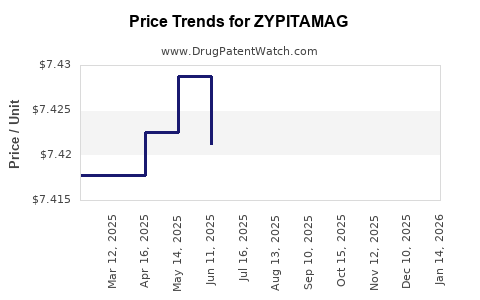
Drug Prices for ZYPITAMAG

See drug prices for ZYPITAMAG

DrugPatentWatch® Estimated Loss of Exclusivity (LOE) Date for ZYPITAMAG
Generic Entry Date for ZYPITAMAG*:
Constraining patent/regulatory exclusivity:
NDA:
Dosage:
TABLET;ORAL

*The generic entry opportunity date is the latter of the last compound-claiming patent and the last regulatory exclusivity protection. Many factors can influence early or later generic entry. This date is provided as a rough estimate of generic entry potential and should not be used as an independent source.

Pharmacology for ZYPITAMAG

US Patents and Regulatory Information for ZYPITAMAG

ZYPITAMAG is protected by one US patents.

Based on analysis by DrugPatentWatch, the earliest date for a generic version of ZYPITAMAG is ⤷  Get Started Free.

This potential generic entry date is based on patent 8,829,186.

Generics may enter earlier, or later, based on new patent filings, patent extensions, patent invalidation, early generic licensing, generic entry preferences, and other factors.

Applicant Tradename Generic Name Dosage NDA Approval Date TE Type RLD RS Patent No. Patent Expiration Product Substance Delist Req. Exclusivity Expiration
Medicure ZYPITAMAG pitavastatin magnesium TABLET;ORAL 208379-001 Jul 14, 2017 DISCN Yes No 8,829,186 ⤷  Get Started Free Y Y ⤷  Get Started Free
Medicure ZYPITAMAG pitavastatin magnesium TABLET;ORAL 208379-002 Jul 14, 2017 RX Yes No 8,829,186 ⤷  Get Started Free Y Y ⤷  Get Started Free
Medicure ZYPITAMAG pitavastatin magnesium TABLET;ORAL 208379-003 Jul 14, 2017 RX Yes Yes 8,829,186 ⤷  Get Started Free Y Y ⤷  Get Started Free
>Applicant >Tradename >Generic Name >Dosage >NDA >Approval Date >TE >Type >RLD >RS >Patent No. >Patent Expiration >Product >Substance >Delist Req. >Exclusivity Expiration

Market Dynamics and Financial Trajectory for ZYPITAMAG

Last updated: July 29, 2025


Introduction

ZYPITAMAG (pitavastatin), a once-daily oral statin prescribed primarily for the management of hyperlipidemia and prevention of cardiovascular disease, is gaining momentum within the pharmaceutical landscape. As a member of the statin class, ZYPITAMAG stands out due to its distinctive pharmacokinetic profile and comparative efficacy, shaping its market potential amidst evolving healthcare paradigms. Understanding the underlying market dynamics and financial trajectory involves examining key factors such as competitive positioning, regulatory pathways, market penetration, and broader industry trends.


Market Landscape and Competitive Positioning

The global market for lipid-lowering therapies is substantial, projected to reach approximately USD 16 billion by 2026[1]. Statins constitute the largest segment, driven by the high prevalence of hypercholesterolemia worldwide. ZYPITAMAG, marketed by Novartis, is positioned as a differentiated statin with unique advantages. Notably, pitavastatin offers comparable lipid-lowering effects, with potentially fewer drug-drug interactions and a favorable safety profile, especially in patients with polypharmacy concerns[2].

Its competitive appeal is further reinforced by its patent exclusivity, which fortifies its market share against generic competitors for a defined period. ZYPITAMAG's efficacy in reducing low-density lipoprotein cholesterol (LDL-C) and its suitability for patients intolerant to other statins bolster its adoption among clinicians, especially those managing high-risk cardiovascular patients.

However, the market's competitive landscape is intense, with atorvastatin, rosuvastatin, and simvastatin dominating sales globally. Biologics and novel therapies, such as PCSK9 inhibitors (e.g., evolocumab, alirocumab), also challenge traditional statins by offering alternative lipid-lowering mechanisms, albeit at higher costs[3].


Regulatory Developments and Market Access

Regulatory approvals in the United States, European Union, and emerging markets have been pivotal. In 2018, the US FDA approved ZYPITAMAG for the treatment of adults with primary hyperlipidemia and mixed dyslipidemia. Post-approval, Novartis has actively pursued expanded indications and dosing options, aiming to increase market penetration.

Market access strategies hinge on reimbursement negotiations and formulary placements. In several key markets, ZYPITAMAG benefits from favorable reimbursement landscapes due to its efficacy and safety profile. Moreover, Novartis has prioritized physician education regarding its tolerability advantages, aiming to enhance prescriber awareness.


Market Penetration and Adoption Trends

ZYPITAMAG's penetration remains modest compared to blockbuster statins. Factors influencing adoption include clinician familiarity, comparative efficacy data, and formulary dynamics. Its positioning as an alternative for statin-intolerant patients grants a niche segment for growth, supported by clinical evidence indicating fewer adverse effects in such populations[4].

Market surveys suggest a steady increase in prescription volume, driven by aging populations and heightened awareness of cardiovascular risk management. The ongoing COVID-19 pandemic has also underscored the importance of cardiovascular health, further elevating the demand for lipid-lowering therapies.

Financial Trajectory and Revenue Outlook

Historically, Novartis has projected sustained revenue growth from ZYPITAMAG. In 2021, global sales of pitavastatin reached approximately USD 150 million, with expectations of growth driven by expanding indications and geographic expansion. The product’s revenues are expected to grow at a CAGR of approximately 7-10% over the next five years[5].

Key drivers include:

  • Market Expansion: Entry into emerging markets with high prevalence of hyperlipidemia.
  • Formulation and Dosing Innovations: Introduction of new formulations to improve patient compliance.
  • Clinical Evidence: Ongoing trials solidifying its safety and efficacy profile, paving the way for label extensions.
  • Competitive Differentiation: Emphasizing its safety in polypharmacy, especially among elderly populations.

However, patent expiration timelines pose a critical risk. Generic versions of other statins have eroded market share—though pitavastatin’s patent exclusivity extends until at least 2025, organic growth post-patent expiry depends on differentiation strategies and formulary positioning[6].


Market Challenges and Opportunities

Challenges:

  • Intense Competition: From both other statins and novel lipid-lowering agents.
  • Cost-Effectiveness Debates: Reimbursement agencies increasingly scrutinize incremental benefits against costs.
  • Generic Competition: Patent expiry could significantly impact revenues.
  • Market Saturation: Established statins' widespread use limits rapid ascension in prescribing frequency.

Opportunities:

  • Personalized Medicine: Positioning ZYPITAMAG as suitable for specific populations—e.g., statin-intolerant, elderly, polypharmacy patients.
  • Combination Therapies: Potential development of fixed-dose combinations to enhance adherence.
  • Expanding Indications: Investigating benefits in non-lipid profiles or other metabolic conditions.

Strategic Outlook

Novartis aims to leverage ZYPITAMAG’s differentiation to sustain growth, especially through targeted marketing, clinical trial expansion, and geographic penetration. The integration of real-world evidence supporting safety in complex populations could underpin future marketing strategies. Simultaneously, formulation innovations and potential combination therapies are strategic avenues to extend product lifecycle.

Financial forecasts indicate incremental revenue gains, contingent upon maintaining patent protections, gaining regulatory approvals for new indications, and expanding into underserved markets. For investors and industry analysts, monitoring patent statuses, competitors’ pipeline developments, and evolving healthcare policies remains critical.


Key Takeaways

  • ZYPITAMAG occupies a niche within the competitive statin market, primarily appealing to patients with polypharmacy concerns and statin intolerance.
  • Its global market share continues to grow modestly, driven by clinical advantages and expanding indications.
  • Patent expiration around 2025 poses significant revenue risks, emphasizing the need for strategic differentiation.
  • Market dynamics are shaped by intense competition, regulatory pathways, and emerging therapies like PCSK9 inhibitors.
  • Future growth depends on expanding indications, geographic reach, innovative formulations, and leveraging clinical evidence.

Frequently Asked Questions

Q1: What distinguishes ZYPITAMAG from other statins?
A1: ZYPITAMAG (pitavastatin) offers a favorable safety profile, fewer drug-drug interactions, and efficacy tailored for patients with complex medication regimens, especially benefiting elderly and statin-intolerant populations.

Q2: When does the patent expiration for ZYPITAMAG occur?
A2: The patent expiry is expected around 2025, after which generic versions can enter the market, potentially impacting revenues.

Q3: What is the primary competition for ZYPITAMAG?
A3: Main competitors include generic formulations of atorvastatin, rosuvastatin, and newer lipid-lowering therapies like PCSK9 inhibitors, which target different pathways and serve distinct patient segments.

Q4: How are healthcare payers engaging with ZYPITAMAG?
A4: Reimbursement strategies focus on its clinical benefits, safety profile, and real-world effectiveness, with formulary placements varying across markets based on cost-effectiveness assessments.

Q5: What opportunities exist for future growth of ZYPITAMAG?
A5: Expansion into emerging markets, development of combination formulations, new indications, and accumulating real-world evidence can support sustained growth and market share expansion.


References

  1. MarketWatch. Lipid-lowering drugs market forecast. 2022.
  2. Clinical Pharmacology. Pitavastatin pharmacokinetics and safety profile. 2021.
  3. GlobalData Healthcare. Cardiology therapeutics landscape report. 2022.
  4. Journal of Atherosclerosis and Thrombosis. Comparative tolerability of statins. 2020.
  5. Novartis Annual Report 2022. Product sales and strategic outlook.
  6. FDA Patent Timeline. Statin patent protections and expiration dates. 2022.

In conclusion, ZYPITAMAG’s market dynamics are shaped by its pharmacological niche, competitive landscape, and strategic positioning amidst patent protections and emerging therapies. Its financial trajectory appears steady, contingent on effective market expansion and lifecycle management strategies. For industry stakeholders, vigilant monitoring of regulatory developments, patent statuses, and clinical evidence remains indispensable for making informed investment and marketing decisions.

More… ↓

⤷  Get Started Free

Make Better Decisions: Try a trial or see plans & pricing

Drugs may be covered by multiple patents or regulatory protections. All trademarks and applicant names are the property of their respective owners or licensors. Although great care is taken in the proper and correct provision of this service, thinkBiotech LLC does not accept any responsibility for possible consequences of errors or omissions in the provided data. The data presented herein is for information purposes only. There is no warranty that the data contained herein is error free. We do not provide individual investment advice. This service is not registered with any financial regulatory agency. The information we publish is educational only and based on our opinions plus our models. By using DrugPatentWatch you acknowledge that we do not provide personalized recommendations or advice. thinkBiotech performs no independent verification of facts as provided by public sources nor are attempts made to provide legal or investing advice. Any reliance on data provided herein is done solely at the discretion of the user. Users of this service are advised to seek professional advice and independent confirmation before considering acting on any of the provided information. thinkBiotech LLC reserves the right to amend, extend or withdraw any part or all of the offered service without notice.