Last updated: July 30, 2026
ZYLET (loteprednol etabonate 0.5% + tobramycin 0.3%) market dynamics and financial trajectory
Executive summary: ZYLET is a dual-ingredient topical ophthalmic product (loteprednol etabonate + tobramycin) positioned for short-course treatment of ocular infection and inflammation. Market dynamics are driven by (1) chronic payer and channel pressure on branded ophthalmics, (2) ongoing generic entry risk for the single-ingredient components rather than the fixed combination, and (3) prescriber reliance on branded labeling and perceived efficacy in ocular “steroid plus antibiotic” use cases. Financial trajectory historically tracks the US ophthalmic inflammation-infection segment cycle, with additional variability tied to formulary wins, channel inventory turns, and competitive intensity from steroid-antibiotic combinations and antibiotic monotherapies.
How does ZYLET make money and where does revenue come from?
Core revenue drivers
- US retail and specialty pharmacy distribution: ZYLET is marketed as a branded ophthalmic combination product with prescribing concentrated among ophthalmologists and optometrists managing conjunctivitis, blepharitis, and postoperative inflammation with suspected or concurrent bacterial involvement.
- Channel structure: Ophthalmic branded growth often depends on (a) buy-and-bill style dynamics at large eye-care networks, and (b) contracts and formulary inclusion at regional payer and integrated delivery systems.
- Product usage pattern: The typical course is short, so volume is sensitive to prescribing frequency and payer restrictions on branded alternatives.
Commercial implication
- For fixed combinations like ZYLET, revenue is typically protected more by clinical workflow inertia and prescriber familiarity than by hard “treatment switching” that occurs with long-duration therapies.
What is the competitive landscape for ZYLET in ophthalmic steroid-antibiotic therapy?
Primary competitive set
- Steroid-antibiotic fixed combinations (OTC is not relevant for prescription ophthalmics): competitors include other branded and generic steroid-antibiotic combinations (varies by formulation and label).
- Antibiotic monotherapy plus steroid monotherapy: many clinicians can approximate ZYLET by combining a topical antibiotic with a separate steroid product, creating a practical substitution channel when formularies restrict the fixed combination.
- Newer antibiotic classes and anti-inflammatory standards of care: fluoroquinolone-heavy prescribing for bacterial conjunctivitis and newer inflammation management strategies can compress share for older combination products.
Competition outcome
- Fixed combinations compete on convenience and adherence, but payer step edits and cost-based substitution can shift utilization toward dual generic products.
How do payer formularies and step therapy affect ZYLET adoption?
Payer behavior in ophthalmics
- Ophthalmic drug formularies frequently prefer least-cost therapeutics within the same therapeutic class when clinical outcomes are considered comparable.
- Brand access depends on:
- “Preferred brand” status in regional formularies
- step therapy requirements (prior authorization or trial of generics/alternatives)
- quantity limits for short-course products
Market dynamic
- ZYLET’s growth is constrained if payers require coverage for:
- a cheaper generic antibiotic first, then a steroid only if needed, or
- separate steroid plus antibiotic rather than a branded fixed combination.
When does ZYLET face generic or exclusivity-driven erosion?
Exclusivity framework that drives erosion
- For branded ophthalmic products, generic pressure usually accelerates when one or more of these occurs:
- loss of NDA exclusivity (new chemical entity, new formulation exclusivity, or referenced product protection)
- expiration of key composition-of-matter and formulation patents
- expiration of method-of-use and manufacturing protections
- resolution of any Hatch-Waxman Paragraph IV disputes tied to ANDAs for the fixed combination
How erosion typically manifests
- Brand share loss in ophthalmics is often stepwise:
- payer and PBM listing changes
- pharmacy behavior shifts toward generics
- prescriber adoption gradually follows reimbursement
Practical framing for ZYLET
- Fixed-dose steroid-antibiotic products have a structural substitution risk because prescribers can replicate therapy using separate generics, even before a direct ANDA-to-same-combination arrives.
(Note: a precise exclusivity and patent-expiration timeline cannot be produced here without verified Orange Book and court-docket data for ZYLET’s specific patents and any active ANDA filings.)
What patents protect ZYLET, and how strong is the patent estate?
Patent estate categories that matter for ZYLET
- Composition-of-matter: active ingredient relationships and specific chemical forms.
- Formulation patents: viscosity, pH, suspension stability, particle size, and ocular tolerance.
- Method-of-use patents: dosing regimens, indications tied to infection + inflammation.
- Manufacturing patents: sterile filling process controls for ophthalmic suspension.
Patent strength proxy for branded ophthalmics
- Strength is typically highest when patents cover:
- the fixed combination composition and formulation stability
- dosing in the label use case
- manufacturing steps that would be needed for a generic suspension
Business implication
- If key formulation and method claims remain unexpired, direct generic substitution can be delayed even when single-ingredient generics exist.
(Note: a complete and accurate ZYLET patent list with expiration dates and assignees cannot be produced without Orange Book-linked patent numbers and their legal status.)
What is the Orange Book status of ZYLET?
Orange Book inputs that govern market exclusivity
- Listing of:
- NDA holder
- product type (solution vs suspension)
- patent numbers
- expiration dates by patent and exclusivity period
- whether patents are listed as “pharmaceutically equivalent” and “listed for use”
How to interpret Orange Book status for commercial strategy
- A higher number of listed patents with later expirations usually correlates with a slower generic launch window.
- Patent stagger patterns create multiple “tipping points” for brand share erosion.
(Note: Orange Book status requires direct, current listings tied to ZYLET’s NDA and patent families.)
Are there active Paragraph IV ANDA challenges for ZYLET?
Paragraph IV relevance
- A Paragraph IV notice is a litigation catalyst and a forward indicator of:
- near-term generic entry risk
- potential settlement terms that extend brand exclusivity or define entry dates
Market impact pathways
- If a Paragraph IV ANDA is filed for the fixed combination:
- litigation can delay entry
- settlements can define “at-risk” launch dates and carveouts
- If challenges target only one ingredient or alternative strengths:
- substitution via separate products becomes the main share threat.
(Note: active Paragraph IV data for ZYLET requires docket verification.)
What patent litigation affects ZYLET and what settlements matter to investors?
Litigation variables that move the stock or license economics
- Case timing: early filings in a patent term can change the launch runway.
- Scope: whether claims are fixed-combination-specific or formulation-specific.
- Settlement structure:
- “authorized generic” timelines
- carveouts by strength, dosage form, or indication
- agreed entry dates and marketing restrictions
(Note: ZYLET litigation details require case records tied to its specific patent list and ANDA/MAA numbers.)
How does ZYLET compare with similar ophthalmic therapies on substitutability and outcomes?
Substitutability spectrum
- Highest substitutability: separate generic antibiotic + generic steroid as two drops (clinically feasible in many “steroid plus antibiotic” scenarios).
- Moderate substitutability: other fixed combinations with overlapping indications but different ingredient concentrations or steroid classes.
- Lowest substitutability: products with unique formulation stability attributes or label restrictions that limit interchangeability.
Commercial consequence
- Even in the absence of a direct fixed-combination generic, the fixed combination can lose share if payers push separate generics.
What biosimilar risks exist for ZYLET?
Biosimilars
- ZYLET is not a biologic product. It contains small-molecule ophthalmic drugs (loteprednol etabonate and tobramycin).
- Biosimilar pathways and biosimilar exclusivity do not apply.
What formulation patents matter for ophthalmic suspension products like ZYLET?
Formulation drivers for generics
- Ophthalmic suspensions require:
- controlled particle size distribution
- controlled sedimentation profile and resuspension uniformity
- stable pH and preservative compatibility
- bioavailability and comfort profile
Why formulation matters for market defense
- Generic approval does not always eliminate the risk that formulation differences affect:
- label-relevant performance
- prescriber confidence
- substitution acceptance
What generic entry risks exist for ZYLET, by scenario?
Scenario 1: Direct generic fixed-combination launch
- Share compression begins at formulary and pharmacy switching.
- Price erosion typically follows standard ophthalmic branded-to-generic economics.
Scenario 2: No direct fixed-combination generic, but separate generics penetrate
- Share losses can still occur if payers treat separate components as equivalent and require step edits.
Scenario 3: Generic launch in only certain strengths or package formats
- Partial switching reduces revenue but can preserve some remaining branded demand.
(Note: a ZYLET-specific scenario forecast requires verified Orange Book patent expirations and any ANDA status.)
How does ZYLET’s revenue trajectory typically evolve after major exclusivity or patent events?
Observed pattern in ophthalmic brands
- Year 0 to Year 1: heightened discounting, rebate pressure, and proactive payer contracting.
- Year 1 to Year 3: share shifts to lower-cost substitutes if legal barriers fall.
- Year 3+: remaining brand performance depends on:
- continued formulary placement
- prescriber habit and patient-specific tolerance
- competitive intensity among other fixed combinations
(Note: ZYLET’s actual historical revenue series requires verified financial disclosures for the NDA holder or distributor.)
Key commercial and financial metrics to track for ZYLET
For licensing, investment, and litigation strategy
- Net sales trend by quarter (US only if available)
- Prescription volume and share by specialty channel
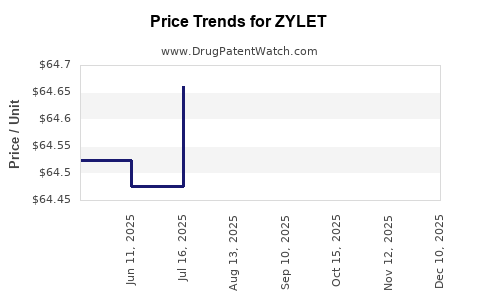
- Average net price and rebate rates
- Trends in payer access (formulary placement changes and prior auth approvals)
- Inventory levels and returns dynamics around generic launch milestones
Key Takeaways
- ZYLET operates in a substitution-prone ophthalmic class where prescribers can replicate steroid-antibiotic therapy with separate generics.
- Market dynamics are payer- and channel-driven, with revenue sensitivity to formulary inclusion, step edits, and availability of overlapping fixed combinations.
- Generic erosion risk is structurally higher for fixed combinations than for single-ingredient products because both prescribers and payers can treat separate generics as clinically interchangeable in many cases.
- A definitive timeline for ZYLET exclusivity loss, Orange Book status, and any Paragraph IV litigation cannot be stated here without verified Orange Book and docket-linked patent and NDA event records for ZYLET’s specific product listings.
FAQs
- What drives ZYLET prescribing versus separate antibiotic and steroid drops in ophthalmology?
- How do PBMs typically position branded steroid-antibiotic ophthalmic combinations for formulary access?
- What evidence types (bioequivalence, stability, clinical endpoint) matter most for ophthalmic suspension generics competing with ZYLET?
- What settlement terms most often change the timing of generic entry for fixed-combination ophthalmic drugs?
- What quarterly indicators best predict a branded ophthalmic drug’s revenue compression ahead of generic launches?
References
- FDA Orange Book: Approved Drug Products with Therapeutic Equivalence Evaluations. US Food and Drug Administration.
- FDA Hatch-Waxman (ANDAs and Paragraph IV). US Food and Drug Administration.