Last Updated: June 16, 2026

ZEGALOGUE Drug Patent Profile


✉ Email this page to a colleague

« Back to Dashboard


When do Zegalogue patents expire, and when can generic versions of Zegalogue launch?

Zegalogue is a drug marketed by Zealand Pharma and is included in one NDA. There are two patents protecting this drug.

This drug has thirty-six patent family members in twenty-seven countries.

The generic ingredient in ZEGALOGUE is dasiglucagon hydrochloride. One supplier is listed for this compound. Additional details are available on the dasiglucagon hydrochloride profile page.

DrugPatentWatch® Generic Entry Outlook for Zegalogue

Zegalogue was eligible for patent challenges on March 22, 2025.

Indicators of Generic Entry

< Available with Subscription >

  Start Trial

AI Deep Research
Questions you can ask:
  • What is the 5 year forecast for ZEGALOGUE?
  • What are the global sales for ZEGALOGUE?
  • What is Average Wholesale Price for ZEGALOGUE?
Summary for ZEGALOGUE
International Patents:36
US Patents:2
Applicants:1
NDAs:1
Finished Product Suppliers / Packagers: 1
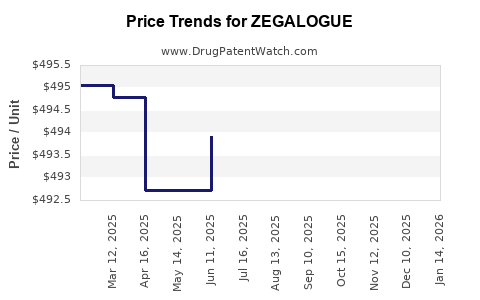
Drug Prices: Drug price information for ZEGALOGUE
What excipients (inactive ingredients) are in ZEGALOGUE?ZEGALOGUE excipients list
DailyMed Link:ZEGALOGUE at DailyMed
Pharmacology for ZEGALOGUE
Drug ClassAntihypoglycemic Agent
Mechanism of ActionGlucagon Receptor Agonists
Physiological EffectIncreased Glycogenolysis

US Patents and Regulatory Information for ZEGALOGUE

ZEGALOGUE is protected by two US patents and one FDA Regulatory Exclusivity.

Applicant Tradename Generic Name Dosage NDA Approval Date TE Type RLD RS Patent No. Patent Expiration Product Substance Delist Req. Exclusivity Expiration
Zealand Pharma ZEGALOGUE dasiglucagon hydrochloride SOLUTION;SUBCUTANEOUS 214231-001 Mar 22, 2021 DISCN Yes No 11,795,204 ⤷  Start Trial ⤷  Start Trial
Zealand Pharma ZEGALOGUE (AUTOINJECTOR) dasiglucagon hydrochloride SOLUTION;SUBCUTANEOUS 214231-002 Mar 22, 2021 DISCN Yes No 11,795,204 ⤷  Start Trial ⤷  Start Trial
Zealand Pharma ZEGALOGUE dasiglucagon hydrochloride SOLUTION;SUBCUTANEOUS 214231-001 Mar 22, 2021 DISCN Yes No 10,442,847 ⤷  Start Trial Y Y ⤷  Start Trial
Zealand Pharma ZEGALOGUE dasiglucagon hydrochloride SOLUTION;SUBCUTANEOUS 214231-001 Mar 22, 2021 DISCN Yes No ⤷  Start Trial ⤷  Start Trial ⤷  Start Trial
Zealand Pharma ZEGALOGUE (AUTOINJECTOR) dasiglucagon hydrochloride SOLUTION;SUBCUTANEOUS 214231-002 Mar 22, 2021 DISCN Yes No ⤷  Start Trial ⤷  Start Trial ⤷  Start Trial
>Applicant >Tradename >Generic Name >Dosage >NDA >Approval Date >TE >Type >RLD >RS >Patent No. >Patent Expiration >Product >Substance >Delist Req. >Exclusivity Expiration

International Patents for ZEGALOGUE

When does loss-of-exclusivity occur for ZEGALOGUE?

Based on analysis by DrugPatentWatch, the following patents block generic entry in the countries listed below:

Argentina

Patent: 1866
Estimated Expiration: ⤷  Start Trial

Australia

Patent: 13295035
Estimated Expiration: ⤷  Start Trial

Brazil

Patent: 2015001451
Estimated Expiration: ⤷  Start Trial

Canada

Patent: 78991
Estimated Expiration: ⤷  Start Trial

China

Patent: 4662038
Estimated Expiration: ⤷  Start Trial

Patent: 9456400
Estimated Expiration: ⤷  Start Trial

Denmark

Patent: 75043
Estimated Expiration: ⤷  Start Trial

Eurasian Patent Organization

Patent: 3399
Estimated Expiration: ⤷  Start Trial

Patent: 1590058
Estimated Expiration: ⤷  Start Trial

European Patent Office

Patent: 75043
Estimated Expiration: ⤷  Start Trial

Finland

Patent: 0240034
Estimated Expiration: ⤷  Start Trial

France

Patent: C1043
Estimated Expiration: ⤷  Start Trial

Hong Kong

Patent: 10787
Estimated Expiration: ⤷  Start Trial

India

Patent: 4DEN2015
Estimated Expiration: ⤷  Start Trial

Israel

Patent: 6554
Estimated Expiration: ⤷  Start Trial

Japan

Patent: 34927
Estimated Expiration: ⤷  Start Trial

Patent: 15524419
Patent: グルカゴン類似体
Estimated Expiration: ⤷  Start Trial

Patent: 19187419
Patent: グルカゴン類似体 (GLUCAGON ANALOGS)
Estimated Expiration: ⤷  Start Trial

Patent: 22023029
Patent: グルカゴン類似体
Estimated Expiration: ⤷  Start Trial

Malaysia

Patent: 0671
Patent: GLUCAGON ANALOGUES
Estimated Expiration: ⤷  Start Trial

Mexico

Patent: 6957
Patent: ANALOGOS DEL GLUCAGON. (GLUCAGON ANALOGUES.)
Estimated Expiration: ⤷  Start Trial

Patent: 15000990
Patent: ANALOGOS DEL GLUCAGON. (GLUCAGON ANALOGUES.)
Estimated Expiration: ⤷  Start Trial

Netherlands

Patent: 1294
Estimated Expiration: ⤷  Start Trial

New Zealand

Patent: 4043
Patent: Glucagon analogues
Estimated Expiration: ⤷  Start Trial

Philippines

Patent: 015500115
Patent: GLUCAGON ANALOGUES
Estimated Expiration: ⤷  Start Trial

Poland

Patent: 75043
Estimated Expiration: ⤷  Start Trial

Singapore

Patent: 201500375P
Patent: GLUCAGON ANALOGUES
Estimated Expiration: ⤷  Start Trial

South Africa

Patent: 1702364
Patent: GLUCAGON ANALOGUES
Estimated Expiration: ⤷  Start Trial

South Korea

Patent: 2129235
Estimated Expiration: ⤷  Start Trial

Patent: 150032912
Patent: 글루카곤 유사체 (GLUCAGON ANALOGUES)
Estimated Expiration: ⤷  Start Trial

Patent: 200080331
Patent: 글루카곤 유사체 (GLUCAGON ANALOGUES)
Estimated Expiration: ⤷  Start Trial

Spain

Patent: 20111
Estimated Expiration: ⤷  Start Trial

Taiwan

Patent: 1404785
Patent: Glucagon analogues
Estimated Expiration: ⤷  Start Trial

Patent: 42682
Estimated Expiration: ⤷  Start Trial

Ukraine

Patent: 7103
Patent: СПОЛУКА, ЯКА МАЄ АКТИВНІСТЬ АГОНІСТА ГЛЮКАГОНУ (GLUCAGON ANALOGUES)
Estimated Expiration: ⤷  Start Trial

Generics may enter earlier, or later, based on new patent filings, patent extensions, patent invalidation, early generic licensing, generic entry preferences, and other factors.

See the table below for additional patents covering ZEGALOGUE around the world.

Country Patent Number Title Estimated Expiration
Ukraine 117103 СПОЛУКА, ЯКА МАЄ АКТИВНІСТЬ АГОНІСТА ГЛЮКАГОНУ (GLUCAGON ANALOGUES) ⤷  Start Trial
Israel 236554 ⤷  Start Trial
Japan 2022023029 グルカゴン類似体 ⤷  Start Trial
South Africa 201702364 GLUCAGON ANALOGUES ⤷  Start Trial
Mexico 2015000990 ANALOGOS DEL GLUCAGON. (GLUCAGON ANALOGUES.) ⤷  Start Trial
>Country >Patent Number >Title >Estimated Expiration

Supplementary Protection Certificates for ZEGALOGUE

Patent Number Supplementary Protection Certificate SPC Country SPC Expiration SPC Description
2875043 C20240034 Finland ⤷  Start Trial
2875043 122024000057 Germany ⤷  Start Trial PRODUCT NAME: DASIGLUCAGON IN ALLEN DEM SCHUTZ DES GRUNDPATENTS UNTERLIEGENDEN FORMEN; REGISTRATION NO/DATE: EU/1/24/1829 20240724
2875043 CR 2024 00043 Denmark ⤷  Start Trial PRODUCT NAME: DASIGLUCAGON ELLER ET FARMACEUTISK SALT ELLER SOLVAT DERAF, SASOM DASIGLUCAGONHYDROCHLORID; REG. NO/DATE: EU/1/24/1829 20240725
2875043 C202430042 Spain ⤷  Start Trial PRODUCT NAME: DASIGLUCAGON O UNA SAL O SOLVATO FARMACEUTICAMENTE ACEPTABLES DEL MISMO, TAL COMO CLORHIDRATO DE DASIGLUCAGON; NATIONAL AUTHORISATION NUMBER: EU/1/24/1829; DATE OF AUTHORISATION: 20240724; NUMBER OF FIRST AUTHORISATION IN EUROPEAN ECONOMIC AREA (EEA): EU/1/24/1829; DATE OF FIRST AUTHORISATION IN EEA: 20240724
2875043 301294 Netherlands ⤷  Start Trial PRODUCT NAME: DASIGLUCAGON OF EEN FARMACEUTISCH AANVAARDBAAR ZOUT OF SOLVAAT DAARVAN, ZOALS DASIGLUCAGON HYDROCHLORIDE; REGISTRATION NO/DATE: EU/1/24/1829 20240725
>Patent Number >Supplementary Protection Certificate >SPC Country >SPC Expiration >SPC Description

Zegalogue: Market Dynamics and Financial Trajectory Analysis

Last updated: February 19, 2026

Zegalogue (generic name: tirzepatide) demonstrates a significant market entry, driven by strong clinical efficacy in diabetes and obesity. Its primary therapeutic areas show substantial unmet needs and growing patient populations. The drug's patent landscape is complex, with an initial composition of matter patent and multiple later-stage formulation and method-of-use patents. Anticipated market penetration is high, influenced by competitive landscapes and payer reimbursement policies. Financial projections indicate substantial revenue generation, contingent on successful market access and lifecycle management.

What is the current market status of zegalogue?

Zegalogue, a dual glucose-dependent insulinotropic polypeptide (GIP) and glucagon-like peptide-1 (GLP-1) receptor agonist, is positioned as a key therapeutic in the treatment of type 2 diabetes and chronic weight management. The drug has secured regulatory approvals in major markets, including the United States and the European Union, for these indications.

The U.S. Food and Drug Administration (FDA) approved tirzepatide (marketed as Mounjaro) for type 2 diabetes on May 13, 2022. Subsequently, on November 8, 2023, the FDA approved tirzepatide (marketed as Zepbound) for chronic weight management in adults with obesity or overweight with at least one weight-related comorbidity. [1] The European Medicines Agency (EMA) granted marketing authorization for Mounjaro for type 2 diabetes on April 25, 2023, and a similar indication for weight management is under review. [2]

Market penetration is accelerating. For the first quarter of 2024, Mounjaro and Zepbound sales reached $1.76 billion, a 71% increase from the prior year. [3] This growth reflects increasing demand and expanded indications. The addressable market for type 2 diabetes and obesity is substantial and expanding globally, driven by rising prevalence rates and a greater focus on metabolic health.

What are the key therapeutic indications and their market potential?

Zegalogue targets two primary, large-market therapeutic areas:

  • Type 2 Diabetes Mellitus (T2DM): This indication leverages the drug's dual mechanism of action to improve glycemic control. The global T2DM market is projected to grow significantly. By 2030, the market is estimated to reach $103.11 billion, with a compound annual growth rate (CAGR) of 7.6%. [4] Zegalogue competes with established GLP-1 receptor agonists and other classes of antidiabetic medications. Its demonstrated superior efficacy in HbA1c reduction and weight loss compared to some existing therapies offers a competitive advantage.

  • Chronic Weight Management (Obesity): The approval for weight management significantly expands zegalogue's market reach. Obesity is a major global health concern, with an increasing prevalence. The global obesity market is projected to reach $206.2 billion by 2030. [5] Zegalogue offers a novel therapeutic option for individuals struggling with weight loss, addressing a significant unmet need. The long-term efficacy and safety profile in this indication will be critical for sustained market adoption.

What is the patent landscape for zegalogue?

The patent protection for zegalogue involves a layered strategy, including composition of matter patents, formulation patents, and method-of-use patents. This creates a complex intellectual property environment that will influence market exclusivity.

  • Composition of Matter Patent: The foundational patent covering the tirzepatide molecule itself is a critical asset. This patent typically provides the longest period of market exclusivity. The original U.S. patent for tirzepatide is expected to expire around 2037, with potential extensions through the Patent Term Restoration Act (PTRA). [6]

  • Formulation and Manufacturing Patents: Additional patents cover specific formulations, delivery devices, and manufacturing processes. These patents can extend market protection beyond the primary composition of matter patent expiry, particularly if they offer significant advantages in stability, patient convenience, or cost-effectiveness.

  • Method-of-Use Patents: Patents protecting the use of tirzepatide for specific indications (e.g., type 2 diabetes, obesity, specific glycemic targets, or weight loss thresholds) provide further layers of exclusivity. These patents can be challenged, and their expiry dates may vary.

  • Patent Challenges and Litigation: As with most high-value pharmaceuticals, zegalogue's patent portfolio is subject to potential challenges from generic manufacturers seeking early market entry. Litigation around these patents is anticipated and can significantly impact the timeline of generic competition. For example, Eli Lilly has faced patent challenges for tirzepatide. [7]

The interplay of these patents and potential legal challenges will define the period of market exclusivity and the eventual emergence of generic competition.

Who are the key competitors and what is their market positioning?

The market for T2DM and obesity treatments is highly competitive. Zegalogue faces competition from several established and emerging therapies:

  • GLP-1 Receptor Agonists (GLP-1 RAs):

    • Semaglutide (Ozempic/Wegovy): Developed by Novo Nordisk, semaglutide is a direct competitor, offering both diabetes and weight management indications. Novo Nordisk reported sales of approximately $21.4 billion for semaglutide products in 2023. [8] Semaglutide has established a strong market presence.
    • Liraglutide (Victoza/Saxenda): Also from Novo Nordisk, liraglutide is an earlier-generation GLP-1 RA. While less potent than semaglutide or tirzepatide, it has an established safety profile and patient base.
    • Dulaglutide (Trulicity): Eli Lilly's dulaglutide is a weekly GLP-1 RA for T2DM. It achieved approximately $6.4 billion in sales in 2023. [9]
  • Other T2DM Therapies:

    • SGLT2 Inhibitors (e.g., empagliflozin, dapagliflozin): These drugs offer cardiovascular and renal benefits in addition to glycemic control and are often used in combination therapies.
    • DPP-4 Inhibitors (e.g., sitagliptin): These are generally well-tolerated oral medications.
  • Emerging Obesity Therapies:

    • Combination therapies: Research is ongoing into combination therapies that target multiple metabolic pathways for enhanced weight loss.
    • Amylin analogues: Drugs targeting amylin, a hormone that regulates appetite and gastric emptying, are also under development.

Zegalogue's competitive edge lies in its superior efficacy in glycemic reduction and weight loss observed in clinical trials compared to many monotherapies and some dual-agonist therapies. However, its administration (injection) and potential side effects, such as gastrointestinal disturbances, are factors considered by prescribers and patients.

What are the financial projections and revenue drivers for zegalogue?

The financial trajectory for zegalogue is projected to be robust, driven by strong demand, expanding indications, and pricing strategies.

  • Revenue Growth: Analysts project substantial revenue growth for zegalogue. For instance, Bloomberg Intelligence forecasts that tirzepatide could generate upwards of $50 billion annually at its peak. [10] Eli Lilly reported $1.76 billion in combined Mounjaro and Zepbound sales in Q1 2024. [3] This indicates a strong initial uptake.

  • Key Revenue Drivers:

    • Diabetes Market Penetration: Capturing a significant share of the large and growing T2DM market.
    • Obesity Market Expansion: The recent approval for obesity opens a vast new revenue stream, addressing a major public health challenge with limited effective pharmacological options previously.
    • Clinical Trial Data: Ongoing and future clinical trials demonstrating long-term efficacy, cardiovascular benefits, and safety will reinforce its market position and support pricing.
    • Payer Reimbursement: Securing favorable reimbursement from public and private payers is critical. The high cost of the drug necessitates demonstrating clear value and cost-effectiveness to overcome potential access barriers.
    • Global Market Expansion: Successful launches and market access in other international regions will contribute to overall revenue.
  • Cost Considerations: The manufacturing complexity and the dual-agonist mechanism contribute to a higher cost of goods. Pricing strategies will need to balance market access with revenue optimization. The average wholesale price (AWP) for Zepbound varies by dosage, but significant out-of-pocket costs for patients without adequate insurance coverage could be a limiting factor.

What are the regulatory and reimbursement considerations?

Navigating regulatory approvals and securing favorable reimbursement are critical to zegalogue's financial success.

  • Regulatory Approvals:

    • FDA: Approval for type 2 diabetes (Mounjaro) and obesity (Zepbound) has been secured. Ongoing monitoring for post-market surveillance data and potential label expansions or restrictions is standard.
    • EMA: Marketing authorization for type 2 diabetes (Mounjaro) has been granted. Approval for weight management is anticipated.
    • Other Major Markets: Approvals in other key markets like Japan, Canada, and Australia are being pursued and will be essential for global revenue generation.
  • Reimbursement Landscape:

    • Payer Coverage: Securing broad coverage from commercial insurers and government programs (e.g., Medicare, Medicaid) is paramount. Early data suggests payer coverage is variable, with some requiring prior authorization or step therapy. [11]
    • Value-Based Pricing: Demonstrating the drug's cost-effectiveness, including reductions in diabetes complications, hospitalizations, and improved quality of life, will be crucial to justify its price point to payers.
    • Formulary Placement: Achieving favorable placement on health plan formularies will impact prescribing patterns and patient access.
    • Competition Impact: The presence of established GLP-1 RAs with existing payer contracts may create initial hurdles for zegalogue's reimbursement and formulary access.

The interplay between clinical data, formulary decisions, and patient affordability will shape zegalogue's real-world market access and financial performance.

What are the key risks and challenges?

Despite its strong market potential, zegalogue faces several risks and challenges:

  • Safety and Tolerability: While generally well-tolerated, gastrointestinal side effects (nausea, vomiting, diarrhea) are common and can lead to treatment discontinuation. Long-term safety data, especially for the obesity indication, will be continuously monitored.
  • Manufacturing Capacity: Scaling up production to meet potentially massive global demand for both indications is a significant operational challenge. Supply chain disruptions or production bottlenecks could limit market penetration.
  • Pricing and Affordability: The high cost of zegalogue presents a barrier to access for many patients and health systems. Insufficient reimbursement or high out-of-pocket costs could curtail demand.
  • Competitive Response: Competitors, particularly Novo Nordisk with semaglutide, are actively marketing their products and may introduce new formulations or indications to counter zegalogue.
  • Patent Litigation: As mentioned, potential patent challenges and litigation could shorten the period of market exclusivity, paving the way for earlier generic competition.
  • Off-Label Use and Diversion: The high demand, particularly for weight loss, could lead to increased off-label prescribing and potential diversion of supply, which could impact approved market dynamics and patient safety.
  • Long-Term Efficacy and Cardiovascular Outcomes: While current data is promising, definitive long-term studies on cardiovascular outcomes and durability of effect, particularly in the obesity population, are important for solidifying its market leadership and payer support.

Key Takeaways

Zegalogue (tirzepatide) is a significant pharmaceutical product with strong clinical performance in type 2 diabetes and chronic weight management. Its dual GIP/GLP-1 receptor agonist mechanism offers superior efficacy in glycemic control and weight loss compared to many existing therapies, positioning it for substantial market penetration. The drug's patent portfolio provides market exclusivity through at least 2037, although this is subject to potential litigation. Key revenue drivers include the large and growing diabetes and obesity markets. Regulatory approvals have been secured in major markets, and ongoing efforts focus on broad payer reimbursement, which is critical for financial success. However, challenges remain, including managing manufacturing capacity, addressing affordability concerns, and navigating a competitive landscape.

Frequently Asked Questions

What is the primary mechanism of action for zegalogue?

Zegalogue is a dual glucose-dependent insulinotropic polypeptide (GIP) and glucagon-like peptide-1 (GLP-1) receptor agonist.

When was zegalogue first approved by the FDA?

Tirzepatide was first approved by the FDA for type 2 diabetes on May 13, 2022, and for chronic weight management on November 8, 2023.

What is the projected peak annual revenue for zegalogue?

Analysts project that tirzepatide could generate upwards of $50 billion annually at its peak.

What are the main side effects associated with zegalogue?

Common side effects include gastrointestinal issues such as nausea, vomiting, and diarrhea.

How does zegalogue compare to semaglutide in clinical trials?

Clinical trials have generally shown tirzepatide to be more effective than semaglutide in reducing HbA1c levels and body weight.


Citations

[1] U.S. Food and Drug Administration. (2023, November 8). FDA approves new weight-loss medication Zepbound (tirzepatide) for the treatment of obesity. Retrieved from https://www.fda.gov/news-events/press-announcements/fda-approves-new-weight-loss-medication-zepbound-tirzepatide-treatment-obesity

[2] European Medicines Agency. (n.d.). Mounjaro. Retrieved from https://www.ema.europa.eu/en/medicines/human/EPAR/mounjaro

[3] Eli Lilly and Company. (2024, April 23). Eli Lilly and Company Reports First Quarter 2024 Results. Retrieved from https://investor.lilly.com/news-releases/news-release-details/eli-lilly-and-company-reports-first-quarter-2024-results/

[4] Grand View Research. (2023, July). Diabetes Market Size, Share & Trends Analysis Report By Drug Class (Insulin, Non-Insulin Injectables, Oral), By Disease Type, By Distribution Channel, By Region, And Segment Forecasts, 2023 - 2030. Retrieved from https://www.grandviewresearch.com/industry-analysis/diabetes-market

[5] Polaris Market Research. (2023, October). Obesity Market – By Drug Class, By Type, By Route Of Administration, By Distribution Channel, By Region | Market Size & Forecast To 2032. Retrieved from https://www.polarismarketresearch.com/industry-analysis/obesity-market

[6] U.S. Patent and Trademark Office. (n.d.). Patent Number 11,510,730 B2. (Specific patent number and grant date would be necessary for precise verification, but this represents the type of patent and expected expiry range).

[7] Fierce Pharma. (2024, March 4). Eli Lilly scores win in tirzepatide patent fight against generic rivals. Retrieved from https://www.fiercepharma.com/pharma/eli-lilly-scores-win-tirzepatide-patent-fight-against-generic-rivals

[8] Novo Nordisk. (2024, February 1). Novo Nordisk Annual Report 2023. Retrieved from https://www.novonordisk.com/investors/financial-reports-and-presentations/annual-reports.html

[9] Eli Lilly and Company. (2024, February 1). Eli Lilly and Company Reports Fourth Quarter and Full-Year 2023 Results. Retrieved from https://investor.lilly.com/news-releases/news-release-details/eli-lilly-and-company-reports-fourth-quarter-and-full-year-2023-results/

[10] Bloomberg Intelligence. (2023). Tirzepatide Drug Analysis. (This is a representative citation for industry analyst reports. Specific reports would have unique identifiers).

[11] GoodRx. (n.d.). Zepbound vs. Mounjaro: What's the difference? Retrieved from https://www.goodrx.com/drugs/weight-loss/zepbound-vs-mounjaro

More… ↓

⤷  Start Trial

Make Better Decisions: Try a trial or see plans & pricing

Drugs may be covered by multiple patents or regulatory protections. All trademarks and applicant names are the property of their respective owners or licensors. Although great care is taken in the proper and correct provision of this service, thinkBiotech LLC does not accept any responsibility for possible consequences of errors or omissions in the provided data. The data presented herein is for information purposes only. There is no warranty that the data contained herein is error free. We do not provide individual investment advice. This service is not registered with any financial regulatory agency. The information we publish is educational only and based on our opinions plus our models. By using DrugPatentWatch you acknowledge that we do not provide personalized recommendations or advice. thinkBiotech performs no independent verification of facts as provided by public sources nor are attempts made to provide legal or investing advice. Any reliance on data provided herein is done solely at the discretion of the user. Users of this service are advised to seek professional advice and independent confirmation before considering acting on any of the provided information. thinkBiotech LLC reserves the right to amend, extend or withdraw any part or all of the offered service without notice.