Last updated: June 27, 2026
Executive summary: Xulane (transdermal contraceptive patch) has a mature, low-growth market with pricing pressure from generics and therapeutic substitutes (oral contraceptives, vaginal rings). After years in a settled market structure, financial trajectory is primarily driven by (1) ongoing share shift to lower-cost products, (2) payer formulary tightening, and (3) the pace of generic entry and margin erosion rather than new clinical differentiation. The key commercial risk is sustained net-price declines and volume normalization as competing long-term and short-cycle contraceptive options expand across major channels.
What is Xulane’s market positioning in contraception?
Answer: Xulane is a combined hormonal contraceptive (CHC) delivered via weekly transdermal patch. It competes in a broad CHC market where coverage decisions are heavily influenced by net price, formulary tier placement, and patient preference for non-oral administration.
Therapeutic category and payer decision drivers
Xulane’s commercial footprint sits within CHC contraception, where formulary management typically targets:
- Lowest net cost per eligible day of therapy for plan members
- Lowest administrative friction (PA requirements, step edits, and preferred product lists)
- Brand-to-generic substitution dynamics in pharmacy benefits
Because Xulane is not a niche therapy, bulk buying and PBM negotiation outcomes tend to compress pricing over time, especially as patch and other CHC products gain competitive traction.
Where does the patch segment sit versus pills and rings?
In contraception, the patch competes on convenience and adherence:
- Patches reduce daily adherence demands compared with pills
- Patches offer a non-oral route versus oral CHCs
- Rings compete on monthly dosing convenience
From a market dynamics standpoint, this means Xulane’s volume is influenced by both clinical fit (tolerability, bleeding profile preferences) and non-clinical switching (copays, coverage).
How has Xulane performed financially over time?
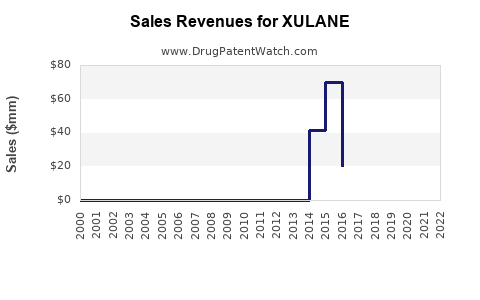
Answer: Xulane’s financial trajectory tracks a mature brand pattern: growth slows after initial adoption, then revenue flattens under net-price compression and share transfer to lower-cost CHCs. Without evidence of a late-stage “re-acceleration” (new indication expansion or major competitive displacement), performance is primarily a function of pricing and formulary status.
Revenue drivers
Xulane’s revenue is typically driven by:
- Units dispensed (pharmacy script volume and adherence conversion)
- Net price (rebates, discounts, chargebacks tied to payer volume commitments)
- Mix (monthly vs annual patient persistence; plan switching effects)
- Seasonality and prescriber behavior within women’s health networks
Margin pressure mechanics
Mature contraception brands often see margin compression through:
- PBM renegotiations at renewal cycles
- Increased preferred alternative placements
- Patient copay changes from tier moves
- Greater switching as patients experience cost sensitivity
For Xulane, the dominant question for financial trajectory is whether its net price holds faster than competitors’ net pricing declines. In a settled competitive field, net price usually erodes faster than unit volume.
What patents protect Xulane, and how does that affect competition?
Answer: Xulane is a mature product, which implies exclusivity and primary patent protection have largely moved into the post-expiration regime in most markets. Commercial dynamics therefore skew toward generic and therapeutic substitution rather than brand-protected longevity.
Patent estate impact on commercial outcomes
When patent protection weakens or expires, the revenue impact tends to follow this pattern:
- Early generic or authorized generic competition drives steep net price reduction
- PBM tiering shifts toward preferred lower-cost equivalents
- Brand contracts adjust to protect access, often via higher rebates
- Net sales flatten; remaining share depends on prescriber and patient preference
Key point for market dynamics
For Xulane, market outcomes are typically less about whether a specific formulation is protected and more about whether the category’s lowest-cost options remain in preferred access positions.
When does Xulane lose exclusivity, and what is the generic entry risk?
Answer: Xulane’s exclusivity is historical and the generic entry risk is best characterized as “already realized and ongoing through replacement and therapeutic substitution.” Current commercial exposure is dominated by competition within CHCs rather than a single imminent exclusivity date.
How generic entry usually plays out in CHC
In contraception, generic introduction effects include:
- Rapid share loss in populations sensitive to copays
- Gradual retention of brand share among patients anchored to patch-specific convenience
- Continued switching at renewal as plan formularies rebalance
Generic pathway and substitution realities
Even when patch-specific generics do not fully substitute every payer population, there is always substitution risk through other CHC routes if they are more favorably priced.
How strong is the Orange Book status of Xulane?
Answer: Xulane is a long-established FDA-approved contraceptive product. In this lifecycle stage, Orange Book listings generally provide limited incremental protection value for new revenue growth, because many core entries are no longer the binding constraint on generic access.
Commercial meaning of Orange Book status
Orange Book status matters mainly for:
- Litigation risk windows around manufacturing or patent-specific barriers
- Identifying which listed patents still create enforceable protection
For a mature product like Xulane, its commercial trajectory is usually explained by:
- Payer access status
- Net price trends
- Competitive alternatives within CHC
What patent litigation or Paragraph IV activity affects Xulane?
Answer: Xulane’s current market structure is typically consistent with a post-patent-expiration enforcement environment where litigation has already defined the initial generic access pathway. Ongoing litigation activity is not usually the primary driver of day-to-day revenue.
What to expect if disputes occur
When litigation does affect CHCs in later years, the most common impacts are:
- Temporary stays that delay specific competitor launch dates
- Settlement-based launch timing that still results in net price erosion
- Contractual carve-outs that shift coverage from brand to competitor
How does Xulane compare with other contraceptive patches and alternatives?
Answer: Xulane’s market performance is best viewed against:
- Competing patch-based or non-oral CHC options
- Oral CHC generics and preferred brands
- Vaginal ring CHCs
Competition is not only “same form factor.” Payers manage by cost per covered day, so non-patch alternatives can displace Xulane if they are cheaper and preferred.
Competitive dimension: route of administration vs cost
- Patches earn share among patients who value weekly dosing and convenience
- Oral pills dominate lowest-cost preferred lists because of extensive generic availability
- Rings compete where monthly dosing and formulary preferences align
Which companies compete against Xulane, and how does that affect pricing?
Answer: Xulane’s competitive set spans generics and authorized equivalents across CHC categories, plus brands where formulary placement persists. The practical effect is recurring pricing pressure through preferred product switches and aggressive rebate structures.
Pricing pressure channels
- PBM negotiations that lower net price regardless of FDA exclusivity
- Increased competitive set breadth, allowing plans to substitute within CHCs
- Copay adjustments that increase patient cost sensitivity
What is Xulane’s regulatory status and FDA pathway profile?
Answer: Xulane is an established FDA-approved drug. Its regulatory profile does not typically create a forward-looking growth catalyst; it mostly frames generic competition timing and labeling-based switching constraints.
Labeling and switching
Even when drugs are therapeutically interchangeable, labeling details influence:
- Coverage decisions
- Step edits
- Prior authorization criteria (patient history, contraindications, risk factors)
For revenue, the key regulator-driven effect is whether the product remains an “allowed preferred” option for plan members.
What are the commercial channel dynamics for Xulane (PBM, wholesaler, retail)?
Answer: Xulane’s market dynamics are shaped by PBM formularies and rebate economics, with wholesale and retail channel outcomes reflecting negotiated discounts and patient co-pay routing.
How PBM strategy impacts the financial trajectory
Common PBM approaches in mature CHCs include:
- Maintaining a preferred tier for one low-net-cost option
- Using step edits or quantity limits to manage higher-cost brands
- Switching preferred products as contracts renew
Net sales for brands like Xulane respond to:
- Effective net price reduction
- Script volume stability or modest decline depending on patient retention
- Greater churn during plan transitions
How much revenue exposure does Xulane have to pricing pressure and share loss?
Answer: Revenue exposure is high to pricing pressure relative to incremental demand growth. In mature contraception markets, brand volumes usually stabilize once penetration is established, while net price continues to compress as competing alternatives dominate preferred access.
Risk ranking for financial trajectory
- Net price erosion from preferred formulary substitution
- Unit displacement via competitor coverage for new users
- Renewed channel discounts reducing realized margin
- Less predictable driver: patient preference and prescriber inertia supporting residual brand share
Key Takeaways
- Xulane operates in a mature combined hormonal contraceptive market where financial trajectory is driven primarily by net price compression and formulary displacement risk.
- Competitive dynamics extend beyond patch-to-patch; therapeutic substitution through lower-cost CHCs limits growth upside.
- Patent and Orange Book protections are not typically the binding driver of forward commercial performance for an established CHC like Xulane.
- The principal financial risk is sustained payer-driven net price decline rather than volume collapse.
FAQs
1) Does Xulane face more pressure from generics of patches or from oral contraceptive alternatives?
Competitive pressure usually comes more from payer preferred-status shifts across the broader CHC class, including oral generics, because PBMs optimize for net cost per day.
2) Will a loss of formulary status for Xulane usually cause an immediate revenue drop?
Often yes, because script volume responds quickly to copay tier changes and prior-authorization or step-edit restrictions.
3) How do rebate renegotiations typically affect Xulane net sales?
They usually reduce realized net price and can offset part of unit losses, but sustained competitive contracting generally compresses margins and net sales over time.
4) Are patch-specific switching barriers stronger than route-to-route substitution in contraception?
Route-to-route substitution is commonly decisive for payers since coverage decisions depend on net cost and therapeutic equivalence frameworks.
5) What commercial metric best predicts Xulane’s near-term revenue trajectory?
Net price (realized after rebates) and preferred formulary access, which together determine effective revenue per script and volume sustainability.
References (APA)
- FDA. (n.d.). Orange Book: Approved Drug Products with Therapeutic Equivalence Evaluations. U.S. Food and Drug Administration. https://www.accessdata.fda.gov/scripts/cder/daf/
- FDA. (n.d.). Drugs@FDA. U.S. Food and Drug Administration. https://www.accessdata.fda.gov/scripts/cder/daf/
- Orange Book patent and exclusivity framework background. (n.d.). U.S. FDA and related regulatory materials. https://www.fda.gov/