XOFLUZA Drug Patent Profile
✉ Email this page to a colleague
Which patents cover Xofluza, and what generic alternatives are available?
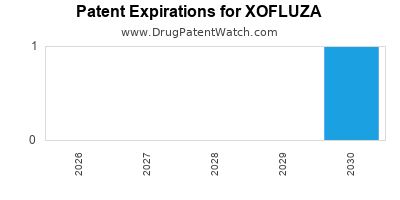
Xofluza is a drug marketed by Genentech Inc and is included in two NDAs. There are ten patents protecting this drug and one Paragraph IV challenge.
The generic ingredient in XOFLUZA is baloxavir marboxil. There is one drug master file entry for this compound. Two suppliers are listed for this compound. Additional details are available on the baloxavir marboxil profile page.
DrugPatentWatch® Litigation and Generic Entry Outlook for Xofluza
A generic version of XOFLUZA was approved as baloxavir marboxil by NORWICH on June 17th, 2026.
AI Deep Research
Questions you can ask:
- What is the 5 year forecast for XOFLUZA?
- What are the global sales for XOFLUZA?
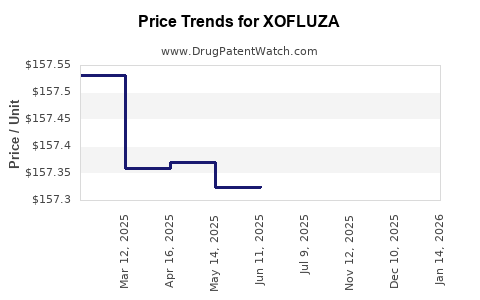
- What is Average Wholesale Price for XOFLUZA?
Summary for XOFLUZA
| US Patents: | 10 |
| Applicants: | 1 |
| NDAs: | 2 |
| Finished Product Suppliers / Packagers: | 2 |
| Raw Ingredient (Bulk) Api Vendors: | 60 |
| Clinical Trials: | 8 |
| Patent Applications: | 525 |
| Drug Prices: | Drug price information for XOFLUZA |
| Patent Litigation and PTAB cases: | See patent lawsuits and PTAB cases for XOFLUZA |
| What excipients (inactive ingredients) are in XOFLUZA? | XOFLUZA excipients list |
| DailyMed Link: | XOFLUZA at DailyMed |
Recent Clinical Trials for XOFLUZA
Identify potential brand extensions & 505(b)(2) entrants
| Sponsor | Phase |
|---|---|
| University Hospital, Geneva | PHASE3 |
| Ente Ospedaliero Cantonale, Ticino, Switzerland | PHASE3 |
| University of Zurich | PHASE3 |
Pharmacology for XOFLUZA
| Drug Class | Polymerase Acidic Endonuclease Inhibitor |
| Mechanism of Action | Chelating Activity Polymerase Acidic Endonuclease Inhibitors |
Paragraph IV (Patent) Challenges for XOFLUZA
| Tradename | Dosage | Ingredient | Strength | NDA | ANDAs Submitted | Submissiondate |
|---|---|---|---|---|---|---|
| XOFLUZA | Tablets | baloxavir marboxil | 40 mg and 80 mg | 210854 | 1 | 2022-10-24 |
US Patents and Regulatory Information for XOFLUZA
XOFLUZA is protected by twelve US patents and one FDA Regulatory Exclusivity.
| Applicant | Tradename | Generic Name | Dosage | NDA | Approval Date | TE | Type | RLD | RS | Patent No. | Patent Expiration | Product | Substance | Delist Req. | Exclusivity Expiration |
|---|---|---|---|---|---|---|---|---|---|---|---|---|---|---|---|
| Genentech Inc | XOFLUZA | baloxavir marboxil | TABLET;ORAL | 210854-003 | Mar 18, 2021 | AB | RX | Yes | Yes | ⤷ Start Trial | ⤷ Start Trial | ⤷ Start Trial | |||
| Genentech Inc | XOFLUZA | baloxavir marboxil | TABLET;ORAL | 210854-001 | Oct 24, 2018 | DISCN | Yes | No | 8,927,710 | ⤷ Start Trial | Y | ⤷ Start Trial | |||
| Genentech Inc | XOFLUZA | baloxavir marboxil | FOR SUSPENSION;ORAL | 214410-003 | May 30, 2025 | RX | Yes | Yes | 11,261,198 | ⤷ Start Trial | Y | ⤷ Start Trial | |||
| Genentech Inc | XOFLUZA | baloxavir marboxil | TABLET;ORAL | 210854-002 | Oct 24, 2018 | AB | RX | Yes | No | 11,306,106 | ⤷ Start Trial | ⤷ Start Trial | |||
| Genentech Inc | XOFLUZA | baloxavir marboxil | TABLET;ORAL | 210854-002 | Oct 24, 2018 | AB | RX | Yes | No | ⤷ Start Trial | ⤷ Start Trial | ⤷ Start Trial | |||
| Genentech Inc | XOFLUZA | baloxavir marboxil | TABLET;ORAL | 210854-001 | Oct 24, 2018 | DISCN | Yes | No | 12,064,438 | ⤷ Start Trial | Y | ⤷ Start Trial | |||
| Genentech Inc | XOFLUZA | baloxavir marboxil | TABLET;ORAL | 210854-002 | Oct 24, 2018 | AB | RX | Yes | No | 9,815,835 | ⤷ Start Trial | Y | ⤷ Start Trial | ||
| >Applicant | >Tradename | >Generic Name | >Dosage | >NDA | >Approval Date | >TE | >Type | >RLD | >RS | >Patent No. | >Patent Expiration | >Product | >Substance | >Delist Req. | >Exclusivity Expiration |
EU/EMA Drug Approvals for XOFLUZA
| Company | Drugname | Inn | Product Number / Indication | Status | Generic | Biosimilar | Orphan | Marketing Authorisation | Marketing Refusal |
|---|---|---|---|---|---|---|---|---|---|
| Roche Registration GmbH | Xofluza | baloxavir marboxil | EMEA/H/C/004974Treatment of influenzaXofluza is indicated for the treatment of uncomplicated influenza in patients aged 1 year and above.Post exposure prophylaxis of influenzaXofluza is indicated for post-exposure prophylaxis of influenza in individuals aged 1 year and above.Xofluza should be used in accordance with official recommendations. | Authorised | no | no | no | 2021-01-07 | |
| >Company | >Drugname | >Inn | >Product Number / Indication | >Status | >Generic | >Biosimilar | >Orphan | >Marketing Authorisation | >Marketing Refusal |
International Patents for XOFLUZA
When does loss-of-exclusivity occur for XOFLUZA?
Based on analysis by DrugPatentWatch, the following patents block generic entry in the countries listed below:
Argentina
Patent: 3890
Estimated Expiration: ⤷ Start Trial
Patent: 5354
Estimated Expiration: ⤷ Start Trial
Australia
Patent: 18369241
Estimated Expiration: ⤷ Start Trial
Patent: 19259686
Estimated Expiration: ⤷ Start Trial
Patent: 23201826
Estimated Expiration: ⤷ Start Trial
Brazil
Patent: 2020009634
Estimated Expiration: ⤷ Start Trial
Patent: 2020021059
Estimated Expiration: ⤷ Start Trial
Patent: 2022006356
Estimated Expiration: ⤷ Start Trial
Canada
Patent: 82522
Estimated Expiration: ⤷ Start Trial
Patent: 98006
Estimated Expiration: ⤷ Start Trial
Patent: 99815
Estimated Expiration: ⤷ Start Trial
China
Patent: 1615390
Estimated Expiration: ⤷ Start Trial
Patent: 2236146
Estimated Expiration: ⤷ Start Trial
European Patent Office
Patent: 11767
Estimated Expiration: ⤷ Start Trial
Patent: 85716
Estimated Expiration: ⤷ Start Trial
Patent: 50773
Estimated Expiration: ⤷ Start Trial
Israel
Patent: 4625
Estimated Expiration: ⤷ Start Trial
Patent: 8161
Estimated Expiration: ⤷ Start Trial
Japan
Patent: 90436
Estimated Expiration: ⤷ Start Trial
Patent: 18099
Estimated Expiration: ⤷ Start Trial
Patent: 60644
Estimated Expiration: ⤷ Start Trial
Patent: 51891
Estimated Expiration: ⤷ Start Trial
Patent: 19189635
Estimated Expiration: ⤷ Start Trial
Patent: 20079283
Estimated Expiration: ⤷ Start Trial
Patent: 2019098259
Estimated Expiration: ⤷ Start Trial
Patent: 2019208540
Estimated Expiration: ⤷ Start Trial
Mexico
Patent: 5463
Estimated Expiration: ⤷ Start Trial
Patent: 20004680
Estimated Expiration: ⤷ Start Trial
Patent: 20011130
Estimated Expiration: ⤷ Start Trial
Patent: 22009094
Estimated Expiration: ⤷ Start Trial
Poland
Patent: 11767
Estimated Expiration: ⤷ Start Trial
South Korea
Patent: 2501180
Estimated Expiration: ⤷ Start Trial
Patent: 2562514
Estimated Expiration: ⤷ Start Trial
Patent: 200089290
Estimated Expiration: ⤷ Start Trial
Patent: 200144127
Estimated Expiration: ⤷ Start Trial
Spain
Patent: 58136
Estimated Expiration: ⤷ Start Trial
Taiwan
Patent: 1922259
Estimated Expiration: ⤷ Start Trial
Patent: 2000206
Estimated Expiration: ⤷ Start Trial
Patent: 2313057
Estimated Expiration: ⤷ Start Trial
Patent: 88557
Estimated Expiration: ⤷ Start Trial
Patent: 95462
Estimated Expiration: ⤷ Start Trial
Patent: 22498
Estimated Expiration: ⤷ Start Trial
Generics may enter earlier, or later, based on new patent filings, patent extensions, patent invalidation, early generic licensing, generic entry preferences, and other factors.
See the table below for additional patents covering XOFLUZA around the world.
| Country | Patent Number | Title | Estimated Expiration |
|---|---|---|---|
| Argentina | 104428 | ⤷ Start Trial | |
| Australia | 2016256125 | ⤷ Start Trial | |
| Brazil | 112017022550 | ⤷ Start Trial | |
| Canada | 2984130 | ⤷ Start Trial | |
| Chile | 2017002711 | ⤷ Start Trial | |
| China | 107709321 | ⤷ Start Trial | |
| China | 112876473 | ⤷ Start Trial | |
| >Country | >Patent Number | >Title | >Estimated Expiration |
Supplementary Protection Certificates for XOFLUZA
| Patent Number | Supplementary Protection Certificate | SPC Country | SPC Expiration | SPC Description |
|---|---|---|---|---|
| 3428170 | LUC00198 | Luxembourg | ⤷ Start Trial | PRODUCT NAME: BALOXAVIR MARBOXIL OU UN SEL PHARMACEUTIQUEMENT ACCEPTABLE DE CELUI-CI; AUTHORISATION NUMBER AND DATE: EU/1/20/1500 20210108 |
| 2620436 | C02620436/01 | Switzerland | ⤷ Start Trial | PRODUCT NAME: BALOXAVIRUM MARBOXILUM; REGISTRATION NO/DATE: SWISSMEDIC-ZULASSUNG 67426 21.02.2020 |
| 2620436 | 301093 | Netherlands | ⤷ Start Trial | PRODUCT NAME: BALOXAVIR MARBOXIL, ALSMEDE FARMACEUTISCH AANVAARDBARE ZOUTEN EN SOLVATEN ERVAN; REGISTRATION NO/DATE: EU/1/20/1500 20210108 |
| 2620436 | PA2021505 | Lithuania | ⤷ Start Trial | PRODUCT NAME: BALOKSAVIRO MARBOKSILAS ARBA JO FARMACINIU POZIURIU PRIIMTINA DRUSKA ARBA SOLVATAS; REGISTRATION NO/DATE: EU/1/20/1500 20210107 |
| 2620436 | 122021000017 | Germany | ⤷ Start Trial | PRODUCT NAME: BALOXAVIR MARBOXIL SOWIE SEINE PHARMAZEUTISCH ANNEHMBAREN SALZE UND SOLVATE; REGISTRATION NO/DATE: EU/1/20/1500 20210107 |
| 2620436 | CA 2021 00004 | Denmark | ⤷ Start Trial | PRODUCT NAME: BALOXAVIR MARBOXIL ELLER ET FARMACEUTISK ACCEPTABELT SALT ELLER SOLVAT DERAF; REG. NO/DATE: EU/1/20/1500 20210108 |
| 2620436 | 2021C/510 | Belgium | ⤷ Start Trial | PRODUCT NAME: BALOXAVIR MARBOXIL OF EEN FARMACEUTISCH AANVAARDBAAR ZOUT OF SOLVAAT HIERVAN; AUTHORISATION NUMBER AND DATE: EU/1/20/1500 20210108 |
| >Patent Number | >Supplementary Protection Certificate | >SPC Country | >SPC Expiration | >SPC Description |
More… ↓
DrugChatter Q&A for XOFLUZA
Make Better Decisions: Try a trial or see plans & pricing
Drugs may be covered by multiple patents or regulatory protections. All trademarks and applicant names are the property of their respective owners or licensors. Although great care is taken in the proper and correct provision of this service, thinkBiotech LLC does not accept any responsibility for possible consequences of errors or omissions in the provided data. The data presented herein is for information purposes only. There is no warranty that the data contained herein is error free. We do not provide individual investment advice. This service is not registered with any financial regulatory agency. The information we publish is educational only and based on our opinions plus our models. By using DrugPatentWatch you acknowledge that we do not provide personalized recommendations or advice. thinkBiotech performs no independent verification of facts as provided by public sources nor are attempts made to provide legal or investing advice. Any reliance on data provided herein is done solely at the discretion of the user. Users of this service are advised to seek professional advice and independent confirmation before considering acting on any of the provided information. thinkBiotech LLC reserves the right to amend, extend or withdraw any part or all of the offered service without notice.
ISSN: 2162-2639

Privacy and Cookies
Terms & Conditions
Site Map
DrugPatentWatch Alternatives
LOE / Major Patent Expirations 2026 - 2027
NCE-1 Patent Challenge Dates 2026 - 2027
Friedman, Yali. "DrugPatentWatch" DrugPatentWatch, thinkBiotech, 2026, www.DrugPatentWatch.com.
See Primary Research Papers Citing DrugPatentWatch