Last updated: August 4, 2026
VOGELXO is a testosterone gel 1% product marketed in the United States by Upsher-Smith Laboratories, a subsidiary of Japan’s Sawai Pharmaceutical. Its commercial position is that of a lower-cost branded testosterone replacement product competing with generic testosterone gels, AndroGel equivalents, and newer oral or injectable therapies. FDA approval and market access are established, but product-level revenue, prescription volume, and profitability are not publicly reported. VOGELXO’s financial trajectory therefore cannot be quantified from issuer disclosures.
What is VOGELXO and how does it compete in testosterone replacement therapy?
VOGELXO is a topical testosterone gel containing testosterone 1%. It is approved for replacement therapy in adult males with testosterone deficiency associated with an identified medical condition. The product is applied once daily to the shoulders and upper arms under the FDA-approved labeling.[1]
| Attribute |
VOGELXO |
| Active ingredient |
Testosterone |
| Dosage form |
Topical gel |
| Strength |
1% |
| Primary indication |
Male hypogonadism associated with an identified medical condition |
| U.S. regulatory pathway |
NDA approval |
| Sponsor |
Upsher-Smith Laboratories, LLC |
| Parent company |
Sawai Pharmaceutical Co., Ltd. |
| Controlled-substance status |
Schedule III testosterone product |
| Main competitors |
Generic testosterone gel, AndroGel, Testim, injections, oral testosterone, nasal testosterone |
| Primary commercial channel |
U.S. retail and specialty pharmacy |
VOGELXO competes in a mature testosterone replacement therapy market. Physicians and patients generally choose among gels, injections, oral products, nasal formulations, and implantable systems based on dosing convenience, insurance coverage, adherence, adverse effects, and patient preference.
The product’s most direct competition comes from generic testosterone gel 1% and authorized or branded versions of AndroGel. Injectable testosterone cypionate and testosterone enanthate typically have lower acquisition costs and maintain significant share because of their established use and broad generic availability.
When did VOGELXO receive FDA approval?
VOGELXO received U.S. FDA approval in 2014 under NDA 203098, according to the product labeling and FDA approval materials.[1][2] Its approval was based on the established safety and efficacy of testosterone replacement therapy and the product’s formulation and delivery characteristics.
The FDA label includes warnings relating to:
- Transfer of testosterone to women and children through skin contact.
- Virilization in exposed females or children.
- Potential effects on prostate tissue.
- Polycythemia and increased hematocrit.
- Cardiovascular and thromboembolic risk considerations.
- Abuse, misuse, and dependence associated with testosterone products.
- Potential infertility caused by suppression of spermatogenesis.
Testosterone products are regulated controlled substances. This creates compliance obligations for prescribing, dispensing, distribution, and promotional activity. Those requirements apply across the category and do not create a unique competitive advantage for VOGELXO.
What is the Orange Book status of VOGELXO?
VOGELXO has an FDA-approved NDA and is listed in the FDA’s Approved Drug Products with Therapeutic Equivalence Evaluations, commonly called the Orange Book.[2]
The commercially relevant patent position is limited compared with products protected by active formulation or device patents. The principal market barriers for VOGELXO are regulatory approval, manufacturing compliance, controlled-substance distribution requirements, insurance access, and brand recognition rather than a long remaining patent term.
For practical market analysis, VOGELXO should be treated as an off-patent or substantially exposed testosterone gel product. The absence of a meaningful remaining patent barrier permits competition from generic testosterone gel products and limits the sponsor’s ability to use patent litigation to preserve pricing.
What patents protect VOGELXO?
Publicly available product information does not establish a significant active patent estate that protects VOGELXO from generic testosterone gel competition. The product’s protection is primarily regulatory and commercial rather than patent-based.
Potentially relevant intellectual-property categories include:
| IP category |
Relevance to VOGELXO |
| Composition patent |
Limited because testosterone is an established active ingredient |
| Formulation patent |
May cover specific gel excipients or concentration, but no major blocking position is publicly evident |
| Device or pump patent |
Could apply to packaging or delivery components |
| Manufacturing know-how |
May protect process consistency and scale-up economics |
| Trademark |
VOGELXO brand name remains commercially relevant |
| Labeling rights |
Limited because testosterone replacement indications are established |
The absence of a visible blocking patent position does not eliminate technical barriers. A competitor must still demonstrate formulation quality, content uniformity, stability, container-closure integrity, microbial control, and equivalent clinical performance where required by the FDA pathway.
How many patents cover VOGELXO and when does exclusivity expire?
No material unexpired patent exclusivity period can be reliably assigned to VOGELXO from the product’s publicly available regulatory profile. FDA approval occurred in 2014, and any ordinary regulatory exclusivity associated with the original approval would have expired years ago.
VOGELXO therefore does not have the profile of a product whose launch depends on a future patent cliff. Its commercial trajectory is driven by price competition and formulary status rather than by the timing of a single dominant patent expiration.
The relevant exclusivity timeline is:
| Event |
Timing |
| FDA approval |
2014 |
| Early commercial availability |
Following FDA approval and launch by Upsher-Smith |
| Expected loss of ordinary approval-related exclusivity |
Expired |
| Current competitive environment |
Generic and branded-generic testosterone products |
| Remaining strategic protection |
Brand, distribution, manufacturing, and contracting capabilities |
Are there Paragraph IV challenges against VOGELXO?
VOGELXO is not primarily a reference product with a widely recognized, high-value patent estate that would normally generate extensive Paragraph IV litigation. The more important competitive issue is the availability of generic testosterone gel products and competing testosterone delivery systems.
Paragraph IV certification risk is therefore more relevant to the underlying testosterone gel market than to a major VOGELXO-specific patent dispute. Generic applicants can challenge listed patents by asserting that patents are invalid, unenforceable, or not infringed. Where no meaningful Orange Book patents remain, market entry can proceed without the multi-year litigation cycle associated with heavily patented products.
What formulations are protected by VOGELXO?
VOGELXO’s commercial formulation is testosterone gel 1%. The formulation is designed for transdermal delivery and daily administration to the shoulders and upper arms.
The formulation’s technical value lies in:
- Delivery of testosterone through the skin.
- Consistent dosing from a gel container or pump.
- Rapid drying after application.
- Reduced application burden compared with multiple daily dosing.
- Product labeling designed to reduce secondary exposure.
The formulation does not provide complete protection from therapeutic substitution. Patients can move between gels, injections, oral testosterone products, nasal formulations, and implantable systems. Payers often favor lower-cost injectable products unless a patient has a clinical or adherence reason to use a topical formulation.
What is the market size and competitive landscape for testosterone replacement therapy?
The U.S. testosterone replacement market includes several distinct segments.
| Segment |
Competitive position |
| Injectable testosterone cypionate/enanthate |
Low-cost, widely available, strong generic competition |
| Testosterone gels |
Established but exposed to generic price pressure |
| Oral testosterone undecanoate |
Higher-priced, differentiated by oral administration |
| Subcutaneous autoinjectors |
Convenience-driven, branded pricing |
| Nasal testosterone |
Lower systemic exposure and differentiated administration |
| Pellets |
Long dosing interval but procedure-based administration |
| Transdermal patches |
Smaller segment because of tolerability and convenience issues |
VOGELXO is most exposed to generic testosterone gel and branded-generic products. It is less directly exposed to oral products such as JATENZO, Kyzatrex, and Tlando when patients or physicians prioritize oral administration. It also competes indirectly with Xyosted, Natesto, Aveed, testosterone pellets, and standard injections.
The market has persistent clinical demand because testosterone deficiency is a chronic condition requiring ongoing treatment. Demand is constrained by diagnostic requirements, safety monitoring, payer controls, and FDA scrutiny of inappropriate testosterone prescribing.
How does VOGELXO compare with AndroGel and generic testosterone gel?
| Factor |
VOGELXO |
AndroGel |
Generic testosterone gel |
| Active ingredient |
Testosterone |
Testosterone |
Testosterone |
| Gel strength |
1% |
1% and other approved strengths depending on product |
Commonly 1% |
| Brand position |
Branded generic or alternative brand |
Originator brand |
Lowest-cost segment |
| Patent leverage |
Limited |
Historical patent estate, largely expired or narrowed |
Usually no originator-brand leverage |
| Price power |
Low to moderate |
Higher where coverage permits |
Low |
| Prescriber familiarity |
Established |
Very high |
High |
| Payer preference |
Dependent on contract |
Often restricted by formulary |
Frequently preferred |
| Key differentiation |
Brand, supply, contracting |
Legacy recognition and product familiarity |
Price |
VOGELXO’s main commercial opportunity is to win prescriptions from higher-priced branded gels while maintaining a margin above unbranded generic products. That strategy depends on net pricing, pharmacy benefit contracts, supply reliability, and sales execution.
What is the financial trajectory of VOGELXO?
Sawai Pharmaceutical does not publicly disclose VOGELXO revenue, gross margin, prescription volume, or operating profit as separate line items in its public financial reporting.[3][4] Upsher-Smith also does not provide a product-level financial statement for VOGELXO.
The financial trajectory can therefore be assessed only through market structure:
- Revenue growth is likely constrained by generic competition.
- Unit demand may remain stable because testosterone replacement is chronic therapy.
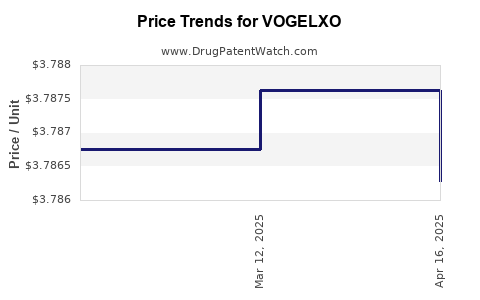
- Net pricing is vulnerable to payer substitution and pharmacy benefit negotiations.
- Gross margin depends heavily on manufacturing cost, contract pricing, and channel mix.
- Product-level earnings are unlikely to be material to Sawai’s consolidated financial results unless VOGELXO achieves substantial share or benefits from a supply disruption affecting competitors.
VOGELXO’s economics are more likely to resemble a mature branded-generic product than a growth pharmaceutical asset. Volume stability can offset price erosion, but durable revenue expansion would require share gains, a supply advantage, improved formulary access, or a differentiated delivery format.
What licensing deals affect VOGELXO?
No major publicly disclosed licensing transaction has been identified as the central commercial driver for VOGELXO. The product is associated with Upsher-Smith, which was acquired by Sawai Pharmaceutical in 2019.[5]
The Sawai ownership structure gives VOGELXO access to a larger generic and specialty-pharmaceutical platform. It also places the product within a portfolio-management framework focused on manufacturing efficiency, regulatory compliance, product selection, and U.S. commercial distribution.
No public evidence indicates that a separate licensing payment, royalty burden, or co-development arrangement materially determines VOGELXO’s current profitability.
What patent litigation affects VOGELXO?
No major active patent litigation involving VOGELXO is central to its current market position based on publicly available information. The product does not appear to face the type of litigation profile associated with newly launched, heavily patented specialty drugs.
The principal legal risks are more likely to involve:
- Product liability and secondary-exposure claims.
- Controlled-substance compliance.
- Promotional and labeling compliance.
- Manufacturing and quality disputes.
- Trademark or unfair-competition claims.
- Distribution and supply agreements.
Testosterone products have faced regulatory and legal scrutiny over cardiovascular risk, prescribing practices, abuse, and off-label use. These category-level issues can increase compliance costs and affect prescribing without creating patent-based exclusivity.
What generic launch risks exist for VOGELXO?
Generic entry risk is high because testosterone gel is an established dosage form with known clinical use and limited patent protection. A generic competitor can pressure VOGELXO through:
- Lower acquisition cost.
- Preferred formulary placement.
- Pharmacy substitution.
- Wholesaler incentives.
- Larger manufacturing scale.
- Aggressive contracting.
VOGELXO retains some commercial defenses. Prescribers may prefer a familiar branded product, patients may remain stable on an established formulation, and supply disruptions can shift market share toward reliable suppliers. These defenses are weaker when payers mandate generic substitution.
Does VOGELXO face biosimilar risk?
VOGELXO does not face biosimilar competition because testosterone is a small-molecule active ingredient, not a biologic. The relevant competitors are generic drugs approved under the abbreviated new drug application pathway and other branded testosterone products.
This distinction matters commercially. Biosimilar launches often involve interchangeability, manufacturing complexity, and biologic reference-product litigation. VOGELXO instead faces conventional generic substitution and formulation-level competition.
What manufacturing and geographic barriers protect VOGELXO?
VOGELXO’s principal geographic market is the United States. Its commercial protection outside the U.S. is limited unless separate national approvals, trademarks, patents, or distribution arrangements exist.
Manufacturing barriers include:
- Controlled-substance handling.
- FDA current good manufacturing practice compliance.
- Consistent testosterone concentration.
- Stability and preservative control.
- Validated packaging and pump performance.
- Prevention of cross-contamination.
- Supply-chain controls for a regulated active ingredient.
These barriers can support supply reliability and discourage small entrants, but they do not create strong exclusivity. Large generic manufacturers can generally address the requirements if the expected market return justifies the investment.
What is the outlook for VOGELXO?
VOGELXO has a stable but low-growth market profile. The product benefits from chronic treatment demand and established physician familiarity. Its weaknesses are limited differentiation, generic competition, payer pressure, and the availability of lower-cost injections and newer delivery systems.
The most likely commercial trajectory is:
| Period |
Expected market dynamic |
| Near term |
Stable demand with continued price and formulary pressure |
| Medium term |
Gradual erosion unless Upsher-Smith gains contracts or supply share |
| Upside case |
Share gains from supply reliability, pricing, or brand retention |
| Downside case |
Accelerated substitution by generic gel or injectable testosterone |
| Long-term |
Mature product economics with limited patent-driven upside |
Key Takeaways
- VOGELXO is a testosterone gel 1% product approved by the FDA in 2014.
- Upsher-Smith markets the product, and Sawai Pharmaceutical owns Upsher-Smith.
- The product competes mainly with generic testosterone gel, AndroGel, and injectable testosterone.
- No material unexpired patent estate or active VOGELXO-specific patent litigation is central to the current market.
- Paragraph IV and biosimilar risks are limited for VOGELXO itself; conventional generic substitution is the primary threat.
- VOGELXO revenue and profitability are not separately disclosed by Sawai or Upsher-Smith.
- The product’s financial outlook is mature and price-sensitive rather than growth-oriented.
- Commercial performance depends on formulary access, supply reliability, manufacturing cost, and brand retention.
FAQs
Is VOGELXO still available in the United States?
VOGELXO is an FDA-approved U.S. testosterone gel product associated with Upsher-Smith. Commercial availability can vary by wholesaler, pharmacy, inventory, and payer coverage.
Is VOGELXO a generic version of AndroGel?
VOGELXO competes with AndroGel and generic testosterone gel, but it is marketed under its own FDA-approved product identity. It is best analyzed as a branded testosterone gel alternative in a largely genericized market.
Can pharmacies substitute generic testosterone for VOGELXO?
Substitution depends on the specific product, state law, prescription instructions, payer rules, and therapeutic-equivalence determinations. Testosterone gel products may not be interchangeable solely because they contain the same active ingredient and strength.
Is VOGELXO covered by Medicare Part D?
Coverage depends on the Part D plan formulary, utilization-management requirements, prior authorization, and whether a generic testosterone product is preferred. Coverage is not uniform across plans.
Does Sawai report VOGELXO sales separately?
Sawai’s public financial disclosures do not provide a separate VOGELXO revenue or profit line. The product is included within broader business and geographic reporting.
References
- U.S. Food and Drug Administration. (2014). VOGELXO (testosterone) gel, 1% prescribing information.
- U.S. Food and Drug Administration. (n.d.). Approved drug products with therapeutic equivalence evaluations, Orange Book.
- Sawai Pharmaceutical Co., Ltd. (2024). Annual report and financial results materials.
- Sawai Pharmaceutical Co., Ltd. (2023). Integrated report.
- Sawai Pharmaceutical Co., Ltd. (2019). Announcement of acquisition of Upsher-Smith Laboratories.