You're using a free limited version of DrugPatentWatch: Upgrade for Complete Access

Last Updated: December 12, 2025

VOCABRIA Drug Patent Profile


✉ Email this page to a colleague

« Back to Dashboard


When do Vocabria patents expire, and when can generic versions of Vocabria launch?

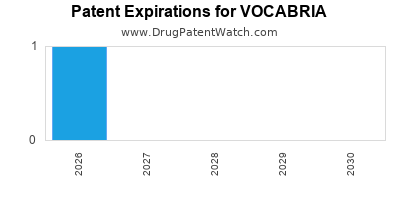
Vocabria is a drug marketed by Viiv Hlthcare and is included in one NDA. There are two patents protecting this drug.

This drug has one hundred and twenty-six patent family members in thirty-three countries.

The generic ingredient in VOCABRIA is cabotegravir sodium. One supplier is listed for this compound. Additional details are available on the cabotegravir sodium profile page.

DrugPatentWatch® Generic Entry Outlook for Vocabria

Vocabria was eligible for patent challenges on January 21, 2025.

By analyzing the patents and regulatory protections it appears that the earliest date for generic entry will be February 4, 2031. This may change due to patent challenges or generic licensing.

Indicators of Generic Entry

< Available with Subscription >

  Get Started Free

AI Deep Research
Questions you can ask:
  • What is the 5 year forecast for VOCABRIA?
  • What are the global sales for VOCABRIA?
  • What is Average Wholesale Price for VOCABRIA?
Summary for VOCABRIA
International Patents:126
US Patents:2
Applicants:1
NDAs:1
Finished Product Suppliers / Packagers: 1
Raw Ingredient (Bulk) Api Vendors: 20
Clinical Trials: 1
Patent Applications: 17
What excipients (inactive ingredients) are in VOCABRIA?VOCABRIA excipients list
DailyMed Link:VOCABRIA at DailyMed
Drug patent expirations by year for VOCABRIA
DrugPatentWatch® Estimated Loss of Exclusivity (LOE) Date for VOCABRIA
Generic Entry Date for VOCABRIA*:
Constraining patent/regulatory exclusivity:
NDA:
Dosage:
TABLET;ORAL

*The generic entry opportunity date is the latter of the last compound-claiming patent and the last regulatory exclusivity protection. Many factors can influence early or later generic entry. This date is provided as a rough estimate of generic entry potential and should not be used as an independent source.

Recent Clinical Trials for VOCABRIA

Identify potential brand extensions & 505(b)(2) entrants

SponsorPhase
Institut de Mdecine et d'Epidmiologie Applique - Fondation Internationale Lon M'BaPHASE2
ANRS, Emerging Infectious DiseasesPHASE2

See all VOCABRIA clinical trials

US Patents and Regulatory Information for VOCABRIA

VOCABRIA is protected by two US patents and three FDA Regulatory Exclusivities.

Based on analysis by DrugPatentWatch, the earliest date for a generic version of VOCABRIA is ⤷  Get Started Free.

This potential generic entry date is based on patent 8,410,103.

Generics may enter earlier, or later, based on new patent filings, patent extensions, patent invalidation, early generic licensing, generic entry preferences, and other factors.

Applicant Tradename Generic Name Dosage NDA Approval Date TE Type RLD RS Patent No. Patent Expiration Product Substance Delist Req. Exclusivity Expiration
Viiv Hlthcare VOCABRIA cabotegravir sodium TABLET;ORAL 212887-001 Jan 21, 2021 RX Yes Yes 8,410,103 ⤷  Get Started Free Y Y ⤷  Get Started Free
Viiv Hlthcare VOCABRIA cabotegravir sodium TABLET;ORAL 212887-001 Jan 21, 2021 RX Yes Yes ⤷  Get Started Free ⤷  Get Started Free ⤷  Get Started Free
Viiv Hlthcare VOCABRIA cabotegravir sodium TABLET;ORAL 212887-001 Jan 21, 2021 RX Yes Yes 10,927,129 ⤷  Get Started Free Y Y ⤷  Get Started Free
Viiv Hlthcare VOCABRIA cabotegravir sodium TABLET;ORAL 212887-001 Jan 21, 2021 RX Yes Yes ⤷  Get Started Free ⤷  Get Started Free ⤷  Get Started Free
>Applicant >Tradename >Generic Name >Dosage >NDA >Approval Date >TE >Type >RLD >RS >Patent No. >Patent Expiration >Product >Substance >Delist Req. >Exclusivity Expiration

International Patents for VOCABRIA

When does loss-of-exclusivity occur for VOCABRIA?

Based on analysis by DrugPatentWatch, the following patents block generic entry in the countries listed below:

Canada

Patent: 06282
Patent: DERIVE POLYCYCLIQUE DE LA CARBAMOYLPYRIDONE A ACTIVITE INHIBITRICE SUR L'INTEGRASE DU VIH (POLYCYCLIC CARBAMOYLPYRIDONE DERIVATIVE HAVING HIV INTEGRASEINHIBITORY ACTIVITY)
Estimated Expiration: ⤷  Get Started Free

Patent: 26956
Patent: DERIVE DE CARBAMOYLPYRIDONE POLYCYCLIQUE AYANT UNE ACTIVITE D'INHIBITION SUR L'INTEGRASE DU VIH (POLYCYCLIC CARBAMOYLPYRIDONE DERIVATIVE HAVING INHIBITORY ACTIVITY ON HIV INTEGRASE)
Estimated Expiration: ⤷  Get Started Free

China

Patent: 1212903
Patent: Polycyclic carbamoylpyridone derivative having HIV integrase inhibitory activity
Estimated Expiration: ⤷  Get Started Free

Viet Nam

Patent: 404
Patent: Polycyclic carbamoylpyridone derivative having HIV integrase inhibitory activity
Estimated Expiration: ⤷  Get Started Free

Generics may enter earlier, or later, based on new patent filings, patent extensions, patent invalidation, early generic licensing, generic entry preferences, and other factors.

See the table below for additional patents covering VOCABRIA around the world.

Country Patent Number Title Estimated Expiration
Slovenia 1874117 ⤷  Get Started Free
European Patent Office 3187225 DÉRIVÉ DE CARBAMOYLPYRIDONE POLYCYCLIQUE DOTÉ D'UNE ACTIVITÉ INHIBITRICE DE L'INTÉGRASE DU VIH (POLYCYCLIC CARBAMOYLPYRIDONE DERIVATIVE HAVING HIV INTEGRASE INHIBITORY ACTIVITY) ⤷  Get Started Free
South Korea 20080009733 POLYCYCLIC CARBAMOYLPYRIDONE DERIVATIVE HAVING HIV INTEGRASE INHIBITORY ACTIVITY ⤷  Get Started Free
Ukraine 96568 ПОЛІЦИКЛІЧНЕ ПОХІДНЕ КАРБАМОЇЛПІРИДОНУ ЯК ІНГІБОР ВІЛ-ІНТЕГРАЗИ[ПОЛИЦИКЛИЧЕСКОЕ ПРОИЗВОДНОЕ КАРБАМОИЛПИРИДОНА КАК ИНГИБИТОР ВИЧ-ИНТЕГРАЗЫ (POLYCYCLIC CARBAMOYL PYRIDONE DERIVATIVE AS HIV-INTEGRASE INHIBITOR) ⤷  Get Started Free
Portugal 3284520 ⤷  Get Started Free
>Country >Patent Number >Title >Estimated Expiration

Supplementary Protection Certificates for VOCABRIA

Patent Number Supplementary Protection Certificate SPC Country SPC Expiration SPC Description
1874117 14C0041 France ⤷  Get Started Free PRODUCT NAME: DOLUTEGRAVIR ET SES SELS OU SOLVATES PHARMACEUTIQUEMENT ACCEPTABLES,NOTAMMENT LE DOLUTEGRAVIR SODIQUE.; REGISTRATION NO/DATE: EU/1/13/892/001-002 20140121
2465580 CA 2021 00010 Denmark ⤷  Get Started Free PRODUCT NAME: CABOTEGRAVIR ELLER ET FARMACEUTISK ACCEPTABELT SALT ELLER SOLVAT DERAF; REG. NO/DATE: EU/1/20/1481 20201221
2465580 C20210013 00397 Estonia ⤷  Get Started Free PRODUCT NAME: KABOTEGRAVIIR;REG NO/DATE: EU/1/120/1481; 21.12.2020
1874117 CA 2014 00032 Denmark ⤷  Get Started Free PRODUCT NAME: DOLUTEGRAVIR ELLER ET FARMACEUTISK ACCEPTABELT SALT ELLER SOLVAT DERAF, HERUNDER DOLUTEGRAVIRNATRIUM; REG. NO/DATE: EU/1/13/892/001-002 20140116
2465580 C02465580/01 Switzerland ⤷  Get Started Free PRODUCT NAME: CABOTEGRAVIR; REGISTRATION NO/DATE: SWISSMEDIC-ZULASSUNG 67740 08.10.2021
>Patent Number >Supplementary Protection Certificate >SPC Country >SPC Expiration >SPC Description

Market Dynamics and Financial Trajectory for VOCABRIA (Ripretinib)

Last updated: November 17, 2025

Introduction

VOCABRIA, marketed as Ripretinib, is an oral switch control kinase inhibitor developed by Deciphera Pharmaceuticals. Approved by the U.S. Food and Drug Administration (FDA) in February 2020, it addresses advanced gastrointestinal stromal tumors (GIST) resistant to prior therapies. As a relatively recent entrant in the oncology therapeutics landscape, VOCABRIA's market performance and financial trajectory are shaped by evolving market dynamics, competitive pressures, regulatory developments, and commercialization strategies. This analysis delineates these factors with a focus on current trends, growth prospects, and investment implications.

Market Overview

Therapeutic Indication and Clinical Landscape

VOCABRIA targets adult patients with advanced, imatinib-resistant or -intolerant GIST, a rare but aggressive mesenchymal tumor with limited treatment options after resistance to first-line therapies. The drug's mechanism as a “switch-control” kinase inhibitor adds value by effectively overcoming secondary mutations in KIT and PDGFRA, common resistance pathways in GIST [1].

The GIST market, particularly post-imatinib failure, is niche but critically underserved. Historically, agents such as sunitinib and regorafenib dominated this space, but VOCABRIA seeks to occupy a more targeted, durable niche, especially given its unique mechanism and demonstrated efficacy in clinical trials.

Market Size and Patient Population

Estimating the global GIST market segment highlights its modest scale but significant growth potential. Approximately 5,000 to 6,000 new GIST cases are diagnosed annually in the U.S., with similar incidence rates globally [2]. The subset of patients who are resistant or intolerant to frontline TKIs constitutes the primary market for VOCABRIA. Market penetration hinges on diagnosis rates, treatment resistance patterns, and regulatory approvals across key regions.

Competitive Landscape

While VOCABRIA's mechanism of action and clinical data present competitive advantages, the market remains crowded with alternatives and pipeline candidates:

  • Existing Therapies: Sunitinib, regorafenib, and avapritinib (more recently approved for PDGFRA exon 18 mutations) serve as current standards of care, with some overlapping indications.
  • Emerging Agents: Pipeline drugs targeting similar mutations or resistance pathways, including next-generation TKIs and antibody-drug conjugates, could challenge VOCABRIA’s market share.

Pricing and Reimbursement

Pricing strategies are crucial for market uptake. FDA approval coincided with a list price of approximately $19,750 per month, positioning VOCABRIA as a premium therapy. Reimbursement by insurers and national health systems depends on demonstrated clinical benefit, cost-effectiveness, and comparative efficacy. Limited data on long-term survival benefit impact reimbursement negotiations, especially in markets with stringent cost controls like Europe and Asia.

Market Dynamics Influencing VOCABRIA's Trajectory

Regulatory Environment

Regulatory decisions actively shape the drug's market accessibility and subsequent sales growth. FDA approval based on clinical endpoints like overall response rate and progression-free survival (PFS) has expedited initial access. However, approvals in other regions, such as the European Medicines Agency (EMA), are pending and could influence global sales trajectories.

Post-marketing surveillance and potential label expansions—for example, broader indications in other KIT-driven tumors—could positively influence market size.

Clinical Development and Label Expansion

Ongoing and future trials exploring VOCABRIA's efficacy in earlier lines of therapy or non-GIST malignancies could significantly expand its addressable market. Data supporting use in adjuvant settings or in less resistant GIST populations may alter its positioning and increase sales.

Physician Adoption and Market Penetration

Physician familiarity, clinical guidelines integration, and patient access influence adoption rates. Given GIST's rarity, educational initiatives and demonstration of clear survival advantages will be critical for widespread acceptance.

Pricing Pressures and Market Access

The high cost of VOCABRIA poses challenges amid increasing scrutiny of drug pricing. Payers may seek negotiated discounts or risk-sharing agreements, especially if comparative effectiveness data evolve. Such pressures could temper sales growth.

Pipeline and Competitive Innovations

The emergence of potentially superior or more convenient treatments could impact VOCABRIA's market share. For instance, drugs with broader indications or combination regimens may threaten direct competition.

Market Entry of Biosimilars and Generics

Currently, no biosimilars exist for Ripretinib, but eventual entry of generic competitors could dramatically alter the financial trajectory post-patent expiry, typically 10-12 years from approval.

Financial Trajectory and Revenue Projections

Sales and Revenue Trends

Initial sales of VOCABRIA have largely been driven by launch in the U.S., with estimates suggesting peak sales of approximately $300–$500 million annually in the next 5 years (assuming optimal penetration and reimbursement). The growth curve is contingent upon approval in additional markets, label expansion, and physician adoption rates.

Market Penetration Strategies

Deciphera Pharmaceuticals has focused on targeted commercialization with key opinion leader (KOL) engagement, clinical data dissemination, and patient advocacy collaborations. These efforts accelerate clinician prescribing behavior and expand indications.

Long-term Profitability

Profitability hinges on sales growth, manufacturing costs, and market competition. While initial revenue estimates are promising, sustaining profitability requires overcoming payor hurdles, competitive actions, and pipeline development costs.

Financial Risks

Potential risks include regulatory delays, adverse clinical trial outcomes, pricing negotiations leading to reduced margins, or competitive pipeline disruptions. COVID-19 and geopolitical factors can further influence supply chains and market access.

Conclusion

VOCABRIA's financial and market trajectory demonstrates a promising outlook amid evolving market dynamics. Its success depends on strategic regulatory positioning, clinical efficacy consolidation, competitive edge maintenance, and effective market access strategies. While early sales are encouraging, long-term growth is contingent upon expanding indications, penetrating international markets, and navigating pricing pressures.


Key Takeaways

  • Significant Unmet Need: VOCABRIA addresses a niche but critically underserved patient population with limited treatment options post-resistance to first-line GIST therapies.
  • Market Penetration Potential: With an estimated peak revenue of $300–$500 million annually, VOCABRIA has substantial growth prospects, particularly with further label expansions and international approval.
  • Regulatory and Reimbursement Risks: Pending approval in Europe and other territories, alongside evolving reimbursement landscapes, will influence sales trajectories.
  • Competitive and Pipeline Threats: Emergence of new therapies and biosimilars could challenge VOCABRIA’s market share, emphasizing the importance of clinical differentiation.
  • Pricing and Access: Maintaining premium pricing may be sustainable if clinical benefits are clearly demonstrated; however, payor negotiations could impact margins.

Frequently Asked Questions (FAQs)

1. What distinguishes VOCABRIA from other GIST therapies?
VOCABRIA's unique mechanism as a switch-control kinase inhibitor allows it to effectively overcome secondary mutations resistant to traditional TKIs like imatinib. Clinical trials demonstrated favorable response rates in imatinib-resistant GIST, positioning it as a targeted option for difficult-to-treat patients.

2. When will VOCABRIA enter international markets outside the U.S.?
Regulatory submissions are underway in Europe and other regions. Approval timelines depend on regional review processes; as of now, no definitive date has been announced for international launches.

3. What are the main hurdles to VOCABRIA's market expansion?
Key challenges include obtaining regulatory approval in additional markets, securing reimbursement agreements, competing therapies emerging from pipeline drugs, and demonstrating long-term survival benefits to clinicians and payers.

4. How does pricing impact VOCABRIA's sales?
High drug prices, while reflective of its targeted niche and clinical benefits, may face resistance from payers seeking cost-effectiveness. Price negotiations and managed-entry schemes will play pivotal roles in maximizing market access.

5. What is the potential for VOCABRIA's use beyond GIST?
While currently approved for specific GIST indications, exploratory research is examining its efficacy in other KIT or PDGFRA-driven tumors, which could potentially expand its indications and market size if successful.


References

[1] Demetri GD, et al. (2020). FDA Approval of Ripretinib for Advanced Gastrointestinal Stromal Tumors. J Clin Oncol.
[2] Casali PG, et al. (2018). Gastrointestinal stromal tumour (GIST): ESMO Clinical Practice Guidelines. Ann Oncol.

More… ↓

⤷  Get Started Free

Make Better Decisions: Try a trial or see plans & pricing

Drugs may be covered by multiple patents or regulatory protections. All trademarks and applicant names are the property of their respective owners or licensors. Although great care is taken in the proper and correct provision of this service, thinkBiotech LLC does not accept any responsibility for possible consequences of errors or omissions in the provided data. The data presented herein is for information purposes only. There is no warranty that the data contained herein is error free. We do not provide individual investment advice. This service is not registered with any financial regulatory agency. The information we publish is educational only and based on our opinions plus our models. By using DrugPatentWatch you acknowledge that we do not provide personalized recommendations or advice. thinkBiotech performs no independent verification of facts as provided by public sources nor are attempts made to provide legal or investing advice. Any reliance on data provided herein is done solely at the discretion of the user. Users of this service are advised to seek professional advice and independent confirmation before considering acting on any of the provided information. thinkBiotech LLC reserves the right to amend, extend or withdraw any part or all of the offered service without notice.