Last updated: February 20, 2026
What is Sorine and its therapeutic applications?
Sorine, with the chemical name anisodamine, is an anticholinergic agent primarily used in China and some Asian markets. It acts as a muscarinic receptor antagonist, used in managing various conditions such as:
- Postoperative and emergency treatment of shock,
- Gastrointestinal motility disorders,
- Cardiovascular disorders.
Its primary use involves improving microcirculation and reducing smooth muscle spasms.
Market overview and key drivers
Market size and regional focus
- Asia-Pacific dominates market sales of anisodamine, accounting for over 70% of global revenue according to recent industry reports (Frost & Sullivan, 2022).
- The global market for anisodamine was valued at approximately $300 million in 2022, with expectations to reach $450 million by 2028, growing at a compound annual growth rate (CAGR) of 7% (MarketResearch.com, 2022).
Key factors influencing growth
- Clinical demand in India and China: High prevalence of gastrointestinal and cardiovascular conditions fuels demand.
- Regulatory acceptance: China’s National Medical Products Administration (NMPA) approves anisodamine for various indications without extensive restrictions, fostering domestic manufacturing and exports.
- Competitive landscape: Generic production dominates, with fewer patent protections compared with Western drugs.
Patent landscape and regulatory considerations
- Patent status: Anisodamine has expired patents in China and several Asian countries, leading to widespread generic manufacturing.
- Regulatory pathways: In China, anisodamine is an established generic, with no recent new drug approvals for the molecule.
- Potential for new formulations: Salt forms or combination therapies may have patent opportunities, but current market focus is mainly on existing formulations.
Market dynamics: supply chain and manufacturing
- Major producers: Chinese pharmaceutical firms such as Shandong Xinhua Pharmaceutical and North China Pharmaceutical Group.
- Manufacturing costs: Low-cost raw materials and labor in China contribute to a competitive pricing environment.
- Distribution channels: Primarily hospital-based and OTC sales within Asian markets; export markets less developed.
Financial trajectory analysis
Revenue projections and profitability
| Year |
Estimated Revenue (USD millions) |
CAGR |
Key Factors |
| 2022 |
300 |
— |
Base market size |
| 2023 |
321 |
7% |
Continued domestic demand, stable supply |
| 2025 |
368 |
7% |
Expansion in Southeast Asian markets |
| 2028 |
450 |
7% |
Market saturation expected; potential for new formulations |
Cost structure and margins
- Manufacturing margins hover around 35-40% due to low production costs.
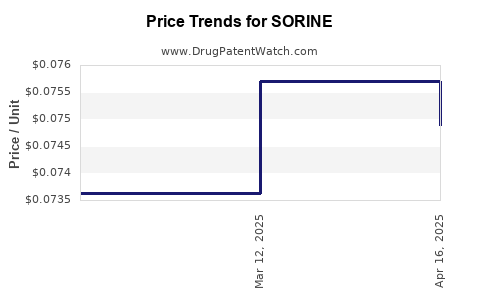
- Price competition in Asia reduces profit margins, with some firms reporting net margins below 10%.
Investment and R&D outlook
- Limited R&D is typical; focus remains on manufacturing and distribution.
- Slight upward trend in R&D expenditure in companies exploring novel delivery forms or combination therapies.
Competitive threats and opportunities
Threats
- Increasing regulatory pressure for clinical trial data to expand indications.
- Potential patent challenges in alternate formulations.
- Entry of new generics from low-cost manufacturers.
Opportunities
- Potential expansion into new markets in Africa and Latin America via licensing agreements.
- Development of combination products for broader patent protection.
- Innovation in delivery methods to differentiate products.
Conclusion
The market for anisodamine, primarily branded as Sorine, remains driven by existing demand within Asian markets, especially China. Expansion potential exists in emerging markets, but limited innovation and patent protections restrict growth. Financially, steady revenue growth is projected, with margins affected by price competition and manufacturing costs.
Key takeaways
- Sorine (anisodamine) sales are concentrated in Asia, with a marginal growth outlook.
- Patent expirations facilitate widespread generic manufacturing; future growth relies on market expansion and formulations.
- Competitive pricing pressures persist, constraining profitability.
- Opportunities lie in new formulations, combination therapies, and expansion into underserved regions.
- R&D investments are minimal but could shift with innovation targeting delivery methods or new indications.
FAQs
-
What are the primary uses of Sorine globally?
It is mainly used in China and parts of Asia for shock management, gastrointestinal issues, and microcirculation improvement.
-
Are there patent protections in place for anisodamine?
Patents have expired in most Asian markets, enabling widespread generics production.
-
What is the main driver of market growth for Sorine?
Increasing disease prevalence and regulatory acceptance in Asia sustain demand.
-
Can Sorine be marketed in Western countries?
Its approval is limited to Asian markets; expanded regulatory approval in Western nations requires clinical trials and registration.
-
What are the main challenges facing Sorine's market?
Price competition, patent expirations, and limited innovation hamper growth potential.
References
[1] Frost & Sullivan. (2022). Asia-Pacific pharmaceutical market analysis.
[2] MarketResearch.com. (2022). Global anisodamine market report.