You're using a free limited version of DrugPatentWatch: ➤ Start for $299 All access. No Commitment.

Last Updated: December 28, 2025

QUILLIVANT XR Drug Patent Profile


✉ Email this page to a colleague

« Back to Dashboard


When do Quillivant Xr patents expire, and what generic alternatives are available?

Quillivant Xr is a drug marketed by Nextwave and is included in one NDA. There are seven patents protecting this drug and one Paragraph IV challenge.

This drug has thirty patent family members in fourteen countries.

The generic ingredient in QUILLIVANT XR is methylphenidate hydrochloride. There are thirty-two drug master file entries for this compound. Forty-five suppliers are listed for this compound. Additional details are available on the methylphenidate hydrochloride profile page.

AI Deep Research
Questions you can ask:
  • What is the 5 year forecast for QUILLIVANT XR?
  • What are the global sales for QUILLIVANT XR?
  • What is Average Wholesale Price for QUILLIVANT XR?
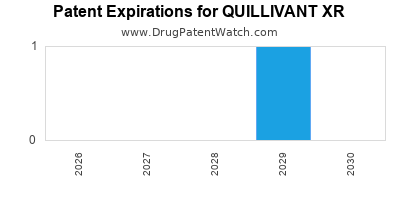
Drug patent expirations by year for QUILLIVANT XR
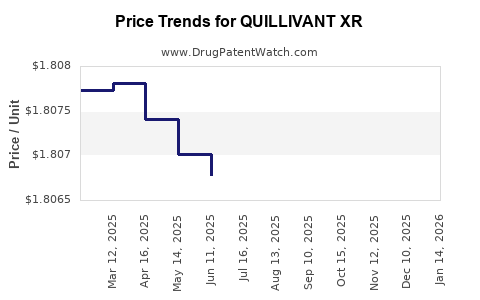
Drug Prices for QUILLIVANT XR

See drug prices for QUILLIVANT XR

Recent Clinical Trials for QUILLIVANT XR

Identify potential brand extensions & 505(b)(2) entrants

SponsorPhase
University of California, DavisPhase 1
Matthew O'BrienPhase 4
Matthew J O'Brien, PhD, BCBA-DPhase 4

See all QUILLIVANT XR clinical trials

Pharmacology for QUILLIVANT XR
Paragraph IV (Patent) Challenges for QUILLIVANT XR
Tradename Dosage Ingredient Strength NDA ANDAs Submitted Submissiondate
QUILLIVANT XR Extended-release Oral Suspension methylphenidate hydrochloride 5 mg/mL 202100 2013-08-02

US Patents and Regulatory Information for QUILLIVANT XR

QUILLIVANT XR is protected by seven US patents.

Applicant Tradename Generic Name Dosage NDA Approval Date TE Type RLD RS Patent No. Patent Expiration Product Substance Delist Req. Exclusivity Expiration
Nextwave QUILLIVANT XR methylphenidate hydrochloride FOR SUSPENSION, EXTENDED RELEASE;ORAL 202100-001 Sep 27, 2012 AB RX Yes Yes 8,465,765 ⤷  Get Started Free Y ⤷  Get Started Free
Nextwave QUILLIVANT XR methylphenidate hydrochloride FOR SUSPENSION, EXTENDED RELEASE;ORAL 202100-001 Sep 27, 2012 AB RX Yes Yes 8,287,903 ⤷  Get Started Free Y ⤷  Get Started Free
Nextwave QUILLIVANT XR methylphenidate hydrochloride FOR SUSPENSION, EXTENDED RELEASE;ORAL 202100-001 Sep 27, 2012 AB RX Yes Yes 8,563,033 ⤷  Get Started Free Y ⤷  Get Started Free
>Applicant >Tradename >Generic Name >Dosage >NDA >Approval Date >TE >Type >RLD >RS >Patent No. >Patent Expiration >Product >Substance >Delist Req. >Exclusivity Expiration

International Patents for QUILLIVANT XR

See the table below for patents covering QUILLIVANT XR around the world.

Country Patent Number Title Estimated Expiration
Brazil 112013020537 suspensão aquosa e pó de liberação prolongada que compreendem metilfenidato ⤷  Get Started Free
World Intellectual Property Organization (WIPO) 2012112140 ⤷  Get Started Free
European Patent Office 2018160 FORMULATIONS A LIBERATION MODIFIEE CONTENANT DES COMPLEXES MEDICAMENT - RESINE ECHANGEUSE D'IONS (MODIFIED RELEASE FORMULATIONS CONTAINING DRUG-ION EXCHANGE RESIN COMPLEXES) ⤷  Get Started Free
>Country >Patent Number >Title >Estimated Expiration

Market Dynamics and Financial Trajectory for Quillivant XR

Last updated: July 27, 2025

Introduction

Quillivant XR, a long-acting methylphenidate hydrochloride formulation, represents a significant player in the treatment of attention deficit hyperactivity disorder (ADHD). Since its approval by the U.S. Food and Drug Administration (FDA) in 2013, Quillivant XR has carved a niche within the pediatric and adult ADHD treatment spectrum. As a sustained-release oral suspension, it offers distinct clinical and commercial advantages, influencing its market dynamics and financial trajectory. This article explores the evolving landscape surrounding Quillivant XR, emphasizing current market factors, competitive pressures, revenue streams, and future prospects.

Market Overview and Product Profile

Pharmacological Profile:
Quillivant XR is a once-daily, extended-release formulation providing consistent plasma concentrations of methylphenidate, a central nervous system stimulant. Approved for patients aged six years and above, it addresses compliance challenges associated with multiple daily doses, especially in pediatric populations. The suspension formulation enhances ease of titration and dose flexibility, particularly beneficial for children and those with swallowing difficulties.

Clinical Positioning:
Clinicians favor Quillivant XR for its predictable pharmacokinetics and flexible dosing, which optimize symptom control. Its liquid form facilitates dose adjustments, making it a preferred option in precise management of ADHD symptoms.


Market Dynamics Influencing Quillivant XR

1. Competitive Landscape

Generic Entry and Market Share Erosion:
Since Quillivant XR’s launch, patent protections have been a key concern. Although the initial patent provided exclusivity, the expiration of key patents—beginning in 2020—has opened the market for generic methylphenidate suspensions, intensifying price competition [1].

Generic Methylphenidate Alternatives:
Generic versions of methylphenidate ER formulations, including tablets and capsules, have gained market traction, often at substantial discounts. This proliferation affects the revenue potential of branded formulations like Quillivant XR, especially in cost-sensitive markets.

New Formulations and Competitive Innovations:
Innovative long-acting methylphenidate products, such as Concerta (Janssen) and Ritalin LA (Novartis), compete not only on efficacy but also on delivery mechanisms, side effect profiles, and patient adherence. The emergence of patch-based or depot formulations further diversifies the treatment options, potentially diverting patients away from suspension-based products.

2. Pricing and Reimbursement Trends

Cost Sensitivity:
Payers and insurance providers increasingly scrutinize the cost-effectiveness of ADHD medications. Branded drugs like Quillivant XR face downward pressure on pricing, especially when generic alternatives are available at reduced costs.

Reimbursement Policies:
Reimbursement strategies influence patient access. Some insurers prefer generic methylphenidate to minimize expenses, which can limit Quillivant XR prescriptions. Conversely, formulary inclusions and prior authorization processes can affect prescribing behaviors.

3. Regulatory and Patent Strategies

Patent Litigation and Market Exclusivity:
Pfizer Inc., the marketer of Quillivant XR, has employed patent strategies to extend exclusivity, including pediatric exclusivity provisions. However, impending patent expirations threaten to accelerate generic penetration.

Potential for Biosimilar and Innovative Approaches:
The landscape may evolve with biosimilar developments or reformulations aimed at improving adherence and reducing side effects, which could impact Quillivant XR’s market position.

4. Clinical Adoption and Prescribing Trends

Physician and Patient Acceptance:
Clinical preferences shift based on efficacy, tolerability, and convenience. Quillivant XR’s suspension form may favor certain pediatric patients, but the convenience of capsules or tablets remains influential in adult populations.

Adherence and Compliance:
Extended-release formulations improve adherence. However, the liquid’s requirement for refrigeration and more elaborate dosing might limit its use compared to more convenient options.


Financial Trajectory and Revenue Analysis

Current Revenue Status

Pfizer’s annual sales of Quillivant XR have historically reflected moderate performance within the ADHD segment. According to recent financial disclosures, the drug's peak revenues approached hundreds of millions of dollars globally during its initial years post-launch [2]. However, revenues have declined in line with patent expirations, market saturation, and introduction of generics.

Forecasted Market Growth and Revenue Trends

Impact of Patent Expirations:
The expiration of patents in 2020-2022 has led to significant generic competition, compressing profit margins and reducing overall revenue from Quillivant XR. Pfizer reported a noticeable decline in sales figures corresponding to these patent cliff periods [3].

Market Size and Regional Expansion:
Globally, the ADHD therapeutics market is expanding, driven by rising diagnosis rates and increased awareness. North America remains the dominant market, with Asia-Pacific emerging as a growth frontier, offering opportunities for both branded and generic methylphenidate formulations.

Pipeline and Lifecycle Management:
Pfizer’s strategic response involves lifecycle extension initiatives—such as developing new formulations, exploring combination therapies, or expanding indications—to sustain revenue streams.

Factors Affecting Long-term Financial Trajectory

  • Generic Market Penetration: Rapid entry of generics diminishes the premium position of Quillivant XR.
  • Pricing Strategies: Continued price reductions to compete with generics may restrict profit margins.
  • Market Penetration: Broader adoption by physicians, especially if supported by novel formulations or evidence of superior efficacy, can bolster revenues.
  • Licensing and Collaborations: Strategic partnerships or licensing agreements could create new revenue channels.

Future Outlook and Opportunities

1. Regulatory Developments and New Indications

Pending regulatory pathways for new formulations or extended indications could sustain or enhance the drug’s market potential. For instance, seeking approval for adult ADHD or combinatorial approaches can open new revenue avenues.

2. Technological Innovations

Enhanced formulations—such as transdermal patches or implantable devices—may offer advantages over suspensions, addressing adherence issues and improving therapeutic outcomes, thereby extending the product lifecycle.

3. Strategic Mergers and Acquisitions

Industry consolidation can influence market dynamics. Larger pharmaceutical entities acquiring or licensing mature medications like Quillivant XR can optimize portfolio diversity and market share.

4. Digital and Personalized Medicine Integration

The integration of digital health tools, such as medication adherence apps or personalized dosing algorithms, can differentiate Quillivant XR-related offerings, acceptability, and ultimately, sales.


Key Takeaways

  • Patent expirations and subsequent generic competition have substantially reduced Quillivant XR’s revenue potential, prompting strategic repositioning.
  • The ADHD therapeutics landscape remains highly competitive, with innovations in formulation and delivery mechanisms influencing prescribing habits.
  • Market expansion into emerging regions coupled with clinical evidence supporting efficacy can help sustain and grow sales.
  • Pricing strategies must navigate balancing access, reimbursement challenges, and profitability amid increasing price sensitivity.
  • Future growth opportunities hinge on innovative formulations, pursuing new indications, and leveraging digital health integrations to reinforce brand relevance.

FAQs

Q1: How does patent expiration impact Quillivant XR’s market exclusivity?
A1: Patent expiration allows generic manufacturers to produce equivalent methylphenidate suspensions, increasing market competition and typically leading to significant revenue declines for the branded product.

Q2: Are there clinical advantages of Quillivant XR over generic methylphenidate formulations?
A2: Quillivant XR offers a flexible dosing suspension with predictable pharmacokinetics, but pharmacodynamic efficacy generally aligns with other methylphenidate ER formulations. Clinical preference often hinges on patient-specific factors like age, tolerability, and adherence.

Q3: What strategies can Pfizer employ to maintain Quillivant XR’s market relevance?
A3: Strategies include developing new formulations, expanding indications (e.g., adult ADHD), leveraging digital adherence tools, and entering licensing or partnership agreements to enhance market penetration.

Q4: How does the competitive landscape influence pricing for Quillivant XR?
A4: Surge of generics and alternative formulations exerts downward pressure on pricing, requiring Pfizer to optimize pricing strategies to sustain margins while maintaining patient access.

Q5: What regional opportunities exist for growth beyond North America?
A5: Emerging markets like Asia-Pacific present growth opportunities, driven by increasing ADHD awareness and evolving healthcare infrastructure, although regulatory and reimbursement challenges must be navigated.


References

[1] U.S. Patent and Trademark Office (USPTO). Patent expirations and generic entry timelines for methylphenidate formulations.
[2] Pfizer Inc. Financial Reports 2013–2022.
[3] IQVIA. Global ADHD market report 2022.

More… ↓

⤷  Get Started Free

Make Better Decisions: Try a trial or see plans & pricing

Drugs may be covered by multiple patents or regulatory protections. All trademarks and applicant names are the property of their respective owners or licensors. Although great care is taken in the proper and correct provision of this service, thinkBiotech LLC does not accept any responsibility for possible consequences of errors or omissions in the provided data. The data presented herein is for information purposes only. There is no warranty that the data contained herein is error free. We do not provide individual investment advice. This service is not registered with any financial regulatory agency. The information we publish is educational only and based on our opinions plus our models. By using DrugPatentWatch you acknowledge that we do not provide personalized recommendations or advice. thinkBiotech performs no independent verification of facts as provided by public sources nor are attempts made to provide legal or investing advice. Any reliance on data provided herein is done solely at the discretion of the user. Users of this service are advised to seek professional advice and independent confirmation before considering acting on any of the provided information. thinkBiotech LLC reserves the right to amend, extend or withdraw any part or all of the offered service without notice.