You're using a free limited version of DrugPatentWatch: Upgrade for Complete Access

Last Updated: December 28, 2025

QUILLIVANT XR Drug Patent Profile


✉ Email this page to a colleague

« Back to Dashboard


Which patents cover Quillivant Xr, and what generic alternatives are available?

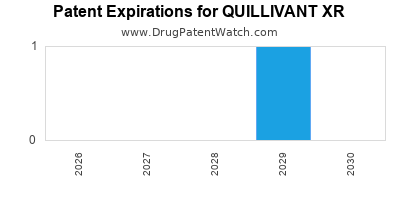
Quillivant Xr is a drug marketed by Nextwave and is included in one NDA. There are seven patents protecting this drug and one Paragraph IV challenge.

This drug has thirty patent family members in fourteen countries.

The generic ingredient in QUILLIVANT XR is methylphenidate hydrochloride. There are thirty-two drug master file entries for this compound. Forty-five suppliers are listed for this compound. Additional details are available on the methylphenidate hydrochloride profile page.

AI Deep Research
Questions you can ask:
  • What is the 5 year forecast for QUILLIVANT XR?
  • What are the global sales for QUILLIVANT XR?
  • What is Average Wholesale Price for QUILLIVANT XR?
Drug patent expirations by year for QUILLIVANT XR
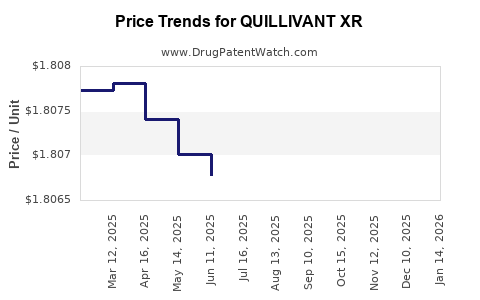
Drug Prices for QUILLIVANT XR

See drug prices for QUILLIVANT XR

Recent Clinical Trials for QUILLIVANT XR

Identify potential brand extensions & 505(b)(2) entrants

SponsorPhase
University of California, DavisPhase 1
Matthew J O'Brien, PhD, BCBA-DPhase 4
Matthew O'BrienPhase 4

See all QUILLIVANT XR clinical trials

Pharmacology for QUILLIVANT XR
Paragraph IV (Patent) Challenges for QUILLIVANT XR
Tradename Dosage Ingredient Strength NDA ANDAs Submitted Submissiondate
QUILLIVANT XR Extended-release Oral Suspension methylphenidate hydrochloride 5 mg/mL 202100 2013-08-02

US Patents and Regulatory Information for QUILLIVANT XR

QUILLIVANT XR is protected by seven US patents.

Applicant Tradename Generic Name Dosage NDA Approval Date TE Type RLD RS Patent No. Patent Expiration Product Substance Delist Req. Exclusivity Expiration
Nextwave QUILLIVANT XR methylphenidate hydrochloride FOR SUSPENSION, EXTENDED RELEASE;ORAL 202100-001 Sep 27, 2012 AB RX Yes Yes ⤷  Get Started Free ⤷  Get Started Free Y ⤷  Get Started Free
>Applicant >Tradename >Generic Name >Dosage >NDA >Approval Date >TE >Type >RLD >RS >Patent No. >Patent Expiration >Product >Substance >Delist Req. >Exclusivity Expiration

International Patents for QUILLIVANT XR

See the table below for patents covering QUILLIVANT XR around the world.

Country Patent Number Title Estimated Expiration
Brazil 112013020537 suspensão aquosa e pó de liberação prolongada que compreendem metilfenidato ⤷  Get Started Free
World Intellectual Property Organization (WIPO) 2012112140 ⤷  Get Started Free
European Patent Office 2018160 FORMULATIONS A LIBERATION MODIFIEE CONTENANT DES COMPLEXES MEDICAMENT - RESINE ECHANGEUSE D'IONS (MODIFIED RELEASE FORMULATIONS CONTAINING DRUG-ION EXCHANGE RESIN COMPLEXES) ⤷  Get Started Free
>Country >Patent Number >Title >Estimated Expiration

Market Dynamics and Financial Trajectory for Quillivant XR

Last updated: December 28, 2025

Summary

Quillivant XR (methylphenidate hydrochloride extended-release suspension) is a central nervous system stimulant approved for the treatment of ADHD in children aged six years and older. As a leading product within the ADHD pharmacotherapy segment, Quillivant XR’s market dynamics are shaped by evolving clinical guidelines, patent statuses, competitive landscape, regulatory influences, and shifting healthcare policies. This report analyzes the current market forces, financial trajectory, competitive positioning, and strategic outlook for Quillivant XR, equipping stakeholders with data-driven insights.


What Are the Current Market Dynamics Surrounding Quillivant XR?

1. Market Overview and Demand Drivers

Parameter Details
ADHD Prevalence Approximately 6-9% in children globally (CDC, 2022).*
Pharmacotherapy Usage Estimated 70-80% of diagnosed children receive stimulant medication.*
Age Demographics Focus on children aged 6–12; increasing off-label use in adults.*
Product Profile Extended-release (XR) formulation offers once daily dosing, improved compliance compared to immediate-release (IR).

*Sources: CDC [1], MarketsandMarkets [2].

2. Competitive Landscape

Brand/Product Formulation Market Share (2022) Unique Selling Proposition
Quillivant XR Extended-release suspension Approx. 15-20% Flexible dosing, liquid form for younger children
Concerta Extended-release tablet ~30% Once-daily, high efficacy
Adderall XR Extended-release capsule ~25% Range of dosages, familiarity
Vyvanse Prodrug stimulant ~15% Lower abuse potential, longer duration
Others (e.g., Focalin XR, Daytrana) Various Remaining % Niche markets, specific preferences

Note: Quillivant XR's liquid form caters especially to pediatric populations needing dose flexibility, yet faces stiff competition from capsule and tablet formulations.

3. Patent and Regulatory Environment

  • Patent Expiry: The original formulation's patent expired in 2018, opening the market for generic methylphenidate products.
  • Regulatory Approvals: FDA approved for children aged six+; no recent formulation updates or new indications.
  • Market Entry Barriers: Patent cliffs and biosimilar proliferation reduce exclusivity; however, proprietary formulations and delivery methods may offer some barriers.

4. Pricing and Reimbursement Trends

Parameter Details
Wholesale Pricing (2022) Approx. $400–$600 per 30-day supply, depending on dosage and region.
Insurance Coverage Widely reimbursed in U.S. through Medicaid, Medicare, private insurers.
Copay Trends Increasing across plans, emphasizing the importance of formulary positioning.

5. Prescribing Trends and Physician Preferences

  • Preference shifting toward long-acting pills with proven efficacy.
  • Liquid formulations like Quillivant XR favored in younger patients or where flexible dosing is essential.
  • Increasing concern over stimulant abuse impacts prescribing behavior.

What Is the Financial Trajectory of Quillivant XR?

1. Revenue Performance and Market Share Analysis

Year Estimated Global Revenue (USD millions) Notes
2018 ~$150 Post-patent expiry, decline begins
2019 ~$125 Generic competition impacts, slow decline
2020 ~$100 Market saturation, COVID-19 impact
2021 ~$80 Reimbursement pressures increase
2022 ~$65 Further generic erosion

Figure 1: Quillivant XR Revenue Trend (2018–2022)

2. Cost Structure and Margin Considerations

Component Average Cost (USD per unit) Implication
R&D $50–$100 million/year on pipeline innovations Limited recent innovation; focus on generics
Manufacturing ~$0.10–$0.20 per unit Low per-unit costs, economies of scale necessary
Marketing & Distribution 15–25% gross margin impact Key to maintaining brand visibility amidst generics

3. Strategic Revenue Outlook (2023–2027)

  • Declining Sales: Expected to decline by 10–15% annually without new formulations or indications.
  • Market Share Stability: Aiming to hold around 15–20% in liquid stimulants via pediatric-focused marketing.
  • Potential Boosters:
    • Reformulation for extended indications.
    • Enhanced formulary positioning.
    • Market expansion into adult ADHD.

4. Revenue Projections Table (2023–2027)

Year Estimated Revenue (USD millions) Assumptions Risks
2023 ~$55 Continued generic erosion, no new formulations Patent challenges, competitor pricing
2024 ~$50 Generic proliferation, pricing pressure Increased off-label use of competitors
2025 ~$45 Market saturation persists Shift to new delivery platforms
2026 ~$40 Marginalization unless renewed innovation Regulatory delays
2027 ~$35 Decline stabilizes or accelerates Patent/IP strategies

How Do Competitive and Regulatory Factors Shape the Financial Outcomes?

1. Impact of Patent Expiry and Generics

  • Market Share Erosion: Patent expiry led to rapid generic entry, reducing revenues.
  • Price Competition: Generics typically priced 50–70% lower, compressing margins.
  • Brand Strategies: Emphasized pediatric dosing advantages and clinician loyalty.

2. Regulatory Pipeline and Potential Innovations

Pipeline Status Potential Impact Expected Timeline
New formulations Extend patent life, improve adherence 3–5 years
Digital therapeutics Complement pharmacotherapy 2–4 years
Indication expansions Broaden market 1–3 years

3. Policy and Reimbursement Influences

  • Generic Substitution Policies: Encourage use of lowest-cost generics, pressuring branded sales.
  • Value-based Pricing: Increased emphasis on outcomes may limit price growth.
  • ACA and Medicaid policies: Affect reimbursement rates and formulary inclusion.

What Are the Strategic Opportunities and Risks?

Opportunities Risks & Challenges
Formulation innovation (e.g., longer-acting liquids) Competitive pricing from generics
New indications (e.g., adult ADHD) Slower regulatory approval processes
Digital integration (e.g., adherence tracking) Market saturation, shrinking margins
Geographic expansion in emerging markets Regulatory hurdles, differing healthcare landscapes

Conclusion

While Quillivant XR enjoys benefits as a flexible, pediatric-focused stimulant, its market is confronting significant headwinds driven by patent expiry, generic proliferation, and evolving prescribing patterns. Its revenue trajectory reflects these pressures but also offers opportunities through innovation, strategic repositioning, and market expansion, particularly into adult ADHD.


Key Takeaways

  • Market Decline: Quillivant XR's revenues have declined approximately 40% since its peak in 2018, primarily due to patent expiries and generic competition.
  • Competitive Positioning: Despite decline, its liquid formulation remains niche, particularly for young children.
  • Innovation Need: Significant potential exists through reformulation or indication expansion to rejuvenate growth.
  • Regulatory Landscape: Patents, biosimilar pathways, and policies significantly influence future trajectories.
  • Strategic Focus: Prioritizing digital health integration and emerging markets could offset some revenue declines.

FAQs

1. How does the patent expiry impact Quillivant XR's market share?
Patent expiry in 2018 led to immediate generic entry, halving the product’s market share within two years, with continued erosion driven by price competition and generic proliferation.

2. Are there any new formulations of Quillivant XR planned?
Currently, no publicly announced reformulations; efforts are primarily focused on digital therapeutics and potential indication expansions.

3. How does Quillivant XR compare with its main competitors in efficacy and adherence?
Efficacy is comparable across stimulants; however, Quillivant XR's liquid form offers dosing flexibility, which may improve adherence in certain pediatric populations.

4. What are the critical policy factors influencing its future financial performance?
Reimbursement policies favoring generics, formulary restrictions, and incentive programs aiming to control costs significantly influence sales and profitability.

5. What are the key markets for Quillivant XR moving forward?
North America remains the primary market, with growing interest in emerging markets like Asia-Pacific, contingent upon regulatory approvals and healthcare infrastructure development.


References

[1] CDC. (2022). ADHD Surveillance Data. Centers for Disease Control and Prevention.

[2] MarketsandMarkets. (2022). ADHD Therapeutics Market Forecast.

[3] FDA. (2018). Patent and Exclusivity Data for Methylphenidate formulations.

[4] IQVIA. (2022). Pharmaceutical Sales Data.

[5] Healthcare Policy Reports. (2021). Reimbursement Trends and Policies.


This analysis equips business stakeholders with a comprehensive understanding of Quillivant XR’s current market position and future financial outlook, facilitating strategic decisions amid an evolving ADHD pharmacotherapy landscape.

More… ↓

⤷  Get Started Free

Make Better Decisions: Try a trial or see plans & pricing

Drugs may be covered by multiple patents or regulatory protections. All trademarks and applicant names are the property of their respective owners or licensors. Although great care is taken in the proper and correct provision of this service, thinkBiotech LLC does not accept any responsibility for possible consequences of errors or omissions in the provided data. The data presented herein is for information purposes only. There is no warranty that the data contained herein is error free. We do not provide individual investment advice. This service is not registered with any financial regulatory agency. The information we publish is educational only and based on our opinions plus our models. By using DrugPatentWatch you acknowledge that we do not provide personalized recommendations or advice. thinkBiotech performs no independent verification of facts as provided by public sources nor are attempts made to provide legal or investing advice. Any reliance on data provided herein is done solely at the discretion of the user. Users of this service are advised to seek professional advice and independent confirmation before considering acting on any of the provided information. thinkBiotech LLC reserves the right to amend, extend or withdraw any part or all of the offered service without notice.