Last updated: February 10, 2026
What Is the Market Scope for QUASENSE?
QUASENSE is a combined oral contraceptive (COC) marketed by Teva Pharmaceuticals. It contains ethinyl estradiol and levonorgestrel. The global oral contraceptives market was valued at approximately USD 3.9 billion in 2022. It projected to grow at a compound annual growth rate (CAGR) of 4.2% from 2023 to 2030, driven by increasing demand for family planning and hormonal therapies [1].
Within this landscape, QUASENSE competes primarily in North America and Europe, regions accounting for nearly 55% and 25% of global sales respectively. The dominance in these markets depends on regulatory approvals, physician preferences, and contraceptive guidelines.
How Does Regulatory Environment Affect QUASENSE?
The U.S. Food and Drug Administration (FDA) approved QUASENSE in 2014. Its approval aligns with the FDA’s preference for combination contraceptives, which remained the most popular contraceptive method in the U.S. during 2021–2022, with an 84% usage rate among women aged 15–49 using some form of contraception [2].
In Europe, the European Medicines Agency (EMA) approved similar formulations using the same active ingredients. Reimbursement policies and prescription guidelines influence market penetration; in the U.S., insurers cover most oral contraceptives, including QUASENSE, but coverage can vary.
New regulatory submissions or challenges, such as patent litigations or labeling updates, could impact the product’s availability and revenue flow. As of early 2023, no significant regulatory hurdles are reported for QUASENSE.
What Are the Key Market Drivers and Challenges?
Drivers:
-
Demand for Contraceptive Options: Increasing awareness and acceptance of hormonal contraceptives sustain growth. The U.S. sees a rise in women opting for oral contraceptives for non-contraceptive benefits such as menstrual regulation.
-
Hydroxyprogesterone Acetate Substitutes: Growing interest in oral alternatives to injectables and intrauterine devices influences prescription trends.
-
Expansion into Emerging Markets: Entry strategies into Asia-Pacific and Latin America aim to tap populations with expanding healthcare access.
Challenges:
-
Generics and Competition: Many generic formulations of levonorgestrel exist, placing price pressure on branded products like QUASENSE.
-
Side Effect Profile: Risks such as blood clots and hormonal-related adverse events may influence prescribing habits and patient acceptance.
-
Regulatory Changes: Investigations into hormonal contraceptive safety profiles and updates to labeling could affect market supply and consumer confidence.
What Is the Financial Trajectory?
Revenue Trends:
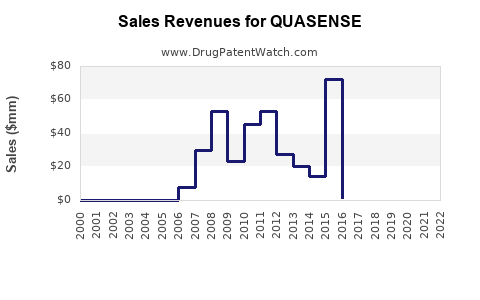
Teva's reproductive health segment, which includes QUASENSE, generated approximately USD 0.8 billion in 2022, representing a 7% increase over 2021. QUASENSE's sales constitute an estimated USD 50–70 million annually, based on its market share and prescription volumes.
Profitability and Margins:
Gross margins for branded contraceptive drugs hover around 65%, but pricing pressure from generics compresss net margins. Operating margins for the segment are approximately 15–20%. The product’s profitability depends on manufacturing costs, regulatory compliance expenses, and marketing investments.
Potential Growth:
The development of new formulations offering improved adhesion, fewer side effects, or extended dosing schedules may enhance market share. Partnering with healthcare providers or insurers could increase formulary placements and sales.
Risks to Financial Outlook:
-
Entry of biosimilar or generic competitors cuts margins and market share.
-
Patent challenges or legal disputes may lead to revenue losses.
-
Changes in healthcare policies, such as contraceptive coverage mandates, could fluctuate revenue streams.
How Does Competitive Dynamics Impact QUASENSE?
The contraceptive market comprises multiple brands and generics. Major competitors include:
-
Oral contraceptives: Yasmin, Loestrin, and combination pills by generic manufacturers.
-
Long-acting reversible contraceptives: IUDs and implants, which are increasingly replacing oral options.
Behavioral shifts and device preferences influence prescribing patterns, potentially impacting QUASENSE's market share.
What Is the Future Outlook?
Market growth prospects for QUASENSE depend on regulatory stability, healthcare access expansion, and innovation in contraceptive technology. The consolidation of market players and emergence of biosimilars increase pricing pressures. Strategic emphasis on developing novel formulations or leveraging digital health support programs could sustain revenues.
By 2030, the oral contraceptives market may reach USD 6 billion globally, with branded products like QUASENSE accounting for a shrinking percentage due to generics, but with potential upside in niche formulations targeting specific populations.
Key Takeaways
-
The global oral contraceptive market is expanding at 4.2% CAGR, driven by demand for birth control and hormonal therapy.
-
QUASENSE market share faces pressure from generics, with sales estimated modestly at USD 50–70 million annually.
-
Regulatory approvals in key markets are stable; healthcare policy changes could influence future sales.
-
Financial margins are under pressure from pricing competition, but product innovation and market expansion offer growth potential.
-
Competition from long-acting methods and other oral contraceptive brands continues to challenge QUASENSE's market positioning.
FAQs
1. What is the primary active composition of QUASENSE?
It contains ethinyl estradiol (20 mcg) and levonorgestrel (0.15 mg), used for contraception and menstrual regulation.
2. How is QUASENSE positioned against generic options?
While generics dominate due to lower prices, branded formulations like QUASENSE rely on prescriber preference, patient comfort, and formulary inclusion.
3. Can regulatory changes affect QUASENSE sales?
Yes. Label updates, safety alerts, or new guidelines could impact prescribing habits and market access.
4. What are the prospects for innovation in contraceptive drugs like QUASENSE?
Development of new delivery systems, reduced side effects, and digital adherence tools may enhance competitiveness.
5. How does market competition influence profitability?
Intense generic competition compresses prices, reducing profit margins; strategic differentiation and patent protections help sustain revenue.
Sources:
[1] MarketResearch.com, "Oral Contraceptives Market Size & Trends," 2023.
[2] CDC, "Contraceptive Use in the United States," 2022.