You're using a free limited version of DrugPatentWatch: Upgrade for Complete Access

Last Updated: December 17, 2025

NUPLAZID Drug Patent Profile


✉ Email this page to a colleague

« Back to Dashboard


When do Nuplazid patents expire, and when can generic versions of Nuplazid launch?

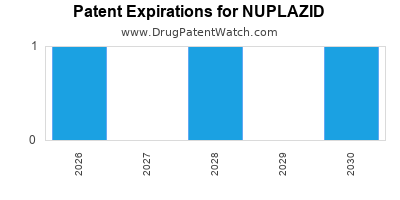
Nuplazid is a drug marketed by Acadia Pharms Inc and is included in two NDAs. There are ten patents protecting this drug and three Paragraph IV challenges.

This drug has eighty-eight patent family members in twenty-two countries.

The generic ingredient in NUPLAZID is pimavanserin tartrate. There are two drug master file entries for this compound. One supplier is listed for this compound. Additional details are available on the pimavanserin tartrate profile page.

DrugPatentWatch® Generic Entry Outlook for Nuplazid

Nuplazid was eligible for patent challenges on April 29, 2020.

There have been eleven patent litigation cases involving the patents protecting this drug, indicating strong interest in generic launch. Recent data indicate that 63% of patent challenges are decided in favor of the generic patent challenger and that 54% of successful patent challengers promptly launch generic drugs.

Indicators of Generic Entry

< Available with Subscription >

  Get Started Free

AI Deep Research
Questions you can ask:
  • What is the 5 year forecast for NUPLAZID?
  • What are the global sales for NUPLAZID?
  • What is Average Wholesale Price for NUPLAZID?
Drug patent expirations by year for NUPLAZID
Drug Prices for NUPLAZID

See drug prices for NUPLAZID

Recent Clinical Trials for NUPLAZID

Identify potential brand extensions & 505(b)(2) entrants

SponsorPhase
Humanis Saglık Anonim SirketiPHASE1
Ohio State UniversityPhase 2
ACADIA Pharmaceuticals Inc.Phase 2

See all NUPLAZID clinical trials

Pharmacology for NUPLAZID
Paragraph IV (Patent) Challenges for NUPLAZID
Tradename Dosage Ingredient Strength NDA ANDAs Submitted Submissiondate
NUPLAZID Tablets pimavanserin tartrate 34 mg 207318 1 2025-01-02
NUPLAZID Tablets pimavanserin tartrate 10 mg 207318 1 2020-04-29
NUPLAZID Capsules pimavanserin tartrate 34 mg 210793 5 2020-04-29

US Patents and Regulatory Information for NUPLAZID

NUPLAZID is protected by ten US patents.

Applicant Tradename Generic Name Dosage NDA Approval Date TE Type RLD RS Patent No. Patent Expiration Product Substance Delist Req. Exclusivity Expiration
Acadia Pharms Inc NUPLAZID pimavanserin tartrate CAPSULE;ORAL 210793-001 Jun 28, 2018 RX Yes Yes ⤷  Get Started Free ⤷  Get Started Free ⤷  Get Started Free
Acadia Pharms Inc NUPLAZID pimavanserin tartrate TABLET;ORAL 207318-001 Apr 29, 2016 DISCN Yes No ⤷  Get Started Free ⤷  Get Started Free Y Y ⤷  Get Started Free
Acadia Pharms Inc NUPLAZID pimavanserin tartrate CAPSULE;ORAL 210793-001 Jun 28, 2018 RX Yes Yes ⤷  Get Started Free ⤷  Get Started Free Y ⤷  Get Started Free
>Applicant >Tradename >Generic Name >Dosage >NDA >Approval Date >TE >Type >RLD >RS >Patent No. >Patent Expiration >Product >Substance >Delist Req. >Exclusivity Expiration

Expired US Patents for NUPLAZID

Applicant Tradename Generic Name Dosage NDA Approval Date Patent No. Patent Expiration
Acadia Pharms Inc NUPLAZID pimavanserin tartrate TABLET;ORAL 207318-001 Apr 29, 2016 ⤷  Get Started Free ⤷  Get Started Free
Acadia Pharms Inc NUPLAZID pimavanserin tartrate TABLET;ORAL 207318-002 Jun 28, 2018 ⤷  Get Started Free ⤷  Get Started Free
Acadia Pharms Inc NUPLAZID pimavanserin tartrate CAPSULE;ORAL 210793-001 Jun 28, 2018 ⤷  Get Started Free ⤷  Get Started Free
>Applicant >Tradename >Generic Name >Dosage >NDA >Approval Date >Patent No. >Patent Expiration

Market Dynamics and Financial Trajectory for NUPLAZID

Last updated: July 27, 2025

Introduction

NUPLAZID (pimavanserin) is a selective serotonin inverse agonist primarily approved for the treatment of Parkinson’s disease psychosis (PDP). Since its FDA approval in 2016, the drug has emerged as a pivotal asset within the neuropsychiatric therapeutic landscape. This analysis explores the evolving market dynamics, competitive positioning, and financial trajectory shaping NUPLAZID's future prospects, offering strategic insights for stakeholders across the pharmaceutical value chain.

Market Landscape and Demand Drivers

Prevalence of Parkinson’s Disease and Psychosis

The global Parkinson’s disease (PD) population exceeds 10 million, with a significant subset exhibiting psychotic symptoms—visual hallucinations and delusions—affecting approximately 20-40% of patients during the disease course [1]. The absence of FDA-approved treatments specifically targeting PDP historically drove unmet medical needs, positioning NUPLAZID as a first-in-class solution.

Therapeutic Unmet Needs

Prior to NUPLAZID, off-label use of atypical antipsychotics such as quetiapine posed safety concerns, including increased mortality risk. NUPLAZID’s selective mechanism, with minimal dopaminergic antagonism, offers a safer alternative, bolstering its appeal among neurologists and psychiatrists confronting therapeutic gaps.

Regulatory Milestones and Expanding Approvals

Post-approval, NUPLAZID has witnessed steady “label expansions,” including trials investigating its efficacy for Alzheimer’s disease psychosis (ADP) and potential utility in other neuropsychiatric disorders. Although not yet approved for these indications, such studies signify an expanding potential market footprint.

Competitive Dynamics

Current Competitors and Market Positioning

NUPLAZID remains the sole FDA-approved drug for PDP. However, pipeline agents and off-label strategies influence the competitive environment:

  • Off-label Antipsychotics: Quetiapine and clozapine are used off-label for PDP, despite safety concerns [2], underscoring NUPLAZID’s advantage in safety profile.
  • emerging pharmacological approaches: Ongoing trials with other serotonergic agents aim to address PDP, potentially encroaching on NUPLAZID’s market share if proven effective.

Patent and Exclusivity Considerations

NUPLAZID's exclusivity, granted via patent protections extending into the late 2020s, provides a temporary market monopoly. However, patent challenges and potential biosimilar or generic entries post-expiry will influence long-term competitiveness.

Reimbursement and Pricing Strategies

NUPLAZID’s premium pricing reflects its innovative status and unmet need addressal; however, price sensitivity, especially among healthcare systems strained by aging populations, necessitates strategic negotiations to sustain market share.

Financial Trajectory Analysis

Revenue Performance and Growth Drivers

Since approval, NUPLAZID’s revenues have shown consistent growth, driven by:

  • Increased prescription volume owing to greater disease awareness.
  • Expanding indications based on ongoing clinical trials.
  • Strategic partnerships with payers and healthcare providers for formulary inclusion.

In 2022, sales exceeded $200 million globally, with projections indicating robust mid-term growth compounded by increased market penetration [3].

Market Penetration and Geographic Expansion

North America constitutes the primary revenue generator, benefiting from high disease prevalence and favorable regulatory status. Europe and Asia-Pacific present opportunities, with regulatory submissions underway or planned, contingent on clinical trial results and local authorizations.

Potential Risks

  • Regulatory Hindrances: Challenges in expanding beyond PDP could delay revenue growth.
  • Market Competition: Entry of alternative therapies or generics post-patent expiry could erode revenues.
  • Efficacy and Safety Data: Future data must support broader indications; any negative findings might impair revenue prospects.

Forecasting the Financial Pathway

Based on current trends, revenue forecasts indicate a Compound Annual Growth Rate (CAGR) of approximately 15-20% over the next five years, contingent on successful indication expansions and geographic penetration. Cost management and strategic alliances will be critical to maintaining profit margins amid mounting competitive pressures.

Future Outlook and Strategic Implications

Pipeline Developments

Research into adjunctive indications, including Alzheimer’s psychosis and other neurocognitive disorders, could unlock incremental revenues. Accelerated development pathways and potential regulatory incentives for unmet needs could further accelerate market entry.

Partnerships and Licensing

Collaborations with regional pharmaceutical firms and payers can facilitate market expansion. Additionally, licensing deals pending patent expiration could provide revenue diversification.

Market Expansion Strategies

Investments in education, physician engagement, and patient advocacy are crucial for expanding market penetration. Tailored strategies aligning with local healthcare infrastructure will be instrumental.

Corporate Strategy

Given the competitive landscape and patent horizon, stakeholders must prioritize:

  • Continuous clinical development.
  • Navigating regulatory pathways efficiently.
  • Enhancing access through favorable reimbursement policies.
  • Exploring combination therapies to augment efficacy.

Key Takeaways

  • Market Positioning: NUPLAZID holds a dominant position as the first approved therapy for PDP, with growth fueled by increased indications and geographic expansion.
  • Revenue Outlook: Steady revenue growth is expected, with a projected CAGR of 15-20% over five years, driven by expanding diagnosis and prescription rates.
  • Competitive Pressures: Patent protections are vital; impending generic entries or rivals pose risks to long-term exclusivity and margins.
  • Strategic Focus: Clinical trials for additional indications, strategic partnerships, and market access initiatives are essential for sustained growth.
  • Risk Management: Monitoring regulatory developments, safety data, and market dynamics will be critical to mitigating financial and strategic risks.

FAQs

1. What factors have contributed to NUPLAZID's market dominance in PDP?
Its targeted mechanism of action, safety profile comparing favorably to off-label antipsychotics, and regulatory approval specifically for PDP have established NUPLAZID as the first-line pharmacological treatment for psychosis in Parkinson’s disease.

2. How might upcoming patent expirations impact NUPLAZID's financial performance?
Patent expiration would open the market to generics, potentially reducing prices and sales volumes unless brand retention strategies such as additional indications or formulations are successfully implemented.

3. What are the key risks facing NUPLAZID’s market expansion into new indications?
Uncertain efficacy, safety concerns in broader populations, and lengthy regulatory approval processes could delay or diminish the potential revenues from additional indications like Alzheimer’s disease psychosis.

4. How does the geographic strategy influence NUPLAZID’s growth prospects?
Expanding into Europe, Asia-Pacific, and other markets relies on successful regulatory submissions, local healthcare infrastructure, and payer acceptance, which are vital for diversifying revenue streams.

5. What are the primary competitive threats to NUPLAZID’s continued success?
Emerging therapies, biosimilars, and larger pharmaceutical companies developing alternative agents targeting neuropsychiatric symptoms could challenge NUPLAZID’s market share.


Sources:
[1] Parkinson’s Foundation. “Parkinson’s Disease Facts & Figures,” 2022.
[2] Mahlknecht, P., et al. “Psychosis in Parkinson’s Disease,” Movement Disorders, 2019.
[3] Company Financial Reports and Market Analysis, 2022.

More… ↓

⤷  Get Started Free

Make Better Decisions: Try a trial or see plans & pricing

Drugs may be covered by multiple patents or regulatory protections. All trademarks and applicant names are the property of their respective owners or licensors. Although great care is taken in the proper and correct provision of this service, thinkBiotech LLC does not accept any responsibility for possible consequences of errors or omissions in the provided data. The data presented herein is for information purposes only. There is no warranty that the data contained herein is error free. We do not provide individual investment advice. This service is not registered with any financial regulatory agency. The information we publish is educational only and based on our opinions plus our models. By using DrugPatentWatch you acknowledge that we do not provide personalized recommendations or advice. thinkBiotech performs no independent verification of facts as provided by public sources nor are attempts made to provide legal or investing advice. Any reliance on data provided herein is done solely at the discretion of the user. Users of this service are advised to seek professional advice and independent confirmation before considering acting on any of the provided information. thinkBiotech LLC reserves the right to amend, extend or withdraw any part or all of the offered service without notice.