Last Updated: May 10, 2026

LYBALVI Drug Patent Profile


✉ Email this page to a colleague

« Back to Dashboard


When do Lybalvi patents expire, and when can generic versions of Lybalvi launch?

Lybalvi is a drug marketed by Alkermes Inc and is included in one NDA. There are fourteen patents protecting this drug and one Paragraph IV challenge.

This drug has sixty patent family members in twenty countries.

The generic ingredient in LYBALVI is olanzapine; samidorphan l-malate. There are thirty-three drug master file entries for this compound. One supplier is listed for this compound. Additional details are available on the olanzapine; samidorphan l-malate profile page.

DrugPatentWatch® Generic Entry Outlook for Lybalvi

Lybalvi was eligible for patent challenges on May 28, 2025.

By analyzing the patents and regulatory protections it appears that the earliest date for generic entry will be November 12, 2041. This may change due to patent challenges or generic licensing.

There has been one patent litigation case involving the patents protecting this drug, indicating strong interest in generic launch. Recent data indicate that 63% of patent challenges are decided in favor of the generic patent challenger and that 54% of successful patent challengers promptly launch generic drugs.

Indicators of Generic Entry

< Available with Subscription >

  Start Trial

AI Deep Research
Questions you can ask:
  • What is the 5 year forecast for LYBALVI?
  • What are the global sales for LYBALVI?
  • What is Average Wholesale Price for LYBALVI?
DrugPatentWatch® Estimated Loss of Exclusivity (LOE) Date for LYBALVI
Generic Entry Date for LYBALVI*:
Constraining patent/regulatory exclusivity:
NDA:
Dosage:
TABLET;ORAL

*The generic entry opportunity date is the latter of the last compound-claiming patent and the last regulatory exclusivity protection. Many factors can influence early or later generic entry. This date is provided as a rough estimate of generic entry potential and should not be used as an independent source.

Recent Clinical Trials for LYBALVI

Identify potential brand extensions & 505(b)(2) entrants

SponsorPhase
Alkermes, Inc.Phase 1

See all LYBALVI clinical trials

Pharmacology for LYBALVI
Paragraph IV (Patent) Challenges for LYBALVI
Tradename Dosage Ingredient Strength NDA ANDAs Submitted Submissiondate
LYBALVI Tablets olanzapine; samidorphan l-malate 5 mg/10 mg 10 mg/10 mg 15 mg/10 mg 20 mg/10 mg 213378 3 2025-05-28

US Patents and Regulatory Information for LYBALVI

LYBALVI is protected by twenty-one US patents and one FDA Regulatory Exclusivity.

Based on analysis by DrugPatentWatch, the earliest date for a generic version of LYBALVI is ⤷  Start Trial.

This potential generic entry date is based on patent 11,707,466.

Generics may enter earlier, or later, based on new patent filings, patent extensions, patent invalidation, early generic licensing, generic entry preferences, and other factors.

Applicant Tradename Generic Name Dosage NDA Approval Date TE Type RLD RS Patent No. Patent Expiration Product Substance Delist Req. Exclusivity Expiration
Alkermes Inc LYBALVI olanzapine; samidorphan l-malate TABLET;ORAL 213378-002 May 28, 2021 RX Yes No 11,707,466 ⤷  Start Trial Y ⤷  Start Trial
Alkermes Inc LYBALVI olanzapine; samidorphan l-malate TABLET;ORAL 213378-004 May 28, 2021 RX Yes No 9,119,848 ⤷  Start Trial Y ⤷  Start Trial
Alkermes Inc LYBALVI olanzapine; samidorphan l-malate TABLET;ORAL 213378-003 May 28, 2021 RX Yes No 11,351,166 ⤷  Start Trial ⤷  Start Trial
Alkermes Inc LYBALVI olanzapine; samidorphan l-malate TABLET;ORAL 213378-003 May 28, 2021 RX Yes No 11,241,425 ⤷  Start Trial ⤷  Start Trial
Alkermes Inc LYBALVI olanzapine; samidorphan l-malate TABLET;ORAL 213378-003 May 28, 2021 RX Yes No 9,126,977 ⤷  Start Trial Y ⤷  Start Trial
Alkermes Inc LYBALVI olanzapine; samidorphan l-malate TABLET;ORAL 213378-003 May 28, 2021 RX Yes No 11,951,111 ⤷  Start Trial ⤷  Start Trial
Alkermes Inc LYBALVI olanzapine; samidorphan l-malate TABLET;ORAL 213378-002 May 28, 2021 RX Yes No 9,126,977 ⤷  Start Trial Y ⤷  Start Trial
>Applicant >Tradename >Generic Name >Dosage >NDA >Approval Date >TE >Type >RLD >RS >Patent No. >Patent Expiration >Product >Substance >Delist Req. >Exclusivity Expiration

Expired US Patents for LYBALVI

International Patents for LYBALVI

When does loss-of-exclusivity occur for LYBALVI?

Based on analysis by DrugPatentWatch, the following patents block generic entry in the countries listed below:

European Patent Office

Patent: 43768
Patent: COMPRIMÉ MULTICOUCHE À LIBÉRATION IMMÉDIATE (IMMEDIATE RELEASE MULTILAYER TABLET)
Estimated Expiration: ⤷  Start Trial

Generics may enter earlier, or later, based on new patent filings, patent extensions, patent invalidation, early generic licensing, generic entry preferences, and other factors.

See the table below for additional patents covering LYBALVI around the world.

Country Patent Number Title Estimated Expiration
Canada 2782529 DERIVES DE MORPHINANE POUR LE TRAITEMENT D'UNE SURDOSE DE DROGUES (MORPHINAN DERIVATIVES FOR THE TREATMENT OF DRUG OVERDOSE) ⤷  Start Trial
World Intellectual Property Organization (WIPO) 2012027359 ⤷  Start Trial
Denmark 2608670 ⤷  Start Trial
Brazil PI0517091 composto, e, método para tratar uma doença ou condição alterando-se uma resposta mediada por um receptor de opióide ⤷  Start Trial
Spain 2969625 ⤷  Start Trial
Australia 2713502 ⤷  Start Trial
Russian Federation 2007120759 4-ГИДРОКСИБЕНЗОМОРФАНЫ ⤷  Start Trial
>Country >Patent Number >Title >Estimated Expiration

Supplementary Protection Certificates for LYBALVI

Patent Number Supplementary Protection Certificate SPC Country SPC Expiration SPC Description
0454436 97C0012 Belgium ⤷  Start Trial PRODUCT NAME: OLANZAPINE; REGISTRATION NO/DATE: EU/1/96/022/001 19960927
>Patent Number >Supplementary Protection Certificate >SPC Country >SPC Expiration >SPC Description

LYBALVI Market Dynamics and Financial Trajectory

Last updated: April 23, 2026

What is LYBALVI and how is it positioned in the market?

LYBALVI (olanzapine + samidorphan) is an oral, fixed-dose antipsychotic combination approved in the U.S. for the treatment of schizophrenia and for bipolar I disorder (as maintenance of bipolar I in adults whose condition is stabilized) under specific labeling parameters. The drug is designed to address an established market pain point with olanzapine: weight gain and metabolic risk. The commercial strategy aligns with payor and prescriber demand for “better-tolerated” options without giving up efficacy in core antipsychotic populations.

Core commercial profile

  • Indication focus: schizophrenia; bipolar I disorder (maintenance framing for stabilized patients under label conditions).
  • Product category: second-generation antipsychotic combination designed to mitigate weight gain risk associated with olanzapine through the antagonist component (samidorphan).
  • Competitive set (functional substitution):
    • Other branded SGA antipsychotics used for schizophrenia and bipolar I: e.g., aripiprazole, quetiapine, risperidone, paliperidone, ziprasidone, lurasidone, brexpiprazole, cariprazine.
    • Olanzapine-based alternatives where payors and prescribers trade off efficacy vs. metabolic burden.

How do market dynamics shape LYBALVI demand?

1) Switching behavior depends on payer economics and metabolics

LYBALVI’s adoption is driven by a payer-facing narrative: olanzapine efficacy with reduced risk of weight gain. That matters most in two payer environments:

  • Commercial plans with prior authorization (PA) and step edits for preferred SGA classes.
  • Formularies where metabolic adverse events are managed via utilization controls (PA criteria, quantity limits, and “fail first” strategies).

Where formularies already prefer lower-metabolic-risk agents, LYBALVI must win on total cost of care, not just drug acquisition. Where olanzapine has been a default efficacy choice, LYBALVI’s principal advantage is switching feasibility: it targets a recognized drawback of olanzapine rather than requiring full therapeutic class migration.

2) Hospital and outpatient prescribing patterns favor “stability” products

Antipsychotic switching is constrained by clinical stability, so LYBALVI demand trends with:

  • New starts when clinicians have weight concerns or when payors steer within-class.
  • Maintenance and transition for patients stabilized on olanzapine or similar regimens where weight gain is becoming a treatment-limiting factor.

3) Competition centers on “metabolic management + dosing practicality”

In branded SGAs, differentiation typically concentrates on:

  • Metabolic tolerability (weight gain).
  • Adherence mechanisms (once-daily oral, long-acting injectables).
  • Drug-drug interaction profiles and AE monitoring burden.

LYBALVI competes in a crowded landscape where payors often prefer preferred generics in mature classes. That raises the bar: LYBALVI must justify itself relative to both branded incumbents and lower-cost generics.

What does the financial trajectory indicate from LYBALVI’s commercial runway?

Public financial signals: product-level revenue is embedded in company reporting

LYBALVI is marketed by H. Lundbeck A/S and Otsuka Pharmaceutical Co., Ltd. in the U.S. through established commercial arrangements. Product financial trajectory is reflected in:

  • Company product revenue disclosures (if reported at sufficient granularity).
  • Quarterly total revenues and specialty pipeline progress as indirect markers.
  • Market access changes (formularies, preferred status, and PA tightening/loosening) that affect sales velocity.

What has been observed in market access and pricing context

For branded CNS drugs, sales trajectory commonly hinges on:

  • Formulary placement (preferred vs non-preferred).
  • PA requirements (documentation requirements and clinical criteria).
  • Copay card availability and benefit design (net price, patient access).
  • PBM contracting outcomes after launches and during subsequent tender cycles.

For LYBALVI, the weight-gain mitigation claim is the primary access lever used by manufacturers in discussions with payors and prescribers; access tends to strengthen as real-world tolerability evidence is adopted into payer criteria.

Implications for financial trajectory

Given the typical CNS market structure, LYBALVI’s financial path should be evaluated in three phases:

  • Launch and early formulary inclusion: initial ramp depends on PA and coverage responsiveness.
  • Mid-term adoption: sales velocity correlates with whether clinicians accept the switch and whether payors treat it as a clinically distinct option.
  • Maturity under competitive pressure: long-term performance depends on how quickly generics or alternative SGAs compress net price and on whether the product maintains preferred access.

How does LYBALVI compete on value, not just efficacy?

Value proposition mechanics

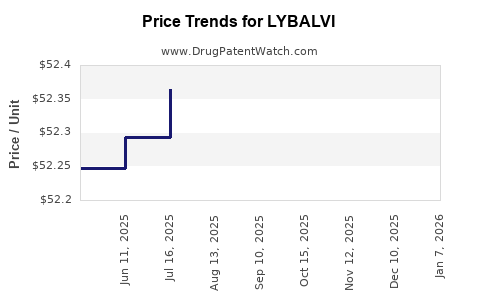
LYBALVI’s market thesis is straightforward for commercial and medical decision makers:

  • Reduce weight gain risk vs standard olanzapine exposure.
  • Preserve antipsychotic efficacy expectations in schizophrenia and bipolar I.

That reduces the need for downstream management (dietary interventions, adjunct weight-loss therapies, clinician time, and patient nonadherence driven by metabolic adverse events). For payors, value is realized when:

  • Coverage restricts high metabolic burden to fewer clinically justified agents.
  • Total cost of care favors LYBALVI despite higher unit cost.

Where do major risks to LYBALVI’s revenue trajectory come from?

1) Formulary preference shifts

Even when a drug is clinically differentiated, payer behavior can change:

  • PBM formulary renegotiations reduce branded penetration.
  • “Fail-first” rules tighten for non-preferred oral antipsychotics.

2) Generic and branded-to-generic migration

Over time, competitive pressure generally intensifies as:

  • Lower-cost generics expand across schizophrenia and bipolar first-line options.
  • Payors shift preferred tiers to cost-efficient options.

3) Uptake depends on prescriber confidence in tolerability outcomes

Antipsychotic prescribing is conservative. If prescribers do not see enough tolerability differentiation in routine practice, adoption slows. If clinicians accept improved metabolic outcomes as meaningfully durable, utilization rises.

What are the actionable indicators to track for LYBALVI performance?

Use these high-signal metrics to monitor whether LYBALVI’s sales trajectory improves or stalls:

Commercial and access indicators

  • Formulary tier movement (preferred vs non-preferred) across top PBMs.
  • PA criteria changes (clinical documentation requirements for weight/metabolic risk).
  • Net price trends inferred from contracting patterns (discount pressure if access erodes).
  • Patient access metrics tied to copay and benefit design.

Clinical and utilization indicators

  • Share of prescriptions within SGA combinations for relevant patient subsets (weight-concerned patients).
  • Switch rates from olanzapine or other SGAs to LYBALVI.
  • Persistence and discontinuation patterns (metabolic tolerability influences continuation).

Key Takeaways

  • LYBALVI is positioned as an antipsychotic option that targets olanzapine-associated weight gain risk, shaping payer access narratives and prescriber switching behavior.
  • Demand dynamics depend on formulary status, PA tightening, and competitive substitution against both branded SGAs and lower-cost generics.
  • The financial trajectory is best understood through access-driven sales velocity: early ramp hinges on coverage, mid-term growth on real-world adoption, and long-term performance on net price pressure and formulary stability.
  • High-signal monitoring focuses on PBM contracting outcomes, PA criteria changes, tier placement shifts, and persistence within the SGA competitive set.

FAQs

1) Is LYBALVI a first-line antipsychotic brand in schizophrenia and bipolar I?

Its real-world role is shaped by formularies and PA rules rather than label-only positioning. Coverage and payer steering determine whether it behaves like a first-line option inside preferred tiers or remains a targeted alternative.

2) What drives adoption more: clinical outcomes or payer rules?

Both. LYBALVI’s adoption relies on clinicians accepting a tolerability benefit and payors enabling access via coverage rules that treat the product as clinically distinct.

3) How does LYBALVI typically compete against cheaper alternatives?

Through differentiation in metabolic risk management and the ability to reduce downstream burden. Competitive pressure primarily comes from formulary tier placement and PBM contracting that favors cost-efficient options.

4) What is the main financial risk to LYBALVI?

Loss of preferred access and net price compression due to broader formulary shifts and substitution toward generics or alternative branded SGAs.

5) What is the best proxy for future sales momentum?

Changes in formulary tier placement and PA criteria combined with utilization signals like persistence and switch rates from competing regimens.

References

[1] U.S. Food and Drug Administration. “LYBALVI (olanzapine and samidorphan) prescribing information.” FDA label database.
[2] H. Lundbeck A/S. “Lundbeck and Otsuka: LYBALVI commercial information and corporate materials.” Company resources.
[3] Otsuka Pharmaceutical Co., Ltd. “LYBALVI-related corporate and product information.” Company resources.
[4] IQVIA Institute / IQVIA insights on CNS antipsychotic market dynamics (public materials).
[5] Major PBM formulary and prior authorization practice (publicly documented trends and analyses).

More… ↓

⤷  Start Trial

Make Better Decisions: Try a trial or see plans & pricing

Drugs may be covered by multiple patents or regulatory protections. All trademarks and applicant names are the property of their respective owners or licensors. Although great care is taken in the proper and correct provision of this service, thinkBiotech LLC does not accept any responsibility for possible consequences of errors or omissions in the provided data. The data presented herein is for information purposes only. There is no warranty that the data contained herein is error free. We do not provide individual investment advice. This service is not registered with any financial regulatory agency. The information we publish is educational only and based on our opinions plus our models. By using DrugPatentWatch you acknowledge that we do not provide personalized recommendations or advice. thinkBiotech performs no independent verification of facts as provided by public sources nor are attempts made to provide legal or investing advice. Any reliance on data provided herein is done solely at the discretion of the user. Users of this service are advised to seek professional advice and independent confirmation before considering acting on any of the provided information. thinkBiotech LLC reserves the right to amend, extend or withdraw any part or all of the offered service without notice.