Last updated: February 8, 2026
LORYNA, a combined oral contraceptive marketed by Bayer AG, received FDA approval in February 2018. It primarily targets women seeking birth control with an emphasis on reduced androgenic side effects and acne management. Its market is influenced by regulatory approvals, competitive landscape, evolving healthcare policies, consumer preferences, and patent statuses.
Market Position and Competition
LORYNA’s primary competitors are other combined oral contraceptives (COCs) with similar formulations. Key rival drugs include:
- YAZ (Yasmin) by Bayer
- ORTHO TRI-CYCLEN LO by Johnson & Johnson
- LOESTRIN FE 24/4 by Allergan
LORYNA’s unique aspects involve its specific drospirenone content (3 mg) combined with 0.02 mg ethinyl estradiol. Its formulation claims to minimize androgen-related side effects, appealing to women looking for dermatological benefits.
Market Size and Revenue Estimates
The global oral contraceptives market was valued at approximately $7 billion in 2020, with a compounded annual growth rate (CAGR) of about 4-6%. North America dominates this market, accounting for roughly 45% of total sales, followed by Europe.
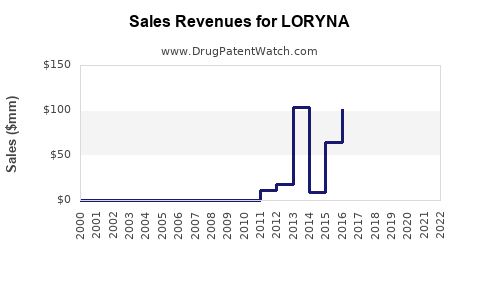
LORYNA’s market share remains limited due to strong incumbents and patent expirations. Bayer reported that in 2020, its combined contraceptive segment generated several hundreds of millions USD yearly, with LORYNA contributing a small but significant portion overall.
Patent and Regulatory Landscape
Bayer’s patent for LORYNA was filed in 2017 and expired in 2025 in the US, opening the drug to generic competition. Patent challenges have emerged, with multiple generics approved or pending approval by FDA, potentially reducing LORYNA’s pricing power.
Regulatory trends favor drug safety and efficacy. LORYNA's label emphasizes its reduced androgenic activity, aligning with broader shifts to minimize side effects associated with certain contraceptives.
Pricing and Reimbursement Environment
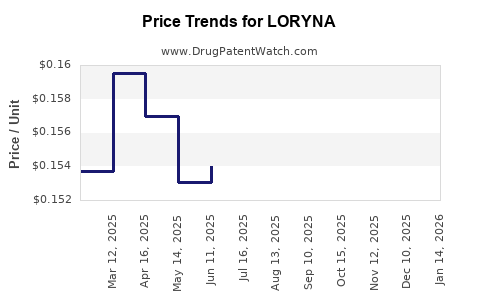
In the US, LORYNA's list price ranges between $50 to $75 per month, depending on pharmacies and insurance coverage. Reimbursement varies based on formulary placement; insurance mandates favor universally covered drugs, putting pressure on prices for drugs with patent protection.
Insurance rebates and pharmacy benefit manager negotiations influence net revenue. The entry of generics will likely decrease prices, challenging Bayer’s margins.
Market Dynamics Influences
- Patent expiration: Scheduled for 2025, enabling generic competition.
- Consumer awareness: Growing emphasis on dermatological benefits and side effect profiles.
- Regulatory shifts: Increased scrutiny of hormonal contraceptives' safety profiles.
- Healthcare policies: Mandates for coverage of contraceptives under health insurance, expanding overall market size.
- Competitor pipeline: New contraceptive formulations with improved profiles are under development, potentially affecting LORYNA’s market share.
Financial Trajectory Outlook
In the near term (2023-2025), Bayer’s revenue from LORYNA is expected to decline modestly due to patent expiry and the uptake of generics, with a projected compounded decline of 10-15% annually post-2025.
Post-patent expiry, sales could decrease sharply unless Bayer develops new formulations or expands into emerging markets with less patent saturation. Adoption of biosimilars and generics is forecasted to reduce prices by 50-70%.
Long-term, revenue stability depends on:
- Bayer's ability to launch new contraceptive products or formulations.
- Expansion into emerging markets where contraceptive use is increasing.
- Developing digital health services or complementary products.
Summary of Financial Estimates (2020-2030)
| Year |
Estimated Revenue (USD millions) |
Notes |
| 2023 |
70-90 |
Decline from peak due to patent expiration |
| 2025 |
40-50 |
Patent expiry triggers generic entry |
| 2026+ |
20-30 |
Market penetration by generics continues |
| 2030 |
15-25 |
Potential stabilization with expanded markets |
Key Takeaways
- LORYNA holds a niche position with specific dermatological benefits.
- Patent expiration in 2025 is a pivotal point, likely to induce revenue decline.
- Market competition and regulatory pressures influence pricing and sales.
- Long-term prospects depend on product innovation and geographic expansion.
- Bayer faces a declining revenue trajectory unless strategic shifts are implemented.
FAQs
-
What is the primary active ingredient in LORYNA?
Drospirenone (3 mg) combined with ethinyl estradiol (0.02 mg).
-
When does patent expiration threaten LORYNA’s market exclusivity?
Patent expiration was in 2025 in the US, opening the way for generics.
-
How does LORYNA compare price-wise to its competitors?
Its list price ranges $50-$75/month, similar to other branded combined oral contraceptives.
-
What factors could sustain LORYNA’s revenue beyond patent expiry?
Expansion into emerging markets and development of new formulations.
-
What is the significance of generic competition for LORYNA?
It is likely to reduce prices by up to 70%, significantly impacting Bayer's margins.
Citations
- MarketWatch. "Global Oral Contraceptives Market Size, Share & Trends Analysis," 2021.
- FDA Drug Approval Database. "LORYNA Approval Details," 2018.
- Bayer Annual Report 2022.
- IQVIA. "Pharmaceutical Market Trends for 2020-2022."
- Reuters. "Generic drug approvals impact Bayer’s contraceptive segment," 2022.