Last updated: August 4, 2026
Lopid, the former branded version of gemfibrozil, is a mature lipid-lowering drug with limited standalone commercial value. Its U.S. market is generic, patent barriers are effectively exhausted, FDA exclusivity has long expired, and demand has shifted toward statins, fenofibrate, prescription omega-3 products, and newer cardiovascular therapies. Pfizer, the successor to original manufacturer Parke-Davis, does not publicly report Lopid revenue as a separate product.
Gemfibrozil remains clinically relevant for selected patients with severe hypertriglyceridemia or mixed dyslipidemia, but its commercial trajectory is consistent with an old, low-margin generic medicine: stable clinical demand, substantial price competition, limited innovation potential, and low probability of a branded revenue recovery.
What is Lopid and who manufactures it?
Lopid is the brand name for gemfibrozil, an oral fibric-acid derivative used to reduce triglycerides and increase high-density lipoprotein cholesterol. The drug received U.S. FDA approval in the early 1980s under Parke-Davis, which later became part of Pfizer.[1]
The original U.S. product was marketed primarily as 600 mg tablets. Generic gemfibrozil is available in 600 mg tablets and, depending on manufacturer and market, 300 mg capsules or tablets. Current U.S. labeling identifies gemfibrozil as a prescription product for lipid disorders, although the original Lopid brand is no longer the principal commercial source.[2]
| Attribute |
Lopid and gemfibrozil |
| Active ingredient |
Gemfibrozil |
| Drug class |
Fibric-acid derivative |
| Primary use |
Hypertriglyceridemia and mixed dyslipidemia |
| Original brand |
Lopid |
| Original developer |
Parke-Davis |
| Successor corporate owner |
Pfizer |
| U.S. dosage forms |
Primarily 600 mg tablets; generic presentations vary |
| FDA pathway |
Original NDA followed by generic ANDAs |
| Current market structure |
Generic-dominated |
| Biosimilar exposure |
None; gemfibrozil is a small-molecule drug |
| Standalone public revenue |
Not separately disclosed by Pfizer |
When did Lopid lose market exclusivity?
Lopid lost meaningful U.S. market exclusivity decades ago. The product was approved in the 1980s, and any five-year new chemical entity exclusivity associated with the original approval expired long before the modern generic market developed. Generic gemfibrozil products subsequently entered through abbreviated new drug applications.
The commercial loss of exclusivity occurred in stages:
| Event |
Approximate timing |
Commercial effect |
| Original FDA approval |
Early 1980s |
Parke-Davis controlled the branded market |
| NCE exclusivity period |
Mid-1980s |
Delayed certain generic approvals |
| Original patent protection |
Expired decades ago |
Removed core compound protection |
| Generic entry |
Late 1980s and thereafter |
Began price and volume erosion |
| Modern generic market |
1990s onward |
Brand value declined sharply |
| Current market |
Mature generic stage |
Low barriers and fragmented supply |
The precise historical patent chronology is less important to current commercial analysis because no active U.S. patent position materially protects the original gemfibrozil molecule or standard Lopid tablets. The FDA Orange Book does not identify a meaningful current patent barrier that would prevent generic gemfibrozil competition.[3]
What patents protect Lopid and gemfibrozil today?
No active U.S. Orange Book patent estate materially protects the original Lopid product. The relevant intellectual-property rights were directed primarily to the active compound and early pharmaceutical compositions, and those rights expired many years ago.
Compound and composition patents
Gemfibrozil is an old small-molecule active ingredient. Any original compound patents and early composition claims have expired. Generic manufacturers therefore do not need to license the original compound patent to market standard gemfibrozil tablets.
Formulation patents
There is no commercially significant current formulation patent moat around conventional Lopid or generic gemfibrozil tablets. Standard immediate-release tablets use established manufacturing processes and widely available excipients.
A manufacturer could pursue a new dosage form, modified-release presentation, combination product, or delivery technology. Such a product would require separate clinical, regulatory, and patent analysis. It would not restore exclusivity to conventional Lopid.
Method-of-use patents
No method-of-use patent appears to create a meaningful present-day barrier around the established use of gemfibrozil for hypertriglyceridemia. Clinical use is based on an old, well-characterized indication. Any new-use patent would face substantial validity, enablement, written-description, obviousness, and infringement challenges.
What is the FDA and Orange Book status of Lopid?
The FDA regulatory position is that gemfibrozil is an established prescription drug with generic equivalents. The original branded Lopid product is not the principal active U.S. commercial product, while generic gemfibrozil products remain available through approved ANDAs and current labeling.
FDA records distinguish between a product being discontinued for commercial reasons and being withdrawn for safety or effectiveness. A discontinued brand does not automatically indicate a regulatory safety withdrawal.[1,3]
| Regulatory issue |
Lopid status |
| Original NDA |
Historically approved |
| Current branded commercial position |
Limited or discontinued relative to generic supply |
| Generic ANDAs |
Available |
| Orange Book patent barrier |
No material current barrier identified |
| Therapeutic-equivalence framework |
Applies to approved generic products |
| FDA exclusivity |
Expired |
| Safety withdrawal status |
No basis to characterize ordinary brand discontinuation as a safety withdrawal |
The principal regulatory risk is clinical rather than exclusivity-related. Gemfibrozil has important drug-interaction limitations. The FDA label warns against concomitant use with simvastatin because of increased risk of myopathy and rhabdomyolysis. Gemfibrozil also interacts with certain other medicines, including repaglinide and some statins.[2]
How strong is the Lopid patent estate?
The Lopid patent estate is commercially weak because it has no meaningful remaining exclusivity over the core product.
| Patent-strength factor |
Assessment |
| Core molecule protection |
Expired |
| Standard tablet protection |
Expired or absent |
| Orange Book-listed patents |
No material current barrier identified |
| Generic substitution resistance |
Low |
| Formulation differentiation |
Limited |
| Method-of-use protection |
No material current moat |
| Regulatory exclusivity |
Expired |
| Litigation leverage |
Low |
| Licensing value |
Low for the legacy product |
For a potential acquirer, the value of Lopid would not come from patent protection. It would depend on manufacturing cost, distribution access, supply reliability, contracts with wholesalers and health systems, and the ability to maintain acceptable generic pricing.
Which companies are challenging Lopid exclusivity?
Generic manufacturers are not required to mount a current Paragraph IV campaign against an active Lopid patent estate because the relevant exclusivity has expired. Generic entry has occurred through the standard ANDA pathway, including certifications addressing the absence or expiration of listed patents.
Publicly visible market participation has historically included multiple generic manufacturers and distributors. The precise supplier group changes over time because generic companies enter, exit, transfer approvals, or discontinue products. The competitive issue is therefore supply concentration rather than patent litigation.
Are there Paragraph IV challenges to Lopid?
Paragraph IV litigation is not a current commercial feature of the Lopid market. Paragraph IV certification is most valuable when an ANDA applicant seeks to enter before an Orange Book patent expires. With the original compound and product protections expired, a new gemfibrozil applicant has little reason to pursue a high-value patent challenge.
The absence of current Paragraph IV activity does not eliminate ordinary generic litigation risk. Companies can still litigate manufacturing processes, trade dress, supply agreements, antitrust claims, product liability, or alleged infringement of unrelated patents. Those issues do not recreate Lopid exclusivity.
What generic entry risks exist for Lopid?
Generic entry risk is effectively realized rather than prospective. Gemfibrozil already operates in a generic market.
The main risks to a branded or authorized-generic supplier are:
- Price compression from additional ANDA holders.
- Loss of preferred formulary or wholesaler placement.
- Manufacturing interruptions and product shortages.
- FDA quality actions affecting a supplier.
- Substitution by fenofibrate or other triglyceride-lowering treatments.
- Lower prescribing because of interaction concerns with statins.
- Declining use of fibrates in patients whose primary treatment is statin therapy.
Supply concentration can temporarily support pricing if only a few manufacturers remain active. That benefit is fragile. An additional approved supplier can quickly reduce market prices, particularly for an old tablet product with limited differentiation.
How does Lopid compare with fenofibrate and statins?
Lopid competes in a market where clinical guidelines and prescribing habits generally favor statins for atherosclerotic cardiovascular risk reduction. Fenofibrate is its closest fibrate competitor, while statins are the primary broader-market alternative.
| Product class |
Examples |
Main commercial advantage |
Main limitation versus gemfibrozil |
| Gemfibrozil |
Lopid, generic gemfibrozil |
Low-cost triglyceride lowering |
Drug interactions and limited modern differentiation |
| Fenofibrate |
Tricor, Trilipix, generics |
More convenient coadministration profile with many statins |
Generic price pressure and narrower use |
| Statins |
Atorvastatin, rosuvastatin, simvastatin |
Strong LDL reduction and outcome evidence |
Less targeted for severe triglyceride elevation |
| Prescription omega-3 products |
Icosapent ethyl and others |
Targeted triglyceride and cardiovascular-risk segments |
Higher cost and differentiated evidence requirements |
| PCSK9 therapies |
Evolocumab, alirocumab |
Powerful LDL reduction |
Injectable, high-cost, and not direct substitutes for all triglyceride cases |
Gemfibrozil's clinical niche is narrow. The label supports its use when dietary intervention is insufficient, particularly in severe hypertriglyceridemia and selected dyslipidemia settings.[2] The drug is less attractive when patients need concurrent statin therapy because of interaction and muscle-toxicity concerns.
Fenofibrate has generally been better positioned for combination use with statins, although treatment selection remains patient-specific. This has reduced gemfibrozil's share of the broader fibrate opportunity.
What is the revenue exposure for Pfizer and generic manufacturers?
Pfizer does not report Lopid as a separately material revenue line in its public financial disclosures. The product's contribution is therefore embedded in broader or immaterial categories, if any branded or authorized distribution remains. Lopid should not be treated as a meaningful driver of Pfizer's consolidated revenue or earnings.
For generic manufacturers, gemfibrozil revenue is also unlikely to be material on a company-wide basis. The economics are typical of mature oral solids:
- Low development cost relative to new drugs.
- Minimal remaining regulatory exclusivity.
- High substitutability.
- Price-based competition.
- Limited marketing requirements.
- Potentially thin gross margins.
- Value concentrated in manufacturing efficiency and distribution.
The product may still generate positive cash flow for a supplier with efficient production and an established channel. That cash flow is different from durable franchise value. No credible public basis supports assigning Lopid a large standalone revenue forecast without proprietary prescription, price, and supplier data.
What is the financial trajectory for Lopid?
The financial trajectory is mature-to-declining, with periodic stabilization rather than structural growth.
Historical phase
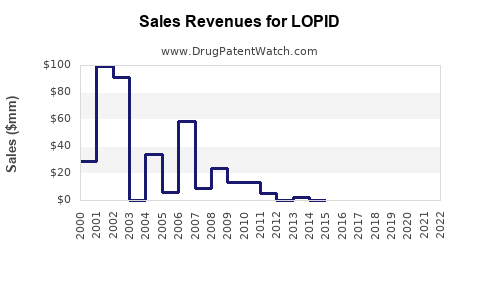
Lopid initially benefited from branded pricing and limited competition. Its commercial value declined after generic entry and expanded further as statins became the dominant treatment for LDL cholesterol reduction.
Current phase
The market is characterized by generic pricing, stable clinical demand in a narrow patient population, and limited promotional investment. Revenue depends more on prescription persistence and supply availability than on brand strength.
Forward outlook
The base case is low single-digit or declining market value over time, interrupted by possible short-term price changes caused by supplier exits, shortages, or contracting shifts. Volume is unlikely to expand materially without a new indication, new formulation, or clinical evidence that changes treatment patterns.
| Financial driver |
Direction |
Rationale |
| Branded pricing |
Downward |
Brand substitution and lack of exclusivity |
| Generic volume |
Stable to declining |
Persistent niche demand but therapeutic substitution |
| Gross margin |
Variable to pressured |
Multiple suppliers and contracting |
| Promotional spending |
Minimal |
Limited return on brand promotion |
| R&D value |
Low |
No protected innovation platform |
| Supply-chain value |
Moderate |
Can matter during shortages or supplier exits |
| Long-term franchise value |
Low |
Mature molecule and weak differentiation |
What litigation and settlement agreements affect Lopid?
No major current patent litigation or settlement agreement is central to the commercial outlook for Lopid. The relevant patent disputes would have occurred during the historical generic-entry period, not during the current mature-market phase.
There is no evident settlement structure that delays generic entry today. The product's key commercial constraint is ordinary competition, not an at-risk launch under a patent settlement.
Potential litigation exposure is more likely to involve:
- Product-liability claims.
- Manufacturing and quality disputes.
- Contract and supply agreements.
- Antitrust claims involving generic pricing or distribution.
- Regulatory enforcement against individual manufacturers.
These matters can affect a supplier's economics but do not create a durable market-wide exclusivity position.
Are biosimilars a risk to Lopid?
Biosimilars are not relevant to Lopid. Gemfibrozil is a chemically synthesized small molecule, not a biologic. Its competitive pathway is generic substitution through ANDAs, not biosimilar approval under the Biologics Price Competition and Innovation Act.
The applicable competitive risks are conventional generic risks: additional ANDA approvals, lower reimbursement, pharmacy substitution, supplier consolidation, and therapeutic substitution.
What geographic markets matter for Lopid?
The United States is a mature generic market for gemfibrozil. International markets also have generic gemfibrozil products, but brand ownership, regulatory approvals, reimbursement, and availability vary by country.
Geographic value is limited by the drug's age and widespread generic availability. A company evaluating international rights would focus on:
- Local product registrations.
- Government reimbursement.
- Tender participation.
- Manufacturing and import requirements.
- Local patent status, if any.
- Pharmacovigilance obligations.
- Distribution costs.
- Market access for fibrates relative to statins and fenofibrate.
A U.S. patent conclusion cannot automatically be applied to Europe, Japan, Canada, or emerging markets. In practice, however, the age of gemfibrozil makes broad, commercially meaningful patent protection unlikely in major markets.
What manufacturing and intellectual-property barriers exist?
Manufacturing barriers are operational rather than patent-based. Gemfibrozil is an established active pharmaceutical ingredient, and standard tablets do not require advanced delivery technology.
A supplier still must manage:
- API sourcing and qualification.
- Finished-dose manufacturing capacity.
- Content uniformity and dissolution.
- Stability and packaging requirements.
- FDA current good manufacturing practice compliance.
- Batch-release testing.
- ANDA maintenance.
- Pharmacovigilance and labeling updates.
The main strategic barrier is reliable supply at a price that preserves margin. A manufacturer with a dependable API source and low-cost tablet capacity can compete effectively despite the absence of intellectual-property protection.
Key Takeaways
- Lopid is the former branded product for gemfibrozil, an old fibric-acid derivative.
- U.S. market exclusivity and core patent protection expired decades ago.
- Generic gemfibrozil dominates commercial supply.
- No current Orange Book patent position materially protects conventional Lopid tablets.
- Paragraph IV litigation and patent settlements are not central to the present market.
- Biosimilar risk does not apply because gemfibrozil is a small molecule.
- Statins, fenofibrate, and prescription omega-3 products limit growth.
- Pfizer does not publicly disclose material standalone Lopid revenue.
- The financial outlook is mature-to-declining, with value concentrated in low-cost manufacturing and supply reliability.
- Regulatory and interaction issues, particularly with simvastatin, constrain prescribing.
FAQs
What is the difference between Lopid and generic gemfibrozil?
Lopid is the original brand name, while generic gemfibrozil contains the same active ingredient and is approved through the ANDA pathway. Commercial differences mainly involve manufacturer, inactive ingredients, packaging, and price.
Is Lopid still prescribed for high triglycerides?
Gemfibrozil remains prescribed for selected patients with severe hypertriglyceridemia or other lipid disorders. Its use is constrained by drug interactions and competition from fenofibrate and other therapies.
Can gemfibrozil be taken with atorvastatin?
The combination requires clinical review because gemfibrozil can increase statin-related muscle toxicity. The FDA label specifically contraindicates gemfibrozil with simvastatin and identifies important interaction risks with other medicines.[2]
Does Lopid have an authorized generic?
The commercial availability of an authorized-generic presentation depends on the holder's distribution and product status. Generic gemfibrozil is widely available independently of any authorized-generic arrangement.
Could a new gemfibrozil formulation regain exclusivity?
A genuinely new formulation could qualify for separate patent or regulatory protection if it met statutory requirements. Any such protection would apply to the new formulation and would not restore exclusivity to conventional Lopid tablets.
References
-
U.S. Food and Drug Administration. (n.d.). Drugs@FDA: FDA-approved drugs. https://www.accessdata.fda.gov/scripts/cder/daf/
-
U.S. Food and Drug Administration. (2023). Gemfibrozil tablets prescribing information. DailyMed. https://dailymed.nlm.nih.gov/dailymed/
-
U.S. Food and Drug Administration. (2024). Approved drug products with therapeutic equivalence evaluations: The Orange Book. https://www.fda.gov/drugs/drug-approvals-and-databases/approved-drug-products-therapeutic-equivalence-evaluations-orange-book