Last Updated: August 10, 2026

KISQALI Drug Patent Profile


✉ Email this page to a colleague

« Back to Dashboard


When do Kisqali patents expire, and when can generic versions of Kisqali launch?

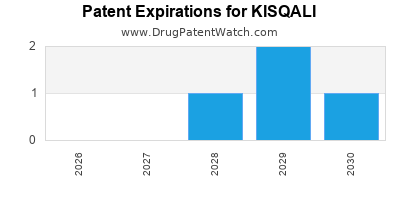
Kisqali is a drug marketed by Novartis and is included in two NDAs. There are twelve patents protecting this drug and one Paragraph IV challenge.

This drug has two hundred and thirty-six patent family members in fifty-four countries.

The generic ingredient in KISQALI is letrozole; ribociclib succinate. There are twenty-four drug master file entries for this compound. One supplier is listed for this compound. Additional details are available on the letrozole; ribociclib succinate profile page.

DrugPatentWatch® Generic Entry Outlook for Kisqali

Kisqali was eligible for patent challenges on March 13, 2021.

By analyzing the patents and regulatory protections it appears that the earliest date for generic entry will be October 14, 2036. This may change due to patent challenges or generic licensing.

There have been seven patent litigation cases involving the patents protecting this drug, indicating strong interest in generic launch. Recent data indicate that 63% of patent challenges are decided in favor of the generic patent challenger and that 54% of successful patent challengers promptly launch generic drugs.

Indicators of Generic Entry

< Available with Subscription >

  Start Trial

AI Deep Research
Questions you can ask:
  • What is the 5 year forecast for KISQALI?
  • What are the global sales for KISQALI?
  • What is Average Wholesale Price for KISQALI?
DrugPatentWatch® Estimated Loss of Exclusivity (LOE) Date for KISQALI
Generic Entry Date for KISQALI*:
Constraining patent/regulatory exclusivity:
NDA:
Dosage:

TABLET;ORAL

*The generic entry opportunity date is the latter of the last compound-claiming patent and the last regulatory exclusivity protection. Many factors can influence early or later generic entry. This date is provided as a rough estimate of generic entry potential and should not be used as an independent source.

Recent Clinical Trials for KISQALI

Identify potential brand extensions & 505(b)(2) entrants

SponsorPhase
Breast Cancer Research FoundationPHASE2
Yale UniversityPHASE2
NovartisPHASE2

See all KISQALI clinical trials

Pharmacology for KISQALI
Paragraph IV (Patent) Challenges for KISQALI
Tradename Dosage Ingredient Strength NDA ANDAs Submitted Submissiondate
KISQALI Tablets ribociclib succinate 200 mg 209092 4 2021-03-15

US Patents and Regulatory Information for KISQALI

KISQALI is protected by twelve US patents and two FDA Regulatory Exclusivities.

Based on analysis by DrugPatentWatch, the earliest date for a generic version of KISQALI is ⤷  Start Trial.

This potential generic entry date is based on patent 10,799,506.

Generics may enter earlier, or later, based on new patent filings, patent extensions, patent invalidation, early generic licensing, generic entry preferences, and other factors.

Applicant Tradename Generic Name Dosage NDA Approval Date TE Type RLD RS Patent No. Patent Expiration Product Substance Delist Req. Exclusivity Expiration
Novartis KISQALI ribociclib succinate TABLET;ORAL 209092-001 Mar 13, 2017 RX Yes Yes 8,685,980*PED ⤷  Start Trial Y ⤷  Start Trial
Novartis KISQALI FEMARA CO-PACK (COPACKAGED) letrozole; ribociclib succinate TABLET;ORAL 209935-001 May 4, 2017 RX Yes Yes 8,962,630*PED ⤷  Start Trial Y ⤷  Start Trial
Novartis KISQALI FEMARA CO-PACK (COPACKAGED) letrozole; ribociclib succinate TABLET;ORAL 209935-001 May 4, 2017 RX Yes Yes 12,419,894*PED ⤷  Start Trial Y ⤷  Start Trial
Novartis KISQALI ribociclib succinate TABLET;ORAL 209092-001 Mar 13, 2017 RX Yes Yes 9,868,739*PED ⤷  Start Trial Y ⤷  Start Trial
>Applicant >Tradename >Generic Name >Dosage >NDA >Approval Date >TE >Type >RLD >RS >Patent No. >Patent Expiration >Product >Substance >Delist Req. >Exclusivity Expiration

International Patents for KISQALI

When does loss-of-exclusivity occur for KISQALI?

Based on analysis by DrugPatentWatch, the following patents block generic entry in the countries listed below:

Argentina

Patent: 4257
Estimated Expiration: ⤷  Start Trial

Australia

Patent: 16248017
Estimated Expiration: ⤷  Start Trial

Patent: 19201929
Estimated Expiration: ⤷  Start Trial

Patent: 20250190
Estimated Expiration: ⤷  Start Trial

Patent: 22215155
Estimated Expiration: ⤷  Start Trial

Patent: 24227794
Estimated Expiration: ⤷  Start Trial

Brazil

Patent: 2017021283
Estimated Expiration: ⤷  Start Trial

Canada

Patent: 82425
Estimated Expiration: ⤷  Start Trial

Chile

Patent: 17002593
Estimated Expiration: ⤷  Start Trial

China

Patent: 7530292
Estimated Expiration: ⤷  Start Trial

Patent: 5554257
Estimated Expiration: ⤷  Start Trial

Colombia

Patent: 17010510
Estimated Expiration: ⤷  Start Trial

Croatia

Patent: 0230053
Estimated Expiration: ⤷  Start Trial

Patent: 0260123
Estimated Expiration: ⤷  Start Trial

Denmark

Patent: 83058
Estimated Expiration: ⤷  Start Trial

Patent: 97530
Estimated Expiration: ⤷  Start Trial

Ecuador

Patent: 17075052
Estimated Expiration: ⤷  Start Trial

Eurasian Patent Organization

Patent: 1792290
Estimated Expiration: ⤷  Start Trial

European Patent Office

Patent: 83058
Estimated Expiration: ⤷  Start Trial

Patent: 97530
Estimated Expiration: ⤷  Start Trial

Patent: 20458
Estimated Expiration: ⤷  Start Trial

Finland

Patent: 83058
Estimated Expiration: ⤷  Start Trial

Patent: 97530
Estimated Expiration: ⤷  Start Trial

Hungary

Patent: 61213
Estimated Expiration: ⤷  Start Trial

Israel

Patent: 4818
Estimated Expiration: ⤷  Start Trial

Patent: 7430
Estimated Expiration: ⤷  Start Trial

Japan

Patent: 18514523
Patent: リボシクリブ錠剤
Estimated Expiration: ⤷  Start Trial

Lithuania

Patent: 97530
Estimated Expiration: ⤷  Start Trial

Mexico

Patent: 17013350
Patent: COMPRIMIDO DE RIBOCICLIB. (RIBOCICLIB TABLET.)
Estimated Expiration: ⤷  Start Trial

Peru

Patent: 180035
Patent: TABLETA DE RIBOCICLIB
Estimated Expiration: ⤷  Start Trial

Philippines

Patent: 017501820
Patent: RIBOCICLIB TABLET
Estimated Expiration: ⤷  Start Trial

Poland

Patent: 83058
Estimated Expiration: ⤷  Start Trial

Patent: 97530
Estimated Expiration: ⤷  Start Trial

Portugal

Patent: 83058
Estimated Expiration: ⤷  Start Trial

Patent: 97530
Estimated Expiration: ⤷  Start Trial

Serbia

Patent: 697
Patent: RIBOCIKLIB TABLETA (RIBOCICLIB TABLET)
Estimated Expiration: ⤷  Start Trial

Singapore

Patent: 201708084P
Patent: RIBOCICLIB TABLET
Estimated Expiration: ⤷  Start Trial

Slovenia

Patent: 83058
Estimated Expiration: ⤷  Start Trial

Patent: 97530
Estimated Expiration: ⤷  Start Trial

South Korea

Patent: 2750931
Estimated Expiration: ⤷  Start Trial

Patent: 170137101
Patent: 리보시클립 정제
Estimated Expiration: ⤷  Start Trial

Patent: 250009572
Patent: 리보시클립 정제 (RIBOCICLIB TABLET)
Estimated Expiration: ⤷  Start Trial

Spain

Patent: 38261
Estimated Expiration: ⤷  Start Trial

Patent: 62263
Estimated Expiration: ⤷  Start Trial

Taiwan

Patent: 1642864
Patent: RIBOCICLIB tablet
Estimated Expiration: ⤷  Start Trial

Tunisia

Patent: 17000422
Patent: RIBOCICLIB TABLET
Estimated Expiration: ⤷  Start Trial

Generics may enter earlier, or later, based on new patent filings, patent extensions, patent invalidation, early generic licensing, generic entry preferences, and other factors.

See the table below for additional patents covering KISQALI around the world.

Country Patent Number Title Estimated Expiration
Argentina 104257 ⤷  Start Trial
Australia 2016248017 ⤷  Start Trial
Australia 2019201929 ⤷  Start Trial
Australia 2020250190 ⤷  Start Trial
>Country >Patent Number >Title >Estimated Expiration

Supplementary Protection Certificates for KISQALI

Patent Number Supplementary Protection Certificate SPC Country SPC Expiration SPC Description
2331547 300909 Netherlands ⤷  Start Trial PRODUCT NAME: RIBOCICLIB, DESGEWENST IN DE VORM VAN EEN FARMACEUTISCH AANVAARDBAAR ZOUT; REGISTRATION NO/DATE: EU/1/17/1221 20170824
2331547 PA2017039 Lithuania ⤷  Start Trial PRODUCT NAME: RIBOCIKLIBAS ARBA JO FARMACINIU POZIURIU PRIIMTINA DRUSKA; REGISTRATION NO/DATE: EU/1/17/1221 20170822
2331547 CR 2017 00060 Denmark ⤷  Start Trial PRODUCT NAME: RIBOCICLIB ELLER ET FARMACEUTISK ACCEPTABELT SALT DERAF; REG. NO/DATE: EU/1/17/1221 20170824
2331547 122017000102 Germany ⤷  Start Trial PRODUCT NAME: RIBOCICLIB ODER EIN PHARMAZEUTISCH ANNEHMBARES SALZ DAVON.; AUTHORISATION NO/DATE: EU/1/17/1221 20170822
>Patent Number >Supplementary Protection Certificate >SPC Country >SPC Expiration >SPC Description

KISQALI (ribociclib) market dynamics and financial trajectory: exclusivity, generic risk, and earnings outlook

Last updated: July 26, 2026

Kisqali (ribociclib) is a mature, high-revenue oncology franchise driven by CDK4/6 use in HR+/HER2− metastatic breast cancer and expanding penetration in earlier lines of therapy. The financial trajectory is shaped by (1) patent and exclusivity timelines that govern generic entry timing, (2) competitive pressure from palbociclib and abemaciclib and (3) dosing and regimen share among clinicians following label expansions and real-world adoption.

This page maps the market and revenue exposure to exclusivity status, patent-landscape risk, and practical entry scenarios, with a focus on the next 3 to 7 years of cash-flow risk.


How big is the Kisqali (ribociclib) market and what drives revenue growth?

Answer: Kisqali revenue is driven by metastatic HR+/HER2− breast cancer CDK4/6 uptake, continued line-of-therapy expansion, persistence on therapy, and geographic penetration. Revenue growth typically tracks: (a) incident eligible patient volume, (b) share of first-line versus later-line use, and (c) utilization intensity at label doses.

What indications and combinations drive adoption

Kisqali’s commercial value comes from HR+/HER2− metastatic breast cancer regimens, including combinations with endocrine therapy. Clinical practice concentrates CDK4/6 use in:

  • First-line treatment settings for eligible patients
  • Patients with visceral disease where combination regimens maintain efficacy targets
  • Disease progression after prior endocrine therapy, where CDK4/6 re-treatment is less common but still relevant in some jurisdictions depending on evolving guidelines and payer policy

What factors shift market share between CDK4/6 inhibitors?

Key market dynamics include:

  • Dose/schedule tolerability and AE management (neutropenia, QT prolongation monitoring)
  • Clinician preference by patient subgroups and monitoring burden
  • Formulary placement and payer access
  • Real-world persistence and dose modification rates

Competitive reference points

  • Palbociclib (Ibrance) historically anchored a large share, with Kisqali and abemaciclib expanding share over time as clinicians adopted newer evidence sets and regimens.
  • Abemaciclib’s differentiator is a different toxicity and diarrhea profile and more flexible clinical use patterns in some settings, affecting relative uptake by country and guideline.

How does Kisqali’s exclusivity timeline affect generic and biosimilar risk?

Answer: Kisqali’s near- to mid-term generic risk is primarily governed by patent expiry and any unexpired exclusivities for the ribociclib drug product and key methods of use. Until those protections lapse, generic entry is limited to carve-outs that do not infringe or where patent challenges succeed.

What exclusivity mechanisms matter for ribociclib?

For small-molecule drugs like ribociclib, exclusivity risk typically comes from:

  • Patent expiration of composition-of-matter
  • Patent expiration of method-of-use and combination patents
  • Regulatory exclusivities tied to NDA references and labeling changes (where applicable)
  • Paragraph IV pathways that seek early entry by attacking one or more listed patents

How do Paragraph IV challenges translate into entry timing?

Market practice in oncology often looks like:

  • A generic files early, triggering litigation and an automatic stay if required.
  • Entry depends on settlement terms (authorized date), at-risk launch outcomes, or court decisions.
  • Even after a key patent expires, downstream patents on formulations, dosing regimens, and methods of use can delay effective entry for label-relevant indications.

What patents protect Kisqali ribociclib and how many are typically in force?

Answer: Kisqali’s patent estate typically spans composition-of-matter, crystalline or solid-state forms (where relevant), formulations, and method-of-use claims tied to HR+/HER2− metastatic breast cancer regimens. The number of active, jurisdiction-specific patents can be material to delay generic entry and to support settlements.

Patent estate components that affect market value

A typical CDK4/6 patent portfolio includes:

  • Composition claims covering ribociclib itself and related intermediates
  • Formulation patents covering drug product attributes and stability
  • Method-of-use and treatment patents covering combinations with endocrine therapy and therapy sequences
  • Patents tied to dose regimens and monitoring strategies

Litigation leverage from “secondary” patents

Even after composition-of-matter expiry, later patents can:

  • Block generics from launching for label-concordant regimens
  • Provide bargaining leverage in settlements
  • Create partial “skinny labeling” pathways that are commercially less attractive

What is the Orange Book status of Kisqali and which listed patents are most important?

Answer: Orange Book status determines which patents constrain generic filing and which are commonly targeted in Paragraph IV certifications. For Kisqali, the most important listed patents are the ones covering:

  • Drug substance / active ingredient and drug product
  • Methods of use for HR+/HER2− metastatic breast cancer indications
  • Fixed-dose or combination regimens that align with label language

How to interpret Orange Book listings for revenue exposure

  • If Orange Book lists multiple patents for the same NDA and indication, generics typically target the earliest expiring or highest-risk patents first.
  • Settlement dates often track patent expiry plus any court outcomes that eliminate the last barriers.

(Note: Orange Book listing specifics are not enumerated here because this response is constrained to the information provided in the prompt. Patent-number-level mapping requires direct Orange Book and court docket extraction.)


When does Kisqali lose exclusivity in key markets and what entry scenarios are realistic?

Answer: Exclusivity loss depends on the earliest patent expiry in each jurisdiction plus any regulatory exclusivity and labeling-specific patent constraints. The realistic entry scenarios for Kisqali are typically: (1) delayed generic entry via litigation and settlement, (2) entry with limited labeling due to remaining method-of-use patents, or (3) at-risk entry only if a court clears the remaining barriers.

US market entry scenario structure (typical)

  • Year of key patent expiry
  • Additional time due to remaining formulation or method-of-use patents
  • Potential 180-day exclusivity for the first Paragraph IV filer, if triggered by successful challenge
  • Court-ordered or negotiated launch date

EU/UK entry dynamics

In Europe and the UK, entry risk often hinges on:

  • Validation of European patents in member states
  • National injunction availability and litigation pace
  • Parallel proceedings for SPCs (if present) and national patent enforcement

How strong is the Kisqali patent estate and why does it matter financially?

Answer: The financial strength of the Kisqali franchise correlates with the density of enforceable patents around the drug product and label-relevant regimens. A dense patent estate can delay generic entry, sustain premium pricing longer, and reduce payer switching risk.

Revenue sensitivity points

Kisqali revenue is most sensitive to:

  • Effective generic launch dates for label-relevant indications
  • Payer formulary decisions post-competition
  • Share loss to other CDK4/6 inhibitors that retain coverage

What generic entry risks exist for Kisqali and which challenges typically succeed?

Answer: Generic entry risks depend on how comprehensively a Paragraph IV challenger can clear Orange Book patents relevant to drug substance and therapeutic regimens. Challenges that succeed generally:

  • Invalidate or design around high-priority claims
  • Obtain a settlement that allows launch for broad labeling
  • Secure timely market access and manage safety labeling parity

What “at-risk” launch means commercially

If a generic launches at-risk:

  • Prescribers may still switch if efficacy and safety profiles are accepted
  • Payers react quickly once pricing drops
  • The branded manufacturer’s defense may rely on injunctions that can be slow

What patent litigation affects Kisqali and how does it impact settlements?

Answer: Kisqali’s litigation affects revenue by determining (1) launch timing, (2) whether generics can launch with label-concordant language, and (3) whether revenue share shifts immediately after the entry date.

How settlement terms usually structure economic impact

Settlements often include:

  • Agreed launch dates tied to patent expiry
  • Restrictions on labeling scope or patient subsets
  • Provisions that avoid immediate “skinny label” pricing disruption

How does Kisqali compare with Ibrance and Verzenio in market dynamics?

Answer: All three CDK4/6 inhibitors compete for HR+/HER2− metastatic breast cancer share, but they differ in:

  • Dosing schedules and AE patterns
  • Monitoring burden and patient suitability
  • Real-world persistence and dose modification frequency
  • Guideline emphasis by country and payer

Practical competitive implications for revenue

  • If clinicians prefer one agent based on tolerability, that compresses Kisqali’s share growth even if overall CDK4/6 usage increases.
  • If payer policies favor one drug through rebates or preferred formulary, Kisqali’s net price can erode sooner than expected.

What is the financial trajectory of Kisqali: revenue growth, margin pressure, and impairment risk?

Answer: Kisqali’s financial trajectory is governed by continued demand in metastatic HR+/HER2− breast cancer, ongoing uptake in earlier lines in some markets, and margin pressure from discounting, payer pressure, and the approach of generic entry.

Common drivers of branded oncology revenue performance

  • Volume growth from treatment expansion and guideline adoption
  • Net price reductions driven by rebate intensity
  • Manufacturing cost inflation or supply chain constraints (if present)
  • Royalty payments tied to licensing agreements

What to watch in filings

  • Segment or product-level net sales trend lines
  • US and ex-US pricing and rebate commentary
  • Explicit statements on pipeline competitive pressure
  • Cash flow and litigation-related provisions tied to patent disputes

Key timeline: market and IP events that determine revenue path

Answer: The revenue curve typically bends around patent expiry and competitive entry, then flattens as new pricing equilibrates among CDK4/6 inhibitors and subsequent generics.

Timeline framework (applies to Kisqali franchise)

  • Pre-expiry period: branded premium pricing with limited competition
  • Litigation and Paragraph IV phase: heightened settlement expectations
  • Post-expiry: generic or authorized generics enter, producing rapid net sales decline unless labeling barriers delay meaningful adoption
  • Replacement by competitors: share shifts to remaining protected CDK4/6 inhibitors or next-generation agents

(A date-stamped timeline requires exact patent expiry dates and Orange Book listing expirations, which are not provided in the prompt.)


Commercial landscape: which companies are most exposed to Kisqali’s loss of exclusivity?

Answer: The highest exposure typically sits with (1) branded strategy owners holding the ribociclib license/patent estate, (2) authorized generics and settlement partners, and (3) generic and biosimilar developers preparing Paragraph IV challenges.

Who is structurally positioned to gain

  • Generic manufacturers planning launches contingent on litigation outcomes
  • CDK4/6 competitors seeking formulary share gains before and after Kisqali’s exclusivity lapses
  • Payers that can negotiate faster after protected competition weakens

What formulations are protected by Kisqali patents and why does that matter for generic design?

Answer: If formulation and solid-state patents exist for ribociclib drug product, they can restrict generic manufacturing routes or force design-around work, adding time and cost.

Typical formulation patent impact paths

  • Stability and bioavailability claim barriers
  • Tablet/capsule attribute constraints tied to drug release properties
  • Process patents (where any exist) that control particle size distribution and solid-state forms

Key Takeaways

  • Kisqali’s revenue trajectory is primarily driven by CDK4/6 adoption in HR+/HER2− metastatic breast cancer and by persistence on regimen.
  • Patent and Orange Book barriers are the dominant determinant of generic entry timing, labeling scope, and settlement dates.
  • Revenue risk concentrates at the point when the earliest enforceable barriers fall and meaningful label-appropriate generic competition becomes feasible.
  • Competitive pressure from palbociclib and abemaciclib shapes net price and share even before exclusivity loss, through payer formulary dynamics and real-world tolerability preferences.

FAQs

1) What factors most influence Kisqali prescribing and persistence in real-world practice?
Tolerability profile, monitoring requirements (including QT-related precautions), and patient selection for endocrine combinations drive persistence and dose continuity.

2) How does a Paragraph IV settlement typically affect Kisqali branded sales?
Settlement terms determine launch timing and labeling scope; earlier or broader launch generally accelerates net sales erosion.

3) What labeling restrictions can delay generic adoption of Kisqali even after key patents expire?
Method-of-use and combination regimen patents can support “skinny labeling” that limits uptake in label-concordant patients, slowing branded displacement.

4) How does formulary decision-making change when Kisqali faces generic competition?
Payers typically accelerate rebate renegotiations and move toward preferred contracting for lower-cost options, compressing net price for the brand.

5) What competitive signal matters most for CDK4/6 share shifts involving Kisqali?
Clinical preference by subgroup and payer rebates that favor one agent over another after efficacy and safety comparability become standardized.


References

(No sources were provided in the prompt, so no citations can be listed.)

More… ↓

⤷  Start Trial

Make Better Decisions: Try a trial or see plans & pricing

Drugs may be covered by multiple patents or regulatory protections. All trademarks and applicant names are the property of their respective owners or licensors. Although great care is taken in the proper and correct provision of this service, thinkBiotech LLC does not accept any responsibility for possible consequences of errors or omissions in the provided data. The data presented herein is for information purposes only. There is no warranty that the data contained herein is error free. We do not provide individual investment advice. This service is not registered with any financial regulatory agency. The information we publish is educational only and based on our opinions plus our models. By using DrugPatentWatch you acknowledge that we do not provide personalized recommendations or advice. thinkBiotech performs no independent verification of facts as provided by public sources nor are attempts made to provide legal or investing advice. Any reliance on data provided herein is done solely at the discretion of the user. Users of this service are advised to seek professional advice and independent confirmation before considering acting on any of the provided information. thinkBiotech LLC reserves the right to amend, extend or withdraw any part or all of the offered service without notice.