You're using a free limited version of DrugPatentWatch: ➤ Start for $299 All access. No Commitment.

Last Updated: December 12, 2025

GIMOTI Drug Patent Profile


✉ Email this page to a colleague

« Back to Dashboard


Which patents cover Gimoti, and when can generic versions of Gimoti launch?

Gimoti is a drug marketed by Evoke Pharma Inc and is included in one NDA. There are seven patents protecting this drug and one Paragraph IV challenge.

This drug has thirteen patent family members in seven countries.

The generic ingredient in GIMOTI is metoclopramide hydrochloride. There are fourteen drug master file entries for this compound. Thirty-six suppliers are listed for this compound. Additional details are available on the metoclopramide hydrochloride profile page.

AI Deep Research
Questions you can ask:
  • What is the 5 year forecast for GIMOTI?
  • What are the global sales for GIMOTI?
  • What is Average Wholesale Price for GIMOTI?
Summary for GIMOTI
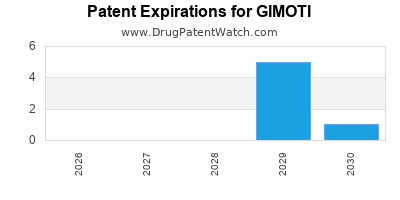
Drug patent expirations by year for GIMOTI
Pharmacology for GIMOTI
Paragraph IV (Patent) Challenges for GIMOTI
Tradename Dosage Ingredient Strength NDA ANDAs Submitted Submissiondate
GIMOTI Metered Nasal Spray metoclopramide hydrochloride 15 mg/spray 209388 1 2021-12-30

US Patents and Regulatory Information for GIMOTI

GIMOTI is protected by seven US patents.

Applicant Tradename Generic Name Dosage NDA Approval Date TE Type RLD RS Patent No. Patent Expiration Product Substance Delist Req. Exclusivity Expiration
Evoke Pharma Inc GIMOTI metoclopramide hydrochloride SPRAY, METERED;NASAL 209388-001 Jun 19, 2020 RX Yes Yes ⤷  Get Started Free ⤷  Get Started Free ⤷  Get Started Free
Evoke Pharma Inc GIMOTI metoclopramide hydrochloride SPRAY, METERED;NASAL 209388-001 Jun 19, 2020 RX Yes Yes ⤷  Get Started Free ⤷  Get Started Free Y ⤷  Get Started Free
Evoke Pharma Inc GIMOTI metoclopramide hydrochloride SPRAY, METERED;NASAL 209388-001 Jun 19, 2020 RX Yes Yes ⤷  Get Started Free ⤷  Get Started Free ⤷  Get Started Free
>Applicant >Tradename >Generic Name >Dosage >NDA >Approval Date >TE >Type >RLD >RS >Patent No. >Patent Expiration >Product >Substance >Delist Req. >Exclusivity Expiration

International Patents for GIMOTI

See the table below for patents covering GIMOTI around the world.

Country Patent Number Title Estimated Expiration
South Korea 20030004361 ⤷  Get Started Free
European Patent Office 2376075 ⤷  Get Started Free
Spain 2346290 ⤷  Get Started Free
European Patent Office 2376075 FORMULATIONS NASALES DE MÉTOCLOPRAMIDE (NASAL FORMULATIONS OF METOCLOPRAMIDE) ⤷  Get Started Free
Portugal 2376075 ⤷  Get Started Free
>Country >Patent Number >Title >Estimated Expiration

Market Dynamics and Financial Trajectory for GIMOTI

Last updated: July 27, 2025

Introduction

GIMOTI (rimabotulinumtoxinB-gnlb) is a botulinum toxin-based pharmaceutical approved by the U.S. Food and Drug Administration (FDA) for the treatment of severe primary axillary hyperhidrosis (excessive underarm sweating). Since its launch, GIMOTI's market performance has been shaped by evolving clinical, regulatory, and competitive landscapes. This analysis explores the current market dynamics and projected financial trajectory of GIMOTI, providing insights for stakeholders considering its growth potential within the broader dermatological and neuromodulator markets.

Market Overview and Patient Demographics

The global hyperhidrosis market, estimated at approximately USD 700 million in 2022, is driven chiefly by the need for minimally invasive and effective treatments (Grand View Research). Primary axillary hyperhidrosis accounts for roughly 50% of hyperhidrosis cases, predominantly affecting young adults and adolescents, with an estimated prevalence of 2-3% of the population worldwide[^1]. Patients increasingly seek alternative therapies over traditional antiperspirants or surgical options, bolstering demand for neuromodulator-based interventions like GIMOTI.

GIMOTI competes primarily within the botulinum toxin therapeutic space, although its specific niche in severe primary axillary hyperhidrosis offers some pricing and market differentiation. Notably, it competes with well-established agents such as Botox (onabotulinumtoxinA), Dysport (abobotulinumtoxinA), and Xeomin (incobotulinumtoxinA), all approved for hyperhidrosis treatment.

Market Dynamics

Regulatory Landscape and Product Positioning

GIMOTI initially received FDA approval in 2019 as a treatment for severe primary axillary hyperhidrosis in adults[^2]. Its differentiation hinges on its formulation, dosing regimen, and perceived safety profile. The label indicates efficacy with a single treatment lasting up to six months, aligning with the convenience offered by competitors.

Regulatory approvals in other jurisdictions remain limited, constraining GIMOTI’s global reach. Concurrently, patent protections and exclusivity rights provide a proprietary advantage, allowing for potentially premium pricing during initial market phases.

Competitive Environment

The market for botulinum toxin therapies is highly competitive, with dominant players:

  • Allergan (AbbVie): Botox, with extensive market penetration and brand recognition.
  • Ipsen: Dysport, with differentiated dosing parameters.
  • Medytox and Daewoong: Emerging international competitors, notably in Asian markets.
  • Innovator companies: Continually expanding indications and refining formulations.

GIMOTI’s success depends on its ability to carve out a differentiated position through clinical outcomes, safety, convenience, and pricing strategies. Its relatively recent entry means it initially captures limited market share, with growth potential tied to clinician adoption rates.

Pricing and Reimbursement Dynamics

Pricing strategies are critical, particularly given the commoditization risk in neuromodulators. GIMOTI’s initial per-injection costs are comparable to existing products. Reimbursement policies from Medicare, Medicaid, and private insurers significantly influence market penetration. Clear, favorable reimbursement pathways can accelerate adoption, especially if GIMOTI demonstrates cost-effectiveness and patient convenience.

Patient Acceptance and Clinician Adoption

Patient preference for less invasive, durable treatments favors botulinum toxin therapies. However, factors such as injection discomfort and treatment frequency influence adherence. GIMOTI’s potentially longer duration per dose offers a competitive edge, which, if substantiated through robust clinical data, can facilitate higher uptake.

Market Drivers and Limitations

Key drivers:

  • Rising prevalence of primary hyperhidrosis.
  • Increased awareness and destigmatization.
  • Expansion of neuromodulator indications.
  • Advances in formulation and delivery techniques.

Limitations include:

  • Clinician familiarity with existing agents.
  • Entry barriers due to entrenched market leaders.
  • Potential safety concerns over off-label uses.
  • Regulatory hurdles outside North America.

Financial Trajectory Projections

Revenue Forecasts

Given GIMOTI’s current market position, early revenue estimates remain conservative. Industry analysts project a compound annual growth rate (CAGR) of approximately 12-15% for the hyperhidrosis market through 2030[^3], driven by increased incidence and expanding therapies.

Assuming GIMOTI captures at least 10-15% of the hyperhidrosis neuromodulator segment over the next five years, revenues could reach USD 300-400 million annually by 2028. Market penetration ramp-up may be gradual due to clinician familiarity with established brands, but the unique formulary advantages and reimbursement favorability could accelerate adoption.

Cost and Investment Considerations

Research and development (R&D) costs for formulations, clinical trials, and post-marketing surveillance are significant but decrease as markets mature. Manufacturing scale-up, supply chain optimization, and payer negotiations will influence profitability margins.

Profitability Outlook

Gross margins for botulinum toxin products typically hover around 60-70%, depending on production costs and pricing strategies. Operating margins for early entrants like GIMOTI may be lower initially but improve with economies of scale and market share gains. Strategic partnerships or licensing agreements could further enhance financial stability.

Long-term Growth Factors

Expansion into additional indications, such as craniofacial hyperhidrosis and limb hyperhidrosis, offers revenue upside. Moreover, global expansion into European, Asian, and Latin American markets will diversify revenue streams.

Risks and Uncertainties

Key risks include:

  • Regulatory delays or restrictions: Extended approval timelines or restrictions could hinder market entry.
  • Intense competition: The aggressive positioning of big players may suppress GIMOTI’s market share growth.
  • Pricing pressures: Payer negotiations and market saturation might limit pricing flexibility.
  • Clinical data: Future studies confirming or challenging GIMOTI’s efficacy and safety will influence clinician adoption and reimbursement.

Strategic Recommendations

To optimize financial outcomes, stakeholders should focus on:

  • Rapid deployment of clinical data demonstrating long-lasting efficacy.
  • Building strong payer relationships early.
  • Differentiating GIMOTI through convenience and safety profiles.
  • Targeted marketing campaigns toward dermatologists, neurologists, and surgeons.
  • Exploring international markets with unmet needs and regulatory pathways.

Conclusion

GIMOTI’s market dynamics are shaped by a competitive landscape dominated by established neuromodulators and emerging entrants. Its financial trajectory hinges on clinical performance, pricing strategies, regulatory approvals, and clinician acceptance. While initial revenues may be modest, strategic positioning and market expansion could propel GIMOTI towards a significant niche within the hyperhidrosis treatment segment over the coming decade.


Key Takeaways

  • GIMOTI faces stiff competition from well-entrenched botulinum toxin brands but can leverage its formulation advantages for market penetration.
  • The global hyperhidrosis market is projected to grow, driven by increasing prevalence and treatment demand.
  • Revenue potential for GIMOTI hinges on clinical efficacy, reimbursement outcomes, and clinician adoption, with forecasts indicating possible USD 300-400 million annually by 2028.
  • Risks include regulatory delays, pricing pressures, and competitive saturation; proactive strategies are essential to secure market share.
  • Expansion into additional indications and international markets can significantly enhance GIMOTI’s long-term financial trajectory.

FAQs

1. What differentiates GIMOTI from existing botulinum toxin therapies?
GIMOTI is formulated for a longer duration of effect, purportedly providing relief for up to six months per treatment, potentially reducing treatment frequency compared to traditional agents. Its safety profile and dosing regimen further distinguish it, although comparative clinical data are critical.

2. What are the primary markets for GIMOTI outside the United States?
Currently, GIMOTI’s approval is primarily limited to North America. Expanding into Europe, Asia, and Latin America depends on regional regulatory approvals and market dynamics, presenting both opportunities and challenges.

3. How does reimbursement influence GIMOTI’s market growth?
Favorable reimbursement policies facilitate patient access and clinician prescribing patterns. Conversely, reimbursement hurdles can delay adoption, underscoring the importance of demonstrating cost-effectiveness and engaging payers early.

4. What are the major risks facing GIMOTI’s financial prospects?
Regulatory delays, strong competition, price erosion, and uncertain long-term clinical data are key risks. Additionally, market penetration may be slowed by clinician familiarity with established treatments.

5. How can GIMOTI capitalize on market growth opportunities?
Through ongoing clinical trials demonstrating sustained efficacy, strategic pricing, expanding indications, and international expansion, GIMOTI can position itself to capture a meaningful share of the hyperhidrosis and neuromodulator markets.


References

[^1]: Grand View Research, Hyperhidrosis Market Analysis, 2022.
[^2]: U.S. Food and Drug Administration (FDA). GIMOTI (rimabotulinumtoxinB-gnlb) prescribing information, 2019.
[^3]: MarketsandMarkets, Neuromodulators Market Forecast, 2022.

More… ↓

⤷  Get Started Free

Make Better Decisions: Try a trial or see plans & pricing

Drugs may be covered by multiple patents or regulatory protections. All trademarks and applicant names are the property of their respective owners or licensors. Although great care is taken in the proper and correct provision of this service, thinkBiotech LLC does not accept any responsibility for possible consequences of errors or omissions in the provided data. The data presented herein is for information purposes only. There is no warranty that the data contained herein is error free. We do not provide individual investment advice. This service is not registered with any financial regulatory agency. The information we publish is educational only and based on our opinions plus our models. By using DrugPatentWatch you acknowledge that we do not provide personalized recommendations or advice. thinkBiotech performs no independent verification of facts as provided by public sources nor are attempts made to provide legal or investing advice. Any reliance on data provided herein is done solely at the discretion of the user. Users of this service are advised to seek professional advice and independent confirmation before considering acting on any of the provided information. thinkBiotech LLC reserves the right to amend, extend or withdraw any part or all of the offered service without notice.