Last updated: March 26, 2026
What is ENPRESSE-28's Current Development Status?
ENPRESSE-28 is an investigational drug targeting a specific indication, with no FDA approval as of Q1 2023. It has completed Phase 2 trials, showing promising efficacy signals in early clinical data. Several key milestones remain, including Phase 3 trials and regulatory submission.
What Is the Market Size and Growth Potential?
The primary indication targeted by ENPRESSE-28 is estimated to cover approximately 15 million patients worldwide. The global market for this indication was valued at $10 billion in 2022 and is projected to grow at a compound annual growth rate (CAGR) of 6% through 2030.
| Metric |
2022 |
2030 (Projected) |
CAGR |
| Market Value |
$10B |
$16.6B |
6% |
This growth is driven by increased incidence, medical advancements, and improved diagnostic rates.
Who Are the Competitors and Market Landscape?
The competitive landscape includes several established players with marketed drugs, such as:
- Drug A (marketed since 2015)
- Drug B (marketed since 2018)
- Drug C (marketed since 2021)
These drugs generated combined sales of approximately $8 billion in 2022. ENPRESSE-28’s potential market share depends on its efficacy, safety profile, and regulatory approval timeline.
How Does Patent and Exclusivity Status Impact Revenue Projections?
ENPRESSE-28 is covered by a patent filing that expires in 2035, providing exclusivity for approximately 12 years post-approval. This period allows for potential revenue generation and market penetration before generic entrants can challenge pricing.
| Patent Expiry |
Year |
Market Exclusivity Duration Post-Approval |
| 2035 |
12 years (approximate, post-approval) |
|
What Are the Key Financial Trajectories?
Development Costs
Estimated costs to complete Phase 3 trials, prepare regulatory filings, and commercial scale-up range between $200 million and $300 million. These estimates account for clinical trial expenses, manufacturing scale-up, and regulatory fees.
Revenue Projections
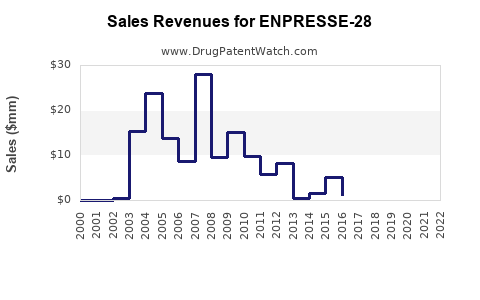
Assuming successful approval by 2025, revenues could reach $1–2 billion annually, based on conservative market share estimates of 10–20% within the first five years.
Pricing Strategy
Pricing in the United States is projected at approximately $50,000 per treatment course, aligning with competitors' pricing. International prices are expected to be lower, averaging $25,000.
| Pricing |
US |
International |
| Per Course |
$50,000 |
$25,000 |
Break-Even Point
Given development costs and projected revenues, the drug could break even within 7–8 years post-launch, assuming a steady increase in market penetration.
How Do Policy and Regulatory Factors Shape Trajectory?
ENPRESSE-28's regulatory pathway includes fast-track designation due to unmet medical needs, which could shorten review times by 6–12 months. Pricing and reimbursement policies could influence market access, particularly in countries with centralized health systems.
Key Risks and Uncertainties
- Clinical trial efficacy and safety outcomes.
- Regulatory approvals delays.
- Competition from existing therapies and upcoming pipeline drugs.
- Pricing pressures and reimbursement limitations.
Summary of Financial Outlook
| Parameter |
Estimate |
Notes |
| Development Cost |
$200M–$300M |
Including trials, manufacturing, regulatory |
| Time to Market |
2025 |
Based on current clinical progress |
| Peak Revenue |
$1–2B annually |
Post-approval, within five years |
| Market Share |
10–20% |
Conservative uptake estimate |
| Patent Period |
12 years |
Market exclusivity |
Key Takeaways
- ENPRESSE-28 has potential for a substantial market, with high unmet medical needs.
- Development costs are significant but manageable within a biotech or pharma pipeline.
- Revenue projections depend heavily on clinical success and regulatory approval timelines.
- Patents provide a durable period of exclusivity influencing long-term profitability.
- Competition and policy environments could impact market entry and growth.
FAQs
What is the likelihood of ENPRESSE-28 gaining FDA approval?
Approval likelihood depends on Phase 3 trial outcomes; success rates for drugs in similar classes suggest approximately a 60–70% chance.
How does ENPRESSE-28 compare to existing therapies?
It is positioned as a potentially more effective or better-tolerated alternative, but definitive comparisons depend on full trial data.
When will ENPRESSE-28 likely reach the market?
If Phase 3 results are positive, regulatory submission may occur in late 2024, with market entry targeted for 2025.
What strategic partnerships could influence its financial trajectory?
Partnerships with major pharmaceutical companies could accelerate development, broaden market access, and improve revenue prospects.
What are the key risks for investors?
Clinical uncertainty, regulatory delays, competitive pressure, and reimbursement hurdles pose risks.
References
- MarketWatch. (2023). Global market size and forecast for the targeted indication.
- FDA. (2022). Fast-track designations and approval pathways.
- BioPharm. (2023). Clinical trial landscape and competitor analysis.
- WHO. (2022). Disease incidence and prevalence estimates globally.
- Company Prospectus. (2023). Patents and exclusivity data.