Last updated: August 26, 2026
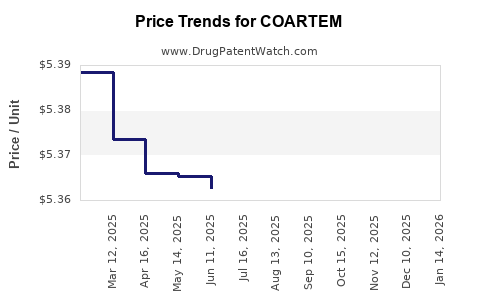
Coartem, the branded artemether-lumefantrine combination marketed by Novartis, is a high-volume malaria medicine with limited pricing power and declining strategic value as a branded product. Its commercial performance depends more on public-sector procurement, donor funding, malaria incidence, manufacturing capacity, and generic competition than on patent exclusivity.
Coartem remains an important first-line treatment for uncomplicated Plasmodium falciparum malaria. Its core markets are sub-Saharan Africa, Southeast Asia, and selected public-health channels in Latin America. Novartis has not consistently disclosed Coartem revenue as a standalone product in recent public reporting, preventing a precise current sales calculation. The product’s financial trajectory is best characterized as volume-driven, procurement-sensitive, and margin-constrained.
What is Coartem and how does it work?
Coartem is an oral fixed-dose combination of artemether and lumefantrine.
| Attribute |
Coartem profile |
| Active ingredients |
Artemether/lumefantrine |
| Standard adult strength |
20 mg artemether/120 mg lumefantrine per tablet |
| Treatment course |
Six doses over three days |
| Primary indication |
Acute uncomplicated malaria caused by P. falciparum |
| Developer and marketer |
Novartis |
| Pediatric product |
Coartem Dispersible |
| Regulatory status |
FDA-approved; WHO-prequalified product and widely used in global malaria programs |
| Commercial channel |
Government tenders, donor-funded procurement, pharmacies, hospitals, and private distributors |
Artemether rapidly reduces parasite burden, while lumefantrine provides longer antimalarial activity. The combination is designed to reduce treatment failure and delay resistance compared with artemisinin monotherapy.
The product is administered with food or milk to improve lumefantrine absorption. That requirement is clinically relevant in low-resource settings and has supported development of dispersible pediatric formulations.
How large is the Coartem market?
The addressable market is defined by global malaria treatment demand rather than by branded-product sales alone. The World Health Organization estimated 263 million malaria cases and 597,000 malaria deaths in 2023. Africa accounted for approximately 94% of cases and 95% of deaths (World Health Organization, 2024).
Artemisinin-based combination therapies, including artemether-lumefantrine, are the standard treatment platform for uncomplicated P. falciparum malaria. The market has several structural characteristics:
- Demand is concentrated in countries with high malaria transmission.
- Public procurement represents the largest volume channel.
- Much of the purchasing power comes from the Global Fund, the U.S. President’s Malaria Initiative, national governments, UNICEF, and other international agencies.
- Tender prices are materially below private-sector prices.
- Product selection depends on WHO prequalification, national registration, delivery reliability, packaging, pediatric suitability, and pharmacovigilance.
- Malaria demand is seasonal in many countries and can change with rainfall, vector-control programs, resistance, conflict, and health-system access.
Coartem competes in a market where brand recognition matters, but price and supply continuity often matter more.
What is Coartem’s financial trajectory?
Novartis does not provide a consistently detailed, current, standalone Coartem revenue line in its primary financial disclosures. That limits direct assessment of annual sales, gross margin, and regional profitability.
The product’s financial trajectory has several identifiable phases:
| Period |
Commercial condition |
Financial implication |
| 1990s-2000s |
Initial commercialization and expansion of artemether-lumefantrine |
Growth from a new branded antimalarial platform |
| 2009 onward |
FDA approval and broader global-health adoption |
Increased regulatory credibility and procurement access |
| 2010s |
Expansion of donor-funded malaria programs and pediatric product adoption |
Higher unit volumes, but public-sector price pressure |
| 2020-2022 |
COVID-19 disruption, reduced healthcare access, logistics constraints, and procurement volatility |
Uneven demand and supply-chain pressure |
| 2023-2024 |
Higher malaria burden, renewed procurement activity, and intensified generic competition |
Potential volume recovery but limited pricing expansion |
Coartem is commercially important in malaria treatment but is not a major earnings driver for Novartis relative to oncology, immunology, cardiovascular, and specialty medicines. Its revenue exposure is therefore more relevant to the global-health portfolio and manufacturing footprint than to consolidated company valuation.
The key revenue drivers are:
- Treatment volume: Higher malaria incidence and improved diagnosis increase demand.
- Public procurement: Tender awards can create significant volume but usually at constrained prices.
- Product mix: Pediatric dispersible formulations can improve access and preserve commercial relevance.
- Generic share: Approved generic artemether-lumefantrine products reduce achievable price and market share.
- Supply reliability: Stockouts can cause procurement losses and substitution by competitors.
- Donor budgets: Changes in Global Fund and PMI spending affect market volume.
A plausible long-term financial profile is stable-to-declining branded revenue per treatment, offset partly by higher global treatment volumes. The market can grow in units while remaining flat or declining in value.
Which companies compete with Coartem?
Coartem competes with both branded and generic antimalarial manufacturers. Competition is fragmented across originator companies, regional manufacturers, and WHO-prequalified suppliers.
Direct artemether-lumefantrine competitors
Generic competitors include manufacturers in India, China, Africa, and other emerging-market production centers. Product availability varies by country and procurement framework. In public tenders, generic suppliers can compete on:
- Lowest delivered price
- WHO prequalification
- Batch-release capability
- Manufacturing capacity
- Pediatric packaging
- Lead times
- Local registration and distribution
- Prior procurement performance
The direct generic market is more important than branded competition in many African countries.
Alternative antimalarial regimens
Coartem also competes with other ACTs:
| Product class |
Examples |
Competitive relevance |
| Artemether-lumefantrine |
Coartem and generics |
Major first-line platform |
| Artesunate-amodiaquine |
Artesunate/amodiaquine products |
Important in West and Central Africa |
| Dihydroartemisinin-piperaquine |
Multiple generic brands |
Used in Asia and selected African markets |
| Pyronaridine-artesunate |
Pyramax and generics |
Alternative ACT with expanding procurement relevance |
| Injectable artesunate |
Multiple suppliers |
Used for severe malaria, not a direct oral substitute |
National treatment guidelines, resistance surveillance, procurement policy, and local epidemiology determine the practical competitive position of each regimen.
When does Coartem lose exclusivity?
Coartem no longer relies on meaningful market exclusivity in its principal markets. The original composition and formulation protections were developed decades ago, and the commercial product now faces generic competition.
The relevant exclusivity mechanisms are:
| Exclusivity type |
Current commercial significance |
| Compound patent |
No longer a meaningful barrier to generic artemether-lumefantrine supply |
| Combination patent |
Historic protection; unlikely to block current generic entry in major markets |
| Formulation patent |
May affect specific delivery systems or claims, but not the entire product category |
| FDA data exclusivity |
Expired for the original approval |
| Orphan exclusivity |
Not applicable |
| Biosimilar exclusivity |
Not applicable because Coartem is a small-molecule drug |
| Pediatric exclusivity |
Any original U.S. pediatric extension would not provide current market protection |
| Regulatory exclusivity outside the U.S. |
Generally expired or immaterial to broad generic competition |
Patent status must be reviewed jurisdiction by jurisdiction because older patents, national registrations, and formulation claims can differ. The central commercial conclusion is unchanged: generic manufacturers do not need to wait for a current Coartem exclusivity period before competing with the active-ingredient combination.
What is the Orange Book status of Coartem?
Coartem is an FDA-approved small-molecule drug, and generic applicants may use the Abbreviated New Drug Application pathway where the relevant requirements are met.
There is no current commercial basis to treat Coartem as a biologic or as a product protected by biosimilar exclusivity. The FDA pathway is generic substitution through an ANDA, not a 351(k) biosimilar application.
Orange Book relevance is limited by three factors:
- The main active-ingredient combination is old.
- Any listed patents would need to remain unexpired and relevant to the proposed generic product.
- A generic applicant can address listed patents through Paragraph IV certification or wait for expiration where applicable.
The Orange Book should be checked for the specific Coartem presentation and current listing status because product-level entries can change. A Paragraph IV filing would create litigation risk only if a qualifying unexpired patent were listed and asserted.
Which Paragraph IV challenges affect Coartem?
No major, commercially consequential Coartem Paragraph IV litigation is broadly established as a current market driver in publicly available information through mid-2024.
That absence is consistent with the product’s maturity. Generic artemether-lumefantrine competition has generally developed through ordinary regulatory and procurement channels rather than through high-value U.S. patent litigation.
A generic applicant would face greater practical risk from:
- Bioequivalence requirements
- Food-effect considerations for lumefantrine
- Dissolution and stability performance
- Pediatric dispersible formulation requirements
- Country-specific registration
- WHO prequalification
- Manufacturing inspection and quality systems
- Procurement qualification
These regulatory and operational requirements are more important than patent litigation for most potential entrants.
What formulations are protected by Coartem-related intellectual property?
The principal product formats are standard tablets and pediatric dispersible tablets.
Coartem tablets
The standard tablet is used for adults and children above the applicable weight threshold. Its intellectual-property protection is weak as a category because multiple manufacturers can produce artemether-lumefantrine tablets.
Competitive differentiation depends on:
- Consistent dose uniformity
- Stability in hot and humid climates
- Packaging that protects against moisture
- Tablet size and swallowability
- Registration in procurement countries
- Reliable supply
Coartem Dispersible
Coartem Dispersible was developed to address pediatric malaria treatment. It disperses in a small amount of water and is designed to improve dosing for children.
The pediatric product has greater technical and commercial differentiation than the conventional tablet, but the protection is not equivalent to durable patent exclusivity. Competitors can develop alternative pediatric formulations, subject to regulatory requirements and procurement acceptance.
Pediatric packaging, taste masking, dispersibility, dose flexibility, and shelf stability can create practical barriers. These barriers are manufacturing and quality barriers rather than a strong, durable monopoly.
How strong is the Coartem patent estate?
Coartem’s patent estate is commercially weak compared with newer branded medicines.
| Patent-estate dimension |
Assessment |
| Composition-of-matter protection |
Expired or commercially exhausted |
| Combination protection |
Limited current blocking power |
| Formulation protection |
Potentially relevant to specific pediatric or delivery claims |
| Manufacturing protection |
Possible process know-how, but generally difficult to use against independent production |
| Regulatory exclusivity |
Expired or limited |
| Freedom to operate for generics |
Generally favorable for standard products, subject to country review |
| Litigation exposure |
Low relative to active oncology or specialty-drug estates |
The strongest remaining barriers are likely to be know-how, quality systems, supply contracts, regulatory history, and procurement reputation. Those assets can preserve market share even when patents no longer do.
How do licensing and public-private partnerships affect Coartem?
Coartem’s market development was closely linked to public-health partnerships. Novartis worked with Medicines for Malaria Venture on the pediatric dispersible formulation and broader access initiatives. The partnership model helped align product development with malaria-program needs, including pediatric dosing and use in low-income countries (Medicines for Malaria Venture, n.d.).
The commercial effect of these arrangements is different from a conventional pharmaceutical licensing deal. The objective is usually market access, treatment scale, and affordability rather than maximizing price per prescription.
Relevant commercial structures include:
- Tiered pricing
- Government and donor tenders
- WHO prequalification
- Volume commitments
- Public-sector supply agreements
- Pediatric product development partnerships
- National registration and distribution arrangements
These mechanisms can expand unit demand while compressing average selling price.
What FDA and global regulatory status does Coartem have?
The FDA approved Coartem in 2009 for treatment of acute uncomplicated malaria caused by P. falciparum in adults and children weighing at least 5 kilograms. The approval was significant because it provided a U.S. regulatory pathway for a medicine primarily used in malaria-endemic regions.
Coartem and related presentations have also been used extensively in global malaria programs. WHO prequalification supports procurement by international agencies and national malaria programs, although it does not guarantee a tender award.
The product’s regulatory value is now defensive rather than exclusive. Novartis benefits from:
- Established safety and efficacy data
- Regulatory familiarity
- Procurement history
- Pharmacovigilance infrastructure
- Manufacturing validation
- Brand recognition
Generic manufacturers with WHO prequalification can still compete effectively.
What patent litigation and settlement risks affect Coartem?
Coartem does not have the litigation profile of a high-value patented medicine facing imminent U.S. generic entry. The key risk is commercial substitution rather than a damages-heavy patent dispute.
Potential disputes could involve:
- Patent listing for a specific formulation
- Trademarks and trade dress
- Regulatory exclusivity interpretation
- Procurement exclusion or tender challenges
- Product quality and bioequivalence
- Manufacturing know-how
- Distribution rights
Trademark enforcement can protect the Coartem name even when the active ingredients are open to generic competition. It cannot prevent lawful sale of approved artemether-lumefantrine products under different brand names.
What generic launch scenarios exist for Coartem?
Scenario 1: Continued generic price erosion
This is the base case. More WHO-prequalified suppliers and national registrations reduce public-sector prices. Novartis retains demand where procurement agencies value its established supply record, but share and margin decline.
Scenario 2: Volume growth offsets price pressure
A higher malaria burden, expanded testing and treatment, and stronger donor procurement increase total treatment volume. Coartem revenue remains stable despite lower prices per course.
Scenario 3: Pediatric displacement
Alternative dispersible or age-appropriate ACT products gain procurement preference. Coartem tablets retain adult demand, while the pediatric segment becomes more competitive.
Scenario 4: Resistance-driven treatment change
Emerging artemisinin or partner-drug resistance could shift guidelines toward other ACTs or next-generation therapies. This is a strategic risk because treatment guidelines can change faster than patent or product lifecycles.
Scenario 5: Supply disruption
Manufacturing interruptions, active pharmaceutical ingredient shortages, quality findings, or logistics failures could cause rapid substitution. Public procurement buyers generally cannot tolerate prolonged stockouts.
What is the geographic market exposure for Coartem?
Coartem’s highest commercial relevance is in:
- Nigeria
- Democratic Republic of the Congo
- Tanzania
- Uganda
- Mozambique
- Ghana
- Kenya
- Malawi
- Zambia
- Zimbabwe
- Ethiopia and other high-burden African markets
- Southeast Asian malaria-endemic countries
Africa is the dominant volume region. Southeast Asia is strategically important because of resistance surveillance and treatment-policy changes, but it is smaller in absolute case volume.
Geographic performance depends on registration status, national guidelines, donor eligibility, procurement frameworks, local competition, and distribution infrastructure. A global brand does not receive uniform market access across malaria-endemic countries.
What manufacturing and intellectual-property barriers protect Coartem?
Manufacturing barriers are more durable than patent barriers but remain moderate rather than prohibitive.
Key barriers include:
- Artemether and lumefantrine sourcing
- Control of lumefantrine particle properties and dissolution
- Batch consistency
- Stability under high temperature and humidity
- Moisture-protective packaging
- Pediatric dispersibility and taste
- WHO prequalification
- Regulatory inspections
- Large-volume tender fulfillment
- Pharmacovigilance and recall capability
These requirements favor established manufacturers, particularly for donor-funded procurement. They do not prevent capable generic companies from entering the market.
How does Coartem compare with other malaria medicines?
| Factor |
Coartem |
Artesunate-amodiaquine |
Dihydroartemisinin-piperaquine |
Pyronaridine-artesunate |
| Commercial maturity |
Very high |
High |
High |
Moderate |
| Generic competition |
Extensive |
Extensive |
Extensive |
Growing |
| Pediatric development |
Strong, including dispersible product |
Varies by supplier |
Varies by supplier |
Expanding |
| Main advantage |
Established efficacy, brand, procurement history |
Strong African use |
Longer partner-drug activity |
Alternative ACT profile |
| Main risk |
Price erosion and resistance |
Tolerability and regional variation |
Resistance and safety monitoring |
Limited historical scale |
| Patent strength |
Weak |
Generally weak |
Generally weak |
More variable by product |
Coartem’s advantage is execution: regulatory history, procurement familiarity, and established supply. Its disadvantage is that the same maturity has eliminated most exclusivity-based pricing power.
Key Takeaways
- Coartem is Novartis’s artemether-lumefantrine antimalarial product and remains a major treatment brand in global malaria programs.
- Market demand is tied to malaria incidence, donor procurement, government tenders, and supply reliability.
- Novartis does not consistently disclose current standalone Coartem revenue, so precise annual financial trajectory cannot be calculated from public company reporting.
- The product can experience unit-volume growth while revenue and margins decline because of tender pricing and generic competition.
- Original patent and regulatory exclusivity are no longer meaningful commercial barriers for standard artemether-lumefantrine products.
- Coartem Dispersible provides greater product differentiation than standard tablets but does not create a durable monopoly.
- No major current Paragraph IV litigation is established as a central Coartem market risk through mid-2024.
- The primary competitive threats are generic ACT suppliers, alternative ACT regimens, pediatric substitutions, resistance, and procurement losses.
- Manufacturing quality, WHO prequalification, supply reliability, and tender performance are more important than patent strength.
- Coartem is strategically relevant to global health but has limited impact on Novartis’s consolidated financial performance.
FAQs
Is Coartem still protected by patents?
The original product is not protected by a commercially meaningful exclusivity period. Specific formulation or process claims may require country-level review, but generic artemether-lumefantrine competition is established.
Is Coartem a biologic or biosimilar product?
No. Coartem is a small-molecule fixed-dose combination. Generic manufacturers use the applicable small-molecule regulatory pathway rather than the biosimilar pathway.
Does Novartis disclose Coartem sales separately?
Recent Novartis reporting does not consistently provide a current standalone Coartem revenue line. Public data therefore support directional analysis but not a precise current product-sales estimate.
Can generic Coartem be substituted automatically?
Substitution depends on the country, product registration, procurement rules, prescriber requirements, and whether the generic has demonstrated the required equivalence and quality standards.
What could reduce future Coartem demand?
The main risks are increased generic tender share, substitution by other ACTs, malaria-treatment guideline changes, artemisinin or lumefantrine resistance, procurement losses, supply interruptions, and reductions in donor-funded malaria programs.
References
- Medicines for Malaria Venture. (n.d.). Coartem Dispersible. https://www.mmv.org
- Novartis AG. (2024). Annual report 2023. https://www.novartis.com
- U.S. Food and Drug Administration. (2009). FDA approves Coartem for treatment of malaria. https://www.fda.gov
- U.S. Food and Drug Administration. (2024). Approved drug products with therapeutic equivalence evaluations: Orange Book. https://www.fda.gov
- World Health Organization. (2024). World malaria report 2024. World Health Organization. https://www.who.int/publications/i/item/9789240104440