Last updated: August 5, 2026
AZSTARYS, a once-daily extended-release ADHD medicine combining serdexmethylphenidate and dexmethylphenidate, has established a differentiated position in the U.S. stimulant market but remains a smaller product than Vyvanse, Adderall XR, Concerta, and generic methylphenidate products. Its commercial case depends on premium pricing, duration of effect, lower abuse potential relative to immediate-release dexmethylphenidate, payer access, and continued prescriber adoption.
The product was approved by the U.S. Food and Drug Administration in March 2021 for attention-deficit/hyperactivity disorder in patients aged six years and older. Corium commercializes AZSTARYS in the United States under a licensing and commercialization arrangement with KemPharm, the developer of serdexmethylphenidate. FDA regulatory exclusivity extended through March 2026 if the product received five-year new chemical entity exclusivity, while listed patent protection is expected to extend into the mid-2030s, subject to patent-term adjustments, regulatory extensions, and Orange Book changes.
What is AZSTARYS and how does it work?
AZSTARYS is a Schedule II controlled substance containing two active components:
| Component |
Function |
| Serdexmethylphenidate |
A prodrug designed to provide extended exposure to dexmethylphenidate |
| Dexmethylphenidate |
The immediately active pharmacologic component |
The product is available in three strengths:
| AZSTARYS strength |
Serdexmethylphenidate |
Dexmethylphenidate |
| 26.1 mg/5.2 mg |
26.1 mg |
5.2 mg |
| 39.2 mg/7.8 mg |
39.2 mg |
7.8 mg |
| 52.3 mg/10.4 mg |
52.3 mg |
10.4 mg |
The formulation is intended for once-daily morning administration. The prodrug design gives AZSTARYS a technical distinction from conventional extended-release stimulant formulations that rely primarily on coated beads, osmotic delivery, or other release-control mechanisms.
FDA approved AZSTARYS on March 2, 2021. The approval covered ADHD treatment in adults and pediatric patients six years and older. The label includes standard stimulant warnings involving abuse, misuse, dependence, cardiovascular effects, psychiatric reactions, growth suppression, and peripheral vasculopathy. [1]
How large is the ADHD stimulant market?
The U.S. ADHD drug market is large, mature, and highly competitive. Stimulants account for most pharmacologic ADHD treatment, with branded and generic amphetamine and methylphenidate products competing on duration, tolerability, dosing convenience, price, and supply availability.
Key competitors include:
| Product |
Active ingredient |
Company or principal marketer |
Commercial position |
| Vyvanse |
Lisdexamfetamine |
Takeda; multiple generic manufacturers after 2023 |
Long-acting prodrug stimulant |
| Adderall XR |
Mixed amphetamine salts |
Teva and other manufacturers |
Major branded and generic stimulant |
| Concerta |
Methylphenidate HCl |
Janssen historically; generic competition |
Long-acting methylphenidate |
| Focalin XR |
Dexmethylphenidate HCl |
Novartis historically; generic competition |
Direct pharmacologic comparator |
| Jornay PM |
Methylphenidate HCl |
Ironshore |
Evening-dosed delayed-release stimulant |
| Quillivant XR |
Methylphenidate HCl |
Tris Pharma |
Liquid extended-release stimulant |
| AZSTARYS |
Serdexmethylphenidate/dexmethylphenidate |
Corium |
Once-daily prodrug-based stimulant |
The market has two structural advantages for AZSTARYS. First, ADHD treatment is chronic, so successful patients can generate recurring prescription volume. Second, switching occurs when patients experience inadequate duration, appetite effects, insomnia, abuse concerns, or difficulty swallowing tablets.
The principal market constraints are generic competition, payer step edits, stimulant shortages, controlled-substance prescribing restrictions, and the high net cost of branded therapy.
What drove AZSTARYS adoption after launch?
AZSTARYS entered the market in June 2021 with a positioning strategy built around duration, once-daily administration, and the serdexmethylphenidate prodrug platform. Corium directed commercial activity toward pediatric and adult ADHD prescribers, while the product’s clinical profile supported differentiation from immediate-release and older extended-release methylphenidate products.
Adoption has been influenced by five factors:
- Duration of symptom control. The product is designed for all-day coverage from a morning dose.
- Prodrug technology. Serdexmethylphenidate is converted to dexmethylphenidate in the body, creating a pharmacokinetic profile distinct from immediate-release administration.
- Dose flexibility. Three strengths allow titration across pediatric and adult patients.
- Methylphenidate-class positioning. AZSTARYS is relevant for patients who respond better to methylphenidate than to amphetamine products.
- Commercial support. Corium has used copay assistance and patient-support programs to reduce the impact of branded pricing.
Adoption has also benefited from instability across the stimulant market. Shortages involving amphetamine products and certain methylphenidate presentations have created opportunities for alternative products. Shortage-driven prescribing is not equivalent to durable market share, however. Patients can move back to lower-cost generic therapy when supply normalizes or insurance coverage changes.
What is the financial trajectory for AZSTARYS?
AZSTARYS has followed a typical specialty-pharmaceutical launch curve: limited initial revenue in 2021, rapid expansion during the early commercial period, and increasing pressure from payer controls and stimulant-market competition.
Corium is privately held and does not provide the same level of product-level financial disclosure as a public pharmaceutical company. Public information therefore supports directional analysis more reliably than a complete standalone income statement.
| Period |
Commercial development |
Financial implication |
| 2021 |
U.S. launch after March FDA approval |
Initial prescription build; high selling and marketing costs |
| 2022 |
Broader prescriber awareness and payer expansion |
Material year-over-year growth from a small base |
| 2023 |
Continued product uptake, offset by stimulant shortages and generic competition |
Growth remained possible, but net sales depended heavily on coverage and copay support |
| 2024 onward |
Maturing branded stimulant product with longer-term patent protection |
Revenue trajectory depends on repeat use, payer access, and share capture from competing stimulants |
KemPharm’s economic interest is based primarily on royalties and other contractual payments associated with AZSTARYS rather than the full product sales line. This structure means AZSTARYS sales growth can translate into high incremental value for the technology owner, but the financial result depends on royalty rates, commercialization costs, milestone terms, and any adjustments under the license agreement.
The most important financial variables are:
- prescription volume;
- gross-to-net deductions from rebates, discounts, free goods, and copay programs;
- the proportion of prescriptions paid by commercial insurance versus cash;
- payer formulary placement;
- refill persistence;
- sales-force and promotional spending;
- royalty obligations to KemPharm;
- manufacturing cost for the proprietary active ingredient and finished product.
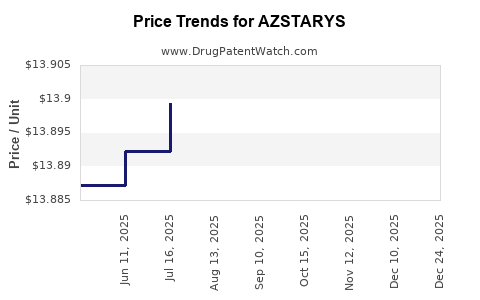
A branded ADHD product can show prescription growth without proportional revenue growth when manufacturers increase copay assistance or provide larger discounts to secure formulary access. AZSTARYS should therefore be evaluated using both prescription trends and reported net sales.
How does AZSTARYS compare with Vyvanse, Focalin XR, and generic stimulants?
AZSTARYS versus Vyvanse
Vyvanse uses lisdexamfetamine, an amphetamine prodrug. AZSTARYS uses serdexmethylphenidate with dexmethylphenidate. The products differ pharmacologically and are not interchangeable.
Vyvanse had a substantially larger commercial base before generic lisdexamfetamine entered the U.S. market in August 2023. Generic entry increased payer pressure across the ADHD category and made it more difficult for premium-priced branded stimulants to maintain formulary position.
AZSTARYS can compete for patients who respond inadequately to amphetamine therapy, experience amphetamine-related adverse effects, or prefer a methylphenidate-class medicine.
AZSTARYS versus Focalin XR
Focalin XR contains dexmethylphenidate, the active component generated from AZSTARYS. Focalin XR has generic competition and a lower-cost position. AZSTARYS must justify its premium through duration, dosing convenience, tolerability, and the prodrug formulation.
This is one of the most important competitive comparisons because prescribers can use generic dexmethylphenidate when the pharmacologic response is acceptable and cost is the principal consideration.
AZSTARYS versus generic methylphenidate
Generic methylphenidate products have broad availability and low acquisition cost. They generally provide weaker commercial economics for manufacturers but remain the default option for many plans and patients.
AZSTARYS has a better chance of maintaining premium economics when a patient requires a specific duration profile, has difficulty with multiple daily doses, or has an inadequate response to standard extended-release products.
When does AZSTARYS lose regulatory exclusivity?
AZSTARYS received FDA approval on March 2, 2021. If FDA granted five-year new chemical entity exclusivity based on serdexmethylphenidate, that exclusivity would run through March 2, 2026. If the product received only three-year exclusivity for new clinical investigations, the relevant period would have ended in March 2024.
FDA regulatory exclusivity and patent protection are separate:
| Protection type |
Relevant timing |
| FDA approval |
March 2, 2021 |
| Potential five-year NCE exclusivity |
Through March 2, 2026 |
| Potential three-year clinical-investigation exclusivity |
Through March 2, 2024 |
| Listed patent protection |
Expected into the mid-2030s, subject to legal adjustments |
| Generic approval pathway |
ANDA approval may be blocked by valid unexpired exclusivity or patents |
A five-year NCE period blocks an ANDA referencing the product during the exclusivity term, subject to statutory exceptions. It does not prevent all forms of competition, such as an independent full NDA or certain non-ANDA regulatory strategies.
What patents protect AZSTARYS?
AZSTARYS is protected by patents covering the combination, pharmaceutical compositions, dosing, and methods of treating ADHD. The relevant U.S. patent estate has included patents associated with KemPharm’s serdexmethylphenidate platform and the commercial product.
Publicly identified patent families associated with AZSTARYS include:
| Patent area |
Protected subject matter |
Commercial relevance |
| Serdexmethylphenidate chemistry |
Prodrug compounds and related forms |
Protects the core active pharmaceutical technology |
| Combination composition |
Serdexmethylphenidate with dexmethylphenidate |
Protects the marketed product composition |
| Pharmaceutical formulation |
Oral dosage forms and release characteristics |
Creates formulation-based barriers to generic substitution |
| Method of treatment |
Administration for ADHD and related indications |
Can support method-of-use enforcement |
| Dose and administration |
Once-daily treatment and dosage regimens |
May complicate design-around strategies |
The core patent estate is commercially stronger than a single composition patent because it can include overlapping compound, formulation, and use claims. Its practical strength depends on claim scope, prosecution history, written-description support, patent-term calculations, and whether generic applicants can avoid infringement.
Patent numbers and expiration dates should be checked against the current FDA Orange Book and USPTO records before a litigation, licensing, or investment decision. Orange Book listings can change through patent-listing updates, delisting, corrections, and new regulatory submissions.
What is the Orange Book status of AZSTARYS?
AZSTARYS is an FDA-approved prescription drug subject to Orange Book patent listing rules. The Orange Book is the operative source for identifying patents submitted by the NDA holder for the approved drug and for assessing the timing of potential ANDA certifications.
The commercial questions are:
- whether the listed patents cover the active ingredient, formulation, or method of use;
- whether an ANDA applicant files a Paragraph IV certification;
- whether the NDA holder files suit within 45 days;
- whether litigation triggers a 30-month stay;
- whether the generic applicant pursues a carve-out for patented methods of use;
- whether any patent expires before the FDA exclusivity period ends.
A Paragraph IV challenge would create litigation risk for Corium and KemPharm but could also accelerate market clarity. No widely reported Paragraph IV litigation involving AZSTARYS had been established in the public record reviewed through mid-2024.
Which companies are challenging AZSTARYS?
The principal competitive threat is generic substitution, but the identity of a future challenger depends on ANDA filings and patent certifications. Large generic manufacturers with ADHD portfolios, including Teva, Sandoz, Amneal, Viatris, and other specialty-generic companies, have the manufacturing and distribution capabilities to evaluate the product.
A generic AZSTARYS would face technical barriers:
- controlled-substance manufacturing requirements;
- development of an equivalent combination product;
- demonstration of bioequivalence;
- replication of the relevant release profile;
- sourcing or manufacturing serdexmethylphenidate;
- compliance with DEA quota and security requirements;
- resolution of Orange Book patents and exclusivity.
The largest barrier may be active-ingredient access rather than finished-dose manufacturing. A generic company may need to develop a non-infringing process for serdexmethylphenidate or obtain a licensed supply source.
What generic launch scenarios exist for AZSTARYS?
Scenario 1: No early Paragraph IV challenge
If no ANDA applicant challenges the listed patents before the relevant filing window, generic entry is more likely to occur after patent expiry or a later settlement. This is the most favorable scenario for long-term branded revenue.
Scenario 2: Paragraph IV challenge and patent litigation
An ANDA filing could lead to a 30-month stay if Corium or the relevant patent owner brings timely litigation. The outcome would depend on validity, infringement, claim construction, and any patent-term extension.
Scenario 3: Authorized generic or settlement
The parties could resolve litigation through a settlement that permits a generic launch before the latest patent expiry. Terms might include a launch date, supply arrangement, or license. No publicly established AZSTARYS settlement had been identified through mid-2024.
Scenario 4: Formulation or process design-around
A challenger could attempt to avoid selected formulation claims while retaining the same active ingredients. Such a product would still need to satisfy FDA bioequivalence requirements and address compound or combination patents.
How strong is the AZSTARYS patent estate?
The estate is strategically meaningful because it is based on a proprietary prodrug platform rather than only on a conventional extended-release formulation. Compound and composition claims generally offer broader protection than a narrow administration claim.
Its main strengths are:
- proprietary serdexmethylphenidate chemistry;
- combination protection for the marketed product;
- potential overlap between compound and formulation claims;
- possible protection into the mid-2030s;
- manufacturing know-how associated with a controlled prodrug stimulant.
Its vulnerabilities are:
- obviousness challenges based on known dexmethylphenidate chemistry;
- written-description and enablement challenges;
- narrow claim construction;
- alternative manufacturing routes;
- generic products using non-infringing formulations;
- limited value of method-of-use patents if a generic can carve out the patented indication.
The estate should be viewed as stronger than a conventional formulation-only portfolio but not immune to Paragraph IV litigation.
What licensing deals support AZSTARYS?
KemPharm developed the serdexmethylphenidate technology and entered into a commercialization relationship with Corium. Corium holds the commercial role for AZSTARYS in the United States and has responsibility for sales, marketing, and market access.
The economic structure separates platform ownership from commercialization. KemPharm benefits from royalties and contractual payments, while Corium bears the cost of selling the product and maintaining market access. This arrangement can improve the developer’s capital efficiency, but it also means KemPharm’s revenue is dependent on the commercial performance and contractual terms of a product it does not directly sell.
What regulatory and commercial risks affect AZSTARYS?
The principal risks are:
| Risk |
Effect on market performance |
| Generic Vyvanse competition |
Lowers branded stimulant pricing and increases payer scrutiny |
| Generic Focalin XR |
Limits AZSTARYS pricing power within the dexmethylphenidate class |
| Stimulant shortages |
Can increase trial prescriptions but disrupt refill continuity |
| Payer exclusions |
Restricts access and increases abandonment |
| Copay dependence |
Supports volume but reduces net revenue |
| Controlled-substance rules |
Limit distribution flexibility and require strict compliance |
| Pediatric growth concerns |
Can reduce persistence or prompt treatment changes |
| Abuse and diversion concerns |
Increase regulatory and prescriber sensitivity |
| Supply concentration |
Creates exposure to manufacturing disruption |
| Patent challenge |
Can shorten the effective commercial life |
Key Takeaways
- AZSTARYS is a differentiated, once-daily methylphenidate-class ADHD product based on serdexmethylphenidate and dexmethylphenidate.
- FDA approval occurred on March 2, 2021, with pediatric and adult ADHD labeling.
- The product competes against Vyvanse, Adderall XR, Focalin XR, Concerta, Jornay PM, and low-cost generic stimulants.
- Commercial growth has benefited from product differentiation and stimulant shortages but remains constrained by payer access and generic competition.
- Corium is the commercial operator, while KemPharm retains economic rights tied to the proprietary technology.
- The product’s financial trajectory is positive from a launch-base perspective, but standalone AZSTARYS sales are not disclosed with the transparency of a large public-company brand.
- Regulatory exclusivity may extend through March 2026 if five-year NCE exclusivity applies.
- Patent protection is expected to extend into the mid-2030s, subject to patent-term adjustments and litigation.
- The most important future catalysts are repeat-prescription growth, improved formulary access, and the absence of an early successful Paragraph IV challenge.
- The most important downside risks are generic substitution, net-price erosion, payer restrictions, and challenges to compound or formulation patents.
FAQs About AZSTARYS Market and Patent Outlook
Is AZSTARYS a blockbuster drug?
No. AZSTARYS is a growing branded ADHD product but remains materially smaller than major stimulant franchises such as Vyvanse and Adderall. Its commercial value depends on continued share gains within the methylphenidate segment.
Will generic AZSTARYS launch after Vyvanse generics?
Not automatically. Generic lisdexamfetamine competes with AZSTARYS but does not establish bioequivalence to it. A generic AZSTARYS applicant must develop the specific serdexmethylphenidate/dexmethylphenidate combination and address the product’s regulatory exclusivity and patents.
Does AZSTARYS have a biosimilar risk?
No. Biosimilars apply to biologic products. AZSTARYS is a small-molecule controlled substance, so the relevant competitive pathway is an ANDA generic, not a biosimilar application.
Can a generic company copy the AZSTARYS prodrug?
A generic company may attempt to reproduce the active ingredients, but it must satisfy FDA equivalence requirements and avoid valid patent claims. Compound, formulation, manufacturing-process, and method-of-use patents can each affect the launch strategy.
What determines AZSTARYS revenue after 2026?
The principal determinants are patent litigation outcomes, generic filing activity, formulary coverage, refill persistence, net pricing, prescriber retention, and whether Corium can expand use among patients who require long-duration methylphenidate therapy.
References
- U.S. Food and Drug Administration. (2021). AZSTARYS prescribing information. FDA.
- U.S. Food and Drug Administration. (2021, March 2). FDA approves new treatment for ADHD. FDA.
- U.S. Food and Drug Administration. (2024). Approved drug products with therapeutic equivalence evaluations: Orange Book. FDA.
- Drug Enforcement Administration. (2024). Controlled substances schedules. U.S. Department of Justice.
- Corium, Inc. (2021-2024). AZSTARYS product and corporate communications. Corium.
- KemPharm, Inc. (2021-2024). Serdexmethylphenidate and AZSTARYS corporate disclosures. KemPharm.