APRETUDE Drug Patent Profile
✉ Email this page to a colleague
Which patents cover Apretude, and when can generic versions of Apretude launch?
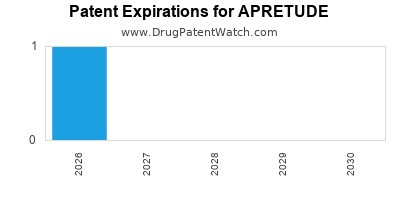
Apretude is a drug marketed by Viiv Hlthcare and is included in one NDA. There are four patents protecting this drug.
The generic ingredient in APRETUDE is cabotegravir. There is one drug master file entry for this compound. One supplier is listed for this compound. Additional details are available on the cabotegravir profile page.
DrugPatentWatch® Generic Entry Outlook for Apretude
Apretude was eligible for patent challenges on January 21, 2025.
There has been one patent litigation case involving the patents protecting this drug, indicating strong interest in generic launch. Recent data indicate that 63% of patent challenges are decided in favor of the generic patent challenger and that 54% of successful patent challengers promptly launch generic drugs.
Indicators of Generic Entry
AI Deep Research
Questions you can ask:
- What is the 5 year forecast for APRETUDE?
- What are the global sales for APRETUDE?
- What is Average Wholesale Price for APRETUDE?
Summary for APRETUDE
| US Patents: | 4 |
| Applicants: | 1 |
| NDAs: | 1 |
| Finished Product Suppliers / Packagers: | 1 |
| Raw Ingredient (Bulk) Api Vendors: | 53 |
| Clinical Trials: | 5 |
| Patent Applications: | 831 |
| Drug Prices: | Drug price information for APRETUDE |
| Patent Litigation and PTAB cases: | See patent lawsuits and PTAB cases for APRETUDE |
| What excipients (inactive ingredients) are in APRETUDE? | APRETUDE excipients list |
| DailyMed Link: | APRETUDE at DailyMed |

Recent Clinical Trials for APRETUDE
Identify potential brand extensions & 505(b)(2) entrants
| Sponsor | Phase |
|---|---|
| PPD | Phase 3 |
| GlaxoSmithKline | Phase 3 |
| ViiV Healthcare | Phase 3 |
US Patents and Regulatory Information for APRETUDE
APRETUDE is protected by four US patents and one FDA Regulatory Exclusivity.
| Applicant | Tradename | Generic Name | Dosage | NDA | Approval Date | TE | Type | RLD | RS | Patent No. | Patent Expiration | Product | Substance | Delist Req. | Exclusivity Expiration |
|---|---|---|---|---|---|---|---|---|---|---|---|---|---|---|---|
| Viiv Hlthcare | APRETUDE | cabotegravir | SUSPENSION, EXTENDED RELEASE;INTRAMUSCULAR | 215499-001 | Dec 20, 2021 | RX | Yes | Yes | 12,138,264 | ⤷ Start Trial | Y | ⤷ Start Trial | |||
| Viiv Hlthcare | APRETUDE | cabotegravir | SUSPENSION, EXTENDED RELEASE;INTRAMUSCULAR | 215499-001 | Dec 20, 2021 | RX | Yes | Yes | 11,224,597 | ⤷ Start Trial | Y | ⤷ Start Trial | |||
| Viiv Hlthcare | APRETUDE | cabotegravir | SUSPENSION, EXTENDED RELEASE;INTRAMUSCULAR | 215499-001 | Dec 20, 2021 | RX | Yes | Yes | 10,927,129 | ⤷ Start Trial | Y | Y | ⤷ Start Trial | ||
| Viiv Hlthcare | APRETUDE | cabotegravir | SUSPENSION, EXTENDED RELEASE;INTRAMUSCULAR | 215499-001 | Dec 20, 2021 | RX | Yes | Yes | 8,410,103 | ⤷ Start Trial | Y | Y | ⤷ Start Trial | ||
| Viiv Hlthcare | APRETUDE | cabotegravir | SUSPENSION, EXTENDED RELEASE;INTRAMUSCULAR | 215499-001 | Dec 20, 2021 | RX | Yes | Yes | ⤷ Start Trial | ⤷ Start Trial | ⤷ Start Trial | ||||
| >Applicant | >Tradename | >Generic Name | >Dosage | >NDA | >Approval Date | >TE | >Type | >RLD | >RS | >Patent No. | >Patent Expiration | >Product | >Substance | >Delist Req. | >Exclusivity Expiration |
Expired US Patents for APRETUDE
| Applicant | Tradename | Generic Name | Dosage | NDA | Approval Date | Patent No. | Patent Expiration |
|---|---|---|---|---|---|---|---|
| Viiv Hlthcare | APRETUDE | cabotegravir | SUSPENSION, EXTENDED RELEASE;INTRAMUSCULAR | 215499-001 | Dec 20, 2021 | 10,927,129 | ⤷ Start Trial |
| >Applicant | >Tradename | >Generic Name | >Dosage | >NDA | >Approval Date | >Patent No. | >Patent Expiration |
EU/EMA Drug Approvals for APRETUDE
| Company | Drugname | Inn | Product Number / Indication | Status | Generic | Biosimilar | Orphan | Marketing Authorisation | Marketing Refusal |
|---|---|---|---|---|---|---|---|---|---|
| ViiV Healthcare B.V. | Vocabria | cabotegravir | EMEA/H/C/004976Vocabria tablets are indicated in combination with rilpivirine tablets for the short-term treatment of Human Immunodeficiency Virus type 1 (HIV-1) infection in adults who are virologically suppressed (HIV-1 RNA | Authorised | no | no | no | 2020-12-17 | |
| ViiV Healthcare B.V. | Apretude | cabotegravir | EMEA/H/C/005756Apretude is indicated in combination with safer sex practices for pre-exposure prophylaxis (PrEP) to reduce the risk of sexually acquired HIV-1 infection in high-risk adults and adolescents, weighing at least 35 kg (see sections 4.2, 4.4 and 5.1). | Authorised | no | no | no | 2023-09-15 | |
| >Company | >Drugname | >Inn | >Product Number / Indication | >Status | >Generic | >Biosimilar | >Orphan | >Marketing Authorisation | >Marketing Refusal |
International Patents for APRETUDE
When does loss-of-exclusivity occur for APRETUDE?
Based on analysis by DrugPatentWatch, the following patents block generic entry in the countries listed below:
Australia
Patent: 11302030
Estimated Expiration: ⤷ Start Trial
Brazil
Patent: 2013005907
Estimated Expiration: ⤷ Start Trial
Canada
Patent: 10524
Estimated Expiration: ⤷ Start Trial
Chile
Patent: 13000715
Estimated Expiration: ⤷ Start Trial
China
Patent: 3547266
Estimated Expiration: ⤷ Start Trial
Croatia
Patent: 0161280
Estimated Expiration: ⤷ Start Trial
Cyprus
Patent: 18279
Estimated Expiration: ⤷ Start Trial
Denmark
Patent: 16076
Estimated Expiration: ⤷ Start Trial
Eurasian Patent Organization
Patent: 4924
Estimated Expiration: ⤷ Start Trial
Patent: 1390233
Estimated Expiration: ⤷ Start Trial
European Patent Office
Patent: 16076
Estimated Expiration: ⤷ Start Trial
Hungary
Patent: 31336
Estimated Expiration: ⤷ Start Trial
Israel
Patent: 5028
Patent: תכשיר רוקחי פרנטרלי לשימוש בטיפול בזיהום על ידי hiv באדם (Parenteral pharmaceutical composition for use in the treatment of an hiv infection in a human)
Estimated Expiration: ⤷ Start Trial
Japan
Patent: 31385
Estimated Expiration: ⤷ Start Trial
Patent: 14500849
Patent: 医薬組成物
Estimated Expiration: ⤷ Start Trial
Lithuania
Patent: 16076
Estimated Expiration: ⤷ Start Trial
Mexico
Patent: 6193
Patent: COMPOSICIONES FARMACEUTICAS. (PHARMACEUTICAL COMPOSITIONS.)
Estimated Expiration: ⤷ Start Trial
Patent: 13003037
Patent: COMPOSICIONES FARMACEUTICAS. (PHARMACEUTICAL COMPOSITIONS.)
Estimated Expiration: ⤷ Start Trial
Montenegro
Patent: 520
Patent: FARMACEUTSKE KOMPOZICIJE (PHARMACEUTICAL COMPOSITIONS)
Estimated Expiration: ⤷ Start Trial
Poland
Patent: 16076
Estimated Expiration: ⤷ Start Trial
Portugal
Patent: 16076
Estimated Expiration: ⤷ Start Trial
San Marino
Patent: 01600350
Patent: COMPOSIZIONI FARMACEUTICHE
Estimated Expiration: ⤷ Start Trial
Serbia
Patent: 222
Patent: FARMACEUTSKE KOMPOZICIJE (PHARMACEUTICAL COMPOSITIONS)
Estimated Expiration: ⤷ Start Trial
Slovenia
Patent: 16076
Estimated Expiration: ⤷ Start Trial
South Africa
Patent: 1301766
Patent: PHARMACEUTICAL COMPOSITIONS
Estimated Expiration: ⤷ Start Trial
South Korea
Patent: 1938662
Estimated Expiration: ⤷ Start Trial
Patent: 130116254
Patent: 약학 조성물 (PHARMACEUTICAL COMPOSITIONS)
Estimated Expiration: ⤷ Start Trial
Spain
Patent: 94557
Estimated Expiration: ⤷ Start Trial
Taiwan
Patent: 1223529
Patent: Pharmaceutical compositions
Estimated Expiration: ⤷ Start Trial
Patent: 77377
Estimated Expiration: ⤷ Start Trial
Ukraine
Patent: 8250
Patent: ПАРЕНТЕРАЛЬНА ФАРМАЦЕВТИЧНА КОМПОЗИЦІЯ, ЇЇ ЗАСТОСУВАННЯ ТА СПОСОБИ ЛІКУВАННЯ АБО ПОПЕРЕДЖЕННЯ ВІЛ-ІНФЕКЦІЇ У ЛЮДИНИ
Estimated Expiration: ⤷ Start Trial
Generics may enter earlier, or later, based on new patent filings, patent extensions, patent invalidation, early generic licensing, generic entry preferences, and other factors.
See the table below for additional patents covering APRETUDE around the world.
| Country | Patent Number | Title | Estimated Expiration |
|---|---|---|---|
| Austria | E516026 | ⤷ Start Trial | |
| Australia | 2006239177 | Polycyclic carbamoylpyridone derivative having HIV integrase inhibitory activity | ⤷ Start Trial |
| Australia | 2006307101 | Polycyclic carbamoylpyridone derivative having inhibitory activity on HIV integrase | ⤷ Start Trial |
| Brazil | PI0610030 | composto, processo para a preparação de um composto, método de tratamento de uma infecção por hiv em um humano, uso de um composto, e, composição farmacêutica | ⤷ Start Trial |
| Brazil | PI0617842 | composto ou um sal farmaceuticamente aceitável ou um solvato do mesmo, e, composição farmacêutica | ⤷ Start Trial |
| >Country | >Patent Number | >Title | >Estimated Expiration |
Supplementary Protection Certificates for APRETUDE
| Patent Number | Supplementary Protection Certificate | SPC Country | SPC Expiration | SPC Description |
|---|---|---|---|---|
| 1874117 | C300676 | Netherlands | ⤷ Start Trial | PRODUCT NAME: DOLUTEGRAVIR OF EEN FARMACEUTISCH AANVAARDBAAR ZOUT OF SOLVAAT DAARVAN, MET INBEGRIP VAN DOLUTEGRAVIR NATRIUM; REGISTRATION NO/DATE: EU/1/13/892 20140121 |
| 1874117 | CA 2014 00032 | Denmark | ⤷ Start Trial | PRODUCT NAME: DOLUTEGRAVIR ELLER ET FARMACEUTISK ACCEPTABELT SALT ELLER SOLVAT DERAF, HERUNDER DOLUTEGRAVIRNATRIUM; REG. NO/DATE: EU/1/13/892/001-002 20140116 |
| 1874117 | PA2014021 | Lithuania | ⤷ Start Trial | PRODUCT NAME: DOLUTEGRAVIRUM NATRICUM; REGISTRATION NO/DATE: EU/1/13/892/001, 2014 01 16 EU/1/13/892/002 20140116 |
| 1874117 | 1490036-9 | Sweden | ⤷ Start Trial | PRODUCT NAME: DOLUTEGRAVIR ELLER ETT FARMACEUTISKT ACCEPTABELT SALT ELLER SOLVAT DAERAV, INKLUSIVE DOLUTEGRAVIRNATRIUM; REG. NO/DATE: EU/1/13/892 20140116 |
| 1874117 | C20140020 00130 | Estonia | ⤷ Start Trial | PRODUCT NAME: DOLUTEGRAVIIR;REG NO/DATE: K(2014)305 (LOPLIK) 21.01.2014 |
| >Patent Number | >Supplementary Protection Certificate | >SPC Country | >SPC Expiration | >SPC Description |
Apretude Market Dynamics, Financial Trajectory, Patents, and Generic Entry Risk
More… ↓
DrugChatter Q&A for APRETUDE
Make Better Decisions: Try a trial or see plans & pricing
Drugs may be covered by multiple patents or regulatory protections. All trademarks and applicant names are the property of their respective owners or licensors. Although great care is taken in the proper and correct provision of this service, thinkBiotech LLC does not accept any responsibility for possible consequences of errors or omissions in the provided data. The data presented herein is for information purposes only. There is no warranty that the data contained herein is error free. We do not provide individual investment advice. This service is not registered with any financial regulatory agency. The information we publish is educational only and based on our opinions plus our models. By using DrugPatentWatch you acknowledge that we do not provide personalized recommendations or advice. thinkBiotech performs no independent verification of facts as provided by public sources nor are attempts made to provide legal or investing advice. Any reliance on data provided herein is done solely at the discretion of the user. Users of this service are advised to seek professional advice and independent confirmation before considering acting on any of the provided information. thinkBiotech LLC reserves the right to amend, extend or withdraw any part or all of the offered service without notice.
ISSN: 2162-2639

Privacy and Cookies
Terms & Conditions
Site Map
DrugPatentWatch Alternatives
LOE / Major Patent Expirations 2026 - 2027
NCE-1 Patent Challenge Dates 2026 - 2027
Friedman, Yali. "DrugPatentWatch" DrugPatentWatch, thinkBiotech, 2026, www.DrugPatentWatch.com.
See Primary Research Papers Citing DrugPatentWatch