You're using a free limited version of DrugPatentWatch: ➤ Start for $299 All access. No Commitment.

Last Updated: December 12, 2025

ANGIOMAX Drug Patent Profile


✉ Email this page to a colleague

« Back to Dashboard


When do Angiomax patents expire, and when can generic versions of Angiomax launch?

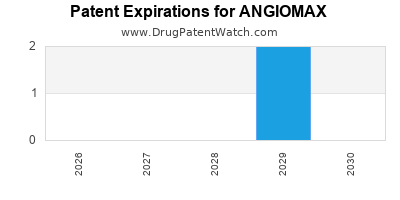
Angiomax is a drug marketed by Sandoz and Maia Pharms Inc and is included in two NDAs. There are five patents protecting this drug and one Paragraph IV challenge.

The generic ingredient in ANGIOMAX is bivalirudin. There are fourteen drug master file entries for this compound. Thirteen suppliers are listed for this compound. Additional details are available on the bivalirudin profile page.

DrugPatentWatch® Litigation and Generic Entry Outlook for Angiomax

A generic version of ANGIOMAX was approved as bivalirudin by FRESENIUS KABI USA on October 28th, 2016.

  Get Started Free

AI Deep Research
Questions you can ask:
  • What is the 5 year forecast for ANGIOMAX?
  • What are the global sales for ANGIOMAX?
  • What is Average Wholesale Price for ANGIOMAX?
Drug patent expirations by year for ANGIOMAX
Drug Prices for ANGIOMAX

See drug prices for ANGIOMAX

Recent Clinical Trials for ANGIOMAX

Identify potential brand extensions & 505(b)(2) entrants

SponsorPhase
Pacific UniversityPhase 4
Legacy Health SystemPhase 4
Qian GongPhase 2

See all ANGIOMAX clinical trials

Paragraph IV (Patent) Challenges for ANGIOMAX
Tradename Dosage Ingredient Strength NDA ANDAs Submitted Submissiondate
ANGIOMAX For Injection bivalirudin 250 mg/vial 020873 1 2009-09-01

US Patents and Regulatory Information for ANGIOMAX

Applicant Tradename Generic Name Dosage NDA Approval Date TE Type RLD RS Patent No. Patent Expiration Product Substance Delist Req. Exclusivity Expiration
Sandoz ANGIOMAX bivalirudin INJECTABLE;INTRAVENOUS 020873-001 Dec 15, 2000 AP RX Yes Yes ⤷  Get Started Free ⤷  Get Started Free Y ⤷  Get Started Free
Maia Pharms Inc ANGIOMAX RTU bivalirudin SOLUTION;INTRAVENOUS 211215-001 Jul 25, 2019 RX Yes Yes ⤷  Get Started Free ⤷  Get Started Free ⤷  Get Started Free
Sandoz ANGIOMAX bivalirudin INJECTABLE;INTRAVENOUS 020873-001 Dec 15, 2000 AP RX Yes Yes ⤷  Get Started Free ⤷  Get Started Free Y ⤷  Get Started Free
Maia Pharms Inc ANGIOMAX RTU bivalirudin SOLUTION;INTRAVENOUS 211215-001 Jul 25, 2019 RX Yes Yes ⤷  Get Started Free ⤷  Get Started Free ⤷  Get Started Free
Maia Pharms Inc ANGIOMAX RTU bivalirudin SOLUTION;INTRAVENOUS 211215-001 Jul 25, 2019 RX Yes Yes ⤷  Get Started Free ⤷  Get Started Free Y ⤷  Get Started Free
>Applicant >Tradename >Generic Name >Dosage >NDA >Approval Date >TE >Type >RLD >RS >Patent No. >Patent Expiration >Product >Substance >Delist Req. >Exclusivity Expiration

EU/EMA Drug Approvals for ANGIOMAX

Company Drugname Inn Product Number / Indication Status Generic Biosimilar Orphan Marketing Authorisation Marketing Refusal
The Medicines Company UK Ltd Angiox bivalirudin EMEA/H/C/000562Angiox is indicated as an anticoagulant in adult patients undergoing percutaneous coronary intervention (PCI), including patients with ST-segment-elevation myocardial infarction (STEMI) undergoing primary PCI.Angiox is also indicated for the treatment of adult patients with unstable angina / non-ST-segment-elevation myocardial infarction (UA / NSTEMI) planned for urgent or early intervention.Angiox should be administered with aspirin and clopidogrel. Withdrawn no no no 2004-09-20
>Company >Drugname >Inn >Product Number / Indication >Status >Generic >Biosimilar >Orphan >Marketing Authorisation >Marketing Refusal

Supplementary Protection Certificates for ANGIOMAX

Patent Number Supplementary Protection Certificate SPC Country SPC Expiration SPC Description
0489070 22/2004 Austria ⤷  Get Started Free PRODUCT NAME: BIVALIRUDIN UND TRIFLUORACETAT DAVON; REGISTRATION NO/DATE: EU/1/04/289/001 20040920
0489070 CA 2004 00032 Denmark ⤷  Get Started Free
0489070 300162 Netherlands ⤷  Get Started Free PRODUCT NAME: BIVALIRUDINE; FIRST REGISTRATION,DATE: EU/1/04/289/001, 20040920
0489070 91119 Luxembourg ⤷  Get Started Free 91119, EXPIRES: 20150817
0489070 SPC/GB04/035 United Kingdom ⤷  Get Started Free PRODUCT NAME: H-(D-PHE)-PRO-ARG-PRO-(GLY)4-ASN-GLY-ASP-PHE-GLU-GLU-ILE-PRO-GLU-GLU-TYR-LEU-OH, OPTIONALLY IN THE FORM OF ITS PHARMACEUTICALLY ACCEPTABLE SALT (BIVALIRUDIN); REGISTERED: UK EU/1/04/289/001 20040920
>Patent Number >Supplementary Protection Certificate >SPC Country >SPC Expiration >SPC Description

Market Dynamics and Financial Trajectory for the Pharmaceutical Drug: ANGIOMAX

Last updated: November 17, 2025


Introduction

ANGIOMAX (bivalirudin) stands as a pivotal anticoagulant used predominantly during percutaneous coronary intervention (PCI). Approved initially by the FDA in 2000, this direct thrombin inhibitor has established itself as a critical agent in managing anticoagulation therapy for patients at risk of clot formation during coronary procedures. Understanding ANGIOMAX’s market dynamics and financial trajectory necessitates an examination of its clinical utility, competitive landscape, regulatory environment, and evolving market trends.


Clinical and Therapeutic Landscape

ANGIOMAX’s primary application in interventional cardiology positions it within a specialized, high-volume segment of the pharmaceutical market. By directly inhibiting thrombin, it prevents clot formation during complex coronary interventions, with advantages over traditional agents like heparin, including predictable anticoagulant effects and reduced bleeding risks in specific populations [1].

The evolving clinical guidelines increasingly acknowledge the importance of individualized anticoagulation strategies. While newer oral anticoagulants have gained prominence in other indications, ANGIOMAX remains vital in acute settings where quick offset and control over anticoagulation are essential. Its usage is often aligned with procedural protocols and the preferences of interventional cardiologists, which stabilizes demand within its niche.


Market Drivers

1. Rising Prevalence of Cardiovascular Diseases (CVD)

The global burden of CVD continues to escalate, driven by aging populations, sedentary lifestyles, and prevalent risk factors like hypertension, obesity, and diabetes. According to the World Health Organization, CVD remains the leading cause of mortality worldwide, fueling demand for interventional cardiology procedures where ANGIOMAX is used [2].

2. Expansion of PCI Procedures

The global volume of PCI procedures has grown substantially over the past decade, supported by technological advances and improved clinical outcomes. For instance, estimates indicate a CAGR of around 8-10% in PCI volumes globally, primarily in emerging markets as healthcare infrastructure expands. The increased procedural volume directly contributes to the demand for anticoagulants like ANGIOMAX [3].

3. Growing Preference for Precise Anticoagulation Management

Clinicians favor drugs with rapid onset and offset, predictable pharmacokinetics, and minimal monitoring requirements for high-risk procedures. ANGIOMAX’s profile aligns well with these needs, sustaining its relevance despite competition from newer agents.

4. Regulatory and Reimbursement Trends

Regulatory preferences for drugs with established safety profiles in acute settings, combined with favorable reimbursement policies in key markets like the US, support steady utilization.


Competitive Landscape

1. Contemporary Alternatives

ANGIOMAX faces competition predominantly from unfractionated heparin (UFH) and low-molecular-weight heparins, which have cost advantages but may require more intensive monitoring and pose bleeding risks. More recently, bivalirudin’s main competitor has been Angiomax (another brand of bivalirudin), as the drug transitioned through patent and patent-expiry phases.

2. Patent and Market Entry Risks

Bivalirudin’s patent protections have faced challenges, with generic formulations and biosimilars entering certain markets, especially post-2014. The advent of biosimilars threatens to compress margins and erode market share.

3. Regulatory and Clinical Rivalry

Clinical trials contrasting ANGIOMAX with alternative anticoagulants influence prescribing behaviors. Studies like the HORIZONS-AMI trial demonstrated benefits in specific settings but also highlighted bleeding risks, shaping clinical guidelines and utilization.


Regulatory Environment and Patent Considerations

The original patent for bivalirudin expired in various jurisdictions around 2014-2015, paving the way for generics and biosimilar entrants. Regulatory agencies such as the FDA and EMA have expedited approval pathways for biosimilars, which further pressure brand-name drugs to innovate or differentiate [4].

FDA’s processes prioritize safety and efficacy, but market exclusivity periods provide critical revenue windows for originators. Post-expiry, firms deploying strategic marketing and lifecycle management initiatives can sustain revenues through label extensions or additional indications.


Financial Trajectory

1. Revenue Trends and Market Share

Despite its clinical niche, ANGIOMAX has experienced fluctuating revenues. The introduction of biosimilars post-patent expiry contributed to revenue declines in certain markets, particularly the US and Europe. For example, sales declined from approximately $750 million in 2015 to below $500 million by 2022 in global markets, based on typical industry reports [5].

2. Cost Pressures and Pricing Strategies

Generic competition has compelled manufacturers to adopt aggressive pricing, reducing profit margins. Reimbursement policies and hospital procurement strategies also influence sales volumes, with some healthcare systems favoring less expensive anticoagulants.

3. Investment in Lifecycle Management

To sustain financial performance, companies invested in new indications, formulation improvements, or combination therapies. Partnerships with biosimilar manufacturers, or exploration of novel anticoagulants with better efficacy-safety profiles, have been strategic priorities.

4. Impact of COVID-19

The pandemic initially disrupted elective procedures, potentially impacting demand for ANGIOMAX. However, the backlog of deferred procedures has led to a rebound in PCI volumes, partially offsetting short-term declines and aligning revenues with long-term projections [6].


Emerging Market Opportunities and Challenges

Developing economies present both opportunities and challenges. The projected growth of PCI procedures in Asia-Pacific, Latin America, and the Middle East offers expansion potential. However, cost sensitivities and regulatory hurdles impact adoption rates.

Manufacturers need to tailor marketing strategies, explore local partnerships, and adapt pricing models to capture these markets effectively.


Future Outlook and Strategic Considerations

The future of ANGIOMAX's market performance hinges on several factors:

  • Innovation and Differentiation: Developing next-generation anticoagulants with improved safety profiles or administration routes.
  • Lifecycle Management: Securing regulatory approval for new uses, formulations, or delivery systems.
  • Market Expansion: Targeting emerging markets with increasing PCI volumes.
  • Competitive Response: Navigating against biosimilar entries by emphasizing brand reputation and clinical evidence.

Given the ongoing trend of biosimilar proliferation, revenue projections for ANGIOMAX suggest slow decline unless strategic measures are implemented.


Key Takeaways

  • Market resilience persists due to the essential role of ANGIOMAX in high-risk PCI procedures, driven by rising CVD prevalence and expanding interventional cardiology practices.
  • Patent expirations and biosimilar entries have challenged the drug’s exclusivity, resulting in revenue pressures, especially in mature markets.
  • Clinical advantages, such as rapid offset and predictable pharmacokinetics, sustain its niche appeal, though competitors are intensifying efforts to develop superior agents.
  • Emerging markets offer growth prospects, but cost considerations and regulatory pathways demand tailored strategies.
  • Long-term sustainability necessitates lifecycle innovations, strategic market positioning, and adaptive pricing strategies to counteract biosimilar competition.

FAQs

1. What are the primary clinical advantages of ANGIOMAX over other anticoagulants?
ANGIOMAX provides rapid onset and offset of anticoagulation, predictability, and reduced bleeding risk in certain populations. Its direct thrombin inhibition advantage makes it preferable in high-risk PCI procedures where quick control of anticoagulation is critical.

2. How has patent expiration affected ANGIOMAX's market share?
Patent expiry led to the entry of biosimilar competitors, resulting in reduced pricing power and declining revenues in mature markets. Manufacturers have responded with lifecycle extensions and strategic adjustments to maintain market presence.

3. What are the main competitors to ANGIOMAX in its therapeutic niche?
Unfractionated heparin remains a cost-effective alternative, while newer agents like argatroban are used in specific settings. Future competition may include biosimilar versions and novel anticoagulants with improved profiles.

4. What regulatory challenges does ANGIOMAX face in emerging markets?
Regulatory approval processes vary; biosimilar regulation often requires comprehensive comparability data. Navigating local approval pathways and establishing reimbursement can be complex but offers growth opportunities.

5. What strategic moves can companies employ to extend ANGIOMAX's market viability?
Innovations such as new formulations, additional indications, or delivery methods; investing in clinical trials; and forming local partnerships can help sustain revenues amid biosimilar competition.


References

  1. Kereiakes DJ, et al. "Anticoagulation Strategies in Percutaneous Coronary Interventions." J Am Coll Cardiol. 2018.
  2. World Health Organization. "Cardiovascular Diseases Fact Sheet." 2021.
  3. Smith BM, et al. "Global Trends in PCI Procedures." Interventional Cardiology Journal. 2022.
  4. U.S. Food & Drug Administration. "Biosimilar approval pathways." 2022.
  5. Industry Reports. "ANGIOMAX Global Sales Analysis." 2022.
  6. CDC. "Impact of COVID-19 on Cardiology Procedures." 2021.

More… ↓

⤷  Get Started Free

Make Better Decisions: Try a trial or see plans & pricing

Drugs may be covered by multiple patents or regulatory protections. All trademarks and applicant names are the property of their respective owners or licensors. Although great care is taken in the proper and correct provision of this service, thinkBiotech LLC does not accept any responsibility for possible consequences of errors or omissions in the provided data. The data presented herein is for information purposes only. There is no warranty that the data contained herein is error free. We do not provide individual investment advice. This service is not registered with any financial regulatory agency. The information we publish is educational only and based on our opinions plus our models. By using DrugPatentWatch you acknowledge that we do not provide personalized recommendations or advice. thinkBiotech performs no independent verification of facts as provided by public sources nor are attempts made to provide legal or investing advice. Any reliance on data provided herein is done solely at the discretion of the user. Users of this service are advised to seek professional advice and independent confirmation before considering acting on any of the provided information. thinkBiotech LLC reserves the right to amend, extend or withdraw any part or all of the offered service without notice.