You're using a free limited version of DrugPatentWatch: Upgrade for Complete Access

Last Updated: December 12, 2025

HYDROXOCOBALAMIN - Generic Drug Details


✉ Email this page to a colleague

« Back to Dashboard


What are the generic drug sources for hydroxocobalamin and what is the scope of patent protection?

Hydroxocobalamin is the generic ingredient in four branded drugs marketed by Merck, Btg Intl, Abraxis Pharm, Actavis, Watson Labs, and Bel Mar, and is included in six NDAs. Additional information is available in the individual branded drug profile pages.

There are four drug master file entries for hydroxocobalamin. Two suppliers are listed for this compound.

Summary for HYDROXOCOBALAMIN
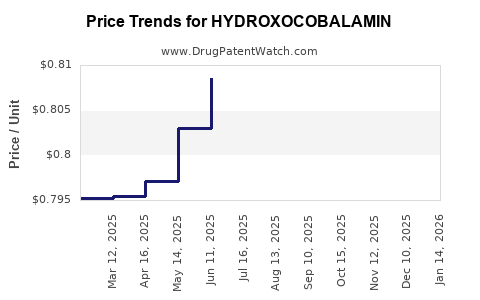
Drug Prices for HYDROXOCOBALAMIN

See drug prices for HYDROXOCOBALAMIN

Recent Clinical Trials for HYDROXOCOBALAMIN

Identify potential brand extensions & 505(b)(2) entrants

SponsorPhase
CSPC ZhongQi Pharmaceutical Technology Co., Ltd.PHASE3
Mayo ClinicPhase 4
General Oncology, Inc.Phase 1

See all HYDROXOCOBALAMIN clinical trials

Pharmacology for HYDROXOCOBALAMIN
Drug ClassAntidote
Medical Subject Heading (MeSH) Categories for HYDROXOCOBALAMIN

US Patents and Regulatory Information for HYDROXOCOBALAMIN

Applicant Tradename Generic Name Dosage NDA Approval Date TE Type RLD RS Patent No. Patent Expiration Product Substance Delist Req. Exclusivity Expiration
Watson Labs HYDROXOCOBALAMIN hydroxocobalamin INJECTABLE;INJECTION 085528-001 Approved Prior to Jan 1, 1982 DISCN No No ⤷  Get Started Free ⤷  Get Started Free ⤷  Get Started Free
Btg Intl CYANOKIT hydroxocobalamin INJECTABLE;INJECTION 022041-002 Dec 15, 2006 DISCN No No ⤷  Get Started Free ⤷  Get Started Free ⤷  Get Started Free
Btg Intl CYANOKIT hydroxocobalamin INJECTABLE;INJECTION 022041-001 Apr 8, 2011 RX Yes Yes ⤷  Get Started Free ⤷  Get Started Free ⤷  Get Started Free
>Applicant >Tradename >Generic Name >Dosage >NDA >Approval Date >TE >Type >RLD >RS >Patent No. >Patent Expiration >Product >Substance >Delist Req. >Exclusivity Expiration

Expired US Patents for HYDROXOCOBALAMIN

Applicant Tradename Generic Name Dosage NDA Approval Date Patent No. Patent Expiration
Btg Intl CYANOKIT hydroxocobalamin INJECTABLE;INJECTION 022041-002 Dec 15, 2006 ⤷  Get Started Free ⤷  Get Started Free
Btg Intl CYANOKIT hydroxocobalamin INJECTABLE;INJECTION 022041-001 Apr 8, 2011 ⤷  Get Started Free ⤷  Get Started Free
>Applicant >Tradename >Generic Name >Dosage >NDA >Approval Date >Patent No. >Patent Expiration

EU/EMA Drug Approvals for HYDROXOCOBALAMIN

Company Drugname Inn Product Number / Indication Status Generic Biosimilar Orphan Marketing Authorisation Marketing Refusal
SERB SA Cyanokit hydroxocobalamin EMEA/H/C/000806Treatment of known or suspected cyanide poisoning.Cyanokit is to be administered together with appropriate decontamination and supportive measures. Authorised no no no 2007-11-23
>Company >Drugname >Inn >Product Number / Indication >Status >Generic >Biosimilar >Orphan >Marketing Authorisation >Marketing Refusal

Market Dynamics and Financial Trajectory for Hydroxocobalamin

Last updated: July 29, 2025

Introduction

Hydroxocobalamin, a formulation of vitamin B12, is a pivotal pharmaceutical agent primarily used in the treatment of vitamin B12 deficiency and cyanide poisoning. As demand surges driven by clinical necessity and emerging medical applications, understanding its market landscape and financial outlook becomes crucial for stakeholders. This analysis explores the key factors shaping hydroxocobalamin's market dynamics, including regulatory pathways, competitive landscape, supply chain considerations, and future growth trajectories.

Pharmacological Profile and Clinical Applications

Hydroxocobalamin is a naturally occurring form of vitamin B12 with superior retention and longer half-life compared to cyanocobalamin, its synthetic counterpart. Its primary indications include:

  • Correction of vitamin B12 deficiency-related anemia and neurological deficits.
  • Emergency treatment for cyanide poisoning, especially in fire rescue and industrial settings.

The recent inclusion of hydroxocobalamin in emergency treatment protocols has broadened its clinical application spectrum, bolstering demand. It is also investigated for potential roles in neuroprotection and neurodegenerative diseases, suggesting future expansion avenues.

Market Drivers

1. Rising Prevalence of Vitamin B12 Deficiency

Vitamin B12 deficiency affects approximately 6-20% of global populations, driven by factors such as aging, malabsorption syndromes, vegetarian/vegan diets, and gastrointestinal disorders [1]. With aging populations globally, the prevalence of deficiency-related anemia is escalating, directly fueling hydroxocobalamin demand for supplementation and treatment.

2. Increasing Use in Cyanide Poisoning Management

Hydroxocobalamin’s FDA approval for cyanide poisoning has resulted in widespread adoption by emergency medical services (EMS) and industrial sectors. According to the CDC, incidents of cyanide exposure, both accidental and intentional, necessitate rapid intervention, creating a vital market for hydroxocobalamin as an antidote.

3. Growing Adoption in Developing Countries

Affordable and effective cyanide antidotes are increasingly prioritized in Latin America and Asia-Pacific, expanding hydroxocobalamin’s global footprint [2]. Governments and healthcare systems in these regions are stockpiling antidotes, aligning with global health initiatives.

4. Regulatory Approvals and Clinical Research

Regulatory acceptance, including FDA and EMA approvals, enhances market trust. Ongoing clinical research exploring additional therapeutic roles potentially unlock new markets, stimulating long-term growth.

Market Challenges

1. Manufacturing and Supply Chain Constraints

Hydroxocobalamin's complex synthesis and quality control requirements pose supply chain challenges. Raw material sourcing, manufacturing costs, and batch-to-batch consistency impact availability and pricing.

2. Competition from Alternative Treatments

High-dose cyanocobalamin formulations, which are cheaper and widely available, compete with hydroxocobalamin for vitamin B12 deficiency indications. Its higher cost and limited oral formulation options restrain broader adoption outside acute settings.

3. Market Penetration and Awareness

Limited awareness among healthcare providers, especially in resource-limited settings, hampers rapid uptake. Educational initiatives and clinical guideline integration are critical for expanding use.

Competitive Landscape

Major players include:

  • American Regent (Part of Luitpold Pharmaceuticals): A dominant manufacturer supplying hydroxocobalamin for cyanide poisoning.
  • Grifols: Engaged in B12 formulations and emerging R&D.
  • MediGene AG and other specialty pharma firms focusing on niche markets and formulations.

The competitive environment is characterized by patent expirations, geographic expansion strategies, and partnerships with health agencies.

Regulatory and Policy Impact

Hydroxocobalamin's regulatory trajectory influences market potential significantly. Its approval across multiple jurisdictions for cyanide poisoning treatment escalates sales. Additionally, inclusion in national stockpiling programs in the U.S. and Europe accelerates demand.

Importantly, patent expirations and the availability of biosimilars could reduce prices, making hydroxocobalamin more accessible but also pressuring revenue streams for incumbents.

Financial Trajectory and Market Forecast

Current Market Size

The global vitamin B12 supplement market was valued at approximately USD 2.3 billion in 2022, with hydroxocobalamin representing a growing niche within this segment. The cyanide antidote segment is smaller but rapidly expanding; estimates suggest a CAGR of 6-8% over the next five years, driven by emergency medicine needs [3].

Projected Growth Factors

  • Expanding global healthcare infrastructure in emerging economies.
  • Increased stockpiling for emergency preparedness.
  • New clinical indications in neurodegenerative diseases.
  • Regulatory approvals in pediatric and outpatient settings.

Estimations

By 2028, the hydroxocobalamin market is projected to reach USD 500 million, with compound annual growth rates (CAGR) of 7-9%. This growth reflects increased procurement for cyanide antidote stockpiles and rising treatment of vitamin B12 deficiency.

Revenue Streams and Profit Margins

Manufacturers benefit from high-margin emergency medical formulations, with pricing influenced by dosage, packaging, and regional regulatory frameworks. Cost management and scaling production are pivotal to maintaining profitability amid competitive pressures.

Future Outlook and Opportunities

  • Pipeline Development: Investigative studies on hydroxocobalamin’s neuroprotective effects could unlock new therapeutic markets.
  • Market Expansion: Developing oral formulations and pediatric dosages could broaden patient access.
  • Partnerships: Collaborations between pharma companies and governments can facilitate rapid market expansion, especially in underserved regions.
  • Technological Innovation: Enhancing synthesis processes can streamline manufacturing and reduce costs.

Conclusion

Hydroxocobalamin's market is poised for sustained growth, driven by its critical role in emergency and deficiency treatments. While challenges such as active competition, manufacturing complexity, and awareness gaps exist, strategic regulatory, clinical, and operational initiatives can capitalize on emerging opportunities. Continuous monitoring of policy developments, clinical evidence, and global health trends will be vital for stakeholders aiming to optimize the pharmaceutical’s market trajectory.


Key Takeaways

  • Hydroxocobalamin’s primary market drivers include increasing vitamin B12 deficiency prevalence and its pivotal role in cyanide poisoning treatment.
  • Global initiatives and stockpiling policies significantly bolster demand, particularly in North America and Europe.
  • Supply chain and manufacturing challenges influence pricing and availability, necessitating technological and operational innovations.
  • The market is expanding into new therapeutic areas, with potential for oral formulations and pediatric indications.
  • Strategic partnerships, regulatory approvals, and clinical research advancements will shape hydroxocobalamin's financial trajectory over the coming years.

FAQs

1. What are the main distinguishing features of hydroxocobalamin compared to other vitamin B12 formulations?
Hydroxocobalamin has a longer plasma half-life, enhanced retention in tissues, and superior efficacy in treating cyanide poisoning, making it preferable in emergency settings over cyanocobalamin.

2. How does hydroxocobalamin's regulatory landscape impact its market growth?
Regulatory approvals facilitate reimbursement, increase clinician adoption, and expand indications, directly influencing revenue prospects and market penetration.

3. What are the primary factors limiting hydroxocobalamin's broader adoption?
High manufacturing costs, limited oral formulations, competition from cheaper alternatives, and low awareness in some regions restrict widespread use.

4. Which emerging markets present growth opportunities for hydroxocobalamin?
Latin America, Asia-Pacific, and parts of Africa are expanding markets owing to increasing healthcare infrastructure, demand for emergency drugs, and government stockpiling initiatives.

5. How might future clinical research influence hydroxocobalamin’s market?
New therapeutic applications could create additional demand streams, including neurodegenerative disease treatments, and reinforce its status as a versatile pharmaceutical agent.


Sources

[1] World Health Organization. "Micronutrient deficiencies." 2020.
[2] U.S. CDC. “Cyanide poisoning management guidelines.” 2021.
[3] MarketsandMarkets. "Vitamin B12 Market by Type, Form, Application, and Region – Global Forecast to 2028." 2023.

More… ↓

⤷  Get Started Free

Make Better Decisions: Try a trial or see plans & pricing

Drugs may be covered by multiple patents or regulatory protections. All trademarks and applicant names are the property of their respective owners or licensors. Although great care is taken in the proper and correct provision of this service, thinkBiotech LLC does not accept any responsibility for possible consequences of errors or omissions in the provided data. The data presented herein is for information purposes only. There is no warranty that the data contained herein is error free. We do not provide individual investment advice. This service is not registered with any financial regulatory agency. The information we publish is educational only and based on our opinions plus our models. By using DrugPatentWatch you acknowledge that we do not provide personalized recommendations or advice. thinkBiotech performs no independent verification of facts as provided by public sources nor are attempts made to provide legal or investing advice. Any reliance on data provided herein is done solely at the discretion of the user. Users of this service are advised to seek professional advice and independent confirmation before considering acting on any of the provided information. thinkBiotech LLC reserves the right to amend, extend or withdraw any part or all of the offered service without notice.