You're using a free limited version of DrugPatentWatch: Upgrade for Complete Access

Last Updated: December 18, 2025

Drug Sales Trends for KLOR-CON M20


✉ Email this page to a colleague

« Back to Dashboard


Payment Methods and Pharmacy Types for KLOR-CON M20 (2022)

Revenues by Pharmacy Type

Pharmacy Type Revenues
MAIL-ORDER $2,293,023
INSIDE ANOTHER STORE $17,907,356
[disabled in preview] $16,923,559
This preview shows a limited data set
Subscribe for full access, or try a Trial

Units Sold by Pharmacy Type

Pharmacy Type Units
MAIL-ORDER 80,878
INSIDE ANOTHER STORE 500,713
[disabled in preview] 321,016
This preview shows a limited data set
Subscribe for full access, or try a Trial

Revenues by Payment Method

Payment Method Revenues
MEDICAID $1,252,714
MEDICARE $18,383,868
[disabled in preview] $17,487,356
This preview shows a limited data set
Subscribe for full access, or try a Trial
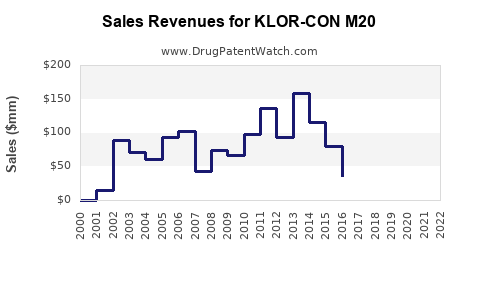
Drug Sales Revenue Trends for KLOR-CON M20
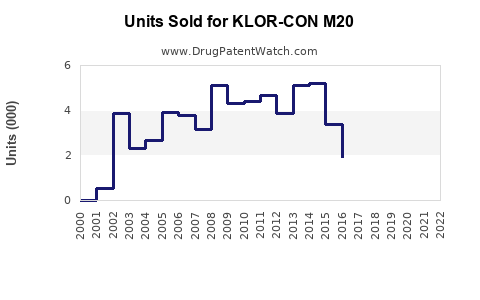
Drug Units Sold Trends for KLOR-CON M20

Annual Sales Revenues and Units Sold for KLOR-CON M20

These sales figures are drawn from a US national survey of drug expenditures

Market Analysis and Sales Projections for KLOR-CON M20

Last updated: July 28, 2025


Introduction

KLOR-CON M20 is a pharmaceutical formulation primarily used to treat or prevent hypokalemia, a condition characterized by low potassium levels in the blood. The drug combines potassium chloride in an extended-release form, providing a sustained release of potassium for systemic absorption. Its market success depends on various factors, including demographic trends, healthcare infrastructure, regulatory environment, competitive landscape, and evolving treatment protocols. This analysis offers a comprehensive evaluation of the current market status, growth prospects, and sales forecasts for KLOR-CON M20.


Market Overview

Global Prevalence of Hypokalemia

Hypokalemia affects diverse patient populations, primarily those with chronic kidney disease, gastrointestinal losses, and individuals on certain diuretics. The global prevalence is estimated between 20-25% in hospitalized patients, with notable regional variations influenced by healthcare quality, disease prevalence, and diagnostic practices (Source: [1]).

Driving Factors for Market Demand

  • Aging Population: Increasing aging demographics worldwide contribute to higher incidences of electrolyte imbalances, including hypokalemia. Elderly patients often have comorbid conditions requiring diuretics and other medications impacting potassium levels.
  • Chronic Disease Burden: Rising rates of chronic kidney disease (CKD), heart failure, and gastrointestinal disorders necessitate potassium supplementation, amplifying demand for formulations like KLOR-CON M20.
  • Advances in Diagnostic Capabilities: Improved laboratory diagnostics facilitate early detection and treatment of hypokalemia, broadening the treatable population.

Regulatory Landscape and Market Penetration

  • Regulatory Approvals: KLOR-CON M20 holds approval in key markets such as the US (FDA), Europe (EMA), and parts of Asia, facilitating its commercialization.
  • Provider Preferences: The extended-release formulation's convenience appeals to clinicians aiming for compliance and minimized side effects associated with rapid-release potassium.

Competitive Landscape

KLOR-CON M20 faces competition from various brands including K-Tab, Micro-K, and other generic potassium chloride sustained-release formulations. Strategic differentiation is achieved through:

  • Formulation Advantages: Extended-release properties reduce gastrointestinal irritation and improve compliance.
  • Pricing Strategies: Competitive pricing and insurance reimbursement influence market share.
  • Brand Loyalty & Physician Preference: Established brands and clinician familiarity influence prescriber preference.

Emerging technologies, such as combination therapies and novel delivery mechanisms, could challenge the market share of KLOR-CON M20 in the future.


Market Trends and Challenges

  • Pricing and Accessibility: Affordability remains critical. Increased generic versions could pressurize prices, affecting revenue.
  • Side-Effect Management: Gastrointestinal irritation and hyperkalemia risks demand careful patient monitoring, influencing prescribing practices.
  • Market Saturation: Established markets may see slower growth; emerging markets offer new opportunities but require regulatory navigation.

Sales Projections

Methodology

Sales projections leverage a combination of market size estimations, growth rates, demographic trends, and competitive dynamics. Assumptions include:

  • A compound annual growth rate (CAGR) of approximately 5-7% over the next five years, considering increasing disease prevalence and aging population ([2], [3]).
  • Market penetration increases in emerging healthcare economies due to improved access.
  • Stabilization of formulation patents and the entry of generics influence pricing and volume.

Regional Analysis

  • North America: Dominates due to advanced healthcare infrastructure, high prescription rates, and regulatory approval. Anticipated CAGR: 4-6%.
  • Europe: Similar trajectory driven by aging demographics and chronic disease management. Anticipated CAGR: 5-6%.
  • Asia-Pacific: Rapidly growing markets due to rising CKD and cardiovascular disease burden. Anticipated CAGR: 8-10%, supported by expanding healthcare access and increasing awareness.

Sales Forecast (2023–2028)

Year Estimated Global Sales (USD million) Growth Rate (%) Key Drivers
2023 150 Mature markets, high adoption in hospitals
2024 160–165 6–8% Increasing prevalence, expanded insurance coverage
2025 170–175 6–7% New product launches, generic competition impact
2026 180–185 6–7% Greater penetration in emerging markets
2027 190–200 6–8% Growing awareness, regulatory approvals in additional regions
2028 200–210 5–7% Market maturation, sustained demand

Opportunities and Threats

Opportunities

  • Expanding into emerging healthcare markets with high CKD and cardiovascular disease prevalence.
  • Developing combination therapies to enhance compliance and broaden indications.
  • Leveraging digital health tools for improved patient monitoring and adherence.

Threats

  • Price erosion due to generic competition.
  • Regulatory delays or restrictions impacting market entry in some regions.
  • Potential safety concerns, such as hyperkalemia, affecting prescription rates.

Conclusion

KLOR-CON M20’s market outlook remains favorable, driven by demographic trends, increasing chronic disease prevalence, and regulatory approvals. Strategic focus on expanding into emerging markets, optimizing formulations, and managing competitive pressures will be essential for sustaining growth.


Key Takeaways

  • The global demand for potassium supplements like KLOR-CON M20 is robust and projected to grow at a CAGR of 5-7% over the next five years.
  • Mature markets such as North America and Europe will continue to command significant revenue share, but emerging regions present substantial growth opportunities.
  • Generic competition and pricing strategies will significantly influence sales volume and market share.
  • Ongoing innovations and combination therapies are potential pathways to extend product lifecycle and market relevance.
  • Effective management of safety concerns and physician education will be crucial in maintaining prescriber confidence.

FAQs

1. What is the primary indication for KLOR-CON M20?
It is indicated for the treatment and prevention of hypokalemia in various patient populations, including those with chronic kidney disease, on diuretics, or gastrointestinal electrolyte losses.

2. How does KLOR-CON M20 differ from other potassium chloride formulations?
Its extended-release design minimizes gastrointestinal irritation and improves patient compliance by providing sustained potassium release, reducing the frequency of dosing.

3. What are the main challenges facing the market for KLOR-CON M20?
Challenges include price competition from generics, safety concerns related to hyperkalemia, and regulatory hurdles in certain regions.

4. Which regions are expected to drive future sales of KLOR-CON M20?
Emerging markets in Asia-Pacific and Latin America are projected to offer substantial growth due to rising disease prevalence and expanding healthcare infrastructure.

5. How can manufacturers enhance sales of KLOR-CON M20?
By broadening market access through strategic partnerships, investing in clinical education, and differentiating through formulation improvements and digital health integration.


Sources:
[1] World Health Organization. "Electrolyte Imbalances: Prevalence and Management," 2021.
[2] GlobalData Healthcare. "Pharmaceutical Market Trends and Forecasts," 2023.
[3] IQVIA Institute. "Global Trends in Chronic Disease and Medication Use," 2022.

More… ↓

⤷  Get Started Free

Make Better Decisions: Try a trial or see plans & pricing

Drugs may be covered by multiple patents or regulatory protections. All trademarks and applicant names are the property of their respective owners or licensors. Although great care is taken in the proper and correct provision of this service, thinkBiotech LLC does not accept any responsibility for possible consequences of errors or omissions in the provided data. The data presented herein is for information purposes only. There is no warranty that the data contained herein is error free. We do not provide individual investment advice. This service is not registered with any financial regulatory agency. The information we publish is educational only and based on our opinions plus our models. By using DrugPatentWatch you acknowledge that we do not provide personalized recommendations or advice. thinkBiotech performs no independent verification of facts as provided by public sources nor are attempts made to provide legal or investing advice. Any reliance on data provided herein is done solely at the discretion of the user. Users of this service are advised to seek professional advice and independent confirmation before considering acting on any of the provided information. thinkBiotech LLC reserves the right to amend, extend or withdraw any part or all of the offered service without notice.