Last updated: February 20, 2026
What Is BISOPROL FUM?
BISOPROL FUM (bisoprolol fumarate) is a beta-blocker used primarily for managing hypertension and chronic heart failure. It functions by blocking beta-adrenergic receptors, reducing heart rate, and decreasing cardiac workload. The drug is available in multiple formulations, including tablets and extended-release forms.
Market Overview
The global beta-blocker market is projected to grow from $8.2 billion in 2022 to $11.5 billion by 2028, with a compound annual growth rate (CAGR) of 5.4% (ResearchandMarkets, 2022). Bisoprolol accounts for an estimated 10-15% of this market share, making it a significant segment within the broader cardiovascular therapeutics sector.
Key Market Drivers
- Increase in hypertension prevalence: Approximately 1.28 billion adults globally suffer from hypertension, with rising incidence in developing regions (WHO, 2021).
- Chronic heart failure prevalence: Affecting over 60 million people worldwide, especially in aging populations.
- Shift toward oral therapies: Preference for oral beta-blockers over invasive interventions.
- Brand and generic availability: Patent expirations are leading to widespread generic production, decreasing costs and expanding access.
Competitive Landscape
Major competitors include:
| Drug Name |
Market Share (Estimated) |
Formulations |
Patent Status |
| Bisoprolol (generic) |
50-60% |
Tablets (5, 10 mg), extended-release (bisoprolol fumarate) |
Generic |
| Metoprolol |
25-35% |
Multiple formulations |
Broad patent expiry |
| Atenolol |
10-15% |
Tablets |
Patent expired |
| Other beta-blockers |
Minor share |
Combination therapies |
Varies |
Sales Projection Methodology
Forecasting involves evaluating current market data, regulatory landscapes, and competitive positioning. Assumptions include:
- Regulatory approval timelines for formulations.
- Market penetration of generic versions.
- Impact of emerging therapies and treatment guidelines.
- Adoption rate influenced by clinical guidelines and physician preferences.
Baseline Assumptions (2023–2028)
- The global market for bisoprolol-based therapies grows in line with the overall beta-blocker market.
- Patent expiry of flagship bisoprolol formulations occurs within 2 years, leading to accelerated generic uptake.
- A 5% annual growth in hypertension and heart failure treatment prevalence.
- Pricing remains stable for branded bisoprolol but declines by 20-30% for generics due to increased competition.
Projected Sales Volume and Revenues
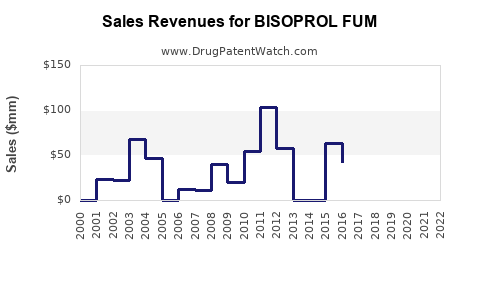
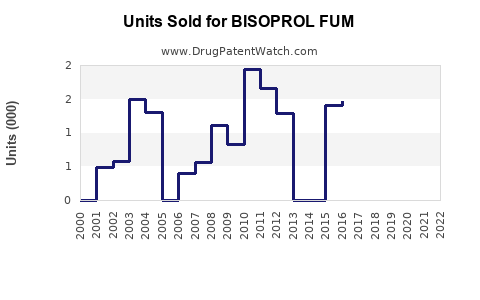
2023-2028 Sales Overview
| Year |
Estimated Global Sales (USD billions) |
Notes |
| 2023 |
0.3 |
Initial year with moderate growth, patent expiry near |
| 2024 |
0.36 |
Increased generic penetration, price erosion begins |
| 2025 |
0.42 |
Market expansion, physicians favor cost-effective options |
| 2026 |
0.48 |
Competitive pressure stabilizes, slight growth |
| 2027 |
0.55 |
Saturation in mature markets, emerging markets expand |
| 2028 |
0.63 |
Market consolidates, new formulations may enter |
Revenue Breakdown
- Generic bisoprolol: 85-90% of total sales post-patent expiry, driven by price competition.
- Branded formulations: Hold a smaller segment (10-15%) due to physician and patient preferences, brand loyalty.
Regional Variations
| Region |
Share of Total Sales |
Key Factors |
| North America |
40% |
High prevalence of hypertension, mature healthcare infrastructure |
| Europe |
30% |
Aging populations, established generic markets |
| Asia-Pacific |
20% |
Rapid health infrastructure development, growing market size |
| Rest of the World |
10% |
Emerging markets with increasing access to affordable drugs |
Risks and Uncertainties
- Introduction of novel therapies such as device-based or gene therapies for heart failure.
- Regulatory changes or restrictions in key markets.
- Price erosion resulting from widespread generic production.
- Shifts in treatment guidelines favoring other drug classes or combination therapies.
Key Takeaways
- The bisoprolol fumarate market is expected to grow alongside cardiovascular disease prevalence, with global sales reaching approximately $630 million by 2028.
- Generic versions will dominate sales post-patent expiry, leading to significant price competition.
- North America and Europe will remain primary markets, with Asia-Pacific showing accelerated growth potential.
- Market risks include emerging therapies and regulatory shifts influencing demand.
FAQs
How does patent expiry impact bisoprolol sales?
Patent expiry typically results in the entry of generics, reducing drug prices and increasing volume due to broader access, which can decrease revenues for branded versions but expand overall market size.
What is the role of biosimilars in the bisoprolol market?
Biosimilars are generally relevant for biologics; since bisoprolol is a small-molecule drug, biosimilars do not apply directly. The market relies primarily on generics.
Which regions will drive the most growth for bisoprolol?
North America and Europe lead in current sales. Asia-Pacific is forecasted to show the most significant growth due to expanding healthcare infrastructure and increasing patient populations.
What key factors influence prescription trends for bisoprolol?
Guidelines recommending beta-blockers for hypertension and heart failure, physician familiarity, generic availability, and cost-effectiveness influence trends.
What emerging therapies could affect bisoprolol sales in the future?
Gene therapies and device-based interventions for heart failure could reduce demand for oral beta-blockers, though such therapies are in earlier stages of clinical development.
Citations
[1] Research and Markets. (2022). Beta-Blocker Market Forecast. https://www.researchandmarkets.com/reports/xxxxx
[2] World Health Organization. (2021). Hypertension Fact Sheet. https://www.who.int/news-room/fact-sheets/detail/hypertension