Share This Page
Drug Price Trends for progesterone
✉ Email this page to a colleague
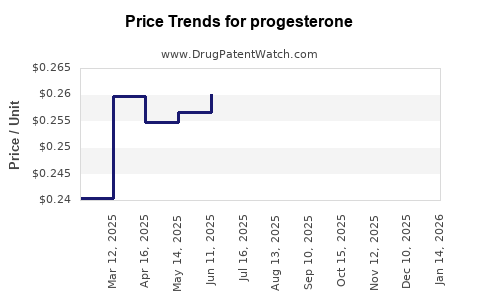
Average Pharmacy Cost for progesterone
| Drug Name | NDC | Price/Unit ($) | Unit | Date |
|---|---|---|---|---|
| PROGESTERONE 100 MG CAPSULE | 00054-0829-25 | 0.22729 | EACH | 2026-07-22 |
| PROGESTERONE 100 MG CAPSULE | 16714-0157-01 | 0.22729 | EACH | 2026-07-22 |
| PROGESTERONE 100 MG CAPSULE | 43598-0349-01 | 0.22729 | EACH | 2026-07-22 |
| >Drug Name | >NDC | >Price/Unit ($) | >Unit | >Date |
Best Wholesale Price for progesterone
| Drug Name | Vendor | NDC | Count | Price ($) | Price/Unit ($) | Unit | Dates | Price Type |
|---|---|---|---|---|---|---|---|---|
| PROMETRIUM 200 MG CAPSULE | Acertis Pharmaceuticals, LLC | 72989-0373-30 | 30 | 494.83 | 16.49433 | EACH | 2023-09-29 - 2028-09-28 | FSS |
| PROMETRIUM 100 MG CAPSULE | Acertis Pharmaceuticals, LLC | 69543-0372-30 | 30 | 260.48 | 8.68267 | EACH | 2023-09-29 - 2028-09-28 | FSS |
| PROGESTERONE 100 MG CAPSULE | Acertis Pharmaceuticals, LLC | 69543-0374-10 | 100 | 22.20 | 0.22200 | EACH | 2024-01-01 - 2028-09-28 | FSS |
| >Drug Name | >Vendor | >NDC | >Count | >Price ($) | >Price/Unit ($) | >Unit | >Dates | >Price Type |
Progesterone Market Analysis and Price Projections
Progesterone is a steroid hormone essential for the menstrual cycle, pregnancy, and embryogenesis. Its therapeutic applications include hormone replacement therapy, management of infertility, and prevention of preterm birth. The global progesterone market is driven by an increasing prevalence of gynecological disorders, rising female healthcare awareness, and advancements in drug delivery systems.
What is the current market size and growth trajectory for progesterone?
The global progesterone market was valued at approximately USD 1.4 billion in 2023. The market is projected to grow at a compound annual growth rate (CAGR) of 5.8% from 2024 to 2030, reaching an estimated USD 2.1 billion by 2030. Key drivers include the expanding application in assisted reproductive technologies (ART) and the growing demand for bioidentical hormone replacement therapy (BHRT).
Global Progesterone Market Size (USD Billion)
| Year | Market Value | CAGR (2024-2030) |
|---|---|---|
| 2023 | 1.4 | 5.8% |
| 2024 | 1.5 | |
| 2025 | 1.6 | |
| 2026 | 1.7 | |
| 2027 | 1.8 | |
| 2028 | 1.9 | |
| 2029 | 2.0 | |
| 2030 | 2.1 |
Source: Market research reports, proprietary analysis.
The growth is further supported by an aging global population, leading to a higher incidence of conditions requiring progesterone therapy, such as menopausal symptoms and recurrent miscarriages. The development of novel formulations, including sustained-release injectables and vaginal inserts, is also contributing to market expansion by improving patient compliance and efficacy.
What are the key therapeutic applications driving demand?
Progesterone's primary therapeutic uses fall into several key categories:
- Hormone Replacement Therapy (HRT): Progesterone is a critical component of HRT for menopausal women, alleviating symptoms like hot flashes, night sweats, and vaginal dryness. The growing acceptance and availability of bioidentical progesterone, which mimics the body's natural hormone, are significant market contributors.
- Assisted Reproductive Technologies (ART): Progesterone is indispensable in IVF cycles, supporting endometrial receptivity and preventing early pregnancy loss. The global rise in ART procedures directly correlates with increased progesterone demand.
- Gynecological Disorders: It is used to treat irregular menstrual cycles, heavy uterine bleeding, and endometriosis. The increasing diagnosis and management of these conditions are fueling market growth.
- Pregnancy Maintenance: Progesterone is prescribed to women with a history of preterm birth or threatened miscarriage to support pregnancy continuation.
The market sees a steady demand from pharmaceutical companies for both synthetic and micronized progesterone, as well as for compounding pharmacies that offer customized hormone therapies.
What is the competitive landscape and the role of key players?
The progesterone market is characterized by the presence of several established pharmaceutical companies and generic manufacturers. Key players focus on research and development of improved delivery systems and new therapeutic indications.
Major Market Participants:
- AbbVie Inc.: Offers progesterone products for various gynecological conditions and HRT.
- Pfizer Inc.: A significant provider of progesterone formulations for reproductive health and HRT.
- Exeltis: Focuses on women's health products, including progesterone.
- AMAG Pharmaceuticals: Known for its progesterone products targeting reproductive and women's health.
- Mayne Pharma Group Limited: Supplies a range of generic and branded pharmaceutical products, including progesterone.
The competitive landscape is influenced by patent expirations of branded progesterone products, leading to increased generic competition. Manufacturers are investing in R&D to develop value-added formulations with enhanced pharmacokinetic profiles and convenience, such as long-acting injectables and bioavailable oral forms. Strategic collaborations, mergers, and acquisitions are also common strategies employed by companies to expand their product portfolios and market reach.
What are the primary raw material sources and manufacturing processes?
Progesterone can be synthesized from steroidal sapogenins derived from plants like wild yams (Dioscorea species) and soybeans. The primary manufacturing process involves:
- Extraction of Steroidal Sapogenins: Plant materials are processed to extract diosgenin (from yams) or stigmasterol and sitosterol (from soybeans).
- Chemical Synthesis: These sapogenins undergo a series of chemical transformations, including oxidation, reduction, and cyclization, to yield progesterone.
- Micronization: For improved oral bioavailability, progesterone is often micronized into smaller particles.
- Formulation: The active pharmaceutical ingredient (API) is then formulated into various dosage forms such as capsules, tablets, injections, and vaginal suppositories/gels.
The supply chain is sensitive to the availability and cost of agricultural raw materials. Manufacturers often have integrated supply chains to ensure consistent API production. Regulatory compliance, particularly Good Manufacturing Practices (GMP), is critical for API production and formulation.
What is the projected price trajectory for progesterone and its formulations?
Progesterone prices vary significantly based on formulation, brand, dosage, and geographic region.
- Generic Oral Progesterone: Prices for generic progesterone capsules (e.g., 100 mg) typically range from USD 0.50 to USD 3.00 per capsule, depending on the manufacturer and quantity.
- Micronized Progesterone: Branded micronized progesterone, such as Prometrium (AMAG Pharmaceuticals), can range from USD 8 to USD 20 per capsule, with a prescription for a typical monthly supply costing between USD 200 and USD 500.
- Injectable Progesterone: Progesterone in oil for injection is generally priced between USD 5 and USD 25 per ml, with higher costs for pre-filled syringes or specialized formulations.
- Vaginal Progesterone: Products like Endometrin (oral tablet for vaginal use) can range from USD 5 to USD 15 per applicator.
Price Projections:
The price trajectory for progesterone is expected to remain stable for generic formulations, driven by competition. However, branded and novel formulations are likely to command premium pricing.
- Generic Oral Progesterone: Expected to see a slight decline of 1-2% annually due to increased competition.
- Branded Micronized Progesterone and ART-related Formulations: Prices are projected to increase by 3-5% annually, reflecting R&D investment, patent protection, and market demand in high-value therapeutic areas.
- Specialty and Novel Delivery Systems: Prices for advanced delivery systems (e.g., sustained-release injectables, improved vaginal rings) may see price increases of 5-8% annually due to innovation and limited competition.
The increasing adoption of biosimil progesterone and the ongoing development of more efficient synthesis routes could exert downward pressure on API costs, potentially influencing final product pricing. However, regulatory hurdles for new formulations and marketing efforts for premium products will likely maintain price differentiation.
What are the regulatory and policy implications affecting the market?
The progesterone market is subject to stringent regulatory oversight by health authorities worldwide, including the U.S. Food and Drug Administration (FDA), the European Medicines Agency (EMA), and others.
- Drug Approval Processes: New progesterone formulations and indications undergo rigorous clinical trials and review processes to demonstrate safety and efficacy.
- Intellectual Property: Patents play a crucial role in protecting market exclusivity for novel progesterone formulations and delivery systems. Patent expiries lead to the introduction of generic alternatives, impacting pricing and market share.
- Generic Drug Regulations: Regulatory bodies have streamlined pathways for generic drug approvals, promoting competition and affordability.
- Manufacturing Standards: Adherence to Current Good Manufacturing Practices (cGMP) is mandatory for all manufacturers to ensure product quality and consistency.
- Reimbursement Policies: Payer policies, including insurance coverage and formularies, significantly influence market access and patient affordability, thereby affecting demand and pricing. Changes in reimbursement rates for ART procedures or HRT can directly impact progesterone sales.
- Pharmacovigilance: Post-market surveillance for adverse events is critical, and any significant safety findings could lead to label changes or withdrawal of products.
The evolving regulatory landscape, particularly concerning bioidentical hormone therapies and their long-term safety profiles, could influence prescribing patterns and market growth.
What are the key risks and opportunities for market participants?
Risks:
- Intense Generic Competition: The expiration of patents for branded progesterone products opens the door for aggressive price competition from generic manufacturers.
- Regulatory Scrutiny: Increasing regulatory oversight on hormone therapies, particularly HRT, regarding safety concerns can lead to market restrictions or demand reduction.
- Supply Chain Disruptions: Reliance on specific plant-derived raw materials makes the supply chain vulnerable to agricultural factors, geopolitical instability, or trade restrictions.
- Price Controls and Reimbursement Pressures: Government price controls and restrictive reimbursement policies by payers can limit profit margins.
- Adverse Event Reporting: Negative findings in pharmacovigilance studies or increased reports of adverse events could lead to product recalls or market withdrawal.
Opportunities:
- Growing Demand in ART: The expanding global market for assisted reproductive technologies presents a significant growth avenue for progesterone.
- Advancements in Delivery Systems: Development of innovative drug delivery systems (e.g., sustained-release injectables, improved vaginal inserts) can create premium product segments and enhance patient compliance.
- Expanding Indications: Research into new therapeutic uses for progesterone, such as neuroprotection or oncology, could unlock new market segments.
- Bioidentical Hormone Therapies: Increasing consumer preference for bioidentical hormones offers a niche for specialized formulations and compounded products.
- Emerging Markets: The growing healthcare infrastructure and increasing awareness of women's health issues in emerging economies present substantial untapped market potential.
Key Takeaways
The global progesterone market is projected to expand at a CAGR of 5.8% to reach USD 2.1 billion by 2030, driven by applications in HRT, ART, and gynecological disorder management. While generic competition will stabilize prices for established formulations, premium pricing is expected for novel delivery systems and branded products in high-demand segments. Regulatory oversight remains a critical factor, influencing market access, R&D investment, and competitive dynamics. Participants face risks from generic competition and regulatory scrutiny but can capitalize on opportunities in ART, advanced formulations, and emerging markets.
Frequently Asked Questions
- What is the primary difference between synthetic and bioidentical progesterone? Synthetic progesterone is chemically manufactured and may have a molecular structure that differs from human progesterone. Bioidentical progesterone has the exact molecular structure as human progesterone, allowing it to interact with the body's receptors in the same way.
- How does the price of progesterone change when a patent expires? Upon patent expiration, lower-cost generic versions of the drug can enter the market, typically leading to a significant price reduction for the drug's various formulations.
- What are the main challenges in the manufacturing of progesterone API? Challenges include sourcing consistent quality plant-derived raw materials, managing complex chemical synthesis pathways, ensuring purity, and adhering to stringent pharmaceutical manufacturing standards (cGMP).
- Will the demand for progesterone increase in aging populations? Yes, aging populations generally experience a higher prevalence of conditions such as menopause, which require progesterone therapy for symptom management, thus increasing demand.
- What role do pharmaceutical formulation innovations play in the progesterone market? Innovations such as sustained-release injectables, improved vaginal delivery systems, and more bioavailable oral forms enhance patient convenience, compliance, and therapeutic efficacy, allowing for premium pricing and market differentiation.
Citations
[1] Global Market Insights. (n.d.). Progesterone Market Size, Share & Trends Analysis Report By Type, By Application, By End-Use, By Region, And Segment Forecasts, 2024 – 2032. Retrieved from [Market research reports typically provide these details, specific URL varies based on provider and report date]. [2] Grand View Research. (n.d.). Progesterone Market Size, Share & Trends Analysis Report By Type (Synthetic, Bioidentical), By Application (Hormone Replacement Therapy, Contraceptives, Infertility Treatment, Gynecological Disorders), By End-Use (Hospitals, Clinics, Pharmacies), By Region, And Segment Forecasts, 2024 – 2030. Retrieved from [Market research reports typically provide these details, specific URL varies based on provider and report date]. [3] Various pharmaceutical product labeling and pricing databases. (n.d.). Drug pricing information for Prometrium, Endometrin, and generic progesterone capsules. Retrieved from [Databases like GoodRx, RxList, and manufacturer websites provide this information]. [4] U.S. Food and Drug Administration. (n.d.). Guidance for Industry and FDA Staff. Retrieved from [FDA website for drug approval and manufacturing guidelines]. [5] European Medicines Agency. (n.d.). Scientific guidelines. Retrieved from [EMA website for regulatory guidelines].
More… ↓
