Share This Page
Drug Price Trends for TRIMETH
✉ Email this page to a colleague
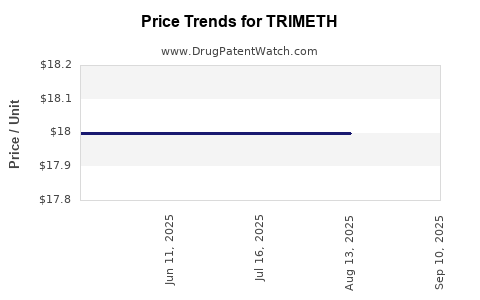
Average Pharmacy Cost for TRIMETH
| Drug Name | NDC | Price/Unit ($) | Unit | Date |
|---|---|---|---|---|
| TRIMETHOPRIM 100 MG TABLET | 70954-0541-10 | 1.15386 | EACH | 2026-07-22 |
| TRIMETHOPRIM 100 MG TABLET | 75907-0043-01 | 1.15386 | EACH | 2026-07-22 |
| TRIMETHOPRIM 100 MG TABLET | 70954-0541-10 | 1.22613 | EACH | 2026-06-17 |
| >Drug Name | >NDC | >Price/Unit ($) | >Unit | >Date |
Best Wholesale Price for TRIMETH
| Drug Name | Vendor | NDC | Count | Price ($) | Price/Unit ($) | Unit | Dates | Price Type |
|---|---|---|---|---|---|---|---|---|
| TRIMETHOPRIM 100MG TAB | Golden State Medical Supply, Inc. | 51407-0738-01 | 100 | 182.57 | 1.82570 | EACH | 2023-12-15 - 2028-06-14 | FSS |
| >Drug Name | >Vendor | >NDC | >Count | >Price ($) | >Price/Unit ($) | >Unit | >Dates | >Price Type |
Trimethoprim Market Analysis and Price Projections: Navigating the Future of Antibiotic Treatment
Introduction to Trimethoprim
Trimethoprim is a widely used antibiotic that plays a crucial role in treating various bacterial infections. As a key player in the pharmaceutical industry, understanding its market dynamics and future price projections is essential for healthcare providers, investors, and patients alike.
Current Market Overview
The global market for trimethoprim is segmented by region, with North America currently holding a substantial market share[1]. This dominance can be attributed to the region's advanced healthcare infrastructure and high prevalence of urinary tract infections (UTIs), a common condition treated with trimethoprim.
Market Size and Growth
While specific market size figures for trimethoprim alone are not provided in the search results, we can gain insights from related markets. The global urinary tract infection treatment market, which includes trimethoprim, is projected to reach approximately $10.73 billion by 2030, growing at a CAGR of 2.72% from 2024 to 2030[10].
Key Market Drivers
Several factors are driving the growth of the trimethoprim market:
- High prevalence of UTIs, especially in the United States
- Aging population more susceptible to bacterial infections
- Advancements in healthcare infrastructure
- Increasing awareness and early diagnosis of infections
- Robust pharmaceutical R&D activities
Pricing Trends and Analysis
Understanding the pricing trends of trimethoprim is crucial for market participants and consumers alike.
Current Pricing
As of the latest available data, the pricing for trimethoprim varies depending on the dosage and supplier:
- The cost for trimethoprim 100 mg oral tablet is around $68 for a supply of 100 tablets, depending on the pharmacy[5].
- Prices can range from $0.68 to $4.79 per tablet for a 100-tablet supply[5].
Factors Influencing Pricing
Several factors contribute to the pricing of trimethoprim:
- Generic competition
- Manufacturing costs
- Regulatory environment
- Demand fluctuations
- Regional market dynamics
Price Variations
It's important to note that prices can vary significantly based on location, pharmacy, and available discount programs. For instance, discount cards and programs can reduce the cost by up to 80% or more, making the medication more affordable for patients without insurance[5].
Future Price Projections
While specific long-term price projections for trimethoprim are not provided in the search results, we can infer potential trends based on market dynamics and related information.
Short-Term Projections
In the short term, prices are likely to remain relatively stable or see a slight decrease due to the competitive generic market[3]. The availability of discount programs and cards will continue to play a significant role in reducing costs for patients.
Long-Term Outlook
Over the long term, several factors may influence trimethoprim pricing:
- Increasing bacterial resistance could lead to a gradual decline in demand, potentially resulting in lower prices[3].
- The drug's essential status and continued use in specific medical conditions will likely maintain a steady market presence[3].
- Regional variations in pricing may persist due to factors such as local healthcare policies and economic conditions[3].
"Given the current market trends and factors, here are some price projections for SMZ-TMP DS tablets: Short-Term Projections: In the short term, prices are likely to remain stable or see a slight decrease due to the competitive generic market. Discount programs and cards will continue to play a significant role in reducing costs for patients."[3]
Regional Market Analysis
North America
North America, particularly the United States, is a key market for trimethoprim. The region's dominance can be attributed to:
- High prevalence of UTIs, affecting 12 million women and several million men annually[10].
- Advanced healthcare infrastructure ensuring quality diagnosis and treatment.
- Active pharmaceutical R&D efforts.
- Favorable regulatory environment.
- Robust healthcare expenditure on prescription drugs.
Europe
While specific data for Europe is not provided in the search results, the region is likely to be a significant market for trimethoprim due to its well-developed healthcare systems and aging population.
Asia-Pacific
The Asia-Pacific region may present growth opportunities for the trimethoprim market due to its large population base and improving healthcare infrastructure.
Competitive Landscape
The trimethoprim market is characterized by the presence of both generic and branded manufacturers. While specific company data for trimethoprim is not provided, key players in the related urinary tract infection treatment market include:
- AstraZeneca
- Bayer AG
- GlaxoSmithKline PLC
- Johnson & Johnson
- Novartis AG
- Pfizer
- Merck & Co. Inc
- Dr Reddy's Laboratories Ltd
- Bristol-Myers Squibb Company[10]
Regulatory Environment
The regulatory landscape plays a crucial role in shaping the trimethoprim market. In the United States, the Food and Drug Administration (FDA) oversees the approval and regulation of antibiotics, including trimethoprim. Stringent regulatory standards ensure product safety and efficacy, fostering patient trust and market growth[10].
Market Challenges
Despite its established position, the trimethoprim market faces several challenges:
Antibiotic Resistance
The increasing prevalence of antibiotic-resistant bacteria poses a significant threat to the efficacy of trimethoprim and other antibiotics. This trend could potentially impact long-term demand and pricing[3].
Side Effects
Trimethoprim use has been associated with certain side effects, particularly hyperkalaemia (elevated potassium levels in the blood). A systematic review found that the prevalence of hyperkalaemia >5.0 mmol/L was observed in a significant number of patients taking standard-dose trimethoprim[7].
Market Competition
The availability of generic versions and alternative antibiotics creates a competitive landscape, potentially putting downward pressure on prices[3].
Future Market Trends
Several trends are likely to shape the future of the trimethoprim market:
Personalized Medicine
Advancements in genetic testing and personalized medicine may lead to more targeted antibiotic prescriptions, potentially affecting trimethoprim usage patterns.
Combination Therapies
The development of new combination therapies, such as the widely used sulfamethoxazole-trimethoprim combination, may open up new market opportunities[3].
Emerging Markets
Growing healthcare infrastructure and increasing awareness in emerging markets may drive demand for trimethoprim and other antibiotics.
Investment Opportunities
For investors considering the trimethoprim market, several factors should be taken into account:
- The essential nature of antibiotics in healthcare
- Potential for growth in emerging markets
- Ongoing R&D efforts to combat antibiotic resistance
- Possible market consolidation through mergers and acquisitions
Conclusion
The trimethoprim market, while facing challenges such as antibiotic resistance and side effects, remains an essential component of the global healthcare landscape. With a stable short-term pricing outlook and potential for growth in emerging markets, trimethoprim continues to play a crucial role in treating bacterial infections.
As the market evolves, stakeholders must stay informed about regulatory changes, technological advancements, and shifting patient needs to make informed decisions and capitalize on emerging opportunities.
Key Takeaways
- The global urinary tract infection treatment market, which includes trimethoprim, is projected to reach $10.73 billion by 2030.
- Current pricing for trimethoprim 100 mg oral tablets ranges from $0.68 to $4.79 per tablet.
- Short-term price projections indicate stability or slight decreases due to generic competition.
- North America, particularly the United States, is a key market for trimethoprim.
- Antibiotic resistance and side effects pose challenges to the trimethoprim market.
- Future trends include personalized medicine, combination therapies, and growth in emerging markets.
FAQs
-
Q: What is the primary use of trimethoprim? A: Trimethoprim is primarily used to treat bacterial infections, particularly urinary tract infections (UTIs).
-
Q: How does the pricing of trimethoprim compare to other antibiotics? A: While specific comparisons are not provided in the search results, trimethoprim is generally considered an affordable antibiotic, especially with the availability of generic versions and discount programs.
-
Q: What factors could lead to increased demand for trimethoprim in the future? A: Factors that could increase demand include growing awareness of UTIs, aging populations, and improved healthcare access in emerging markets.
-
Q: Are there any ongoing research efforts to improve trimethoprim's efficacy or reduce side effects? A: While specific research efforts are not mentioned in the search results, ongoing R&D in the antibiotic field aims to address issues such as antibiotic resistance and side effects.
-
Q: How might the development of new antibiotics impact the trimethoprim market? A: The introduction of new antibiotics could potentially reduce demand for trimethoprim, especially if they offer improved efficacy or fewer side effects. However, trimethoprim's established position and affordability may help maintain its market share.
Sources cited: [1] https://www.drugpatentwatch.com/p/drug-price/drugname/trimethoprim [3] https://www.drugpatentwatch.com/p/drug-price/drugname/SULFAMETHOXAZOLE-TMP+DS+TABLET [5] https://www.drugs.com/price-guide/trimethoprim [7] https://academic.oup.com/jac/article/77/10/2588/6677175?login=false [10] https://www.globenewswire.com/news-release/2024/02/29/2837895/28124/en/Global-Urinary-Tract-Infection-Treatment-Market-Analysis-Report-2023-2030-Quinolones-are-the-Go-to-Antibiotics-for-Treating-UTIs-Retail-Pharmacies-Maintain-their-Leading-Role.html
More… ↓
