Last updated: February 20, 2026
What is the current market landscape for moxifloxacin?
Moxifloxacin is a fourth-generation fluoroquinolone antibiotic used primarily for respiratory tract infections, skin, and soft tissue infections. Its global sales reached approximately $1.2 billion in 2022, with an expected compound annual growth rate (CAGR) of around 3.8% from 2023 to 2028. The drug is available in both branded and generic forms, with the latter increasing market penetration.
Major manufacturers include Bayer (Avelox), Sandoz, and Teva. The predominant markets are North America, Europe, and Asia-Pacific, with China and India showing increased demand due to rising bacterial infection rates and expanding healthcare infrastructure.
How does the competitive landscape influence moxifloxacin pricing?
Pricing for moxifloxacin varies considerably by region and formulation. In the U.S., branded formulations currently retail at around $150 for a 10-tablet pack, whereas generic versions are priced between $20 and $50. European prices are comparable, with branded drugs costing approximately €150 per pack, and generics priced at €30-€40.
The entry of generics has significantly reduced prices, leading to increased accessibility but also intensifying competitive pressure. Patent expirations in key markets occurred between 2012 and 2015, facilitating the proliferation of generics. Entry barriers are moderate due to manufacturing complexities and regulatory approvals.
What are the key factors affecting future price trends?
Several factors influence future pricing:
- Patent Status and Generic Competition: Patent expiration in many jurisdictions has resulted in a price decrease. Continued patent cliff progression could further lower prices.
- Regulatory Changes: Stringent approval processes or new indications requiring additional clinical data could influence cost and pricing.
- Market Demand: Growing antibiotic resistance leads to increased prescriptions but also pushes for development of next-generation antibiotics, affecting demand for existing drugs.
- Pricing Policies: Governments and healthcare providers in high-income countries negotiate prices, often under price control mechanisms. In emerging markets, prices are driven by local affordability and procurement strategies.
- Development of New Formulations: Extended-release or combination therapies could command premium pricing but may face generic competition sooner.
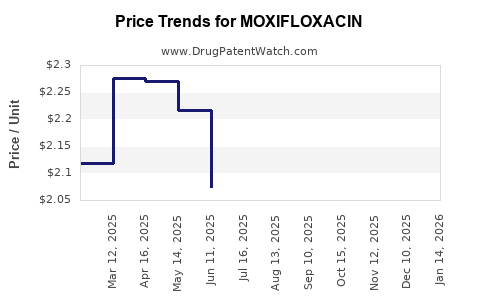
What are projected price trends through 2028?
| Year |
Estimated Average Price per Pack (U.S.) |
Major Factors Influencing Price |
| 2023 |
$25 (generic) |
Increased generic market share |
| 2024 |
$23 |
Patent expirations, price competition |
| 2025 |
$21 |
Regulatory pressures, emerging markets growth |
| 2026 |
$19 |
Market saturation, newer antibiotics emerging |
| 2027 |
$18 |
Price stabilization, global supply chain shifts |
| 2028 |
$16 |
Increased access, further generics entry |
What are key regions to watch for pricing shifts?
- North America: Continues to push for price reductions due to hospital negotiations and high generic competition.
- Europe: Stable prices, with national health systems demanding cost-effective options, driving prices downward.
- Asia-Pacific: Rapid growth in demand, with local manufacturers offering lower-cost generics, further lowering market prices.
- Emerging Markets: Price sensitivity remains high; potential for significant discounts.
What are the implications for companies involved in moxifloxacin?
For existing manufacturers, maintaining market share depends on cost control and securing regulatory approvals for new formulations. For generic producers, expanding capacity and accelerating approval timelines provide volume opportunities. Innovators focusing on newer antibiotics may gradually displace older drugs like moxifloxacin, impacting long-term revenue.
Key Takeaways
- Moxifloxacin’s global sales are expected to decline gradually as generic competition intensifies.
- Prices are projected to decrease from approximately $25 per pack in 2023 to $16 by 2028.
- Patent expirations and increased regional demand will shape regional price trends.
- Industry participants should focus on regulatory strategies and market expansion in emerging markets.
- Potential for development of new formulations can create short-term premium pricing opportunities.
FAQs
1. What factors could accelerate the price decline of moxifloxacin?
Patent expirations and the entry of multiple generic manufacturers produce greater price competition.
2. Are there upcoming patent protections for key formulations?
Most patents expired between 2012 and 2015; however, some extended-release or combination formulations may still be under patent.
3. How does resistance impact moxifloxacin sales?
Rising bacterial resistance reduces efficacy, leading to decreased prescriptions and potentially lowered prices or market share.
4. What are the regulatory challenges for new moxifloxacin formulations?
Regulatory agencies require proof of safety and efficacy; complex formulations may face longer approval timelines impacting pricing and market entry.
5. How might healthcare policies influence pricing in the next five years?
Cost-containment measures and negotiation strategies, especially in high-income countries, will likely continue to pressure prices downward.
Sources
[1] Statista. (2023). Global antibiotic market size.
[2] Research and Markets. (2022). Moxifloxacin market analysis.
[3] European Medicines Agency. (2021). Patent expirations report.
[4] IQVIA. (2022). Global pharmaceutical sales data.
[5] World Health Organization. (2022). Antibiotic resistance trends.