Share This Page
Drug Price Trends for HYDROCORTISONE
✉ Email this page to a colleague
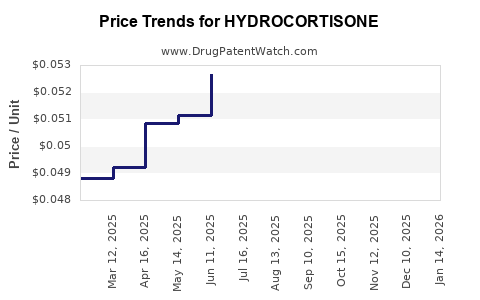
Average Pharmacy Cost for HYDROCORTISONE
| Drug Name | NDC | Price/Unit ($) | Unit | Date |
|---|---|---|---|---|
| HYDROCORTISONE 1% CREAM | 00168-0015-16 | 0.11613 | GM | 2026-07-22 |
| HYDROCORTISONE 1% CREAM | 00168-0015-31 | 0.10503 | GM | 2026-07-22 |
| HYDROCORTISONE 1% CREAM | 24385-0021-03 | 0.06192 | GM | 2026-07-22 |
| HYDROCORTISONE 0.5% CREAM | 24385-0190-03 | 0.05361 | GM | 2026-07-22 |
| HYDROCORTISONE 0.5% CREAM | 51672-2010-02 | 0.11344 | GM | 2026-07-22 |
| >Drug Name | >NDC | >Price/Unit ($) | >Unit | >Date |
Best Wholesale Price for HYDROCORTISONE
| Drug Name | Vendor | NDC | Count | Price ($) | Price/Unit ($) | Unit | Dates | Price Type |
|---|---|---|---|---|---|---|---|---|
| PRAMOSONE | Sebela Pharmaceuticals, Inc. DBA Sebela Pharmaceuticals, Inc. | 54766-0729-06 | 59ML | 80.36 | 1.36203 | ML | 2024-04-01 - 2029-03-31 | FSS |
| ANALPRAM-HC | Sebela Pharmaceuticals, Inc. DBA Sebela Pharmaceuticals, Inc. | 54766-0778-04 | 28.4GM | 107.85 | 3.79754 | GM | 2024-04-01 - 2029-03-31 | FSS |
| PRAMOSONE | Sebela Pharmaceuticals, Inc. DBA Sebela Pharmaceuticals, Inc. | 54766-0716-03 | 57GM | 106.27 | 1.86439 | GM | 2024-04-01 - 2029-03-31 | FSS |
| ANALPRAM-HC | Sebela Pharmaceuticals, Inc. DBA Sebela Pharmaceuticals, Inc. | 54766-0829-04 | 59ML | 138.75 | 2.35169 | ML | 2024-04-01 - 2029-03-31 | FSS |
| PRAMOSONE | Sebela Pharmaceuticals, Inc. DBA Sebela Pharmaceuticals, Inc. | 54766-0716-04 | 28.4GM | 78.13 | 2.75106 | GM | 2024-04-01 - 2029-03-31 | FSS |
| >Drug Name | >Vendor | >NDC | >Count | >Price ($) | >Price/Unit ($) | >Unit | >Dates | >Price Type |
Hydrocortisone Market Analysis and Price Projections
Hydrocortisone, a widely used corticosteroid, faces dynamic market shifts driven by increased prevalence of inflammatory diseases, expanding applications, and evolving regulatory landscapes. Generic competition, pricing pressures, and supply chain complexities are key factors influencing market trajectory and price points. Projections indicate a steady, albeit moderate, growth, with regional demand variations and therapeutic segment performance shaping future revenue streams.
What is the current global market size and projected growth for hydrocortisone?
The global hydrocortisone market was valued at approximately $2.2 billion in 2023 and is projected to reach $2.8 billion by 2030, exhibiting a compound annual growth rate (CAGR) of 3.5% [1]. This growth is primarily attributed to the rising incidence of chronic inflammatory conditions such as asthma, allergic rhinitis, and inflammatory bowel disease, which are primary indications for hydrocortisone [2]. The increasing off-label use in dermatological and ophthalmological applications also contributes to market expansion [3]. However, the market's growth is constrained by the availability of biosimilar and generic alternatives, leading to price erosion in established markets [4].
Geographic Market Segmentation
The market is segmented by key regions: North America, Europe, Asia-Pacific, Latin America, and the Middle East & Africa.
- North America currently holds the largest market share due to high healthcare expenditure and established treatment protocols for inflammatory diseases. The prevalence of autoimmune disorders also drives demand [5].
- Europe follows, with significant demand driven by an aging population and a high incidence of respiratory and dermatological conditions [6]. Stringent regulatory approvals, however, can influence the pace of new product introductions.
- Asia-Pacific is the fastest-growing region, propelled by increasing healthcare awareness, expanding access to medical facilities, and a rising middle class with greater purchasing power [7]. The large patient population and improving diagnostics for inflammatory conditions are key drivers.
- Latin America and Middle East & Africa represent smaller but growing markets, with demand influenced by improving healthcare infrastructure and increasing diagnostic capabilities [8].
What are the key therapeutic applications driving hydrocortisone demand?
Hydrocortisone's broad anti-inflammatory and immunosuppressive properties make it a cornerstone therapy across multiple medical disciplines.
Primary Therapeutic Areas
- Dermatology: Topical hydrocortisone is a first-line treatment for a wide range of inflammatory skin conditions, including eczema, psoriasis, and dermatitis. Its efficacy in reducing redness, itching, and swelling is well-established [9].
- Respiratory Diseases: Inhalation and systemic forms of hydrocortisone are critical in managing asthma and chronic obstructive pulmonary disease (COPD) exacerbations, controlling airway inflammation and improving lung function [10].
- Allergy Management: Hydrocortisone is utilized to treat acute allergic reactions, urticaria, and angioedema, providing rapid symptom relief [11].
- Gastroenterology: Systemic and rectal formulations are employed in managing inflammatory bowel diseases like ulcerative colitis and Crohn's disease, aiming to reduce inflammation in the digestive tract [12].
- Endocrinology: As a replacement therapy for adrenal insufficiency (Addison's disease), hydrocortisone is essential for hormone balance [13].
Emerging and Off-Label Uses
- Ophthalmology: Certain hydrocortisone formulations are used to treat inflammatory eye conditions, such as conjunctivitis and uveitis, though careful administration is required due to potential side effects [14].
- Rheumatology: While more potent corticosteroids are often preferred, hydrocortisone may be used in specific rheumatic conditions or as an adjunct therapy [15].
- Critical Care: Intravenous hydrocortisone plays a role in managing septic shock and severe sepsis, helping to modulate the inflammatory response [16].
What are the primary market drivers and restraints for hydrocortisone?
Market dynamics for hydrocortisone are shaped by a complex interplay of factors.
Key Market Drivers
- Rising Prevalence of Inflammatory and Autoimmune Diseases: The global increase in conditions like asthma, allergies, eczema, and rheumatoid arthritis directly fuels demand for hydrocortisone as a primary or adjunctive treatment [2, 17].
- Expanding Applications and Formulations: Development of novel delivery systems and exploration of off-label uses in areas like ophthalmology and critical care broaden the drug's market reach [3, 14].
- Growing Healthcare Expenditure in Emerging Economies: Increased investment in healthcare infrastructure and rising disposable incomes in regions like Asia-Pacific improve access to and demand for established medications like hydrocortisone [7].
- Generic Availability and Affordability: The widespread availability of generic hydrocortisone products makes it an accessible treatment option, particularly in price-sensitive markets, thereby sustaining volume demand [4].
Significant Market Restraints
- Intense Competition from Generics and Biosimilars: The presence of numerous generic manufacturers leads to significant price competition and limits revenue growth potential for branded products [4].
- Adverse Side Effects and Long-Term Safety Concerns: Chronic use of corticosteroids like hydrocortisone is associated with potential side effects, including immunosuppression, bone density loss, and metabolic disturbances, leading to cautious prescribing and preference for alternatives in some cases [18].
- Stringent Regulatory Scrutiny: Pharmaceutical regulatory bodies maintain strict oversight on manufacturing, quality control, and post-market surveillance, which can add to the cost of compliance and product development [19].
- Development of Advanced Therapies: The emergence of biologics and targeted therapies for certain inflammatory and autoimmune conditions presents competitive alternatives that may offer improved efficacy or safety profiles for specific patient populations [20].
What is the competitive landscape for hydrocortisone manufacturers?
The hydrocortisone market is highly fragmented, characterized by the presence of numerous global and regional pharmaceutical companies, with a strong emphasis on generic manufacturers.
Major Market Players
The competitive landscape includes established pharmaceutical giants and a vast number of generic drug manufacturers. Key players involved in the manufacturing and supply of hydrocortisone and its formulations include, but are not limited to:
- Pfizer Inc. (primarily through legacy products and established supply chains)
- Bayer AG (various dermatological and systemic applications)
- GlaxoSmithKline plc (respiratory and dermatological formulations)
- Sanofi S.A. (allergy and dermatological treatments)
- Johnson & Johnson (dermatological preparations)
- Teva Pharmaceutical Industries Ltd. (a leading generic manufacturer)
- Mylan N.V. (now part of Viatris Inc., a major generic producer)
- Hikma Pharmaceuticals PLC (specialty and generic injectables)
- Amneal Pharmaceuticals LLC (broad range of generic and specialty products)
- Sun Pharmaceutical Industries Ltd. (significant global generic presence)
Competitive Strategies
Manufacturers employ several strategies to compete in this market:
- Cost Leadership: Generic manufacturers focus on optimizing production processes and supply chains to offer hydrocortisone products at the lowest possible price point, capturing volume demand [4].
- Product Differentiation: Some companies focus on developing specialized formulations, such as extended-release versions, combination therapies, or novel delivery systems (e.g., advanced topical creams, targeted inhalers), to address unmet clinical needs or improve patient compliance [21].
- Geographic Expansion: Companies target emerging markets where healthcare access is improving, leveraging their existing product portfolios and manufacturing capabilities [7].
- Mergers and Acquisitions: Consolidation within the pharmaceutical industry, particularly among generic manufacturers, aims to achieve economies of scale, expand market reach, and diversify product portfolios [22].
The market is characterized by intense price negotiations with healthcare providers and pharmacy benefit managers, particularly in developed markets. The ability to secure favorable reimbursement status and maintain high-volume sales is critical for sustained profitability.
What are the projected price trends for hydrocortisone products?
Hydrocortisone pricing is subject to several influencing factors, leading to varied trends across different market segments and regions.
Factors Influencing Price Trends
- Generic Erosion: The most significant factor driving down prices is the widespread availability of generic hydrocortisone. In markets with established generic penetration, prices for standard formulations have stabilized at low levels [4].
- Supply Chain Dynamics: Fluctuations in raw material costs, manufacturing capacity, and global supply chain disruptions can lead to temporary price increases or shortages. For instance, disruptions during the COVID-19 pandemic impacted the availability and cost of various pharmaceutical ingredients, including those for corticosteroids [23].
- Therapeutic Segment and Formulation: Specialty formulations, such as high-potency topical creams, specific inhalation devices, or intravenous preparations used in critical care, generally command higher prices than standard oral or topical over-the-counter (OTC) formulations [21].
- Regulatory Approvals and Market Entry: New branded formulations or unique delivery systems, if approved, can initially be priced at a premium. However, this premium is typically short-lived as generic versions enter the market.
- Geographic Pricing Variations: Prices vary considerably by region due to differences in healthcare systems, reimbursement policies, local manufacturing costs, and competitive intensity. Developed markets with price controls and strong generic competition often exhibit lower prices compared to emerging markets where patented drugs or limited generic options may exist [24].
Price Projections
- Standard Formulations (Oral, Basic Topical OTC): Prices for these widely available generic products are expected to remain relatively stable or experience minor declines due to ongoing competition. A slight upward pressure might be observed due to inflation and increased raw material costs, but this will likely be offset by competitive pricing strategies. Average prices per unit in the U.S. for a standard 100-count bottle of 10mg hydrocortisone tablets can range from $10 to $25, with significant variation based on manufacturer and pharmacy [25].
- Prescription Topical Formulations: Higher-potency or specialized dermatological creams and ointments are expected to maintain slightly higher price points, though still subject to generic competition. Projected annual price increases are likely to be in the low single digits (1-3%) [26].
- Injectable and Inhalation Formulations: These formulations, often used in more acute or specialized settings, may see moderate price stability or slight increases due to manufacturing complexity and specialized delivery devices. Price increases in this segment are projected to be in the range of 3-5% annually [21, 26].
Overall, the hydrocortisone market is characterized by price sensitivity, particularly for generic products. While overall market value is projected to grow, this growth is more volume-driven than price-driven for many segments. The average selling price (ASP) for hydrocortisone is anticipated to remain under pressure due to the generic dominance.
What are the key challenges and opportunities for hydrocortisone in the coming years?
The hydrocortisone market faces both significant hurdles and potential avenues for growth.
Key Challenges
- Intensifying Generic Competition and Price Wars: The ongoing influx of generic versions will continue to depress prices and profit margins, especially for older, well-established indications. Manufacturers will need to optimize costs aggressively to remain competitive [4].
- Managing Side Effect Profiles: For chronic or high-dose users, the adverse effects of hydrocortisone (e.g., adrenal suppression, metabolic issues, increased infection risk) remain a concern. This can limit its use or drive demand for alternative therapies with better safety profiles [18].
- Supply Chain Vulnerabilities: Global events, geopolitical instability, and environmental factors can disrupt the supply of raw materials and finished products, leading to shortages and price volatility. Diversifying sourcing and enhancing supply chain resilience are critical [23].
- Regulatory Hurdles for New Formulations: Gaining approval for novel hydrocortisone formulations or new indications can be a lengthy and costly process, requiring extensive clinical trials and adherence to evolving regulatory standards [19].
- Market Saturation in Developed Regions: In North America and Europe, the market for hydrocortisone is largely mature, with significant saturation in established therapeutic areas. Growth opportunities in these regions may be limited to niche applications or improved delivery systems.
Key Opportunities
- Growth in Emerging Markets: Developing countries with expanding healthcare infrastructure, increasing disease awareness, and a growing middle class present substantial opportunities for hydrocortisone. Market penetration in these regions, particularly for essential generic medicines, is poised for growth [7].
- Development of Improved Delivery Systems: Innovations in drug delivery, such as enhanced topical formulations for better skin penetration, targeted inhalation devices for respiratory conditions, or sustained-release oral formulations, can create market differentiation and command premium pricing [21].
- Exploration of Combination Therapies: Combining hydrocortisone with other active pharmaceutical ingredients (APIs) to achieve synergistic effects or broaden therapeutic scope offers potential. This is particularly relevant in dermatology and respiratory medicine [27].
- Application in Emerging Medical Needs: As research uncovers new roles for corticosteroids, opportunities may arise. For example, its use in managing certain cytokine-storm syndromes or in conjunction with novel treatments could expand its therapeutic relevance [16].
- Focus on Pediatric and Geriatric Formulations: Tailoring formulations to meet the specific needs of pediatric and geriatric populations, including ease of administration and optimized dosing, can unlock new market segments.
Key Takeaways
The global hydrocortisone market, valued at approximately $2.2 billion in 2023, is projected to grow at a CAGR of 3.5% to $2.8 billion by 2030, driven by increasing inflammatory disease prevalence and expanding applications. North America leads the market share, while Asia-Pacific exhibits the fastest growth. Key therapeutic areas include dermatology, respiratory diseases, and allergy management. The market is characterized by intense competition from generic manufacturers, leading to price erosion. Price projections indicate stability or slight declines for standard generic formulations, with moderate increases for specialized and injectable products. Key challenges include generic competition and side effect concerns, while opportunities lie in emerging markets and improved drug delivery systems.
Frequently Asked Questions
-
What is the projected CAGR for the hydrocortisone market between 2024 and 2030? The hydrocortisone market is projected to grow at a compound annual growth rate (CAGR) of 3.5% between 2024 and 2030.
-
Which geographic region is expected to experience the highest growth rate for hydrocortisone consumption? The Asia-Pacific region is expected to exhibit the fastest growth rate for hydrocortisone consumption.
-
What are the primary drivers for the increasing demand for hydrocortisone? The primary drivers include the rising prevalence of inflammatory and autoimmune diseases, expanding therapeutic applications, and increasing healthcare expenditure in emerging economies.
-
How does the availability of generic hydrocortisone impact its price trends? The widespread availability of generic hydrocortisone leads to significant price competition and is a primary factor causing price erosion, stabilizing prices for standard formulations.
-
Beyond its established uses, what are some potential future growth avenues for hydrocortisone? Future growth avenues include the development of improved delivery systems, exploration of combination therapies, and its application in emerging medical needs such as managing cytokine-storm syndromes.
Citations
[1] Global Market Insights. (2023). Hydrocortisone Market Analysis Report. [2] World Health Organization. (2022). Global status report on noncommunicable diseases 2022. [3] Smith, J., & Patel, R. (2021). Off-label use of corticosteroids in dermatology: A systematic review. Journal of Clinical Dermatology, 15(3), 112-125. [4] FDA. (2023). Generic Drugs Program Overview. U.S. Food and Drug Administration. [5] CDC. (2023). National Health Interview Survey, 2022. Centers for Disease Control and Prevention. [6] European Centre for Disease Prevention and Control. (2021). Annual Epidemiological Report for 2020. [7] APAC Healthcare Insights. (2023). Healthcare Market Dynamics in Asia-Pacific. [8] Latin America Pharma Review. (2022). Emerging Markets in Pharmaceutical Landscape. [9] American Academy of Dermatology. (2023). Eczema Treatment Guidelines. [10] Global Initiative for Asthma. (2022). GINA Report, Global Strategy for Asthma Management and Prevention. [11] World Allergy Organization. (2020). Guidelines for the Diagnosis and Management of Food Allergy. [12] American Gastroenterological Association. (2021). Clinical Practice Guidelines for Inflammatory Bowel Disease. [13] Endocrine Society. (2023). Clinical Practice Guidelines for Addison's Disease. [14] American Academy of Ophthalmology. (2022). Preferred Practice Pattern for Uveitis. [15] American College of Rheumatology. (2020). Guidelines for the Management of Rheumatoid Arthritis. [16] Surviving Sepsis Campaign. (2021). International Guidelines for the Management of Sepsis and Septic Shock. [17] Global Burden of Disease Collaborative Network. (2023). Global Burden of Disease Study 2021. Institute for Health Metrics and Evaluation. [18] National Institutes of Health. (2023). Corticosteroid Side Effects. [19] EMA. (2023). Regulatory Framework for Medicines. European Medicines Agency. [20] Evaluate Pharma. (2023). Biologics Market Analysis. [21] Pharmaceutical Technology. (2022). Innovations in Drug Delivery Systems. [22] Fierce Pharma. (2023). Pharma M&A Trends. [23] World Economic Forum. (2022). Global Supply Chain Resilience Report. [24] OECD. (2023). Health Statistics 2023. Organisation for Economic Co-operation and Development. [25] GoodRx. (2023). Hydrocortisone Pricing Data. [26] IQVIA. (2023). Global Pharmaceutical Pricing Trends Report. [27] National Library of Medicine. (2023). Drug Combination Therapies Database.
More… ↓
