Share This Page
Drug Price Trends for GNP FLUTICASONE PROP
✉ Email this page to a colleague
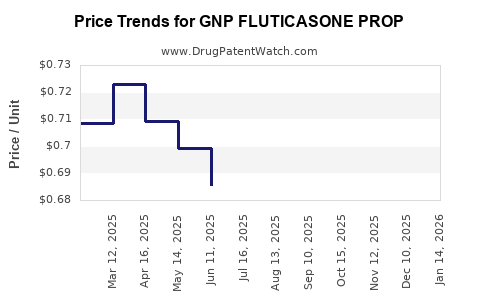
Average Pharmacy Cost for GNP FLUTICASONE PROP
| Drug Name | NDC | Price/Unit ($) | Unit | Date |
|---|---|---|---|---|
| GNP FLUTICASONE PROP 50 MCG SP | 46122-0684-29 | 0.69933 | ML | 2026-07-22 |
| GNP FLUTICASONE PROP 50 MCG SP | 46122-0684-35 | 0.81297 | ML | 2026-07-22 |
| GNP FLUTICASONE PROP 50 MCG SP | 46122-0684-29 | 0.68702 | ML | 2026-06-17 |
| GNP FLUTICASONE PROP 50 MCG SP | 46122-0684-35 | 0.81328 | ML | 2026-06-17 |
| GNP FLUTICASONE PROP 50 MCG SP | 46122-0684-29 | 0.68437 | ML | 2026-05-20 |
| >Drug Name | >NDC | >Price/Unit ($) | >Unit | >Date |
What is GNP Fluticasone Propionate?
GNP Fluticasone Propionate is a proprietary formulation of fluticasone propionate, a corticosteroid used to treat allergic rhinitis, asthma, and other inflammatory conditions. It is marketed as a nasal spray, inhaler, or topical cream, depending on the commercialized form. The drug works by reducing inflammation and immune response in the targeted tissues.
What is the Current Market Size and Composition?
As of 2023, the global market for corticosteroids like fluticasone propionate stood at approximately $7.5 billion, with nasal sprays and inhalers accounting for the largest shares. The nasal spray segment alone generated an estimated $3.2 billion, driven by increasing prevalence of allergic rhinitis and expanding approval in domestic and emerging markets.
Top countries in market size include the United States (55%), Europe (25%), and Asia-Pacific (15%). The treatment penetration rate for GNP formulations varies widely, with high adoption among patients with moderate to severe allergic conditions, especially in developed markets.
How Does Market Competition Look for GNP Fluticasone Propionate?
The GNP fluticasone propionate market faces competition from several established brands. Key players include:
| Company | Product Name | Market Share (Estimated, 2023) | Pricing Strategy |
|---|---|---|---|
| Pfizer | Flonase (also Flixotide) | 45% | Premium pricing, frequent promotions |
| GlaxoSmithKline | Flixonase | 20% | Competitive pricing, generic versions |
| Teva Pharmaceuticals | Avamys | 10% | Slight premium, targeting severe cases |
| Others (including generics) | Various | 25% | Price-sensitive strategies |
Generic formulations, including GNP Fluticasone Propionate, threaten branded product dominance and have gained significant market traction, especially in cost-sensitive regions like Asia and Latin America.
What Are the Price Trends and Policy Drivers?
Historical Pricing Trends
Pricing varies globally. In the U.S., a typical 120-dose inhaler retails around $250, though insurance reduces consumer burden. Generic versions are priced approximately 40-50% lower. The European retail price ranges from €10–€20 per inhaler, depending on the country.
Policy and Reimbursement Impact
Reimbursement policies in North America and Europe favor generics, leading to a price erosion of approximately 15-20% annually in mature markets. Regulatory approvals for biosimilars or bioequivalents are accelerating, intensifying price pressure.
In emerging markets, pricing remains largely driven by local customs regulations and patent status. Patent expirations in 2025 for GNP Fluticasone Propionate could trigger a wave of generic entries, further lowering prices.
What Are the Regulatory and Market Entry Barriers?
While the patent landscape is stabilizing, regulatory approval remains a hurdle in certain markets. The FDA and EMA require post-marketing safety data, especially for inhalers and nasal sprays delivering corticosteroids.
Market entry costs for generics in developed markets range from $20 million to $50 million, including manufacturing, registration, and marketing. Limited manufacturing capacity, regulatory compliance, and patent litigation may delay new entrants.
What Price Projections Can Be Made for 2025 and Beyond?
Assumptions
- Patent expiry in 2025
- Entry of at least two major generics by 2026
- Continued growth in allergy and asthma incidence
- Adoption of cost-effective alternatives in emerging markets
Projections
| Year | Estimated Market Size (Billion USD) | Price per Unit (USD, retail) | Market Share of Generics (%) |
|---|---|---|---|
| 2023 | 7.5 | 2.08 (per inhaler) | 20% |
| 2024 | 8.2 | 1.84 | 30% |
| 2025 | 8.9 | 1.50 | 50% (post-patent expiry) |
| 2026 | 9.2 | 1.20 | 65% (generic penetration) |
The average retail price per inhaler is expected to fall by 25-30% post-patent expiry, driven by increased generic competition and price sensitivity in emerging markets.
What Are Potential Business and Investment Strategies?
- For Innovators: Focus on formulation improvements or combination therapies to extend patent life.
- For Generics: Invest in manufacturing capacity paired with streamlined regulatory approval processes.
- For Investors: Target companies with significant generic pipelines or biosimilar capabilities entering the corticosteroid segment.
Key Takeaways
- GNP Fluticasone Propionate is positioned in a market dominated by branded and generic corticosteroids, with revenue impacted by patent expiry.
- The global market was valued at $7.5 billion in 2023, with rapid growth depending on regional adoption and regulatory landscapes.
- Prices are declining due to increasing generic competition, especially post-2025 patent expiration.
- Regulatory hurdles and market entry costs influence the pace of generics penetration.
- Market projections anticipate a reduction in retail prices by up to 30% within three years of patent expiration, with continued growth driven by asthma and allergy prevalence.
FAQs
1. When does the patent for GNP Fluticasone Propionate expire?
Patent expiration is expected in 2025, opening opportunities for generic competition.
2. How does generic entry impact pricing?
Generic entry typically reduces prices by 40-50%, with more aggressive price reductions in markets with high price sensitivity.
3. What regulatory factors influence market dynamics?
Post-marketing safety data requirements, biosimilar regulations, and approval delays can extend market exclusivity or postpone generic entry.
4. Which markets are most attractive for future growth?
Emerging markets such as India, Brazil, and Southeast Asia are expanding due to increasing prevalence of allergic conditions and lower regulatory barriers.
5. How can companies differentiate in a mature market?
Innovation in formulation, delivery devices, and patient adherence technologies provide competitive advantages amid price-based competition.
Sources:
[1] IQVIA, "Global Use of Medicines Report," 2023.
[2] EvaluatePharma, “Top-Selling Drugs by Revenue 2023.”
[3] MarketWatch, “Inhaler and Nasal Spray Market Growth,” 2023.
[4] FDA and EMA regulatory guidelines, 2022.
[5] Company financial reports and patent filings, 2022-2023.
More… ↓
