Share This Page
Drug Price Trends for FLUTICASONE-SALMETEROL
✉ Email this page to a colleague
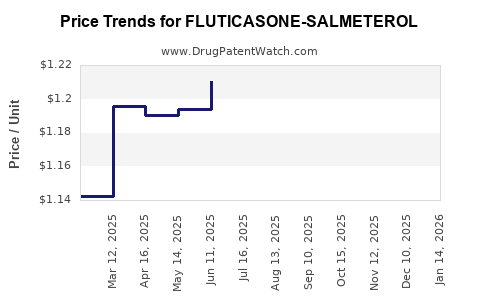
Average Pharmacy Cost for FLUTICASONE-SALMETEROL
| Drug Name | NDC | Price/Unit ($) | Unit | Date |
|---|---|---|---|---|
| FLUTICASONE-SALMETEROL 100-50 | 00054-0326-56 | 1.14397 | EACH | 2026-07-22 |
| FLUTICASONE-SALMETEROL 55-14 | 00093-3607-82 | 112.32971 | EACH | 2026-07-22 |
| FLUTICASONE-SALMETEROL 113-14 | 00093-3608-82 | 114.30643 | EACH | 2026-07-22 |
| FLUTICASONE-SALMETEROL 100-50 | 00093-7517-31 | 1.14397 | EACH | 2026-07-22 |
| FLUTICASONE-SALMETEROL 115-21 | 66993-0087-96 | 20.86859 | GM | 2026-07-22 |
| FLUTICASONE-SALMETEROL 230-21 | 66993-0088-96 | 27.16506 | GM | 2026-07-22 |
| >Drug Name | >NDC | >Price/Unit ($) | >Unit | >Date |
Fluticasone-Salmeterol Market Analysis and Price Projections
Fluticasone-salmeterol, a fixed-dose combination inhaler, is a cornerstone therapy for managing moderate to severe asthma and chronic obstructive pulmonary disease (COPD). This analysis provides a current market overview, identifies key drivers and challenges, and projects future pricing trends.
What is the Current Market Landscape for Fluticasone-Salmeterol?
The global market for fluticasone-salmeterol is substantial, driven by the high prevalence of respiratory diseases. The drug is available in various formulations and delivery devices, catering to different patient needs and physician preferences. Major players in the market include GlaxoSmithKline (GSK) with its branded Advair Diskus and Advair HFA, as well as numerous generic manufacturers.
The market is characterized by a mature brand presence and a growing generic penetration following patent expiries of key innovator products. This has led to increased price competition.
- Market Size: The global respiratory inhalers market, which includes fluticasone-salmeterol, was valued at approximately USD 27.3 billion in 2022 and is projected to grow to USD 34.6 billion by 2028, with a compound annual growth rate (CAGR) of 4.1% [1]. Fluticasone-salmeterol formulations represent a significant segment within this market.
- Key Products:
- Advair Diskus (GSK)
- Advair HFA (GSK)
- Generic fluticasone-salmeterol inhalers (multiple manufacturers)
- Geographic Distribution: North America and Europe represent the largest markets due to high disease prevalence and established healthcare infrastructures. The Asia-Pacific region is experiencing rapid growth driven by increasing awareness, rising disposable incomes, and a growing burden of respiratory illnesses.
- Competition: The market is highly competitive, with both branded and generic products. Generic competition has intensified significantly, leading to downward price pressure, particularly in developed markets.
What are the Primary Market Drivers?
Several factors are propelling the demand for fluticasone-salmeterol:
- Increasing Prevalence of Asthma and COPD: Global rates of asthma and COPD are on the rise due to factors such as air pollution, aging populations, and lifestyle changes. The World Health Organization estimates that 235 million people currently have asthma [2]. This growing patient pool directly fuels demand for effective maintenance therapies like fluticasone-salmeterol.
- Preference for Combination Therapies: Fixed-dose combination inhalers offer improved patient adherence and convenience compared to using separate inhalers for a corticosteroid and a long-acting beta-agonist (LABA). This simplifies treatment regimens, especially for patients with moderate to severe disease requiring maintenance therapy.
- Technological Advancements in Inhaler Devices: Innovations in inhaler device technology, including dry powder inhalers (DPIs) and metered-dose inhalers (MDIs), enhance drug delivery efficiency and patient usability. The development of smart inhalers that track usage and adherence is also emerging.
- Growth in Emerging Markets: Increasing healthcare expenditure, greater access to medical facilities, and rising awareness of respiratory diseases in emerging economies are contributing to market expansion in regions like Asia-Pacific and Latin America.
- Effectiveness of Fluticasone-Salmeterol: The drug combination is well-established as a highly effective maintenance treatment for controlling airway inflammation and bronchoconstriction in asthma and COPD, leading to sustained prescriptions.
What are the Major Market Restraints?
Despite strong growth drivers, the fluticasone-salmeterol market faces several challenges:
- Intense Generic Competition: The expiry of patents for innovator products has led to a surge in generic versions. This has significantly eroded market share and profit margins for branded products, forcing price reductions across the board.
- Pricing Pressures and Reimbursement Policies: Healthcare systems and payers are increasingly scrutinizing drug costs. This leads to intense negotiation for reimbursement and can limit price increases. Government policies aimed at controlling healthcare spending can also impact market dynamics.
- Adverse Events and Side Effects: While generally safe, fluticasone-salmeterol can cause side effects, including oral thrush, hoarseness, headaches, and paradoxical bronchospasm. These can affect patient compliance and lead to switches to alternative therapies.
- Development of Novel Therapies: Ongoing research and development are leading to new classes of respiratory medications, including biologics and combination therapies with different mechanisms of action. These novel treatments may offer superior efficacy or safety profiles for specific patient subgroups, potentially impacting the long-term demand for fluticasone-salmeterol.
- Regulatory Hurdles: Stringent regulatory approval processes for new drug applications and device modifications can slow down market entry and product innovation.
What are the Key Patent Expiries and Their Impact?
The patent landscape for fluticasone-salmeterol has been a critical determinant of market structure and pricing.
- Innovator Patents: The original patents for GSK's Advair (fluticasone propionate/salmeterol xinafoate) expired in the United States in 2010 and in Europe in 2011 [3]. This marked the beginning of significant generic competition.
- Generic Entry: Following patent expiries, numerous generic manufacturers entered the market. This led to a substantial decline in the average selling price (ASP) of fluticasone-salmeterol products.
- Impact on Pricing: The availability of generics has made fluticasone-salmeterol a highly competitive therapeutic area. Branded manufacturers have experienced revenue declines, while generic prices are subject to aggressive bidding and market forces.
- Evergreening Strategies: Pharmaceutical companies sometimes employ "evergreening" strategies, such as developing new formulations, delivery devices, or combination therapies, to extend patent protection or create new market exclusivities. However, for the core fluticasone-salmeterol combination, the primary patent expiries have already occurred.
What are the Projected Price Trends for Fluticasone-Salmeterol?
Price projections for fluticasone-salmeterol are influenced by a complex interplay of generic competition, healthcare policy, and market demand.
- Short-Term Outlook (1-3 years):
- Continued Price Erosion: Generic competition will remain the dominant factor, driving further price declines for both generic and, to some extent, branded fluticasone-salmeterol products. This is particularly true in mature markets like the US and Europe.
- Price Stabilization in Emerging Markets: While prices may also decrease in emerging markets, the rate of erosion might be slower due to developing healthcare infrastructure and potentially less mature generic markets.
- ASP Decline: The average selling price (ASP) is expected to continue its downward trajectory, potentially by 5-10% annually in developed markets due to aggressive tendering and reimbursement pressures.
- Medium-Term Outlook (3-7 years):
- Mature Generic Market: The market will likely be dominated by generic players. Pricing will be largely determined by manufacturing costs, supply chain efficiency, and market share competition among generics.
- Limited Upside for Branded Products: Branded Advair will likely see its market share further diminish, with pricing remaining under significant pressure.
- Potential for Niche Growth: Any price differentiation for branded products would need to be justified by unique delivery systems, patient support programs, or proven superior outcomes in specific patient populations.
- Long-Term Outlook (7+ years):
- Commoditization of Generics: Fluticasone-salmeterol generics will likely become highly commoditized, with prices driven primarily by manufacturing costs and intense competition.
- Shift to Newer Therapies: Depending on the success and adoption of newer respiratory therapies, the overall demand for fluticasone-salmeterol might gradually decline. This could lead to price stabilization or even marginal increases for remaining established generics as supply potentially consolidates.
- Impact of Biosimil-like Competition: While not a biologic, the long-term price trajectory might resemble that of highly competitive generic drug classes where sustained low pricing becomes the norm.
Factors Influencing Price Projections:
- Number of Generic Entrants: A larger number of competing generic manufacturers will maintain downward price pressure.
- Healthcare Payer Policies: Increased focus on value-based pricing and stringent reimbursement criteria by government payers and private insurers will continue to exert downward pressure on prices.
- Manufacturing Costs: Fluctuations in raw material costs and manufacturing efficiencies among generic producers can influence pricing.
- Availability of Alternative Therapies: The introduction of more effective or cost-efficient alternatives could accelerate price declines for fluticasone-salmeterol.
What are the Key Performance Indicators for Success?
For companies operating in the fluticasone-salmeterol market, key performance indicators (KPIs) include:
- Market Share: Tracking the share of branded vs. generic products, and individual generic manufacturer market positions.
- Average Selling Price (ASP): Monitoring ASP trends across different regions and product types.
- Cost of Goods Sold (COGS): Maintaining efficient manufacturing processes to ensure competitive pricing for generics.
- Patient Adherence Rates: Demonstrating improved outcomes through patient support programs or user-friendly devices.
- Regulatory Compliance: Ensuring adherence to all manufacturing and quality standards.
Key Takeaways
The fluticasone-salmeterol market is characterized by strong demand driven by the increasing prevalence of respiratory diseases. However, this is offset by intense generic competition following patent expiries, leading to significant price erosion. While branded products face declining market share and ASP, generic manufacturers compete on cost and supply chain efficiency. Future price projections indicate continued declines in the short to medium term, with the market potentially becoming highly commoditized in the long term as newer therapies gain traction.
Frequently Asked Questions
What are the most common side effects of fluticasone-salmeterol?
Common side effects include oral thrush, hoarseness, headache, muscle cramps, and tremors. Paradoxical bronchospasm can also occur.
Are there any new patent expirations on the horizon for fluticasone-salmeterol?
The primary patents for the original fluticasone-salmeterol combination expired years ago. Any remaining patents are likely related to specific formulations, delivery devices, or manufacturing processes, offering limited market exclusivity.
How does fluticasone-salmeterol differ from other asthma medications?
Fluticasone-salmeterol is a combination of an inhaled corticosteroid (fluticasone) and a long-acting beta-agonist (salmeterol). This combination targets both inflammation and bronchoconstriction, making it effective for maintenance therapy in moderate to severe asthma and COPD. Other medications may focus on only one of these mechanisms or have different durations of action or delivery methods.
What is the typical cost range for fluticasone-salmeterol?
The cost varies significantly by region, manufacturer (branded vs. generic), and insurance coverage. In the US, a generic 30-day inhaler can range from $20 to $100 or more, while branded versions can be considerably higher before insurance.
What are the alternatives to fluticasone-salmeterol for asthma and COPD management?
Alternatives include inhaled corticosteroids alone, long-acting beta-agonists alone (though not recommended as monotherapy for asthma), short-acting beta-agonists for rescue relief, anticholinergics, leukotriene modifiers, and biologics for severe, uncontrolled asthma.
Citations
[1] Grand View Research. (2023). Respiratory Inhalers Market Size, Share & Trends Analysis Report By Device Type (MDIs, DPIs, Nebulizers), By Application (Asthma, COPD), By End-use (Hospitals, Homecare), By Region, And Segment Forecasts, 2023 - 2030. [Report Accessed: October 26, 2023]. [2] World Health Organization. (2022, December 1). Asthma. Retrieved from https://www.who.int/news-room/fact-sheets/detail/asthma [3] U.S. Food & Drug Administration. (n.d.). Patent and Exclusivity Information. Retrieved from https://www.accessdata.fda.gov/scripts/drugobx/ (Note: Specific patent expiry dates require detailed search within this database).
More… ↓
