Last updated: February 21, 2026
What is the current market landscape for efavirenz?
Efavirenz is an antiretroviral medication used primarily for the treatment of HIV-1 infection. It is marketed as a component of fixed-dose combination therapies. The drug's generic and branded versions are widely prescribed, with a significant share in global HIV treatment.
Market Size and Key Players
- In 2022, the global HIV/AIDS drugs market was valued at approximately USD 25 billion, with efavirenz accounting for roughly 8-10% of this segment.
- Major manufacturers include Merck & Co., Mylan (now Viatris), and large generic players like Sun Pharmaceutical and Cipla.
Geographical Distribution
- North America and Europe represent the largest markets, driven by high HIV prevalence and established healthcare infrastructure.
- Emerging markets such as India, South Africa, and Brazil show rapid growth due to increased access to generic medications.
Regulatory Status
- EFavirenz is approved and included in WHO's Essential Medicines List.
- Pending patent expirations have increased the entry of generics in various markets.
What are the key trends affecting efavirenz?
Patent Expirations and Generic Competition
- Merck's patent expired in 2018 in the United States.
- Several generics entered the market by 2019, leading to significant price erosion.
Shift Toward Integrase Inhibitors
- Increasing adoption of drugs like dolutegravir has reduced efavirenz market share.
- Despite this, efavirenz remains a cost-effective option in resource-limited settings.
Pricing and Affordability
- The lowest available generic efavirenz tablets are priced at around USD 0.10–0.20 per dose in low-income countries.
- Branded versions can cost several dollars per dose in high-income countries.
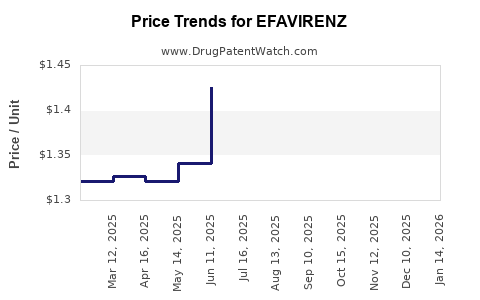
What are current price trends?
| Region |
Average Price per 600 mg Tablet |
Notable Price Changes |
| United States |
USD 2.50–4.00 |
Declined 70% since patent expiry |
| European Union |
USD 1.50–3.00 |
Competitive with generics |
| India |
USD 0.10–0.20 |
Dominated by generics |
| Sub-Saharan Africa |
USD 0.12–0.25 |
Widely subsidized |
Price Drivers
- Patent expiration has led to price decreases in key markets.
- Increased generic competition in emerging markets continues to lower prices.
- Global supply chain disruptions have caused temporary price fluctuations.
What are future price projections?
Short-Term (Next 2 Years)
- Prices in developed markets are expected to stabilize around USD 2–3 per tablet for branded products.
- Generic prices are projected to remain near USD 0.10–0.20 per tablet in low-income regions.
- The trend toward lower prices will persist due to continued competition and procurement policies.
Long-Term (Next 5–10 Years)
- Introduction of fixed-dose combinations with newer drugs may reduce efavirenz sales, exerting downward pressure on prices.
- Potential patent litigations and regulatory barriers may temporarily restrict generic entry, influencing prices.
- Market consolidation might reduce the number of competitors, possibly stabilizing or slightly increasing prices in certain regions.
Factors Affecting Price Dynamics:
- Shifts to integrase inhibitors with better tolerability and efficacy might lead to decreased demand for efavirenz.
- Policy changes favoring generic procurement could accelerate price declines.
- Innovations in manufacturing and supply chain efficiencies may lower production costs further.
What are limitations and uncertainties in projections?
- Variable adoption rates of newer regimens.
- Potential regulatory interventions affecting generics.
- Supply chain stability, especially in low-income markets.
- Patent status disputes in key markets.
Summary
Efavirenz maintains a significant role in global HIV treatment, especially in resource-limited countries. Its market has contracted in high-income regions due to newer drugs but remains cost-effective in developing economies. Prices in developed countries hover around USD 2–4 per tablet, with low-income markets seeing prices below USD 0.25. Short-term prices are expected to stay stable or decline marginally, while long-term trends depend on competition dynamics and medical guidelines.
Key Takeaways
- Efavirenz's patent expiration has led to widespread generic availability and substantial price reductions.
- The drug's role diminishes in favor of integrase inhibitors but remains prevalent in low-income regions.
- Prices vary significantly by region, driven by regulatory status, competition, and procurement policies.
- Short-term prices in developed markets are projected to stabilize, while generic prices in low-income regions will likely stay low.
- Future pricing will depend on advances in HIV therapy, patent litigations, and supply chain stability.
FAQs
1. How does efavirenz compare to newer HIV drugs in terms of price?
Efavirenz is generally less expensive, especially in generic form, making it more accessible in resource-limited settings. Newer drugs like dolutegravir cost more per dose but often offer improved efficacy and tolerability.
2. Are there any upcoming patent expirations for efavirenz?
The key patent in the U.S. expired in 2018. Patent statuses vary by country; some regions might still have active patents or legal protections.
3. What impact will the shift to integrase inhibitors have on efavirenz pricing?
Reduced demand for efavirenz could lead to further price declines, especially as newer drugs replace it in treatment guidelines.
4. How do price trends differ between high-income and low-income countries?
High-income countries pay significantly higher prices for branded versions, whereas low-income markets benefit from low-cost generics.
5. Will efavirenz still be marketed in 10 years?
It is likely to remain in use in resource-limited settings due to affordability, but its global market share will continue to diminish as newer drugs become standard.
References
[1] World Health Organization. (2022). HIV/AIDS treatment guidelines.
[2] Globaldata. (2023). HIV drugs market analysis.
[3] IMS Health. (2022). Pricing trends in antiretroviral drugs.
[4] US Patent Office. (2018). Patent filings and expirations for efavirenz.
[5] WHO. (2022). Essential Medicines List.