Last updated: February 12, 2026
What is Doxylamine-Pyridoxine?
Doxylamine-Pyridoxine is a fixed-dose combination typically used for treating nausea in pregnancy. The drug pairs doxylamine, an antihistamine with sedative properties, with pyridoxine (Vitamin B6), which is involved in core metabolic processes and alleviates nausea.
Current Market Landscape
Indications and Usage
- Approved primarily for nausea and vomiting in pregnancy (NVP)
- Prescribed in multiple formulations, with the U.S. FDA approving Diclegis (Doxylamine-Pyridoxine) in 2013
- Other markets see off-label use, but regulatory approval remains limited outside the U.S.
Regulatory Status
- FDA approval granted based on safety and efficacy data submitted by Duchesnay Inc.
- Approved in Canada under the brand Diclectin since 1984
- Market presence in Europe is limited; regulatory agencies differ
Market Size
- U.S. market for NVP treatments estimated at approximately $500 million annually (as per IQVIA data, 2022)
- Diclegis/Diclectin accounts for roughly 50% of that market segment
- Growth driven by increased awareness and diagnosis of NVP, along with a trend toward prescription therapies over herbal or OTC options
Competitive Landscape
- Main competitors include doxylamine with Vitamin B6 in OTC formulations, OTC antihistamines, and alternative herbal remedies
- Few prescription-only options, giving Doxylamine-Pyridoxine a dominant position in prescribed NVP treatments
- Generic formulations are limited but could enter market post-patent expiration
Patent and Regulatory Outlook
Patent Status
- Diclegis patent expired in the U.S. in 2029 (company-specific patents around formulation and delivery)
- Future generics expected post-2029, which could pressure pricing
Regulatory Challenges
- Limited marketed formulations outside North America
- Variability in regulatory requirements globally may restrict expansion, especially in Europe and Asia
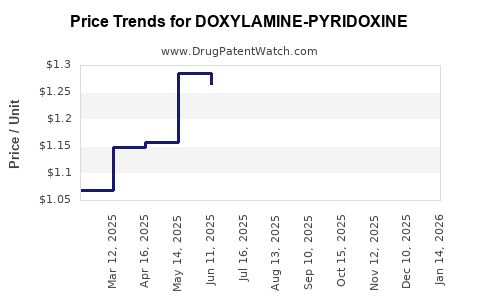
Price Trends and Projections
Current Pricing
- Brand-name Diclegis (U.S.): Wholesale acquisition cost (WAC) approximately $67 per month (30 tablets, 10 mg doxylamine/10 mg pyridoxine)
- Generic versions (once available): Expected to see pricing around 20% to 40% lower, i.e., $40-$50 per month
- Over-the-counter formulations in some U.S. stores sell between $10-$15 for a 30-tablet pack, but these lack regulatory approval for NVP
Pricing Factors
- Patent expirations in 2029 could open the market to generics, reducing prices
- R&D costs for new formulations and approvals are minimal, limiting premium pricing
- Market penetration expansion hinges on prescriber acceptance and patient awareness
Price Projections (2023–2030)
- Short-term (2023–2025): Prices remain around current levels due to patent exclusivity
- Medium-term (2026–2029): Slight decline anticipated, towards $50 per month post-patent expiration
- Long-term (post-2029): Substantial price erosion with generics possibly lowering costs by 50% or more, to approximately $25 per month
- The impact depends significantly on the speed of generic entry and market penetration
Market Opportunities and Risks
Opportunities
- Expansion into emerging markets with increasing maternal health programs
- Potential for formulation reformulations (e.g., liquid, extended-release) to capture new segments
- Growing use of branded generics could sustain high margins until patent expiry
Risks
- Competition from OTC combinations and herbal remedies
- Patent challenges or legal disputes delaying generic entry
- Variability in global regulatory approvals
Key Takeaways
- Doxylamine-Pyridoxine commands a premium price in the U.S. but faces imminent pricing pressure once patents expire.
- The US market, dominated by Diclegis, is mature but vulnerable to generic competition from 2029 onward.
- Expansion opportunities exist in global markets, but regulatory hurdles restrict immediate growth.
- Price erosion is likely post-2029, with generics potentially reducing costs by half or more within five years of market entry.
FAQs
1. When will generic versions of Doxylamine-Pyridoxine become available?
Generic formulations are expected after the patent expiration in 2029, assuming no patent challenges or delays.
2. How does the price of Diclegis compare to OTC formulations?
Diclegis costs around $67 per month wholesale, while OTC products can cost between $10 and $15 per month but lack formal approval for NVP.
3. What is the potential market size worldwide?
The global NVP treatment market, including non-prescription options, exceeds $1 billion, though Doxylamine-Pyridoxine's primary markets are North America and select regions with regulatory approval.
4. Are there regulatory barriers to expanding Doxylamine-Pyridoxine use?
Yes. Different countries have varying approval standards. Limited approvals outside North America restrict expansion.
5. How might new formulations impact pricing and market share?
Innovative formulations may sustain higher prices temporarily but are unlikely to alter long-term pricing trends beyond the generic competition impact.
References
[1] IQVIA. "North American Prescription Data." 2022.
[2] Duchesnay Inc. "Diclegis FDA Approval Documentation." 2013.
[3] U.S. Patent and Trademark Office. "Patent Expiry Dates for Diclegis." 2029.
[4] European Medicines Agency. "Regulatory Status of NVP Treatments." 2022.