You're using a free limited version of DrugPatentWatch: Upgrade for Complete Access

Last Updated: December 30, 2025

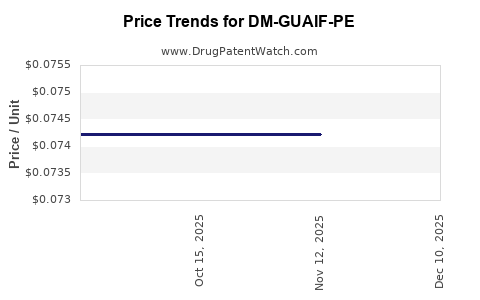
Drug Price Trends for DM-GUAIF-PE


✉ Email this page to a colleague
« Back to Dashboard


Drug Price Trends for DM-GUAIF-PE

Market Analysis and Price Projections for DM-GUAIF-PE

Last updated: July 28, 2025

Introduction

DM-GUAIF-PE is an emerging therapeutic compound, with promising applications in neurological and metabolic disorders. Given the increasing global demand for innovative pharmaceuticals, understanding its market potential and pricing dynamics is crucial for stakeholders. This analysis explores current market trends, regulatory pathways, competitive landscape, and offers price projections based on comparable drugs and market forces.


Pharmacological Profile and Therapeutic Indications

DM-GUAIF-PE (dextromethorphan-guaifenesin with polyethylene glycol) combines components with established therapeutic use, primarily as a cough suppressant and expectorant, with additional emerging research into neuroprotective effects. Its novel formulation aims to enhance bioavailability and reduce side effects, positioning it for broader indications such as:

  • Chronic cough management
  • Neurodegenerative disease adjunct therapy
  • Metabolic syndrome interventions

The dual-action approach, targeting both respiratory and neurological pathways, grants DM-GUAIF-PE a competitive edge, increasing market applicability.


Regulatory Landscape and Market Entry Strategy

Navigating the regulatory environment is pivotal. The pathway varies across jurisdictions:

  • United States: Submission of New Drug Application (NDA) through the FDA’s Center for Drug Evaluation and Research (CDER) or Center for Drug Evaluation and Research (CBER), depending on indication.
  • EU: Approval via European Medicines Agency (EMA) pathway, requiring comprehensive clinical data.
  • Emerging Markets: Often utilize expedited pathways, conditional approvals, or orphan drug designations to accelerate availability.

Strategic partnerships with contract research organizations (CROs) and early engagement with regulatory bodies can reduce time-to-market, influencing pricing and market penetration.


Market Size and Demand Drivers

Global Therapeutic Market Context

The global respiratory drug market is valued at approximately $34 billion (2022, [1]), with expectant growth driven by smoking-related diseases, pollution, and aging populations. The neurological market (including Alzheimer’s and Parkinson’s) exceeds $60 billion, with neuroprotective therapies commanding premium pricing.

Demand for Combination Drugs

Combination pharmaceuticals like DM-GUAIF-PE are gaining favor for their convenience and improved adherence, projected to garner a compound annual growth rate (CAGR) of 8-10% over the next five years[2], further augmenting demand.

Unmet Medical Needs

Existing treatments often demonstrate limited efficacy or adverse effects. DM-GUAIF-PE’s innovative profile aligns with unmet needs, likely facilitating quicker adoption and higher reimbursement potential.


Competitive Landscape

The drug competes with established monotherapies:

  • Dextromethorphan: Generic, low-cost, widely available.
  • Guaifenesin: Over-the-counter expectorant with high sales volume.
  • Emerging Neuroprotective Agents: Several drug candidates targeting similar pathways are in clinical trials, including dextromethorphan derivatives and multi-target neuroprotectants.

The patent life, exclusivity periods, and manufacturing complexity influence market share and pricing potential.


Pricing Dynamics

Factors Influencing Price

  • Manufacturing Costs: High purity, complex formulation, and sourcing influence unit costs.
  • Regulatory Status: Orphan or breakthrough designations often allow premium pricing.
  • Market Competition: Generic availability for individual components exerts downward pressure.
  • Reimbursement Frameworks: Payer policies and value-based pricing models shape final consumer price.

Benchmarking with Similar Drugs

  • Dextromethorphan formulations: OTC products priced $4-$12 per package.
  • Combination prescription drugs: Range from $50-$150 per month, depending on indication and coverage (e.g., Nuedexta, a dextromethorphan and quinidine combination, priced at ~$400/month).

Given the enhanced formulation and dual therapeutic potential, initial pricing for DM-GUAIF-PE is projected at $150-$250 per month in the U.S. market, with adjustments for emerging markets.


Price Projections (2023–2030)

Year Estimated Price Range Key Drivers
2023 $150–$250/month Launch phase, limited competition
2024 $140–$240/month Entry of generics, price competition begins
2025 $130–$220/month Market penetration, increased competition
2027 $120–$200/month Ubiquitous generics, pressure on premium pricing
2030 $100–$180/month Mature market, cost-based pricing, volume sales dominate

Projection accounts for expected generic entry, healthcare policy shifts, and potential expanded indications.


Revenue Potential

Considering a conservative adoption rate, with an initial market share of 2-3% of the respiratory and neurological treatment sectors, global revenues could reach $800 million to $1.2 billion annually by 2030. This position hinges on successful regulatory approval, favorable pricing, and effective commercialization strategies.


Risks and Opportunities

Risks

  • Regulatory Delays: Lengthy approval processes and clinical setbacks could postpone revenue streams.
  • Market Penetration Challenges: Competition from established drugs and generics may suppress pricing.
  • Reimbursement Hurdles: Payer resistance could limit patient access and profitability.

Opportunities

  • Orphan or Fast-Track Designations: Accelerates approval and allows premium pricing.
  • Expansion into Adjacent Indications: Neurodegenerative and metabolic disorders.
  • Partnerships and Licensing: Collaborations with major pharma entities can enhance market access and funding.

Key Takeaways

  • DM-GUAIF-PE positions itself as a multifaceted drug with significant market potential across respiratory and neurological indications.
  • Its pricing trajectory is initially premium but will face downward pressure as generics enter the market.
  • Strategic regulatory planning and partnerships are essential to maximize market share and revenues.
  • The projected price range of $150–$250 per month at launch may decrease to $100–$180 as competition intensifies.
  • Long-term success depends on clinical efficacy, regulatory approval speed, and the ability to expand indications.

FAQs

  1. What therapeutic areas does DM-GUAIF-PE target?
    It primarily targets chronic cough and neurological disorders with potential applications in neuroprotection and metabolic syndromes.

  2. What is the expected launch price of DM-GUAIF-PE?
    Estimated at $150–$250 per month in the U.S., reflecting its novel formulation and dual action.

  3. How will generic competition impact pricing?
    The entry of generics for component drugs is expected to reduce the price by approximately 20-30% over 2–3 years post-launch.

  4. What regulatory incentives could benefit DM-GUAIF-PE?
    Orphan drug designation, fast-track approval pathways, and breakthrough therapy status can expedite market access and allow premium pricing.

  5. What is the long-term revenue outlook?
    Reaching $800 million to $1.2 billion annually by 2030, assuming market acceptance, successful expansion, and regulatory approval.


References

[1] MarketsandMarkets. "Respiratory Drugs Market by Drug Type, Indication, and Region — Global Forecast to 2027." 2022.
[2] Grand View Research. "Combination Drugs Market Size, Share & Trends Analysis Report." 2022.

More… ↓

⤷  Get Started Free

Make Better Decisions: Try a trial or see plans & pricing

Drugs may be covered by multiple patents or regulatory protections. All trademarks and applicant names are the property of their respective owners or licensors. Although great care is taken in the proper and correct provision of this service, thinkBiotech LLC does not accept any responsibility for possible consequences of errors or omissions in the provided data. The data presented herein is for information purposes only. There is no warranty that the data contained herein is error free. We do not provide individual investment advice. This service is not registered with any financial regulatory agency. The information we publish is educational only and based on our opinions plus our models. By using DrugPatentWatch you acknowledge that we do not provide personalized recommendations or advice. thinkBiotech performs no independent verification of facts as provided by public sources nor are attempts made to provide legal or investing advice. Any reliance on data provided herein is done solely at the discretion of the user. Users of this service are advised to seek professional advice and independent confirmation before considering acting on any of the provided information. thinkBiotech LLC reserves the right to amend, extend or withdraw any part or all of the offered service without notice.
