Share This Page
Drug Price Trends for DIOVAN
✉ Email this page to a colleague
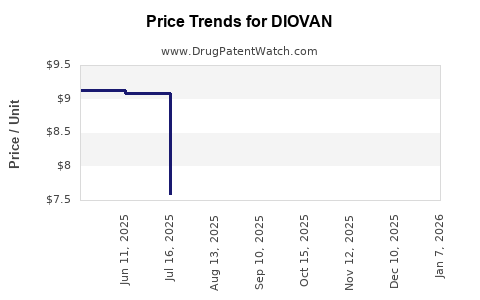
Average Pharmacy Cost for DIOVAN
| Drug Name | NDC | Price/Unit ($) | Unit | Date |
|---|---|---|---|---|
| DIOVAN 160 MG TABLET | 00078-0359-34 | 10.00515 | EACH | 2026-05-20 |
| DIOVAN 80 MG TABLET | 00078-0358-34 | 9.33695 | EACH | 2026-05-20 |
| DIOVAN 320 MG TABLET | 00078-0360-34 | 12.67149 | EACH | 2026-05-20 |
| >Drug Name | >NDC | >Price/Unit ($) | >Unit | >Date |
Diovan (Valsartan) Market Analysis and Price Projections
Diovan, a angiotensin II receptor blocker (ARB), is a prescription medication used to treat high blood pressure and heart failure. Its active pharmaceutical ingredient is valsartan. This analysis examines the current market landscape, competitive pressures, and projected price trajectory for Diovan.
What is the Current Market Status of Diovan?
Diovan's market presence is characterized by a mature lifecycle, significant generic competition, and established clinical utility. The drug, originally developed by Novartis, has faced patent expiries, leading to the widespread availability of generic valsartan. This has fundamentally altered its pricing and market share dynamics.
The global market for antihypertensives remains substantial, driven by the increasing prevalence of cardiovascular diseases worldwide, particularly hypertension. Diovan, as a well-established ARB, historically held a significant position in this market. However, its originator product, branded Diovan, now faces intense price pressure and diminished market share compared to its peak.
Key Market Data:
- Therapeutic Class: Angiotensin II Receptor Blocker (ARB)
- Primary Indications: Hypertension, Congestive Heart Failure, Post-Myocardial Infarction
- Original Developer: Novartis
- Patent Expiry: Multiple patents have expired globally. The primary composition of matter patent for valsartan expired in the U.S. in 2012.
- Generic Availability: Widespread. Numerous generic manufacturers produce valsartan.
- Market Segments: Prescription drug market, primarily distributed through retail pharmacies and hospital formularies.
The market for branded Diovan is now a fraction of its former size. Sales are primarily driven by a smaller segment of patients and prescribers who continue to opt for the branded product due to perceived quality, physician preference, or specific formulary agreements. However, the vast majority of valsartan prescriptions are filled with generic versions.
Who are the Key Competitors for Diovan?
The competitive landscape for Diovan is primarily defined by generic valsartan manufacturers and other ARBs. The introduction of generic valsartan has been the most significant competitive factor, driving down prices and fragmenting market share.
Direct Competitors (Other ARBs):
- Losartan (e.g., Cozaar): Another widely prescribed ARB, available in both branded and generic forms. Losartan has a long history of availability and significant market penetration.
- Olmesartan (e.g., Benicar): Introduced later than valsartan, olmesartan has also faced generic competition.
- Telmisartan (e.g., Micardis): Similar to other ARBs, telmisartan is available in generic forms.
- Candesartan (e.g., Atacand): Another ARB in the same therapeutic class.
Indirect Competitors (Other Antihypertensive Classes):
- ACE Inhibitors (e.g., Lisinopril, Enalapril): These drugs work by a different mechanism but target the renin-angiotensin-aldosterone system and are often considered first-line therapies or alternatives to ARBs.
- Calcium Channel Blockers (e.g., Amlodipine, Nifedipine): A different class of antihypertensives with distinct mechanisms of action.
- Diuretics (e.g., Hydrochlorothiazide, Furosemide): Often used as monotherapy or in combination with other agents.
- Beta-Blockers (e.g., Metoprolol, Atenolol): Another major class of cardiovascular medications.
The presence of numerous generic valsartan manufacturers creates a highly competitive environment. Pricing strategies among these manufacturers are aggressive, focusing on volume and cost efficiency. Branded Diovan must compete not only on efficacy and safety but also on its ability to justify a price premium, which is increasingly challenging.
What are the Pricing Dynamics and Projections for Diovan?
The pricing of Diovan has been significantly impacted by patent expiries and the subsequent influx of generic competition. The trajectory indicates continued price erosion for the branded product and a stabilization of prices for generic valsartan, albeit at substantially lower levels than the originator drug.
Historical Pricing Trends:
- Pre-Generic Era: Branded Diovan commanded premium pricing, reflecting its novel status, R&D investment, and market exclusivity.
- Post-Generic Entry: A steep decline in the average selling price (ASP) of valsartan began immediately after generic entry. This decline was driven by multiple generic manufacturers competing on price.
- Branded Diovan Pricing: Novartis has maintained the branded Diovan product, but its pricing has also been subject to downward pressure. The price is now significantly lower than its peak but still substantially higher than generic equivalents. This strategy aims to capture a niche market while recognizing the dominance of generics.
Current Pricing Landscape:
- Generic Valsartan: The price of generic valsartan is highly competitive and varies by manufacturer, dosage, and packaging. It is typically sold at a fraction of the cost of branded Diovan. Average wholesale prices (AWP) for generic valsartan (e.g., 160mg, 30-count) can range from $10 to $30, while branded Diovan can be $100 or more for the same quantity, depending on pharmacy and insurance.
- Branded Diovan: Novartis continues to market branded Diovan, likely targeting specific markets or patient segments where brand loyalty or formulary inclusion justifies a higher price. However, its market share is minimal compared to generics.
Price Projections:
- Branded Diovan: The price of branded Diovan is expected to remain under pressure. While it may not fall to generic levels, its ASP will likely continue a slow, incremental decline as the market share shifts further towards generics and alternative therapies. Significant price increases are highly unlikely. The focus for Novartis will be on managing costs and optimizing the profitability of a mature, low-volume product.
- Generic Valsartan: Prices for generic valsartan are expected to remain relatively stable. The market has matured, and competition is primarily on volume and manufacturing efficiency rather than disruptive price wars. Minor fluctuations may occur due to supply chain dynamics or the entry/exit of smaller manufacturers, but significant upward price movements are improbable. Generic prices are unlikely to fall substantially lower than current levels without further innovations in manufacturing or significant shifts in demand.
Factors Influencing Future Pricing:
- Competition: Continued availability of multiple generic manufacturers is the primary price-stabilizing factor for generics.
- Regulatory Environment: Changes in pricing regulations or reimbursement policies in key markets could impact both branded and generic pricing.
- Therapeutic Guidelines: Evolving clinical guidelines for hypertension and heart failure management might influence prescribing patterns, indirectly affecting demand and pricing.
- Supply Chain Disruptions: Unforeseen events impacting the global pharmaceutical supply chain could lead to temporary price volatility for generics.
- Cardiovascular Disease Trends: The ongoing increase in cardiovascular diseases globally ensures sustained demand for antihypertensives, supporting the overall market volume for valsartan.
What are the Intellectual Property and Regulatory Considerations?
The intellectual property (IP) landscape for Diovan (valsartan) is largely characterized by expired patents. This has paved the way for extensive generic competition. Regulatory considerations are critical for both the originator product and its generic counterparts.
Key IP Aspects:
- Composition of Matter Patents: The primary patents protecting the valsartan molecule itself have expired. This allowed generic manufacturers to legally produce and market valsartan. For example, U.S. Patent No. 5,399,578 for valsartan expired in 2012 [1].
- Formulation and Method of Use Patents: While composition patents are expired, there may be secondary patents related to specific formulations (e.g., extended-release) or new methods of use that could provide limited, temporary protection. However, these are less impactful than the expired composition patents.
- Evergreening Strategies: Pharmaceutical companies often employ strategies to extend patent exclusivity, such as patenting new formulations, dosages, or combination products. However, for a drug as established as valsartan, these efforts have had limited success in preventing broad generic entry.
- Litigation: Historically, there has been significant patent litigation surrounding ARBs, including valsartan, as originator companies attempted to defend their market exclusivity.
Key Regulatory Aspects:
- Food and Drug Administration (FDA) Approval: Branded Diovan received FDA approval for its initial indications. Generic valsartan products must receive Abbreviated New Drug Application (ANDA) approval from the FDA, demonstrating bioequivalence to the reference listed drug (RLD), which is branded Diovan [2].
- Bioequivalence: A critical regulatory hurdle for generic drugs. Generic manufacturers must prove their product performs the same as the branded drug in terms of absorption, distribution, metabolism, and excretion.
- Good Manufacturing Practices (GMP): All manufacturers, both branded and generic, must adhere to strict GMP regulations to ensure product quality, safety, and efficacy.
- Drug Master Files (DMFs): Generic manufacturers submit DMFs to regulatory agencies detailing their manufacturing processes, facilities, and quality control measures.
- Recalls and Safety Monitoring: Post-market surveillance and pharmacovigilance are ongoing regulatory responsibilities. Valsartan has faced recalls due to the presence of N-nitrosodimethylamine (NDMA) and N-nitrosodiethylamine (NDEA) impurities, which are potential carcinogens. These recalls impacted the supply chain and market availability for specific batches and manufacturers [3, 4]. This highlights the ongoing regulatory scrutiny on manufacturing quality.
- European Medicines Agency (EMA) and Other Global Regulators: Similar regulatory pathways and requirements exist in other major pharmaceutical markets, such as the EMA in Europe.
The expiry of key patents has definitively shifted Diovan into a highly genericized market. The regulatory focus now is on ensuring the quality and safety of all valsartan products available to patients, particularly in light of past impurity issues.
What are the Market Trends and Future Outlook for Diovan?
The market for Diovan is mature and heavily influenced by the dynamics of the generic drug sector. Future trends will be shaped by the sustained demand for antihypertensives, ongoing competition, and potential shifts in therapeutic approaches.
Key Market Trends:
- Dominance of Generics: Generic valsartan will continue to be the dominant form of the drug. The market share for branded Diovan will remain marginal.
- Price Stability for Generics: Generic valsartan prices are expected to remain stable, driven by established manufacturing processes and competitive market forces. Significant price increases are not anticipated.
- Continued Demand for ARBs: The global rise in hypertension and cardiovascular diseases ensures sustained demand for ARBs like valsartan. This provides a steady, albeit lower-margin, revenue stream for generic manufacturers.
- Focus on Combination Therapies: While valsartan is effective as monotherapy, many patients require combination therapy to achieve blood pressure targets. This trend may influence prescribing patterns, potentially favoring fixed-dose combination products that include valsartan.
- Therapeutic Inertia: For many patients and physicians, valsartan is a well-established, effective, and affordable treatment option. This "therapeutic inertia" supports the continued use of generic valsartan.
- Impurity Scrutiny: The past recalls due to NDMA and NDEA impurities have increased regulatory and market scrutiny regarding the manufacturing quality of valsartan. This may lead to stricter quality control measures and potentially impact the supply chain for certain manufacturers.
- Emerging Markets: Growth in emerging markets, where access to affordable healthcare is expanding, will contribute to overall volume demand for generic valsartan.
Future Outlook:
The future outlook for Diovan is that of a well-established, essential generic medication. The branded product will continue to occupy a niche.
- Generic Valsartan Market: This segment is expected to maintain steady volume growth, driven by population demographics and the ongoing need for hypertension management. Profitability will remain dependent on manufacturing efficiency and market share within the generic space.
- Branded Diovan: The branded product will likely see continued modest declines in volume and revenue. Its existence will be more about brand legacy and serving specific patient or physician preferences rather than market leadership.
- Innovation in ARB Space: While valsartan is mature, research into novel cardiovascular therapies and improved ARB formulations (e.g., different salt forms, novel combinations) continues. However, these innovations are unlikely to significantly disrupt the market dominance of generic valsartan in the short to medium term.
- Impact of Value-Based Care: As healthcare systems increasingly move towards value-based care models, the cost-effectiveness of generic valsartan makes it a highly attractive option. This trend further solidifies the long-term viability of generic valsartan.
Overall, Diovan, in its generic form, is positioned as a stable, high-volume, low-cost antihypertensive medication. The market will continue to favor cost-effective generics over the originator brand.
Key Takeaways
- Diovan's market is dominated by generic valsartan due to patent expiries, leading to significant price erosion for the originator product.
- Key competitors include other ARBs (losartan, olmesartan, telmisartan) and different classes of antihypertensives.
- Generic valsartan prices are stable and significantly lower than branded Diovan. Branded Diovan prices are expected to continue a slow decline.
- The intellectual property landscape for valsartan is largely characterized by expired composition of matter patents, facilitating generic entry.
- Regulatory scrutiny remains high, particularly concerning manufacturing quality and past impurity recalls (NDMA, NDEA).
- The future outlook is for continued stable demand for generic valsartan, driven by the global prevalence of hypertension, with branded Diovan retaining a minimal market share.
Frequently Asked Questions
-
What is the current typical cost range for a 30-day supply of generic valsartan? A 30-day supply of generic valsartan, depending on dosage and specific manufacturer, typically ranges from $10 to $30 at the average wholesale price.
-
Can patients still get branded Diovan prescribed? Yes, branded Diovan can still be prescribed by physicians, but its market share is minimal compared to generic valsartan. Availability may vary by pharmacy and insurance formulary.
-
Are there any ongoing patent protections for Diovan? While the primary composition of matter patents for valsartan have expired, secondary patents related to specific formulations or methods of use might still exist, though their impact on broad market entry is limited.
-
What impact did the NDMA impurity recalls have on the Diovan market? The NDMA and NDEA impurity recalls led to significant product recalls and temporary supply shortages for affected batches and manufacturers, increasing regulatory scrutiny on valsartan production quality.
-
How does valsartan compare in price and availability to other ARBs like losartan? Both valsartan and losartan are widely available as generics at comparable low price points. Pricing and availability are generally similar across major ARBs due to extensive generic competition in this class.
Citations
[1] U.S. Patent 5,399,578. (1995). Angiotensin II antagonists. Retrieved from USPTO.gov. [2] U.S. Food & Drug Administration. (n.d.). Generic Drugs. Retrieved from FDA.gov. [3] U.S. Food & Drug Administration. (2018, July 24). FDA announces voluntary recall of valsartan products due to potential contamination with N-nitrosodimethylamine (NDMA). Retrieved from FDA.gov. [4] U.S. Food & Drug Administration. (2019, February 11). FDA announces further voluntary recalls of valsartan-containing medicines due to potential contamination with N-nitrosodiethylamine (NDEA). Retrieved from FDA.gov.
More… ↓
